Occupation Summary

Teaching Assistants, Preschool, Elementary, Middle, and Secondary School, Except Special Education

O*NET 25-9042.00

Description:

Assist a preschool, elementary, middle, or secondary school teacher with instructional duties. Serve in a position for which a teacher has primary responsibility for the design and implementation of educational programs and services.

Annual Wages:
Unavailable
Employment Rate:
Employment is expected to increase by %.
Education Level:
High School Diploma - or the equivalent (for example, GED). According to O*Net, the majority of people employed in this occupation have this level of education.

  1. Assist in bus loading and unloading.
  2. Attend staff meetings and serve on committees, as required.
  3. Clean classrooms.
  4. Collect money from students for school-related projects.
  5. Conduct demonstrations to teach skills, such as sports, dancing, and handicrafts.
  6. Discuss assigned duties with classroom teachers to coordinate instructional efforts.
  7. Distribute teaching materials, such as textbooks, workbooks, papers, and pencils, to students.
  8. Distribute tests and homework assignments and collect them when they are completed.
  9. Enforce administration policies and rules governing students.
  10. Grade homework and tests, and compute and record results, using answer sheets or electronic marking devices.
  11. Instruct and monitor students in the use and care of equipment and materials to prevent injuries and damage.
  12. Laminate teaching materials to increase their durability under repeated use.
  13. Maintain computers in classrooms and laboratories, and assist students with hardware and software use.
  14. Observe students' performance, and record relevant data to assess progress.
  15. Operate and maintain audio-visual equipment.
  16. Organize and label materials and display students' work in a manner appropriate for their eye levels and perceptual skills.
  17. Organize and supervise games and other recreational activities to promote physical, mental, and social development.
  18. Participate in teacher-parent conferences regarding students' progress or problems.
  19. Plan, prepare, and develop various teaching aids, such as bibliographies, charts, and graphs.
  20. Prepare lesson materials, bulletin board displays, exhibits, equipment, and demonstrations.
  21. Present subject matter to students under the direction and guidance of teachers, using lectures, discussions, supervised role-playing methods, or by reading aloud.
  22. Requisition and stock teaching materials and supplies.
  23. Supervise students in classrooms, halls, cafeterias, school yards, and gymnasiums, or on field trips.
  24. Take class attendance and maintain attendance records.
  25. Teach social skills to students.
  26. Tutor and assist children individually or in small groups to help them master assignments and to reinforce learning concepts presented by teachers.
  27. Type, file, and duplicate materials.
  28. Use computers, audio-visual aids, and other equipment and materials to supplement presentations.


No Industry Employment Patterns found.

Labor Market Information


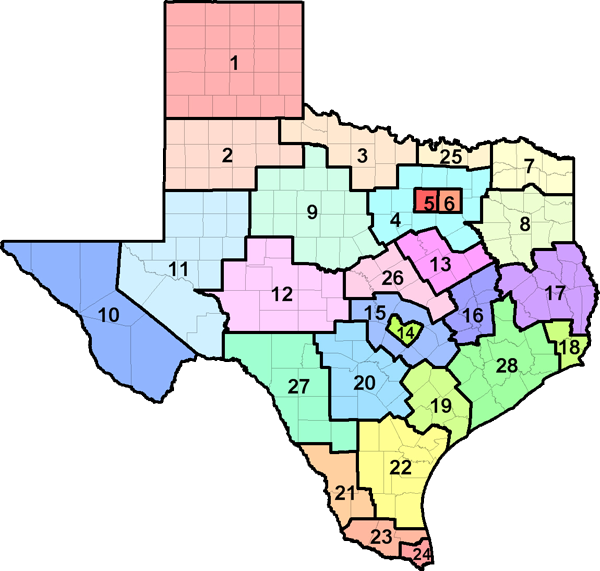
TEXAS COUNTY MAP BY WORKFORCE DEVELOPMENT AREA
Region Employment Projected Employment 2032 Projected
Annual Openings 2032
Annual
Growth Rate
Average Income
Texas (all regions) Unavailable Unavailable Unavailable Unavailable Unavailable
* Due to confidentiality rules, not all regions may have the data displayed. The sum of all the regions may not be equal to the state total.


Top 10 Relevant Knowledge Areas Relevant Importance Levels
Customer and Personal Service
Knowledge of principles and processes for providing customer and personal services. This includes customer needs assessment, meeting quality standards for services, and evaluation of customer satisfaction.
82.20%
English Language
Knowledge of the structure and content of the English language including the meaning and spelling of words, rules of composition, and grammar.
76.00%
Psychology
Knowledge of human behavior and performance; individual differences in ability, personality, and interests; learning and motivation; psychological research methods; and the assessment and treatment of behavioral and affective disorders.
75.20%
Mathematics
Knowledge of arithmetic, algebra, geometry, calculus, statistics, and their applications.
70.40%
Education and Training
Knowledge of principles and methods for curriculum and training design, teaching and instruction for individuals and groups, and the measurement of training effects.
69.60%
Public Safety and Security
Knowledge of relevant equipment, policies, procedures, and strategies to promote effective local, state, or national security operations for the protection of people, data, property, and institutions.
66.00%
Administrative
Knowledge of administrative and office procedures and systems such as word processing, managing files and records, stenography and transcription, designing forms, and workplace terminology.
63.20%
Sociology and Anthropology
Knowledge of group behavior and dynamics, societal trends and influences, human migrations, ethnicity, cultures, and their history and origins.
61.60%
Geography
Knowledge of principles and methods for describing the features of land, sea, and air masses, including their physical characteristics, locations, interrelationships, and distribution of plant, animal, and human life.
59.80%
Therapy and Counseling
Knowledge of principles, methods, and procedures for diagnosis, treatment, and rehabilitation of physical and mental dysfunctions, and for career counseling and guidance.
59.40%


Top 10 Relevant Skill Areas Relevant Importance Levels
Active Listening
Giving full attention to what other people are saying, taking time to understand the points being made, asking questions as appropriate, and not interrupting at inappropriate times.
75.00%
Social Perceptiveness
Being aware of others' reactions and understanding why they react as they do.
75.00%
Reading Comprehension
Understanding written sentences and paragraphs in work-related documents.
72.40%
Speaking
Talking to others to convey information effectively.
72.40%
Service Orientation
Actively looking for ways to help people.
70.00%
Coordination
Adjusting actions in relation to others' actions.
70.00%
Instructing
Teaching others how to do something.
67.60%
Writing
Communicating effectively in writing as appropriate for the needs of the audience.
67.60%
Critical Thinking
Using logic and reasoning to identify the strengths and weaknesses of alternative solutions, conclusions, or approaches to problems.
67.60%
Learning Strategies
Selecting and using training/instructional methods and procedures appropriate for the situation when learning or teaching new things.
67.60%


Top 10 Relevant Abilities Relevant Importance Levels
Oral Comprehension
The ability to listen to and understand information and ideas presented through spoken words and sentences.
75.00%
Written Comprehension
The ability to read and understand information and ideas presented in writing.
75.00%
Oral Expression
The ability to communicate information and ideas in speaking so others will understand.
75.00%
Information Ordering
The ability to arrange things or actions in a certain order or pattern according to a specific rule or set of rules (e.g., patterns of numbers, letters, words, pictures, mathematical operations).
72.40%
Written Expression
The ability to communicate information and ideas in writing so others will understand.
70.00%
Problem Sensitivity
The ability to tell when something is wrong or is likely to go wrong. It does not involve solving the problem, only recognizing that there is a problem.
70.00%
Speech Recognition
The ability to identify and understand the speech of another person.
70.00%
Speech Clarity
The ability to speak clearly so others can understand you.
70.00%
Near Vision
The ability to see details at close range (within a few feet of the observer).
67.60%
Far Vision
The ability to see details at a distance.
67.60%


  • Assisting and Caring for Others
    -- Providing personal assistance, medical attention, emotional support, or other personal care to others such as coworkers, customers, or patients.
  • Thinking Creatively
    -- Developing, designing, or creating new applications, ideas, relationships, systems, or products, including artistic contributions.
  • Getting Information
    -- Observing, receiving, and otherwise obtaining information from all relevant sources.
  • Making Decisions and Solving Problems
    -- Analyzing information and evaluating results to choose the best solution and solve problems.
  • Resolving Conflicts and Negotiating with Others
    -- Handling complaints, settling disputes, and resolving grievances and conflicts, or otherwise negotiating with others.
Other Activities


No work importance values found.

No certifications found.


Tools

Balance or gross motor equipment: Play structures;

Board games: Educational board games;

Building blocks: Toy block sets;

Cassette players or recorders: Audio tape recorders or players;

Childrens science kits: Science activity kits;

Compact disk players or recorders: Compact disk CD players;

Computer mouse: Trackballs;

Desktop computers: Desktop computers;

Digital camcorders or video cameras: Digital video cameras;

Digital video disk players or recorders: Digital video disk DVD players;

Intercom systems: Intercom systems;

Keyboards: Alternative computer keyboards;

Laminators: Laminating equipment;

Laser printers: Computer laser printers;

Liquid crystal display projector: Liquid crystal display LCD projectors;

Microphones: Microphones;

Mobile medical services first aid kits: Emergency first aid kits;

Notebook computers: Laptop computers;

Overhead projectors: Overhead projectors;

Personal computers: Personal computers;

Sand or water tables or activity centers: Water tables; Sand tables;

Scanners: Reading pens; Data input scanners;

Tactile toys: Pegboards;

Televisions: Television monitors;

Touch screen monitors: Wireless touch screen monitors;

Video cassette players or recorders: Video cassette recorders VCR;


Technology

Calendar and scheduling software: High School Scheduling and Transcript HSST;

Computer based training software: Padlet; Children's educational software; Appletree; Quizlet; Schoology; Text to speech software;

Data base user interface and query software: Student information systems SIS software; Automate the Schools ATS; Blackboard software;

Desktop communications software: ClassDojo; ParentSquare; Tadpoles;

Device drivers or system software: Screen magnification software; Screen reader software;

Electronic mail software: Microsoft Outlook; Email software;

Internet browser software: Web browser software;

Multi-media educational software: Seesaw; Kahoot!;

Office suite software: Microsoft Office software;

Presentation software: Microsoft PowerPoint;

Project management software: Google Classroom;

Spell checkers: Hand held spell checkers;

Spreadsheet software: Microsoft Excel;

Video conferencing software: Google Meet;

Video creation and editing software: Flipgrid; Loom;

Word processing software: Microsoft Word; Word processing software;


Related O*NET occupational titles for Teaching Assistants, Preschool, Elementary, Middle, and Secondary School, Except Special Education include:
  • 25-3011.00 Adult Basic Education, Adult Secondary Education, and English as a Second Language Instructors
  • 25-2021.00 Elementary School Teachers, Except Special Education
  • 25-2022.00 Middle School Teachers, Except Special and Career/Technical Education
  • 25-3021.00 Self-Enrichment Teachers
  • 25-2056.00 Special Education Teachers, Elementary School
  • 25-2058.00 Special Education Teachers, Secondary School
  • 25-3031.00 Substitute Teachers, Short-Term
  • 25-9044.00 Teaching Assistants, Postsecondary
  • 25-9043.00 Teaching Assistants, Special Education
  • 25-3041.00 Tutors


No sources of additional information found.

Contact Texas Workforce Commission
Labor Market and Career Information  |  101 E. 15th Street, Annex Room 0252  |  Austin, Texas 78778
Official Website  |  1-800-822-PLAN (7526)  |  512.936.3200

** The information in this report may be derived from many sources like O*NET, BLS (Bureau of Labor Statistics), OOH (Occupational Outlook Handbook), and Career One Stop.