
The U.S. Department of Labor has developed an automated occupational information database, O*NET, that identifies and describes work content, work skills, and training requirements for all jobs across the country in all sectors of the economy. Much of the occupational information contained in this report is derived directly from the O*NET database, and supplemented with information from the Bureau of Labor Statistics, Census Bureau, and Labor Market and Career Information.

| 2024 Statewide average hourly wage | $42.00 |
| 2024 National average hourly wage | $39.77 |
| 2022 National employment | 429,600 |
| 2022 Texas employment | 43,023 |
| Texas projected employment by 2032 | 51,565 |
| Texas projected annual employment and Turnover openings through 2032 | 4,450 |
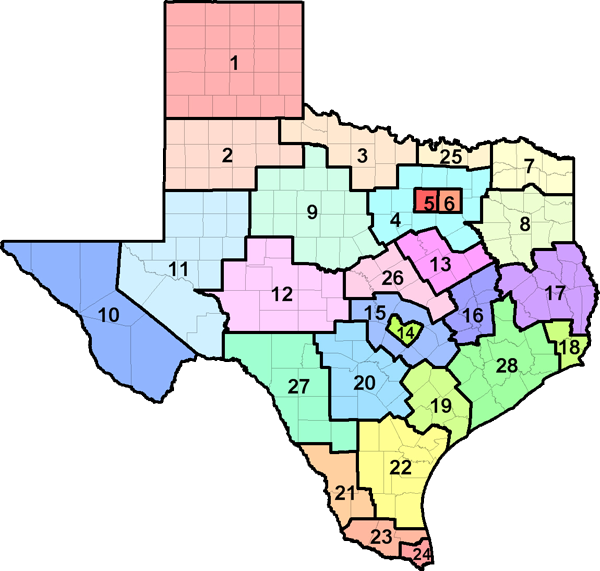
| Region | Employment | Projected Employment 2032 | Projected Annual Openings 2032 |
Annual Growth Rate |
Average Income |
|---|---|---|---|---|---|
| Texas (all regions) | 43,023 | 51,565 | 4,450 | 1.83% | $87,356.00 |
| Top 10 Relevant Knowledge Areas | Relevant Importance Levels |
|---|---|
| Customer and Personal Service Knowledge of principles and processes for providing customer and personal services. This includes customer needs assessment, meeting quality standards for services, and evaluation of customer satisfaction. |
|
| Administration and Management Knowledge of business and management principles involved in strategic planning, resource allocation, human resources modeling, leadership technique, production methods, and coordination of people and resources. |
|
| Economics and Accounting Knowledge of economic and accounting principles and practices, the financial markets, banking, and the analysis and reporting of financial data. |
|
| English Language Knowledge of the structure and content of the English language including the meaning and spelling of words, rules of composition, and grammar. |
|
| Law and Government Knowledge of laws, legal codes, court procedures, precedents, government regulations, executive orders, agency rules, and the democratic political process. |
|
| Public Safety and Security Knowledge of relevant equipment, policies, procedures, and strategies to promote effective local, state, or national security operations for the protection of people, data, property, and institutions. |
|
| Mathematics Knowledge of arithmetic, algebra, geometry, calculus, statistics, and their applications. |
|
| Personnel and Human Resources Knowledge of principles and procedures for personnel recruitment, selection, training, compensation and benefits, labor relations and negotiation, and personnel information systems. |
|
| Computers and Electronics Knowledge of circuit boards, processors, chips, electronic equipment, and computer hardware and software, including applications and programming. |
|
| Sales and Marketing Knowledge of principles and methods for showing, promoting, and selling products or services. This includes marketing strategy and tactics, product demonstration, sales techniques, and sales control systems. |
| Top 10 Relevant Skill Areas | Relevant Importance Levels |
|---|---|
| Speaking Talking to others to convey information effectively. |
|
| Reading Comprehension Understanding written sentences and paragraphs in work-related documents. |
|
| Active Listening Giving full attention to what other people are saying, taking time to understand the points being made, asking questions as appropriate, and not interrupting at inappropriate times. |
|
| Writing Communicating effectively in writing as appropriate for the needs of the audience. |
|
| Coordination Adjusting actions in relation to others' actions. |
|
| Negotiation Bringing others together and trying to reconcile differences. |
|
| Critical Thinking Using logic and reasoning to identify the strengths and weaknesses of alternative solutions, conclusions, or approaches to problems. |
|
| Social Perceptiveness Being aware of others' reactions and understanding why they react as they do. |
|
| Persuasion Persuading others to change their minds or behavior. |
|
| Complex Problem Solving Identifying complex problems and reviewing related information to develop and evaluate options and implement solutions. |
| Top 10 Relevant Abilities | Relevant Importance Levels |
|---|---|
| Oral Comprehension The ability to listen to and understand information and ideas presented through spoken words and sentences. |
|
| Written Comprehension The ability to read and understand information and ideas presented in writing. |
|
| Oral Expression The ability to communicate information and ideas in speaking so others will understand. |
|
| Written Expression The ability to communicate information and ideas in writing so others will understand. |
|
| Inductive Reasoning The ability to combine pieces of information to form general rules or conclusions (includes finding a relationship among seemingly unrelated events). |
|
| Problem Sensitivity The ability to tell when something is wrong or is likely to go wrong. It does not involve solving the problem, only recognizing that there is a problem. |
|
| Speech Recognition The ability to identify and understand the speech of another person. |
|
| Speech Clarity The ability to speak clearly so others can understand you. |
|
| Deductive Reasoning The ability to apply general rules to specific problems to produce answers that make sense. |
|
| Information Ordering The ability to arrange things or actions in a certain order or pattern according to a specific rule or set of rules (e.g., patterns of numbers, letters, words, pictures, mathematical operations). |