Occupation Summary

Compliance Managers

O*NET 11-9199.02

Description:

Plan, direct, or coordinate activities of an organization to ensure compliance with ethical or regulatory standards.

Annual Wages:
$147,934.00
Employment Rate:
Employment is expected to increase by 15.36%.
Education Level:
Bachelor's Degree. According to O*Net, the majority of people employed in this occupation have this level of education.
Endorsement:
Business and Industry

  1. Verify that software technology is in place to adequately provide oversight and monitoring in all required areas.
  2. Serve as a confidential point of contact for employees to communicate with management, seek clarification on issues or dilemmas, or report irregularities.
  3. Maintain documentation of compliance activities, such as complaints received or investigation outcomes.
  4. Consult with corporate attorneys as necessary to address difficult legal compliance issues.
  5. Collaborate with human resources departments to ensure the implementation of consistent disciplinary action strategies in cases of compliance standard violations.
  6. Advise internal management or business partners on the implementation or operation of compliance programs.
  7. Review communications such as securities sales advertising to ensure there are no violations of standards or regulations.
  8. Provide employee training on compliance related topics, policies, or procedures.
  9. Report violations of compliance or regulatory standards to duly authorized enforcement agencies as appropriate or required.
  10. Provide assistance to internal or external auditors in compliance reviews.
  11. Prepare management reports regarding compliance operations and progress.
  12. Monitor compliance systems to ensure their effectiveness.
  13. Identify compliance issues that require follow-up or investigation.
  14. Disseminate written policies and procedures related to compliance activities.
  15. File appropriate compliance reports with regulatory agencies.
  16. Design or implement improvements in communication, monitoring, or enforcement of compliance standards.
  17. Conduct periodic internal reviews or audits to ensure that compliance procedures are followed.
  18. Conduct or direct the internal investigation of compliance issues.
  19. Advise technical professionals on the development or use of environmental compliance or reporting tools.
  20. Conduct environmental audits to ensure adherence to environmental standards.
  21. Direct environmental programs, such as air or water compliance, aboveground or underground storage tanks, spill prevention or control, hazardous waste or materials management, solid waste recycling, medical waste management, indoor air quality, integrated pest management, employee training, or disaster preparedness.
  22. Evaluate testing procedures to meet the specifications of environmental monitoring programs.
  23. Review or modify policies or operating guidelines to comply with changes to environmental standards or regulations.
  24. Discuss emerging compliance issues to ensure that management and employees are informed about compliance reporting systems, policies, and practices.
  25. Verify that all regulatory policies and procedures have been documented, implemented, and communicated.
  26. Keep informed regarding pending industry changes, trends, or best practices.
  27. Direct the development or implementation of policies and procedures related to compliance throughout an organization.
  28. Develop risk management strategies based on assessment of product, compliance, or operational risks.
  29. Oversee internal reporting systems, such as corporate compliance hotlines.


No Industry Employment Patterns found.

Labor Market Information


2024 Statewide average hourly wage $71.12
2024 National average hourly wage $72.06
2022 National employment 1,228,300
2022 Texas employment 90,602
Texas projected employment by 2032 104,521
Texas projected annual employment and Turnover openings through 2032 8,446


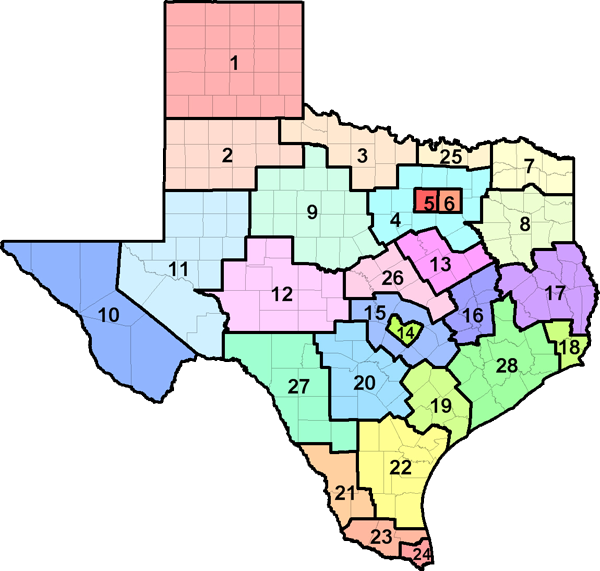
TEXAS COUNTY MAP BY WORKFORCE DEVELOPMENT AREA
* Due to confidentiality rules, not all regions may have the data displayed. The sum of all the regions may not be equal to the state total.


Top 10 Relevant Knowledge Areas Relevant Importance Levels
Law and Government
Knowledge of laws, legal codes, court procedures, precedents, government regulations, executive orders, agency rules, and the democratic political process.
91.20%
English Language
Knowledge of the structure and content of the English language including the meaning and spelling of words, rules of composition, and grammar.
90.60%
Administration and Management
Knowledge of business and management principles involved in strategic planning, resource allocation, human resources modeling, leadership technique, production methods, and coordination of people and resources.
81.20%
Customer and Personal Service
Knowledge of principles and processes for providing customer and personal services. This includes customer needs assessment, meeting quality standards for services, and evaluation of customer satisfaction.
74.40%
Personnel and Human Resources
Knowledge of principles and procedures for personnel recruitment, selection, training, compensation and benefits, labor relations and negotiation, and personnel information systems.
73.60%
Computers and Electronics
Knowledge of circuit boards, processors, chips, electronic equipment, and computer hardware and software, including applications and programming.
72.00%
Education and Training
Knowledge of principles and methods for curriculum and training design, teaching and instruction for individuals and groups, and the measurement of training effects.
68.80%
Administrative
Knowledge of administrative and office procedures and systems such as word processing, managing files and records, stenography and transcription, designing forms, and workplace terminology.
67.20%
Public Safety and Security
Knowledge of relevant equipment, policies, procedures, and strategies to promote effective local, state, or national security operations for the protection of people, data, property, and institutions.
66.00%
Mathematics
Knowledge of arithmetic, algebra, geometry, calculus, statistics, and their applications.
59.00%


Top 10 Relevant Skill Areas Relevant Importance Levels
Reading Comprehension
Understanding written sentences and paragraphs in work-related documents.
80.00%
Critical Thinking
Using logic and reasoning to identify the strengths and weaknesses of alternative solutions, conclusions, or approaches to problems.
80.00%
Active Listening
Giving full attention to what other people are saying, taking time to understand the points being made, asking questions as appropriate, and not interrupting at inappropriate times.
77.60%
Writing
Communicating effectively in writing as appropriate for the needs of the audience.
77.60%
Speaking
Talking to others to convey information effectively.
77.60%
Active Learning
Understanding the implications of new information for both current and future problem-solving and decision-making.
75.00%
Monitoring
Monitoring/Assessing performance of yourself, other individuals, or organizations to make improvements or take corrective action.
75.00%
Coordination
Adjusting actions in relation to others' actions.
75.00%
Persuasion
Persuading others to change their minds or behavior.
72.40%
Social Perceptiveness
Being aware of others' reactions and understanding why they react as they do.
70.00%


Top 10 Relevant Abilities Relevant Importance Levels
Oral Expression
The ability to communicate information and ideas in speaking so others will understand.
82.40%
Written Expression
The ability to communicate information and ideas in writing so others will understand.
82.40%
Problem Sensitivity
The ability to tell when something is wrong or is likely to go wrong. It does not involve solving the problem, only recognizing that there is a problem.
82.40%
Deductive Reasoning
The ability to apply general rules to specific problems to produce answers that make sense.
80.00%
Inductive Reasoning
The ability to combine pieces of information to form general rules or conclusions (includes finding a relationship among seemingly unrelated events).
80.00%
Oral Comprehension
The ability to listen to and understand information and ideas presented through spoken words and sentences.
80.00%
Written Comprehension
The ability to read and understand information and ideas presented in writing.
80.00%
Near Vision
The ability to see details at close range (within a few feet of the observer).
72.40%
Speech Clarity
The ability to speak clearly so others can understand you.
72.40%
Speech Recognition
The ability to identify and understand the speech of another person.
70.00%


  • Evaluating Information to Determine Compliance with Standards
    -- Using relevant information and individual judgment to determine whether events or processes comply with laws, regulations, or standards.
  • Getting Information
    -- Observing, receiving, and otherwise obtaining information from all relevant sources.
  • Communicating with Supervisors, Peers, or Subordinates
    -- Providing information to supervisors, co-workers, and subordinates by telephone, in written form, e-mail, or in person.
  • Working with Computers
    -- Using computers and computer systems (including hardware and software) to program, write software, set up functions, enter data, or process information.
  • Documenting/Recording Information
    -- Entering, transcribing, recording, storing, or maintaining information in written or electronic/magnetic form.
Other Activities


  • Achievement
    - Occupations that satisfy this work value are results oriented and allow employees to use their strongest abilities, giving them a feeling of accomplishment. Corresponding needs are Ability Utilization and Achievement.
  • Support
    - Occupations that satisfy this work value offer supportive management that stands behind employees. Corresponding needs are Company Policies, Supervision: Human Relations and Supervision: Technical.


Tools

Desktop computers: Desktop computers;

Laser fax machine: Laser facsimile machines;

Laser printers: Computer laser printers;

Notebook computers: Laptop computers;

Personal computers: Personal computers;

Photocopiers: Photocopying equipment;

Special purpose telephones: Multi-line telephone systems;


Technology

Accounting software: Tax software;

Analytical or scientific software: StataCorp Stata; Data analysis software; Horwath Software Magique;

Calendar and scheduling software: Scheduling software;

Cloud-based data access and sharing software: Microsoft SharePoint;

Compliance software: Modulo Risk Manager; MyComplianceOffice Compliance Operations Management System; Neohapsis Certus GRC; Oracle Enterprise Governance, Risk, and Compliance Manager; Oracle Insurance Compliance Tracker; policyIQ; Protiviti Governance Portal; QUMAS quality management solution software; Resolve Legislative Compliance Management; RVR Systems Compliance; Sword Achiever Compliance Portal Dashboard; The Garland Group RiskKey; Thomson Reuters Paisley Enterprise GRC; Keane SCORE; EtQ Environmental Health and Safety Software; EtQ FDA cGxP Compliance Software for Life Sciences; Fidessa Compliance Manager; FRSGlobal RegPro; Governance, risk, and compliance GRC software; Guideline Risk Technologies RUBI; MediRegs ComplyTrack; Methodware ERA; MetricStream Compliance Management; MetricStream Enterprise Compliance Platform; MetricStream Regulatory Reporting; LRN Ethics and Compliance Alliance; DoubleCheck GRC&T Platform; 80-20 Software Leaders4; Actimize Brokerage Compliance Solutions; Agiliance Compliance Manager; Aline GRC; ARC Logics Sword; Archer Compliance Management; AssurX CATSWeb; AssurX Financial Services Compliance Management System; Audit2 AdaptiveGRC; Axentis Compliance Management; BPS Compliance; BWise Compliance Management; CMO Compliance Regulatory Compliance Solution; Compliance 360; Compliance11 Supervisory Suite; ComplianceBridge Total Compliance; ControlCase Compliance Manager; Cura Software Solutions Cura for Compliance Management;

Data base management system software: Database management software;

Data base reporting software: SAP BEx Report Designer;

Data base user interface and query software: Microsoft Access;

Desktop publishing software: Desktop publishing software;

Document management software: Adobe Acrobat;

Electronic mail software: Email software; Microsoft Outlook; IBM Notes;

Human resources software: Human resource information system (HRIS);

Information retrieval or search software: LexisNexis;

Internet browser software: Microsoft Internet Explorer; Apple Safari; Web browser software; Mozilla Firefox;

Medical software: Healthcare common procedure coding system HCPCS;

Office suite software: Microsoft Office software;

Operating system software: Microsoft Windows;

Presentation software: Microsoft PowerPoint;

Process mapping and design software: Microsoft Visio;

Project management software: Microsoft Project;

Risk management data and analysis software: MasterControl MD; MasterControl TotalPharma;

Spreadsheet software: Microsoft Excel; Spreadsheet software;

Tax preparation software: Tax accounting software;

Word processing software: Word processing software; Microsoft Word;


Related O*NET occupational titles for Compliance Managers include:
  • 11-3012.00 Administrative Services Managers
  • 13-1041.00 Compliance Officers
  • 13-1041.01 Environmental Compliance Inspectors
  • 13-1041.04 Government Property Inspectors and Investigators
  • 15-1299.05 Information Security Engineers
  • 13-1111.00 Management Analysts
  • 11-9199.01 Regulatory Affairs Managers
  • 13-1041.07 Regulatory Affairs Specialists
  • 13-1199.07 Security Management Specialists
  • 11-3013.01 Security Managers


No sources of additional information found.

Contact Texas Workforce Commission
Labor Market and Career Information  |  101 E. 15th Street, Annex Room 0252  |  Austin, Texas 78778
Official Website  |  1-800-822-PLAN (7526)  |  512.936.3200

** The information in this report may be derived from many sources like O*NET, BLS (Bureau of Labor Statistics), OOH (Occupational Outlook Handbook), and Career One Stop.