Occupation Summary

Loss Prevention Managers

O*NET 11-9199.08

Description:

Plan and direct policies, procedures, or systems to prevent the loss of assets. Determine risk exposure or potential liability, and develop risk control measures.

Annual Wages:
$147,934.00
Employment Rate:
Employment is expected to increase by 15.36%.
Education Level:
Bachelor's Degree. According to O*Net, the majority of people employed in this occupation have this level of education.
Endorsement:
Business and Industry

  1. Review loss prevention exception reports and cash discrepancies to ensure adherence to guidelines.
  2. Perform cash audits and deposit investigations to fully account for store cash.
  3. Provide recommendations and solutions in crisis situations such as workplace violence, protests, and demonstrations.
  4. Monitor and review paperwork procedures and systems to prevent error-related shortages.
  5. Maintain databases such as bad check logs, reports on multiple offenders, and alarm activation lists.
  6. Investigate or interview individuals suspected of shoplifting or internal theft.
  7. Direct installation of covert surveillance equipment, such as security cameras.
  8. Advise retail establishments on development of loss-investigation procedures.
  9. Visit stores to ensure compliance with company policies and procedures.
  10. Verify correct use and maintenance of physical security systems, such as closed-circuit television, merchandise tags, and burglar alarms.
  11. Train loss prevention staff, retail managers, or store employees on loss control and prevention measures.
  12. Supervise surveillance, detection, or criminal processing related to theft and criminal cases.
  13. Recommend improvements in loss prevention programs, staffing, scheduling, or training.
  14. Perform or direct inventory investigations in response to shrink results outside of acceptable ranges.
  15. Hire or supervise loss prevention staff.
  16. Maintain documentation of all loss prevention activity.
  17. Coordinate theft and fraud investigations involving career criminals or organized group activities.
  18. Direct loss prevention audit programs including target store audits, maintenance audits, safety audits, or electronic article surveillance (EAS) audits.
  19. Develop and maintain partnerships with federal, state, or local law enforcement agencies or members of the retail loss prevention community.
  20. Coordinate or conduct internal investigations of problems such as employee theft and violations of corporate loss prevention policies.
  21. Collaborate with law enforcement to investigate and solve external theft or fraud cases.
  22. Assess security needs across locations to ensure proper deployment of loss prevention resources, such as staff and technology.
  23. Analyze retail data to identify current or emerging trends in theft or fraud.
  24. Advise retail managers on compliance with applicable codes, laws, regulations, or standards.
  25. Monitor compliance to operational, safety, or inventory control procedures, including physical security standards.
  26. Identify potential for loss and develop strategies to eliminate it.
  27. Administer systems and programs to reduce loss, maintain inventory control, or increase safety.


No Industry Employment Patterns found.

Labor Market Information


2024 Statewide average hourly wage $71.12
2024 National average hourly wage $72.06
2022 National employment 1,228,300
2022 Texas employment 90,602
Texas projected employment by 2032 104,521
Texas projected annual employment and Turnover openings through 2032 8,446


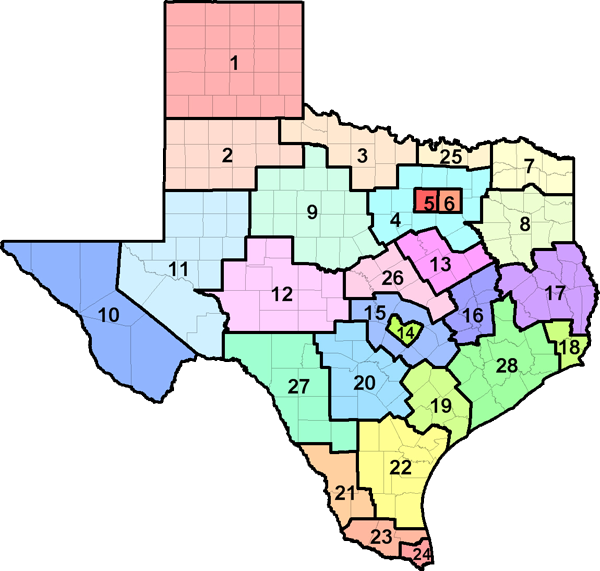
TEXAS COUNTY MAP BY WORKFORCE DEVELOPMENT AREA
* Due to confidentiality rules, not all regions may have the data displayed. The sum of all the regions may not be equal to the state total.


Top 10 Relevant Knowledge Areas Relevant Importance Levels
Public Safety and Security
Knowledge of relevant equipment, policies, procedures, and strategies to promote effective local, state, or national security operations for the protection of people, data, property, and institutions.
82.80%
Law and Government
Knowledge of laws, legal codes, court procedures, precedents, government regulations, executive orders, agency rules, and the democratic political process.
78.20%
Administration and Management
Knowledge of business and management principles involved in strategic planning, resource allocation, human resources modeling, leadership technique, production methods, and coordination of people and resources.
76.20%
English Language
Knowledge of the structure and content of the English language including the meaning and spelling of words, rules of composition, and grammar.
75.40%
Education and Training
Knowledge of principles and methods for curriculum and training design, teaching and instruction for individuals and groups, and the measurement of training effects.
74.60%
Customer and Personal Service
Knowledge of principles and processes for providing customer and personal services. This includes customer needs assessment, meeting quality standards for services, and evaluation of customer satisfaction.
71.00%
Psychology
Knowledge of human behavior and performance; individual differences in ability, personality, and interests; learning and motivation; psychological research methods; and the assessment and treatment of behavioral and affective disorders.
70.00%
Computers and Electronics
Knowledge of circuit boards, processors, chips, electronic equipment, and computer hardware and software, including applications and programming.
69.00%
Personnel and Human Resources
Knowledge of principles and procedures for personnel recruitment, selection, training, compensation and benefits, labor relations and negotiation, and personnel information systems.
68.60%
Mathematics
Knowledge of arithmetic, algebra, geometry, calculus, statistics, and their applications.
64.60%


Top 10 Relevant Skill Areas Relevant Importance Levels
Reading Comprehension
Understanding written sentences and paragraphs in work-related documents.
80.00%
Active Listening
Giving full attention to what other people are saying, taking time to understand the points being made, asking questions as appropriate, and not interrupting at inappropriate times.
80.00%
Speaking
Talking to others to convey information effectively.
80.00%
Critical Thinking
Using logic and reasoning to identify the strengths and weaknesses of alternative solutions, conclusions, or approaches to problems.
77.60%
Monitoring
Monitoring/Assessing performance of yourself, other individuals, or organizations to make improvements or take corrective action.
77.60%
Instructing
Teaching others how to do something.
77.60%
Complex Problem Solving
Identifying complex problems and reviewing related information to develop and evaluate options and implement solutions.
77.60%
Judgment and Decision Making
Considering the relative costs and benefits of potential actions to choose the most appropriate one.
77.60%
Time Management
Managing one's own time and the time of others.
77.60%
Systems Analysis
Determining how a system should work and how changes in conditions, operations, and the environment will affect outcomes.
75.00%


Top 10 Relevant Abilities Relevant Importance Levels
Oral Expression
The ability to communicate information and ideas in speaking so others will understand.
82.40%
Problem Sensitivity
The ability to tell when something is wrong or is likely to go wrong. It does not involve solving the problem, only recognizing that there is a problem.
82.40%
Oral Comprehension
The ability to listen to and understand information and ideas presented through spoken words and sentences.
80.00%
Near Vision
The ability to see details at close range (within a few feet of the observer).
80.00%
Written Comprehension
The ability to read and understand information and ideas presented in writing.
77.60%
Written Expression
The ability to communicate information and ideas in writing so others will understand.
77.60%
Deductive Reasoning
The ability to apply general rules to specific problems to produce answers that make sense.
77.60%
Inductive Reasoning
The ability to combine pieces of information to form general rules or conclusions (includes finding a relationship among seemingly unrelated events).
77.60%
Speech Recognition
The ability to identify and understand the speech of another person.
75.00%
Speech Clarity
The ability to speak clearly so others can understand you.
75.00%


  • Getting Information
    -- Observing, receiving, and otherwise obtaining information from all relevant sources.
  • Making Decisions and Solving Problems
    -- Analyzing information and evaluating results to choose the best solution and solve problems.
  • Establishing and Maintaining Interpersonal Relationships
    -- Developing constructive and cooperative working relationships with others, and maintaining them over time.
  • Communicating with Supervisors, Peers, or Subordinates
    -- Providing information to supervisors, co-workers, and subordinates by telephone, in written form, e-mail, or in person.
  • Identifying Objects, Actions, and Events
    -- Identifying information by categorizing, estimating, recognizing differences or similarities, and detecting changes in circumstances or events.
Other Activities


  • Achievement
    - Occupations that satisfy this work value are results oriented and allow employees to use their strongest abilities, giving them a feeling of accomplishment. Corresponding needs are Ability Utilization and Achievement.
  • Relationships
    - Occupations that satisfy this work value allow employees to provide service to others and work with co-workers in a friendly non-competitive environment. Corresponding needs are Co-workers, Moral Values and Social Service.


Tools

Alarm systems: Security alarm systems;

Closed circuit television CCTV system: Closed circuit television CCTV monitoring systems;

Fire alarm control panel: Fire alarm monitoring systems;

Notebook computers: Laptop computers;

Personal computers: Personal computers;

Security or access control systems: Physical access control systems;

Special purpose telephones: Multiline telephone systems;

Video monitors: Video surveillance systems;


Technology

Accounting software: Financial accounting software;

Business intelligence and data analysis software: MICROS XBR Loss Prevention;

Calendar and scheduling software: Work scheduling software;

Cloud-based data access and sharing software: Microsoft SharePoint;

Data base user interface and query software: MySQL; Structured query language SQL; Microsoft Access;

Electronic mail software: IBM Lotus Notes; Microsoft Outlook;

Enterprise application integration software: Enterprise application integration EAI software;

Enterprise resource planning ERP software: SAP software;

Human resources software: Personnel management software;

Inventory management software: Inventory tracking software;

Office suite software: Microsoft Office software;

Operating system software: Microsoft operating system; Microsoft Windows;

Point of sale POS software: Point of sale POS software;

Presentation software: Microsoft PowerPoint;

Project management software: Microsoft Project; Enabl-u Technologies APIS;

Spreadsheet software: Microsoft Excel;

Time accounting software: Time reporting software;

Word processing software: Microsoft Word;


Related O*NET occupational titles for Loss Prevention Managers include:
  • 13-1199.04 Business Continuity Planners
  • 11-9199.02 Compliance Managers
  • 11-9161.00 Emergency Management Directors
  • 13-2054.00 Financial Risk Specialists
  • 13-2099.04 Fraud Examiners, Investigators and Analysts
  • 17-2111.00 Health and Safety Engineers, Except Mining Safety Engineers and Inspectors
  • 15-1299.05 Information Security Engineers
  • 13-1111.00 Management Analysts
  • 13-1199.07 Security Management Specialists
  • 11-3013.01 Security Managers


No sources of additional information found.

Contact Texas Workforce Commission
Labor Market and Career Information  |  101 E. 15th Street, Annex Room 0252  |  Austin, Texas 78778
Official Website  |  1-800-822-PLAN (7526)  |  512.936.3200

** The information in this report may be derived from many sources like O*NET, BLS (Bureau of Labor Statistics), OOH (Occupational Outlook Handbook), and Career One Stop.