Occupation Summary

Wind Energy Development Managers

O*NET 11-9199.10

Description:

Lead or manage the development and evaluation of potential wind energy business opportunities, including environmental studies, permitting, and proposals. May also manage construction of projects.

Annual Wages:
$147,934.00
Employment Rate:
Employment is expected to increase by 15.36%.
Education Level:
Bachelor's Degree. According to O*Net, the majority of people employed in this occupation have this level of education.
Endorsement:
Business and Industry

  1. Supervise the work of subcontractors or consultants to ensure quality and conformance to specifications or budgets.
  2. Prepare requests for proposals (RFPs) for wind project construction or equipment acquisition.
  3. Manage site assessments or environmental studies for wind fields.
  4. Lead or support negotiations involving tax agreements or abatements, power purchase agreements, land use, or interconnection agreements.
  5. Update schedules, estimates, forecasts, or budgets for wind projects.
  6. Review or evaluate proposals or bids to make recommendations regarding awarding of contracts.
  7. Provide verbal or written project status reports to project teams, management, subcontractors, customers, or owners.
  8. Review civil design, engineering, or construction technical documentation to ensure compliance with applicable government or industrial codes, standards, requirements, or regulations.
  9. Provide technical support for the design, construction, or commissioning of wind farm projects.
  10. Prepare wind project documentation, including diagrams or layouts.
  11. Manage wind project costs to stay within budget limits.
  12. Develop scope of work for wind project functions, such as design, site assessment, environmental studies, surveying, or field support services.
  13. Coordinate or direct development, energy assessment, engineering, or construction activities to ensure that wind project needs and objectives are met.
  14. Prepare or assist in the preparation of applications for environmental, building, or other required permits.
  15. Create wind energy project plans, including project scope, goals, tasks, resources, schedules, costs, contingencies, or other project information.


No Industry Employment Patterns found.

Labor Market Information


2024 Statewide average hourly wage $71.12
2024 National average hourly wage $72.06
2022 National employment 1,228,300
2022 Texas employment 90,602
Texas projected employment by 2032 104,521
Texas projected annual employment and Turnover openings through 2032 8,446


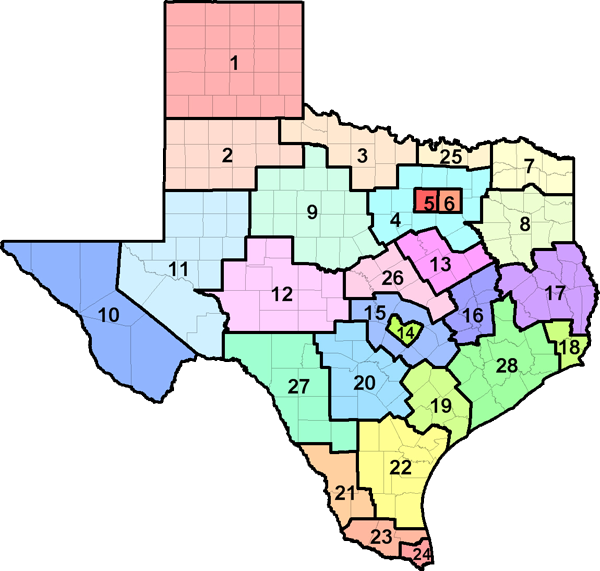
TEXAS COUNTY MAP BY WORKFORCE DEVELOPMENT AREA
* Due to confidentiality rules, not all regions may have the data displayed. The sum of all the regions may not be equal to the state total.


Top 10 Relevant Knowledge Areas Relevant Importance Levels
Administration and Management
Knowledge of business and management principles involved in strategic planning, resource allocation, human resources modeling, leadership technique, production methods, and coordination of people and resources.
82.00%
English Language
Knowledge of the structure and content of the English language including the meaning and spelling of words, rules of composition, and grammar.
76.40%
Building and Construction
Knowledge of materials, methods, and the tools involved in the construction or repair of houses, buildings, or other structures such as highways and roads.
75.40%
Engineering and Technology
Knowledge of the practical application of engineering science and technology. This includes applying principles, techniques, procedures, and equipment to the design and production of various goods and services.
73.40%
Economics and Accounting
Knowledge of economic and accounting principles and practices, the financial markets, banking, and the analysis and reporting of financial data.
67.80%
Customer and Personal Service
Knowledge of principles and processes for providing customer and personal services. This includes customer needs assessment, meeting quality standards for services, and evaluation of customer satisfaction.
66.80%
Design
Knowledge of design techniques, tools, and principles involved in production of precision technical plans, blueprints, drawings, and models.
66.60%
Mathematics
Knowledge of arithmetic, algebra, geometry, calculus, statistics, and their applications.
66.40%
Computers and Electronics
Knowledge of circuit boards, processors, chips, electronic equipment, and computer hardware and software, including applications and programming.
60.80%
Mechanical
Knowledge of machines and tools, including their designs, uses, repair, and maintenance.
60.00%


Top 10 Relevant Skill Areas Relevant Importance Levels
Critical Thinking
Using logic and reasoning to identify the strengths and weaknesses of alternative solutions, conclusions, or approaches to problems.
80.00%
Reading Comprehension
Understanding written sentences and paragraphs in work-related documents.
77.60%
Writing
Communicating effectively in writing as appropriate for the needs of the audience.
77.60%
Speaking
Talking to others to convey information effectively.
77.60%
Active Listening
Giving full attention to what other people are saying, taking time to understand the points being made, asking questions as appropriate, and not interrupting at inappropriate times.
75.00%
Coordination
Adjusting actions in relation to others' actions.
72.40%
Judgment and Decision Making
Considering the relative costs and benefits of potential actions to choose the most appropriate one.
72.40%
Monitoring
Monitoring/Assessing performance of yourself, other individuals, or organizations to make improvements or take corrective action.
70.00%
Social Perceptiveness
Being aware of others' reactions and understanding why they react as they do.
70.00%
Complex Problem Solving
Identifying complex problems and reviewing related information to develop and evaluate options and implement solutions.
67.60%


Top 10 Relevant Abilities Relevant Importance Levels
Deductive Reasoning
The ability to apply general rules to specific problems to produce answers that make sense.
80.00%
Inductive Reasoning
The ability to combine pieces of information to form general rules or conclusions (includes finding a relationship among seemingly unrelated events).
80.00%
Oral Comprehension
The ability to listen to and understand information and ideas presented through spoken words and sentences.
80.00%
Written Comprehension
The ability to read and understand information and ideas presented in writing.
80.00%
Oral Expression
The ability to communicate information and ideas in speaking so others will understand.
77.60%
Written Expression
The ability to communicate information and ideas in writing so others will understand.
77.60%
Problem Sensitivity
The ability to tell when something is wrong or is likely to go wrong. It does not involve solving the problem, only recognizing that there is a problem.
77.60%
Speech Recognition
The ability to identify and understand the speech of another person.
77.60%
Speech Clarity
The ability to speak clearly so others can understand you.
77.60%
Near Vision
The ability to see details at close range (within a few feet of the observer).
75.00%


  • Communicating with People Outside the Organization
    -- Communicating with people outside the organization, representing the organization to customers, the public, government, and other external sources. This information can be exchanged in person, in writing, or by telephone or e-mail.
  • Making Decisions and Solving Problems
    -- Analyzing information and evaluating results to choose the best solution and solve problems.
  • Communicating with Supervisors, Peers, or Subordinates
    -- Providing information to supervisors, co-workers, and subordinates by telephone, in written form, e-mail, or in person.
  • Evaluating Information to Determine Compliance with Standards
    -- Using relevant information and individual judgment to determine whether events or processes comply with laws, regulations, or standards.
  • Organizing, Planning, and Prioritizing Work
    -- Developing specific goals and plans to prioritize, organize, and accomplish your work.
Other Activities


  • Achievement
    - Occupations that satisfy this work value are results oriented and allow employees to use their strongest abilities, giving them a feeling of accomplishment. Corresponding needs are Ability Utilization and Achievement.
  • Independence
    - Occupations that satisfy this work value allow employees to work on their own and make decisions. Corresponding needs are Creativity, Responsibility and Autonomy.


Tools

Anemometers: Recording anemometers; Propeller anemometers; Cup anemometers;

Barometers: Barometric pressure sensors;

Desktop computers: Desktop computers;

Digital camcorders or video cameras: Digital video cameras;

Digital cameras: Digital still cameras;

Global positioning system GPS receiver: Handheld global positioning system GPS units;

Notebook computers: Laptop computers;

Personal computers: Personal computers;

Portable data input terminals: Dataloggers;

Soil core sampling apparatus: Soil samplers;

Solar radiation surface observing apparatus: Pyranometers;

Temperature transmitters: Electronic temperature sensors;

Weather stations: Portable meteorological stations;

Wind surface observing apparatus: Wind vanes;


Technology

Computer aided design CAD software: Autodesk AutoCAD;

Electronic mail software: Microsoft Outlook;

Enterprise resource planning ERP software: SAP software;

Geographic information system: ESRI ArcGIS software;

Internet browser software: Web browser software;

Office suite software: Microsoft Office software;

Presentation software: Microsoft PowerPoint;

Process mapping and design software: Microsoft Visio;

Project management software: Oracle Primavera Systems; Microsoft Project;

Spreadsheet software: Microsoft Excel;

Video conferencing software: Web conferencing software;

Word processing software: Microsoft Word;


Related O*NET occupational titles for Wind Energy Development Managers include:
  • 11-9021.00 Construction Managers
  • 17-2199.03 Energy Engineers, Except Wind and Solar
  • 11-3051.02 Geothermal Production Managers
  • 11-3051.06 Hydroelectric Production Managers
  • 47-1011.03 Solar Energy Installation Managers
  • 17-2199.11 Solar Energy Systems Engineers
  • 13-1199.05 Sustainability Specialists
  • 17-2199.10 Wind Energy Engineers
  • 11-9199.09 Wind Energy Operations Managers
  • 49-9081.00 Wind Turbine Service Technicians


No sources of additional information found.

Contact Texas Workforce Commission
Labor Market and Career Information  |  101 E. 15th Street, Annex Room 0252  |  Austin, Texas 78778
Official Website  |  1-800-822-PLAN (7526)  |  512.936.3200

** The information in this report may be derived from many sources like O*NET, BLS (Bureau of Labor Statistics), OOH (Occupational Outlook Handbook), and Career One Stop.