Occupation Summary

Claims Adjusters, Examiners, and Investigators

O*NET 13-1031.00

Description:

Review settled claims to determine that payments and settlements are made in accordance with company practices and procedures. Confer with legal counsel on claims requiring litigation. May also settle insurance claims.

Annual Wages:
$79,564.00
Employment Rate:
Employment is expected to increase by 5.28%.
Education Level:
Bachelor's Degree. According to O*Net, the majority of people employed in this occupation have this level of education.
Endorsement:
Business and Industry

  1. Examine claims forms and other records to determine insurance coverage.
  2. Analyze information gathered by investigation and report findings and recommendations.
  3. Review police reports, medical treatment records, medical bills, or physical property damage to determine the extent of liability.
  4. Investigate and assess damage to property and create or review property damage estimates.
  5. Interview or correspond with agents and claimants to correct errors or omissions and to investigate questionable claims.
  6. Interview or correspond with claimants, witnesses, police, physicians, or other relevant parties to determine claim settlement, denial, or review.
  7. Investigate, evaluate, and settle claims, applying technical knowledge and human relations skills to effect fair and prompt disposal of cases and to contribute to a reduced loss ratio.
  8. Adjust reserves or provide reserve recommendations to ensure that reserve activities are consistent with corporate policies.
  9. Resolve complex, severe exposure claims, using high service oriented file handling.
  10. Pay and process claims within designated authority level.
  11. Examine claims investigated by insurance adjusters, further investigating questionable claims to determine whether to authorize payments.
  12. Verify and analyze data used in settling claims to ensure that claims are valid and that settlements are made according to company practices and procedures.
  13. Enter claim payments, reserves and new claims on computer system, inputting concise yet sufficient file documentation.
  14. Refer questionable claims to investigator or claims adjuster for investigation or settlement.
  15. Collect evidence to support contested claims in court.
  16. Confer with legal counsel on claims requiring litigation.
  17. Contact or interview claimants, doctors, medical specialists, or employers to get additional information.
  18. Maintain claim files, such as records of settled claims and an inventory of claims requiring detailed analysis.
  19. Present cases and participate in their discussion at claim committee meetings.
  20. Supervise claims adjusters to ensure that adjusters have followed proper methods.
  21. Conduct detailed bill reviews to implement sound litigation management and expense control.
  22. Examine titles to property to determine validity and act as company agent in transactions with property owners.
  23. Report overpayments, underpayments, and other irregularities.
  24. Communicate with reinsurance brokers to obtain information necessary for processing claims.
  25. Prepare reports to be submitted to company's data processing department.
  26. Obtain credit information from banks and other credit services.
  27. Attend mediations or trials.
  28. Communicate with former associates to verify employment record or to obtain background information regarding persons or businesses applying for credit.
  29. Negotiate claim settlements or recommend litigation when settlement cannot be negotiated.


National Industry Employment Patterns


Industry % of Claims Adjusters, Examiners, and Investigators employed Annual Growth Rate
Insurance carriers 45.2 -0.41
Agencies, brokerages, and other insurance related activities 28.4 0.30


Labor Market Information


2025 Statewide average hourly wage $38.25
2025 National average hourly wage $38.69
2022 National employment 329,000
2022 Texas employment 23,312
Texas projected employment by 2032 24,544
Texas projected annual employment and Turnover openings through 2032 1,721


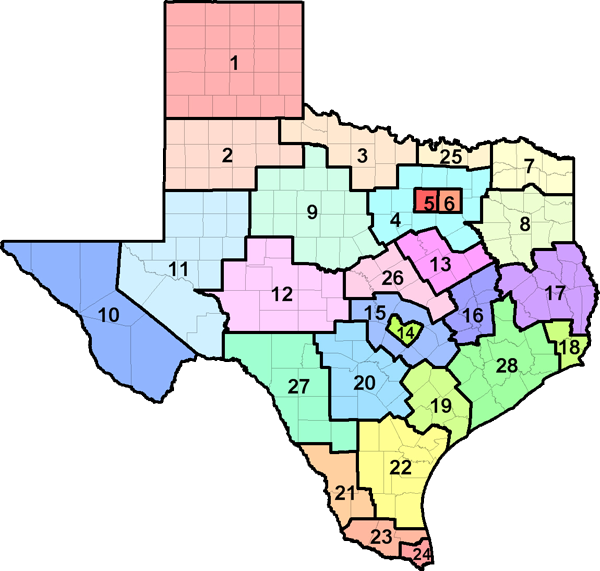
TEXAS COUNTY MAP BY WORKFORCE DEVELOPMENT AREA
* Due to confidentiality rules, not all regions may have the data displayed. The sum of all the regions may not be equal to the state total.


Top 10 Relevant Knowledge Areas Relevant Importance Levels
Customer and Personal Service
Knowledge of principles and processes for providing customer and personal services. This includes customer needs assessment, meeting quality standards for services, and evaluation of customer satisfaction.
94.00%
English Language
Knowledge of the structure and content of the English language including the meaning and spelling of words, rules of composition, and grammar.
88.40%
Administrative
Knowledge of administrative and office procedures and systems such as word processing, managing files and records, stenography and transcription, designing forms, and workplace terminology.
76.40%
Mathematics
Knowledge of arithmetic, algebra, geometry, calculus, statistics, and their applications.
73.20%
Computers and Electronics
Knowledge of circuit boards, processors, chips, electronic equipment, and computer hardware and software, including applications and programming.
68.60%
Law and Government
Knowledge of laws, legal codes, court procedures, precedents, government regulations, executive orders, agency rules, and the democratic political process.
66.20%
Administration and Management
Knowledge of business and management principles involved in strategic planning, resource allocation, human resources modeling, leadership technique, production methods, and coordination of people and resources.
61.60%
Economics and Accounting
Knowledge of economic and accounting principles and practices, the financial markets, banking, and the analysis and reporting of financial data.
60.80%
Education and Training
Knowledge of principles and methods for curriculum and training design, teaching and instruction for individuals and groups, and the measurement of training effects.
58.20%
Psychology
Knowledge of human behavior and performance; individual differences in ability, personality, and interests; learning and motivation; psychological research methods; and the assessment and treatment of behavioral and affective disorders.
57.60%


Top 10 Relevant Skill Areas Relevant Importance Levels
Reading Comprehension
Understanding written sentences and paragraphs in work-related documents.
82.40%
Active Listening
Giving full attention to what other people are saying, taking time to understand the points being made, asking questions as appropriate, and not interrupting at inappropriate times.
80.00%
Critical Thinking
Using logic and reasoning to identify the strengths and weaknesses of alternative solutions, conclusions, or approaches to problems.
80.00%
Speaking
Talking to others to convey information effectively.
77.60%
Judgment and Decision Making
Considering the relative costs and benefits of potential actions to choose the most appropriate one.
75.00%
Writing
Communicating effectively in writing as appropriate for the needs of the audience.
72.40%
Complex Problem Solving
Identifying complex problems and reviewing related information to develop and evaluate options and implement solutions.
70.00%
Monitoring
Monitoring/Assessing performance of yourself, other individuals, or organizations to make improvements or take corrective action.
67.60%
Social Perceptiveness
Being aware of others' reactions and understanding why they react as they do.
67.60%
Coordination
Adjusting actions in relation to others' actions.
65.00%


Top 10 Relevant Abilities Relevant Importance Levels
Written Comprehension
The ability to read and understand information and ideas presented in writing.
87.60%
Oral Expression
The ability to communicate information and ideas in speaking so others will understand.
82.40%
Oral Comprehension
The ability to listen to and understand information and ideas presented through spoken words and sentences.
82.40%
Deductive Reasoning
The ability to apply general rules to specific problems to produce answers that make sense.
80.00%
Inductive Reasoning
The ability to combine pieces of information to form general rules or conclusions (includes finding a relationship among seemingly unrelated events).
80.00%
Written Expression
The ability to communicate information and ideas in writing so others will understand.
77.60%
Near Vision
The ability to see details at close range (within a few feet of the observer).
77.60%
Problem Sensitivity
The ability to tell when something is wrong or is likely to go wrong. It does not involve solving the problem, only recognizing that there is a problem.
72.40%
Speech Clarity
The ability to speak clearly so others can understand you.
72.40%
Speech Recognition
The ability to identify and understand the speech of another person.
70.00%


  • Working with Computers
    -- Using computers and computer systems (including hardware and software) to program, write software, set up functions, enter data, or process information.
  • Communicating with People Outside the Organization
    -- Communicating with people outside the organization, representing the organization to customers, the public, government, and other external sources. This information can be exchanged in person, in writing, or by telephone or e-mail.
  • Getting Information
    -- Observing, receiving, and otherwise obtaining information from all relevant sources.
  • Identifying Objects, Actions, and Events
    -- Identifying information by categorizing, estimating, recognizing differences or similarities, and detecting changes in circumstances or events.
  • Making Decisions and Solving Problems
    -- Analyzing information and evaluating results to choose the best solution and solve problems.
Other Activities


  • Independence
    - Occupations that satisfy this work value allow employees to work on their own and make decisions. Corresponding needs are Creativity, Responsibility and Autonomy.
  • Support
    - Occupations that satisfy this work value offer supportive management that stands behind employees. Corresponding needs are Company Policies, Supervision: Human Relations and Supervision: Technical.


Tools

Automotive computer systems: Event data recorders;

Desktop computers: Desktop computers;

Measuring wheels for distance: Measure markers;

Notebook computers: Notebook computers;

Personal computers: Personal computers;

Personal digital assistant PDAs or organizers: Personal digital assistants PDA;

Portable data input terminals: Mobile wireless handheld communication devices; Data collectors; Field computers; Handheld computers;

Scanners: Scanners;

Tablet computers: Tablet computers;

Theodolites: Total stations;


Technology

Access software: CCC EZNet electronic communications network; CSC Automated Work Distributor AWD;

Analytical or scientific software: Injury Sciences EDR InSight; Insurance claims fraud detection software; Magnify Predictive Targeting System;

Computer aided design CAD software: MapScenes Evidence Recorder; MapScenes Pro; PhotoModeler; Visual Statement Investigator Suite; 4n6xprt Systems StiffCalcs; ARSoftware WinSMAC; CAD Zone Insurance;

Data base reporting software: Corporate Systems ClaimsPro;

Data base user interface and query software: Claims processing administration and management software; Xactware Xactimate; Tropics Claims Reserve Management; Microsoft Access; Fair Isaac Claims Advisor;

Desktop publishing software: Microsoft Publisher;

Document management software: Hyland OnBase Enterprise Content Management; InSystems Calligo Document Management System; Clear Technology Tranzax; Covansys ClaimConnect; Datanex ClaimTrac; Document management system software; CCC Pathways Image Management Solution; CCC TL2000 Solution; CGI INSideOUT; Captiva InputAccel; Castek Insure3 Claims; BCCORP Burkitt W5; BCCORP W5 for Adjusters; Bramerhill ClaimsTech; Bridium Claims 3; Brightwork Alyce Claims Systems; AutoClaims Direct DirectLink; Automatic Data Processing Autosource; Automatic Data Processing Claims Manager & Dispatch; Agency Management Systems AMS 360;

Electronic mail software: Microsoft Outlook;

Enterprise resource planning ERP software: ADP software; CCC Pathways Appraisal Quality Solution;

Expert system software: Axonwave Fraud and Abuse Management System; CCC GuidePost Decision Support; Bill review software; ISO ClaimSearch; ISO NetMap for Claims; LexisNexis RiskWise; IBM Fraud and Abuse Management System; CSC Fault Evaluator; Hummingbird Legal Bill Review; Fair Isaac SmartAdvisor; First Notice Systems ClaimCapture; StrataCare StrataWare eReview;

Financial analysis software: Turtle Creek Software Goldenseal Architect; Property damage, bodily injury, and liability estimation software; QwikQuote software; Simsol for Adjusters; Automatic Data Processing Estimating; CSC Colossus;

Information retrieval or search software: CGI-AMS BureauLink Enterprise;

Interactive voice response software: Computerized voice stress analyzer CVSA software;

Internet browser software: Apple Safari; Mozilla Firefox;

Medical software: Healthcare common procedure coding system HCPCS; Medical condition coding software; Medical procedure coding software;

Office suite software: Microsoft Office software; Business software applications;

Presentation software: Microsoft PowerPoint;

Spreadsheet software: Microsoft Excel;

Video conferencing software: Zoom;

Word processing software: Microsoft Word;


Related O*NET occupational titles for Claims Adjusters, Examiners, and Investigators include:
  • 13-2023.00 Appraisers and Assessors of Real Estate
  • 13-1141.00 Compensation, Benefits, and Job Analysis Specialists
  • 43-4041.00 Credit Authorizers, Checkers, and Clerks
  • 43-4051.00 Customer Service Representatives
  • 43-4061.00 Eligibility Interviewers, Government Programs
  • 13-2099.04 Fraud Examiners, Investigators and Analysts
  • 43-9041.00 Insurance Claims and Policy Processing Clerks
  • 41-3021.00 Insurance Sales Agents
  • 13-2053.00 Insurance Underwriters
  • 13-2081.00 Tax Examiners and Collectors, and Revenue Agents


Sources of Additional Information
  • For more information about education and credentials for insurance-related occupations, visit: The Institutes
  • International Claim Association
  • National Association of Public Insurance Adjusters
  • For more information about state licensing requirements, check with your state insurance agency or visit: National Insurance Producer Registry (NIPR)
  • Claims Adjusters, Examiners, and Investigators
  • Insurance Appraisers, Auto Damage

  • Contact Texas Workforce Commission
    Labor Market and Career Information  |  101 E. 15th Street, Annex Room 0252  |  Austin, Texas 78778
    Official Website  |  1-800-822-PLAN (7526)  |  512.936.3200

    ** The information in this report may be derived from many sources like O*NET, BLS (Bureau of Labor Statistics), OOH (Occupational Outlook Handbook), and Career One Stop.