Occupation Summary

Equal Opportunity Representatives and Officers

O*NET 13-1041.03

Description:

Monitor and evaluate compliance with equal opportunity laws, guidelines, and policies to ensure that employment practices and contracting arrangements give equal opportunity without regard to race, religion, color, national origin, sex, age, or disability.

Annual Wages:
$78,542.00
Employment Rate:
Employment is expected to increase by 14.68%.
Education Level:
Bachelor's Degree. According to O*Net, the majority of people employed in this occupation have this level of education.
Endorsement:
Public Service

  1. Investigate employment practices or alleged violations of laws to document and correct discriminatory factors.
  2. Interpret civil rights laws and equal opportunity regulations for individuals or employers.
  3. Study equal opportunity complaints to clarify issues.
  4. Coordinate, monitor, or revise complaint procedures to ensure timely processing and review of complaints.
  5. Prepare reports of selection, survey, or other statistics and recommendations for corrective action.
  6. Conduct surveys and evaluate findings to determine if systematic discrimination exists.
  7. Review company contracts to determine actions required to meet governmental equal opportunity provisions.
  8. Counsel newly hired members of minority or disadvantaged groups, informing them about details of civil rights laws.
  9. Provide information, technical assistance, or training to supervisors, managers, or employees on topics such as employee supervision, hiring, grievance procedures, or staff development.
  10. Verify that all job descriptions are submitted for review and approval and that descriptions meet regulatory standards.
  11. Consult with community representatives to develop technical assistance agreements in accordance with governmental regulations.
  12. Meet with job search committees or coordinators to explain the role of the equal opportunity coordinator, to provide resources for advertising, or to explain expectations for future contacts.
  13. Participate in the recruitment of employees through job fairs, career days, or advertising plans.
  14. Prepare reports related to investigations of equal opportunity complaints.
  15. Interview persons involved in equal opportunity complaints to verify case information.
  16. Meet with persons involved in equal opportunity complaints to arbitrate and settle disputes.
  17. Develop guidelines for nondiscriminatory employment practices.
  18. Monitor the implementation and impact of guidelines for nondiscriminatory employment practices.


National Industry Employment Patterns


Industry % of Equal Opportunity Representatives and Officers employed Annual Growth Rate
Insurance carriers 4.1 0.63
Management, scientific, and technical consulting services 3.3 1.08
Employment services 2.3 0.23
Colleges, universities, and professional schools 2.3 0.34
General medical and surgical hospitals 2.1 0.37
Agencies, brokerages, and other insurance related activities 2.1 1.41


Labor Market Information


2024 Statewide average hourly wage $37.76
2024 National average hourly wage $40.86
2022 National employment 377,500
2022 Texas employment 33,838
Texas projected employment by 2032 38,804
Texas projected annual employment and Turnover openings through 2032 3,250


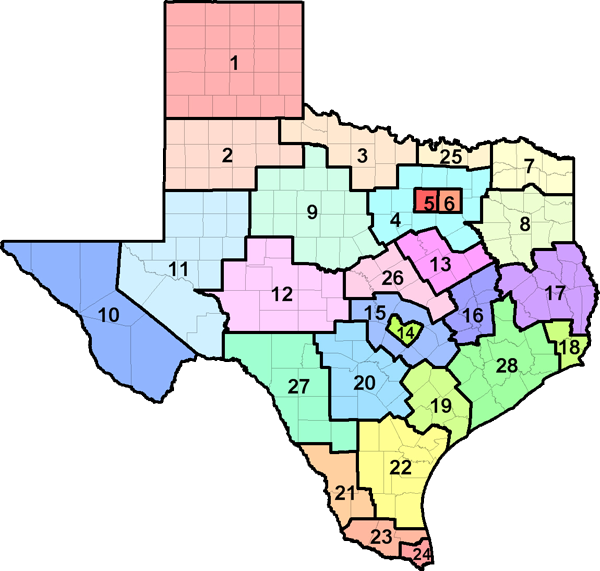
TEXAS COUNTY MAP BY WORKFORCE DEVELOPMENT AREA
* Due to confidentiality rules, not all regions may have the data displayed. The sum of all the regions may not be equal to the state total.


Top 10 Relevant Knowledge Areas Relevant Importance Levels
Law and Government
Knowledge of laws, legal codes, court procedures, precedents, government regulations, executive orders, agency rules, and the democratic political process.
88.60%
English Language
Knowledge of the structure and content of the English language including the meaning and spelling of words, rules of composition, and grammar.
79.40%
Personnel and Human Resources
Knowledge of principles and procedures for personnel recruitment, selection, training, compensation and benefits, labor relations and negotiation, and personnel information systems.
78.40%
Customer and Personal Service
Knowledge of principles and processes for providing customer and personal services. This includes customer needs assessment, meeting quality standards for services, and evaluation of customer satisfaction.
75.60%
Sociology and Anthropology
Knowledge of group behavior and dynamics, societal trends and influences, human migrations, ethnicity, cultures, and their history and origins.
68.00%
Administration and Management
Knowledge of business and management principles involved in strategic planning, resource allocation, human resources modeling, leadership technique, production methods, and coordination of people and resources.
65.80%
Administrative
Knowledge of administrative and office procedures and systems such as word processing, managing files and records, stenography and transcription, designing forms, and workplace terminology.
63.80%
Education and Training
Knowledge of principles and methods for curriculum and training design, teaching and instruction for individuals and groups, and the measurement of training effects.
60.20%
Psychology
Knowledge of human behavior and performance; individual differences in ability, personality, and interests; learning and motivation; psychological research methods; and the assessment and treatment of behavioral and affective disorders.
57.40%
Computers and Electronics
Knowledge of circuit boards, processors, chips, electronic equipment, and computer hardware and software, including applications and programming.
55.60%


Top 10 Relevant Skill Areas Relevant Importance Levels
Active Listening
Giving full attention to what other people are saying, taking time to understand the points being made, asking questions as appropriate, and not interrupting at inappropriate times.
85.00%
Reading Comprehension
Understanding written sentences and paragraphs in work-related documents.
82.40%
Critical Thinking
Using logic and reasoning to identify the strengths and weaknesses of alternative solutions, conclusions, or approaches to problems.
80.00%
Speaking
Talking to others to convey information effectively.
80.00%
Social Perceptiveness
Being aware of others' reactions and understanding why they react as they do.
80.00%
Writing
Communicating effectively in writing as appropriate for the needs of the audience.
77.60%
Active Learning
Understanding the implications of new information for both current and future problem-solving and decision-making.
75.00%
Complex Problem Solving
Identifying complex problems and reviewing related information to develop and evaluate options and implement solutions.
75.00%
Judgment and Decision Making
Considering the relative costs and benefits of potential actions to choose the most appropriate one.
72.40%
Monitoring
Monitoring/Assessing performance of yourself, other individuals, or organizations to make improvements or take corrective action.
67.60%


Top 10 Relevant Abilities Relevant Importance Levels
Written Comprehension
The ability to read and understand information and ideas presented in writing.
87.60%
Oral Comprehension
The ability to listen to and understand information and ideas presented through spoken words and sentences.
85.00%
Problem Sensitivity
The ability to tell when something is wrong or is likely to go wrong. It does not involve solving the problem, only recognizing that there is a problem.
82.40%
Oral Expression
The ability to communicate information and ideas in speaking so others will understand.
82.40%
Written Expression
The ability to communicate information and ideas in writing so others will understand.
82.40%
Inductive Reasoning
The ability to combine pieces of information to form general rules or conclusions (includes finding a relationship among seemingly unrelated events).
82.40%
Deductive Reasoning
The ability to apply general rules to specific problems to produce answers that make sense.
80.00%
Speech Recognition
The ability to identify and understand the speech of another person.
80.00%
Speech Clarity
The ability to speak clearly so others can understand you.
77.60%
Near Vision
The ability to see details at close range (within a few feet of the observer).
75.00%


  • Evaluating Information to Determine Compliance with Standards
    -- Using relevant information and individual judgment to determine whether events or processes comply with laws, regulations, or standards.
  • Identifying Objects, Actions, and Events
    -- Identifying information by categorizing, estimating, recognizing differences or similarities, and detecting changes in circumstances or events.
  • Communicating with Supervisors, Peers, or Subordinates
    -- Providing information to supervisors, co-workers, and subordinates by telephone, in written form, e-mail, or in person.
  • Resolving Conflicts and Negotiating with Others
    -- Handling complaints, settling disputes, and resolving grievances and conflicts, or otherwise negotiating with others.
  • Analyzing Data or Information
    -- Identifying the underlying principles, reasons, or facts of information by breaking down information or data into separate parts.
Other Activities


  • Achievement
    - Occupations that satisfy this work value are results oriented and allow employees to use their strongest abilities, giving them a feeling of accomplishment. Corresponding needs are Ability Utilization and Achievement.
  • Relationships
    - Occupations that satisfy this work value allow employees to provide service to others and work with co-workers in a friendly non-competitive environment. Corresponding needs are Co-workers, Moral Values and Social Service.


Tools

Desktop calculator: 10-key calculators;

Desktop computers: Desktop computers;

Notebook computers: Laptop computers;

Personal computers: Personal computers;

Personal digital assistant PDAs or organizers: Personal digital assistants PDA;

Special purpose telephones: Multi-line telephone systems;


Technology

Analytical or scientific software: Equitas EEOStat; Peopleclick PayStat;

Cloud-based data access and sharing software: Microsoft SharePoint;

Compliance software: Bashen EEOFedSoft; Bashen EEOSoft; Equal employment opportunity EEO compliance software;

Data base user interface and query software: Database software; Microsoft Access;

Electronic mail software: Microsoft Outlook;

Human resources software: EEO Made Simple AAPMaker; EEO Made Simple AppTrac; Gerstco AAPBase; Bashen LinkLine; Berkshire Associates BALANCEaap; Biddle Adverse Impact Toolkit; Biddle AutoAAP; Yocum & McKee The Complete AAP; Speediware SpeedEEO; Peopleclick AAPlanner; Peopleclick CAAMS; Peopleclick Monitor;

Office suite software: Corel WordPerfect Office Suite; Microsoft Office software;

Operating system software: Microsoft operating system;

Presentation software: Microsoft PowerPoint;

Spreadsheet software: Microsoft Excel; IBM Lotus 1-2-3;

Word processing software: Microsoft Word; Word processing software;


Related O*NET occupational titles for Equal Opportunity Representatives and Officers include:
  • 23-1022.00 Arbitrators, Mediators, and Conciliators
  • 13-1141.00 Compensation, Benefits, and Job Analysis Specialists
  • 11-9199.02 Compliance Managers
  • 13-1041.00 Compliance Officers
  • 43-4061.00 Eligibility Interviewers, Government Programs
  • 43-4161.00 Human Resources Assistants, Except Payroll and Timekeeping
  • 11-3121.00 Human Resources Managers
  • 13-1071.00 Human Resources Specialists
  • 13-1075.00 Labor Relations Specialists
  • 13-1041.07 Regulatory Affairs Specialists


Sources of Additional Information
  • For more information about compliance careers in federal, state, or local government, contact the appropriate government agency.
  • For more information about corporate compliance jobs, visit: Society of Corporate Compliance and Ethics
  • CareerOneStop

  • For career videos on compliance officers, visit: Compliance Officers
  • Equal Opportunity Representatives and Officers
  • Government Property Inspectors and Investigators
  • Compliance Officers
  • Coroners
  • Customs Brokers
  • Environmental Compliance Inspectors
  • Equal Opportunity Representatives and Officers
  • Government Property Inspectors and Investigators
  • Regulatory Affairs Specialists

  • Contact Texas Workforce Commission
    Labor Market and Career Information  |  101 E. 15th Street, Annex Room 0252  |  Austin, Texas 78778
    Official Website  |  1-800-822-PLAN (7526)  |  512.936.3200

    ** The information in this report may be derived from many sources like O*NET, BLS (Bureau of Labor Statistics), OOH (Occupational Outlook Handbook), and Career One Stop.