Occupation Summary

Regulatory Affairs Specialists

O*NET 13-1041.07

Description:

Coordinate and document internal regulatory processes, such as internal audits, inspections, license renewals, or registrations. May compile and prepare materials for submission to regulatory agencies.

Annual Wages:
$78,542.00
Employment Rate:
Employment is expected to increase by 14.68%.
Education Level:
Bachelor's Degree. According to O*Net, the majority of people employed in this occupation have this level of education.
Endorsement:
Public Service

  1. Communicate with regulatory agencies regarding pre-submission strategies, potential regulatory pathways, compliance test requirements, or clarification and follow-up of submissions under review.
  2. Coordinate, prepare, or review regulatory submissions for domestic or international projects.
  3. Interpret regulatory rules or rule changes and ensure that they are communicated through corporate policies and procedures.
  4. Provide technical review of data or reports to be incorporated into regulatory submissions to assure scientific rigor, accuracy, and clarity of presentation.
  5. Review product promotional materials, labeling, batch records, specification sheets, or test methods for compliance with applicable regulations and policies.
  6. Advise project teams on subjects such as premarket regulatory requirements, export and labeling requirements, or clinical study compliance issues.
  7. Compile and maintain regulatory documentation databases or systems.
  8. Coordinate efforts associated with the preparation of regulatory documents or submissions.
  9. Determine the types of regulatory submissions or internal documentation that are required in situations such as proposed device changes or labeling changes.
  10. Develop or conduct employee regulatory training.
  11. Maintain current knowledge base of existing and emerging regulations, standards, or guidance documents.
  12. Obtain and distribute updated information regarding domestic or international laws, guidelines, or standards.
  13. Participate in internal or external audits.
  14. Prepare or direct the preparation of additional information or responses as requested by regulatory agencies.
  15. Prepare or maintain technical files as necessary to obtain and sustain product approval.
  16. Recommend changes to company procedures in response to changes in regulations or standards.
  17. Prepare responses to customer requests for information, such as product data, written regulatory affairs statements, surveys, or questionnaires.
  18. Review clinical protocols to ensure collection of data needed for regulatory submissions.
  19. Write or update standard operating procedures, work instructions, or policies.
  20. Coordinate recall or market withdrawal activities as necessary.
  21. Develop or track quality metrics.
  22. Direct the collection and preparation of laboratory samples as requested by regulatory agencies.
  23. Review adverse drug reactions and file all related reports in accordance with regulatory agency guidelines.
  24. Determine regulations or procedures related to the management, collection, reuse, recovery, or recycling of packaging waste.
  25. Determine requirements applying to treatment, storage, shipment, or disposal of potentially hazardous production-related waste.
  26. Determine the legal implications of the production, supply, or use of ozone-depleting substances or equipment containing such substances.
  27. Specialize in regulatory issues related to agriculture, such as the cultivation of green biotechnology crops or the post-market regulation of genetically altered crops.
  28. Identify relevant guidance documents, international standards, or consensus standards.
  29. Provide pre-, ongoing, and post-inspection follow-up assistance to governmental inspectors.
  30. Recommend adjudication of product complaints.


National Industry Employment Patterns


Industry % of Regulatory Affairs Specialists employed Annual Growth Rate
Insurance carriers 4.1 0.63
Management, scientific, and technical consulting services 3.3 1.08
Employment services 2.3 0.23
Colleges, universities, and professional schools 2.3 0.34
General medical and surgical hospitals 2.1 0.37
Agencies, brokerages, and other insurance related activities 2.1 1.41


Labor Market Information


2024 Statewide average hourly wage $37.76
2024 National average hourly wage $40.86
2022 National employment 377,500
2022 Texas employment 33,838
Texas projected employment by 2032 38,804
Texas projected annual employment and Turnover openings through 2032 3,250


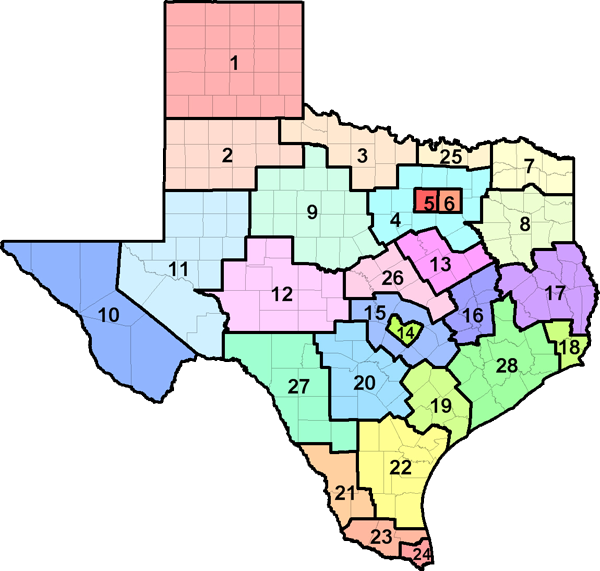
TEXAS COUNTY MAP BY WORKFORCE DEVELOPMENT AREA
* Due to confidentiality rules, not all regions may have the data displayed. The sum of all the regions may not be equal to the state total.


Top 10 Relevant Knowledge Areas Relevant Importance Levels
English Language
Knowledge of the structure and content of the English language including the meaning and spelling of words, rules of composition, and grammar.
90.00%
Law and Government
Knowledge of laws, legal codes, court procedures, precedents, government regulations, executive orders, agency rules, and the democratic political process.
82.00%
Biology
Knowledge of plant and animal organisms, their tissues, cells, functions, interdependencies, and interactions with each other and the environment.
69.00%
Computers and Electronics
Knowledge of circuit boards, processors, chips, electronic equipment, and computer hardware and software, including applications and programming.
68.00%
Administration and Management
Knowledge of business and management principles involved in strategic planning, resource allocation, human resources modeling, leadership technique, production methods, and coordination of people and resources.
67.40%
Administrative
Knowledge of administrative and office procedures and systems such as word processing, managing files and records, stenography and transcription, designing forms, and workplace terminology.
63.40%
Chemistry
Knowledge of the chemical composition, structure, and properties of substances and of the chemical processes and transformations that they undergo. This includes uses of chemicals and their interactions, danger signs, production techniques, and disposal methods.
55.80%
Medicine and Dentistry
Knowledge of the information and techniques needed to diagnose and treat human injuries, diseases, and deformities. This includes symptoms, treatment alternatives, drug properties and interactions, and preventive health-care measures.
55.80%
Communications and Media
Knowledge of media production, communication, and dissemination techniques and methods. This includes alternative ways to inform and entertain via written, oral, and visual media.
53.00%
Education and Training
Knowledge of principles and methods for curriculum and training design, teaching and instruction for individuals and groups, and the measurement of training effects.
52.00%


Top 10 Relevant Skill Areas Relevant Importance Levels
Active Listening
Giving full attention to what other people are saying, taking time to understand the points being made, asking questions as appropriate, and not interrupting at inappropriate times.
80.00%
Writing
Communicating effectively in writing as appropriate for the needs of the audience.
80.00%
Speaking
Talking to others to convey information effectively.
80.00%
Critical Thinking
Using logic and reasoning to identify the strengths and weaknesses of alternative solutions, conclusions, or approaches to problems.
77.60%
Reading Comprehension
Understanding written sentences and paragraphs in work-related documents.
77.60%
Judgment and Decision Making
Considering the relative costs and benefits of potential actions to choose the most appropriate one.
77.60%
Systems Analysis
Determining how a system should work and how changes in conditions, operations, and the environment will affect outcomes.
75.00%
Complex Problem Solving
Identifying complex problems and reviewing related information to develop and evaluate options and implement solutions.
75.00%
Social Perceptiveness
Being aware of others' reactions and understanding why they react as they do.
67.60%
Time Management
Managing one's own time and the time of others.
67.60%


Top 10 Relevant Abilities Relevant Importance Levels
Written Comprehension
The ability to read and understand information and ideas presented in writing.
85.00%
Written Expression
The ability to communicate information and ideas in writing so others will understand.
82.40%
Oral Expression
The ability to communicate information and ideas in speaking so others will understand.
80.00%
Oral Comprehension
The ability to listen to and understand information and ideas presented through spoken words and sentences.
80.00%
Speech Clarity
The ability to speak clearly so others can understand you.
77.60%
Problem Sensitivity
The ability to tell when something is wrong or is likely to go wrong. It does not involve solving the problem, only recognizing that there is a problem.
77.60%
Deductive Reasoning
The ability to apply general rules to specific problems to produce answers that make sense.
77.60%
Inductive Reasoning
The ability to combine pieces of information to form general rules or conclusions (includes finding a relationship among seemingly unrelated events).
77.60%
Speech Recognition
The ability to identify and understand the speech of another person.
75.00%
Information Ordering
The ability to arrange things or actions in a certain order or pattern according to a specific rule or set of rules (e.g., patterns of numbers, letters, words, pictures, mathematical operations).
72.40%


  • Evaluating Information to Determine Compliance with Standards
    -- Using relevant information and individual judgment to determine whether events or processes comply with laws, regulations, or standards.
  • Getting Information
    -- Observing, receiving, and otherwise obtaining information from all relevant sources.
  • Communicating with Supervisors, Peers, or Subordinates
    -- Providing information to supervisors, co-workers, and subordinates by telephone, in written form, e-mail, or in person.
  • Communicating with People Outside the Organization
    -- Communicating with people outside the organization, representing the organization to customers, the public, government, and other external sources. This information can be exchanged in person, in writing, or by telephone or e-mail.
  • Working with Computers
    -- Using computers and computer systems (including hardware and software) to program, write software, set up functions, enter data, or process information.
Other Activities


  • Independence
    - Occupations that satisfy this work value allow employees to work on their own and make decisions. Corresponding needs are Creativity, Responsibility and Autonomy.
  • Working Conditions
    - Occupations that satisfy this work value offer job security and good working conditions. Corresponding needs are Activity, Compensation, Independence, Security, Variety and Working Conditions.


Tools

Desktop computers: Desktop computers;

Laser fax machine: Laser facsimile machines;

Notebook computers: Laptop computers;

Personal computers: Personal computers;

Photocopiers: Photocopying equipment;

Scanners: Computer data input scanners;

Special purpose telephones: Multi-line telephone systems;


Technology

Accounting software: Fund accounting software; Tax software;

Analytical or scientific software: Statistical software; Analyse-it;

Business intelligence and data analysis software: MicroStrategy; Qlik Tech QlikView;

Cloud-based data access and sharing software: Microsoft SharePoint;

Data base management system software: Relational database management software;

Data base reporting software: DataVision;

Data base user interface and query software: FileMaker Pro; Microsoft Access; Microsoft SQL Server; Structured query language SQL; Yardi software;

Development environment software: Microsoft Visual Basic; Integrated development environment IDE software;

Document management software: Atrion Intelligent Authoring; Adobe Acrobat;

Electronic mail software: Microsoft Outlook;

Enterprise resource planning ERP software: Microsoft Dynamics; SAP software;

Human resources software: Human resource management software HRMS;

Information retrieval or search software: LexisNexis;

Internet browser software: Web browser software;

Medical software: Medical procedure coding software; Healthcare common procedure coding system HCPCS;

Office suite software: Microsoft Office software;

Presentation software: Microsoft PowerPoint;

Process mapping and design software: Microsoft Visio;

Project management software: Microsoft Project;

Spreadsheet software: Microsoft Excel;

Transaction security and virus protection software: McAfee; NortonLifeLock cybersecurity software;

Word processing software: Microsoft Word;


Related O*NET occupational titles for Regulatory Affairs Specialists include:
  • 11-9199.02 Compliance Managers
  • 13-1041.00 Compliance Officers
  • 13-1041.06 Coroners
  • 13-1041.08 Customs Brokers
  • 15-1299.03 Document Management Specialists
  • 13-1041.01 Environmental Compliance Inspectors
  • 13-1041.03 Equal Opportunity Representatives and Officers
  • 13-1041.04 Government Property Inspectors and Investigators
  • 11-3051.01 Quality Control Systems Managers
  • 11-9199.01 Regulatory Affairs Managers


Sources of Additional Information
  • For more information about compliance careers in federal, state, or local government, contact the appropriate government agency.
  • For more information about corporate compliance jobs, visit: Society of Corporate Compliance and Ethics
  • CareerOneStop

  • For career videos on compliance officers, visit: Compliance Officers
  • Equal Opportunity Representatives and Officers
  • Government Property Inspectors and Investigators
  • Compliance Officers
  • Coroners
  • Customs Brokers
  • Environmental Compliance Inspectors
  • Equal Opportunity Representatives and Officers
  • Government Property Inspectors and Investigators
  • Regulatory Affairs Specialists

  • Contact Texas Workforce Commission
    Labor Market and Career Information  |  101 E. 15th Street, Annex Room 0252  |  Austin, Texas 78778
    Official Website  |  1-800-822-PLAN (7526)  |  512.936.3200

    ** The information in this report may be derived from many sources like O*NET, BLS (Bureau of Labor Statistics), OOH (Occupational Outlook Handbook), and Career One Stop.