Occupation Summary

Logisticians

O*NET 13-1081.00

Description:

Analyze and coordinate the ongoing logistical functions of a firm or organization. Responsible for the entire life cycle of a product, including acquisition, distribution, internal allocation, delivery, and final disposal of resources.

Annual Wages:
$79,775.00
Employment Rate:
Employment is expected to increase by 36.23%.
Education Level:
Bachelor's Degree. According to O*Net, the majority of people employed in this occupation have this level of education.
Endorsement:
Business and Industry

  1. Maintain and develop positive business relationships with a customer's key personnel involved in, or directly relevant to, a logistics activity.
  2. Develop an understanding of customers' needs and take actions to ensure that such needs are met.
  3. Direct availability and allocation of materials, supplies, and finished products.
  4. Collaborate with other departments as necessary to meet customer requirements, to take advantage of sales opportunities or, in the case of shortages, to minimize negative impacts on a business.
  5. Protect and control proprietary materials.
  6. Review logistics performance with customers against targets, benchmarks, and service agreements.
  7. Develop and implement technical project management tools, such as plans, schedules, and responsibility and compliance matrices.
  8. Direct team activities, establishing task priorities, scheduling and tracking work assignments, providing guidance, and ensuring the availability of resources.
  9. Report project plans, progress, and results.
  10. Direct and support the compilation and analysis of technical source data necessary for product development.
  11. Explain proposed solutions to customers, management, or other interested parties through written proposals and oral presentations.
  12. Develop proposals that include documentation for estimates.
  13. Plan, organize, and execute logistics support activities, such as maintenance planning, repair analysis, and test equipment recommendations.
  14. Provide project management services, including the provision and analysis of technical data.
  15. Participate in the assessment and review of design alternatives and design change proposal impacts.
  16. Support the development of training materials and technical manuals.
  17. Stay informed of logistics technology advances and apply appropriate technology to improve logistics processes.
  18. Redesign the movement of goods to maximize value and minimize costs.
  19. Manage subcontractor activities, reviewing proposals, developing performance specifications, and serving as liaisons between subcontractors and organizations.
  20. Manage the logistical aspects of product life cycles, including coordination or provisioning of samples, and the minimization of obsolescence.
  21. Perform system lifecycle cost analysis and develop component studies.
  22. Perform managerial duties such as hiring and training employees and overseeing facility needs or requirements.

Watch a video about Logisticians

Career videos are provided by: CareerOneStop.org


National Industry Employment Patterns


Industry % of Logisticians employed Annual Growth Rate
Management, scientific, and technical consulting services 7.6 2.23
Aerospace product and parts manufacturing 3.8 1.63
Freight transportation arrangement 3.3 3.78
Computer systems design and related services 2.9 2.53
Architectural, engineering, and related services 2.8 1.58
Scientific research and development services 2.2 1.84


Labor Market Information


2024 Statewide average hourly wage $38.35
2024 National average hourly wage $42.12
2022 National employment 208,700
2022 Texas employment 16,651
Texas projected employment by 2032 22,683
Texas projected annual employment and Turnover openings through 2032 2,155


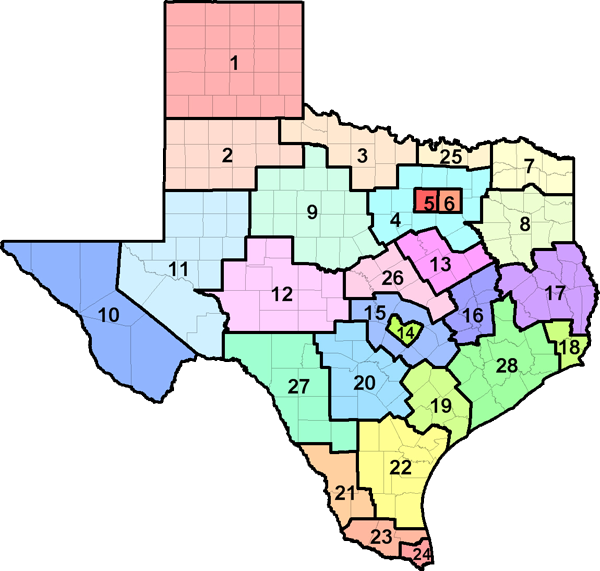
TEXAS COUNTY MAP BY WORKFORCE DEVELOPMENT AREA
* Due to confidentiality rules, not all regions may have the data displayed. The sum of all the regions may not be equal to the state total.


Top 10 Relevant Knowledge Areas Relevant Importance Levels
Transportation
Knowledge of principles and methods for moving people or goods by air, rail, sea, or road, including the relative costs and benefits.
95.00%
English Language
Knowledge of the structure and content of the English language including the meaning and spelling of words, rules of composition, and grammar.
80.00%
Administration and Management
Knowledge of business and management principles involved in strategic planning, resource allocation, human resources modeling, leadership technique, production methods, and coordination of people and resources.
79.20%
Customer and Personal Service
Knowledge of principles and processes for providing customer and personal services. This includes customer needs assessment, meeting quality standards for services, and evaluation of customer satisfaction.
78.40%
Mathematics
Knowledge of arithmetic, algebra, geometry, calculus, statistics, and their applications.
74.20%
Computers and Electronics
Knowledge of circuit boards, processors, chips, electronic equipment, and computer hardware and software, including applications and programming.
72.40%
Economics and Accounting
Knowledge of economic and accounting principles and practices, the financial markets, banking, and the analysis and reporting of financial data.
66.60%
Geography
Knowledge of principles and methods for describing the features of land, sea, and air masses, including their physical characteristics, locations, interrelationships, and distribution of plant, animal, and human life.
66.60%
Public Safety and Security
Knowledge of relevant equipment, policies, procedures, and strategies to promote effective local, state, or national security operations for the protection of people, data, property, and institutions.
66.60%
Sales and Marketing
Knowledge of principles and methods for showing, promoting, and selling products or services. This includes marketing strategy and tactics, product demonstration, sales techniques, and sales control systems.
65.80%


Top 10 Relevant Skill Areas Relevant Importance Levels
Critical Thinking
Using logic and reasoning to identify the strengths and weaknesses of alternative solutions, conclusions, or approaches to problems.
80.00%
Monitoring
Monitoring/Assessing performance of yourself, other individuals, or organizations to make improvements or take corrective action.
77.60%
Reading Comprehension
Understanding written sentences and paragraphs in work-related documents.
77.60%
Active Listening
Giving full attention to what other people are saying, taking time to understand the points being made, asking questions as appropriate, and not interrupting at inappropriate times.
77.60%
Speaking
Talking to others to convey information effectively.
77.60%
Coordination
Adjusting actions in relation to others' actions.
77.60%
Complex Problem Solving
Identifying complex problems and reviewing related information to develop and evaluate options and implement solutions.
75.00%
Social Perceptiveness
Being aware of others' reactions and understanding why they react as they do.
72.40%
Judgment and Decision Making
Considering the relative costs and benefits of potential actions to choose the most appropriate one.
72.40%
Systems Analysis
Determining how a system should work and how changes in conditions, operations, and the environment will affect outcomes.
70.00%


Top 10 Relevant Abilities Relevant Importance Levels
Oral Comprehension
The ability to listen to and understand information and ideas presented through spoken words and sentences.
80.00%
Written Comprehension
The ability to read and understand information and ideas presented in writing.
80.00%
Oral Expression
The ability to communicate information and ideas in speaking so others will understand.
80.00%
Problem Sensitivity
The ability to tell when something is wrong or is likely to go wrong. It does not involve solving the problem, only recognizing that there is a problem.
80.00%
Deductive Reasoning
The ability to apply general rules to specific problems to produce answers that make sense.
80.00%
Inductive Reasoning
The ability to combine pieces of information to form general rules or conclusions (includes finding a relationship among seemingly unrelated events).
80.00%
Information Ordering
The ability to arrange things or actions in a certain order or pattern according to a specific rule or set of rules (e.g., patterns of numbers, letters, words, pictures, mathematical operations).
80.00%
Speech Recognition
The ability to identify and understand the speech of another person.
77.60%
Speech Clarity
The ability to speak clearly so others can understand you.
77.60%
Written Expression
The ability to communicate information and ideas in writing so others will understand.
72.40%


  • Communicating with Supervisors, Peers, or Subordinates
    -- Providing information to supervisors, co-workers, and subordinates by telephone, in written form, e-mail, or in person.
  • Organizing, Planning, and Prioritizing Work
    -- Developing specific goals and plans to prioritize, organize, and accomplish your work.
  • Making Decisions and Solving Problems
    -- Analyzing information and evaluating results to choose the best solution and solve problems.
  • Getting Information
    -- Observing, receiving, and otherwise obtaining information from all relevant sources.
  • Working with Computers
    -- Using computers and computer systems (including hardware and software) to program, write software, set up functions, enter data, or process information.
Other Activities


  • Achievement
    - Occupations that satisfy this work value are results oriented and allow employees to use their strongest abilities, giving them a feeling of accomplishment. Corresponding needs are Ability Utilization and Achievement.
  • Independence
    - Occupations that satisfy this work value allow employees to work on their own and make decisions. Corresponding needs are Creativity, Responsibility and Autonomy.


Tools

Desktop computers: Desktop computers;

High capacity removable media drives: Universal serial bus USB flash drives;

Liquid crystal display projector: Liquid crystal display LCD video projectors;

Notebook computers: Laptop computers;

Personal computers: Personal computer platforms; Personal computers; Workstation platforms;

Semiconductor testers: Teradyne Catalyst; Teradyne J750 testers;


Technology

Accounting software: Intuit QuickBooks;

Business intelligence and data analysis software: IBM Cognos Impromptu;

Cloud-based data access and sharing software: Microsoft SharePoint;

Computer aided design CAD software: Autodesk AutoCAD;

Customer relationship management CRM software: Customer relationship management CRM software;

Data base user interface and query software: Microsoft Access; Microsoft SQL Server; Structured query language SQL;

Electronic mail software: Microsoft Outlook;

Enterprise resource planning ERP software: Oracle E-Business Suite; Oracle JD Edwards EnterpriseOne; Microsoft Dynamics; Enterprise resource planning ERP software; SAP software;

Enterprise system management software: IBM Power Systems software;

Graphics or photo imaging software: SmugMug Flickr;

Internet browser software: Web browser software;

Inventory management software: Radio frequency identification RFID software;

Materials requirements planning logistics and supply chain software: RedPrairie E2e; Warehouse management system WMS;

Office suite software: Microsoft Office software;

Presentation software: Microsoft PowerPoint;

Process mapping and design software: Microsoft Visio;

Procurement software: Order management software; Purchasing software;

Project management software: Microsoft Project; Oracle Primavera Enterprise Project Portfolio Management;

Spreadsheet software: Microsoft Excel;

Word processing software: Microsoft Word;


Related O*NET occupational titles for Logisticians include:
  • 11-3051.00 Industrial Production Managers
  • 13-1081.02 Logistics Analysts
  • 13-1081.01 Logistics Engineers
  • 13-1111.00 Management Analysts
  • 43-5061.00 Production, Planning, and Expediting Clerks
  • 13-1082.00 Project Management Specialists
  • 13-1023.00 Purchasing Agents, Except Wholesale, Retail, and Farm Products
  • 11-3061.00 Purchasing Managers
  • 11-3071.04 Supply Chain Managers
  • 11-3071.00 Transportation, Storage, and Distribution Managers


Sources of Additional Information
  • For more information about logisticians, including certification, visit: Association for Supply Chain Management (ASCM)
  • Council of Logistics Engineering Professionals (CLEP)
  • Defense Acquisition University
  • International Society of Logistics (SOLE)
  • Logisticians
  • Logistics Analysts
  • Logistics Engineers

  • Contact Texas Workforce Commission
    Labor Market and Career Information  |  101 E. 15th Street, Annex Room 0252  |  Austin, Texas 78778
    Official Website  |  1-800-822-PLAN (7526)  |  512.936.3200

    ** The information in this report may be derived from many sources like O*NET, BLS (Bureau of Labor Statistics), OOH (Occupational Outlook Handbook), and Career One Stop.