Occupation Summary

Logistics Engineers

O*NET 13-1081.01

Description:

Design or analyze operational solutions for projects such as transportation optimization, network modeling, process and methods analysis, cost containment, capacity enhancement, routing and shipment optimization, or information management.

Annual Wages:
$79,775.00
Employment Rate:
Employment is expected to increase by 36.23%.
Education Level:
Bachelor's Degree. According to O*Net, the majority of people employed in this occupation have this level of education.
Endorsement:
Business and Industry

  1. Propose logistics solutions for customers.
  2. Interview key staff or tour facilities to identify efficiency-improvement, cost-reduction, or service-delivery opportunities.
  3. Direct the work of logistics analysts.
  4. Design plant distribution centers.
  5. Develop specifications for equipment, tools, facility layouts, or material-handling systems.
  6. Review contractual commitments, customer specifications, or related information to determine logistics or support requirements.
  7. Prepare or validate documentation on automated logistics or maintenance-data reporting or management information systems.
  8. Identify or develop business rules or standard operating procedures to streamline operating processes.
  9. Develop or maintain cost estimates, forecasts, or cost models.
  10. Determine feasibility of designing new facilities or modifying existing facilities, based on factors such as cost, available space, schedule, technical requirements, or ergonomics.
  11. Determine logistics support requirements, such as facility details, staffing needs, or safety or maintenance plans.
  12. Conduct logistics studies or analyses, such as time studies, zero-base analyses, rate analyses, network analyses, flow-path analyses, or supply chain analyses.
  13. Analyze or interpret logistics data involving customer service, forecasting, procurement, manufacturing, inventory, transportation, or warehousing.
  14. Provide logistics technology or information for effective and efficient support of product, equipment, or system manufacturing or service.
  15. Evaluate effectiveness of current or future logistical processes.
  16. Apply logistics modeling techniques to address issues, such as operational process improvement or facility design or layout.
  17. Evaluate the use of inventory tracking technology, Web-based warehousing software, or intelligent conveyor systems to maximize plant or distribution center efficiency.
  18. Develop logistic metrics, internal analysis tools, or key performance indicators for business units.
  19. Identify cost-reduction or process-improvement logistic opportunities.
  20. Evaluate the use of technologies, such as global positioning systems (GPS), radio-frequency identification (RFID), route navigation software, or satellite linkup systems, to improve transportation efficiency.
  21. Prepare logistic strategies or conceptual designs for production facilities.
  22. Design comprehensive supply chains that minimize environmental impacts or costs.
  23. Develop or document reverse logistics management processes to ensure maximal efficiency of product recycling, reuse, or final disposal.
  24. Conduct environmental audits for logistics activities, such as storage, distribution, or transportation.
  25. Create models or scenarios to predict the impact of changing circumstances, such as fuel costs, road pricing, energy taxes, or carbon emissions legislation.
  26. Review global, national, or regional transportation or logistics reports for ways to improve efficiency or minimize the environmental impact of logistics activities.
  27. Determine requirements for compliance with environmental certification standards.
  28. Provide logistical facility or capacity planning analyses for distribution or transportation functions.
  29. Develop or document procedures to minimize or mitigate carbon output resulting from the movement of materials or products.
  30. Assess the environmental impact or energy efficiency of logistics activities, using carbon mitigation software.


National Industry Employment Patterns


Industry % of Logistics Engineers employed Annual Growth Rate
Management, scientific, and technical consulting services 7.6 2.23
Aerospace product and parts manufacturing 3.8 1.63
Freight transportation arrangement 3.3 3.78
Computer systems design and related services 2.9 2.53
Architectural, engineering, and related services 2.8 1.58
Scientific research and development services 2.2 1.84


Labor Market Information


2024 Statewide average hourly wage $38.35
2024 National average hourly wage $42.12
2022 National employment 208,700
2022 Texas employment 16,651
Texas projected employment by 2032 22,683
Texas projected annual employment and Turnover openings through 2032 2,155


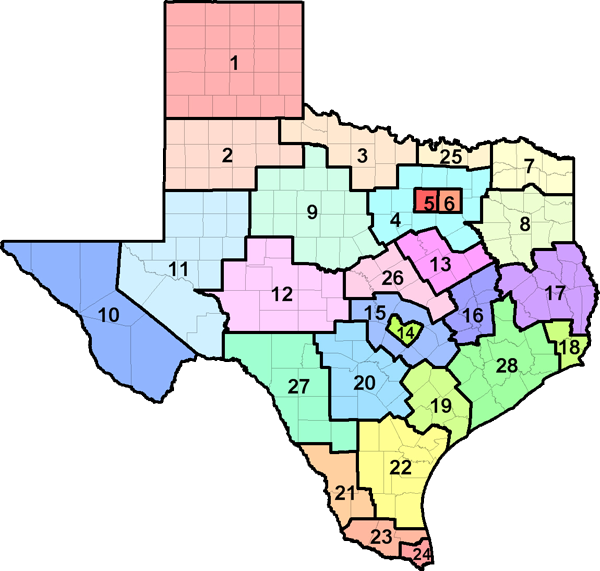
TEXAS COUNTY MAP BY WORKFORCE DEVELOPMENT AREA
* Due to confidentiality rules, not all regions may have the data displayed. The sum of all the regions may not be equal to the state total.


Top 10 Relevant Knowledge Areas Relevant Importance Levels
Engineering and Technology
Knowledge of the practical application of engineering science and technology. This includes applying principles, techniques, procedures, and equipment to the design and production of various goods and services.
87.00%
English Language
Knowledge of the structure and content of the English language including the meaning and spelling of words, rules of composition, and grammar.
85.00%
Mathematics
Knowledge of arithmetic, algebra, geometry, calculus, statistics, and their applications.
82.20%
Transportation
Knowledge of principles and methods for moving people or goods by air, rail, sea, or road, including the relative costs and benefits.
80.00%
Design
Knowledge of design techniques, tools, and principles involved in production of precision technical plans, blueprints, drawings, and models.
70.00%
Computers and Electronics
Knowledge of circuit boards, processors, chips, electronic equipment, and computer hardware and software, including applications and programming.
68.00%
Administration and Management
Knowledge of business and management principles involved in strategic planning, resource allocation, human resources modeling, leadership technique, production methods, and coordination of people and resources.
65.00%
Customer and Personal Service
Knowledge of principles and processes for providing customer and personal services. This includes customer needs assessment, meeting quality standards for services, and evaluation of customer satisfaction.
64.20%
Production and Processing
Knowledge of raw materials, production processes, quality control, costs, and other techniques for maximizing the effective manufacture and distribution of goods.
59.00%
Mechanical
Knowledge of machines and tools, including their designs, uses, repair, and maintenance.
59.00%


Top 10 Relevant Skill Areas Relevant Importance Levels
Reading Comprehension
Understanding written sentences and paragraphs in work-related documents.
82.40%
Systems Analysis
Determining how a system should work and how changes in conditions, operations, and the environment will affect outcomes.
82.40%
Judgment and Decision Making
Considering the relative costs and benefits of potential actions to choose the most appropriate one.
80.00%
Active Listening
Giving full attention to what other people are saying, taking time to understand the points being made, asking questions as appropriate, and not interrupting at inappropriate times.
80.00%
Writing
Communicating effectively in writing as appropriate for the needs of the audience.
80.00%
Complex Problem Solving
Identifying complex problems and reviewing related information to develop and evaluate options and implement solutions.
80.00%
Mathematics
Using mathematics to solve problems.
77.60%
Critical Thinking
Using logic and reasoning to identify the strengths and weaknesses of alternative solutions, conclusions, or approaches to problems.
77.60%
Systems Evaluation
Identifying measures or indicators of system performance and the actions needed to improve or correct performance, relative to the goals of the system.
77.60%
Time Management
Managing one's own time and the time of others.
75.00%


Top 10 Relevant Abilities Relevant Importance Levels
Written Comprehension
The ability to read and understand information and ideas presented in writing.
85.00%
Oral Expression
The ability to communicate information and ideas in speaking so others will understand.
80.00%
Written Expression
The ability to communicate information and ideas in writing so others will understand.
80.00%
Problem Sensitivity
The ability to tell when something is wrong or is likely to go wrong. It does not involve solving the problem, only recognizing that there is a problem.
80.00%
Deductive Reasoning
The ability to apply general rules to specific problems to produce answers that make sense.
80.00%
Inductive Reasoning
The ability to combine pieces of information to form general rules or conclusions (includes finding a relationship among seemingly unrelated events).
80.00%
Oral Comprehension
The ability to listen to and understand information and ideas presented through spoken words and sentences.
80.00%
Fluency of Ideas
The ability to come up with a number of ideas about a topic (the number of ideas is important, not their quality, correctness, or creativity).
77.60%
Information Ordering
The ability to arrange things or actions in a certain order or pattern according to a specific rule or set of rules (e.g., patterns of numbers, letters, words, pictures, mathematical operations).
75.00%
Mathematical Reasoning
The ability to choose the right mathematical methods or formulas to solve a problem.
75.00%


  • Working with Computers
    -- Using computers and computer systems (including hardware and software) to program, write software, set up functions, enter data, or process information.
  • Getting Information
    -- Observing, receiving, and otherwise obtaining information from all relevant sources.
  • Analyzing Data or Information
    -- Identifying the underlying principles, reasons, or facts of information by breaking down information or data into separate parts.
  • Processing Information
    -- Compiling, coding, categorizing, calculating, tabulating, auditing, or verifying information or data.
  • Making Decisions and Solving Problems
    -- Analyzing information and evaluating results to choose the best solution and solve problems.
Other Activities


  • Achievement
    - Occupations that satisfy this work value are results oriented and allow employees to use their strongest abilities, giving them a feeling of accomplishment. Corresponding needs are Ability Utilization and Achievement.
  • Working Conditions
    - Occupations that satisfy this work value offer job security and good working conditions. Corresponding needs are Activity, Compensation, Independence, Security, Variety and Working Conditions.


Tools

Desktop computers: Desktop computers;

Digital cameras: Digital cameras;

Laser fax machine: Laser facsimile machines;

Laser printers: Computer laser printers;

Multimedia projectors: Multimedia projection equipment; Multimedia projectors;

Notebook computers: Laptop computers;

Personal computers: Personal computers;

Special purpose telephones: Multi-line telephone systems;


Technology

Analytical or scientific software: Failure modes and effects analysis FMEA software; IBM ILOG CPLEX Optimization Studio; JMS Software RCM WorkSaver; Logistics Cost Estimating Tool; LOGSA COMPASS; LOGSA SYSPARS; ITEM Software ITEM ToolKit; ITEM Software Spare Cost; Minitab; Relex FMEA; Reliability centered maintenance RCM software; ReliaSoft RCM++; ReliaSoft XFMEA; Reliass EAGLE; SAS;

Business intelligence and data analysis software: Tableau; IBM Cognos Impromptu; Microsoft Power BI;

Cloud-based data access and sharing software: Microsoft SharePoint;

Computer aided design CAD software: Autodesk AutoCAD; Computer aided design and drafting CADD software;

Data base management system software: Microsoft SQL Server;

Data base user interface and query software: Oracle Database; Microsoft Access; Structured query language SQL;

Development environment software: Microsoft Visual Basic; Microsoft Visual Basic for Applications VBA; Prolog;

Electronic mail software: IBM Notes;

Enterprise resource planning ERP software: Enterprise resource planning ERP software; Oracle Hyperion; SAP Business Objects; SAP software;

Materials requirements planning logistics and supply chain software: Warehouse management system WMS; JDA Manugistics; i2 Transportation Modeler; Logistics management information LMI database software; Logistics Support Analysts SmartLogic;

Object or component oriented development software: C++; Oracle Java; Python;

Office suite software: Microsoft Office software;

Presentation software: Microsoft PowerPoint;

Process mapping and design software: Microsoft Visio;

Project management software: Microsoft Project; Oracle Primavera Enterprise Project Portfolio Management;

Spreadsheet software: Microsoft Excel;

Word processing software: Microsoft Word; Word processing software;


Related O*NET occupational titles for Logistics Engineers include:
  • 17-2112.00 Industrial Engineers
  • 11-3051.00 Industrial Production Managers
  • 13-1081.00 Logisticians
  • 13-1081.02 Logistics Analysts
  • 17-2112.03 Manufacturing Engineers
  • 15-2031.00 Operations Research Analysts
  • 13-1082.00 Project Management Specialists
  • 41-9031.00 Sales Engineers
  • 11-3071.04 Supply Chain Managers
  • 11-3071.00 Transportation, Storage, and Distribution Managers


Sources of Additional Information
  • For more information about logisticians, including certification, visit: Association for Supply Chain Management (ASCM)
  • Council of Logistics Engineering Professionals (CLEP)
  • Defense Acquisition University
  • International Society of Logistics (SOLE)
  • Logisticians
  • Logistics Analysts
  • Logistics Engineers

  • Contact Texas Workforce Commission
    Labor Market and Career Information  |  101 E. 15th Street, Annex Room 0252  |  Austin, Texas 78778
    Official Website  |  1-800-822-PLAN (7526)  |  512.936.3200

    ** The information in this report may be derived from many sources like O*NET, BLS (Bureau of Labor Statistics), OOH (Occupational Outlook Handbook), and Career One Stop.