Occupation Summary

Computer and Information Research Scientists

O*NET 15-1221.00

Description:

Conduct research into fundamental computer and information science as theorists, designers, or inventors. Develop solutions to problems in the field of computer hardware and software.

Annual Wages:
$115,883.00
Employment Rate:
Employment is expected to increase by 52.06%.
Education Level:
Bachelor's Degree. According to O*Net, the majority of people employed in this occupation have this level of education.
Endorsement:
Business and Industry, Science Technology Engineering and Math (STEM)

  1. Analyze problems to develop solutions involving computer hardware and software.
  2. Assign or schedule tasks to meet work priorities and goals.
  3. Evaluate project plans and proposals to assess feasibility issues.
  4. Apply theoretical expertise and innovation to create or apply new technology, such as adapting principles for applying computers to new uses.
  5. Consult with users, management, vendors, and technicians to determine computing needs and system requirements.
  6. Meet with managers, vendors, and others to solicit cooperation and resolve problems.
  7. Conduct logical analyses of business, scientific, engineering, and other technical problems, formulating mathematical models of problems for solution by computers.
  8. Develop and interpret organizational goals, policies, and procedures.
  9. Participate in staffing decisions and direct training of subordinates.
  10. Develop performance standards, and evaluate work in light of established standards.
  11. Design computers and the software that runs them.
  12. Maintain network hardware and software, direct network security measures, and monitor networks to ensure availability to system users.
  13. Participate in multidisciplinary projects in areas such as virtual reality, human-computer interaction, or robotics.
  14. Approve, prepare, monitor, and adjust operational budgets.
  15. Direct daily operations of departments, coordinating project activities with other departments.


National Industry Employment Patterns


Industry % of Computer and Information Research Scientists employed Annual Growth Rate
Computer systems design and related services 27.9 2.69
Scientific research and development services 17.5 2.00
Colleges, universities, and professional schools 4.8 2.14
Software publishers 3 2.44
Architectural, engineering, and related services 2 2.55


Labor Market Information


2024 Statewide average hourly wage $55.71
2024 National average hourly wage $73.23
2022 National employment 36,500
2022 Texas employment 2,065
Texas projected employment by 2032 3,140
Texas projected annual employment and Turnover openings through 2032 270


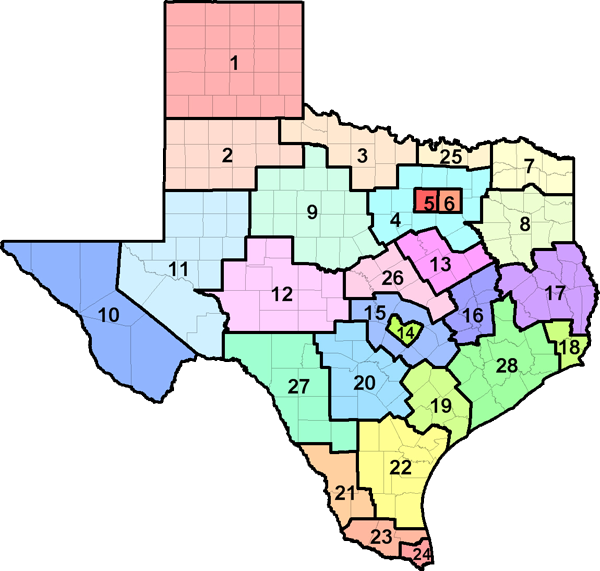
TEXAS COUNTY MAP BY WORKFORCE DEVELOPMENT AREA
* Due to confidentiality rules, not all regions may have the data displayed. The sum of all the regions may not be equal to the state total.


Top 10 Relevant Knowledge Areas Relevant Importance Levels
Computers and Electronics
Knowledge of circuit boards, processors, chips, electronic equipment, and computer hardware and software, including applications and programming.
91.40%
Mathematics
Knowledge of arithmetic, algebra, geometry, calculus, statistics, and their applications.
81.20%
Engineering and Technology
Knowledge of the practical application of engineering science and technology. This includes applying principles, techniques, procedures, and equipment to the design and production of various goods and services.
79.00%
English Language
Knowledge of the structure and content of the English language including the meaning and spelling of words, rules of composition, and grammar.
77.80%
Administration and Management
Knowledge of business and management principles involved in strategic planning, resource allocation, human resources modeling, leadership technique, production methods, and coordination of people and resources.
66.00%
Design
Knowledge of design techniques, tools, and principles involved in production of precision technical plans, blueprints, drawings, and models.
65.40%
Telecommunications
Knowledge of transmission, broadcasting, switching, control, and operation of telecommunications systems.
61.80%
Physics
Knowledge and prediction of physical principles, laws, their interrelationships, and applications to understanding fluid, material, and atmospheric dynamics, and mechanical, electrical, atomic and sub-atomic structures and processes.
56.80%
Sales and Marketing
Knowledge of principles and methods for showing, promoting, and selling products or services. This includes marketing strategy and tactics, product demonstration, sales techniques, and sales control systems.
54.20%
Customer and Personal Service
Knowledge of principles and processes for providing customer and personal services. This includes customer needs assessment, meeting quality standards for services, and evaluation of customer satisfaction.
54.20%


Top 10 Relevant Skill Areas Relevant Importance Levels
Critical Thinking
Using logic and reasoning to identify the strengths and weaknesses of alternative solutions, conclusions, or approaches to problems.
80.00%
Complex Problem Solving
Identifying complex problems and reviewing related information to develop and evaluate options and implement solutions.
80.00%
Judgment and Decision Making
Considering the relative costs and benefits of potential actions to choose the most appropriate one.
80.00%
Systems Analysis
Determining how a system should work and how changes in conditions, operations, and the environment will affect outcomes.
75.00%
Reading Comprehension
Understanding written sentences and paragraphs in work-related documents.
75.00%
Active Listening
Giving full attention to what other people are saying, taking time to understand the points being made, asking questions as appropriate, and not interrupting at inappropriate times.
75.00%
Systems Evaluation
Identifying measures or indicators of system performance and the actions needed to improve or correct performance, relative to the goals of the system.
72.40%
Programming
Writing computer programs for various purposes.
72.40%
Speaking
Talking to others to convey information effectively.
70.00%
Active Learning
Understanding the implications of new information for both current and future problem-solving and decision-making.
70.00%


Top 10 Relevant Abilities Relevant Importance Levels
Deductive Reasoning
The ability to apply general rules to specific problems to produce answers that make sense.
82.40%
Inductive Reasoning
The ability to combine pieces of information to form general rules or conclusions (includes finding a relationship among seemingly unrelated events).
82.40%
Oral Comprehension
The ability to listen to and understand information and ideas presented through spoken words and sentences.
80.00%
Oral Expression
The ability to communicate information and ideas in speaking so others will understand.
80.00%
Written Comprehension
The ability to read and understand information and ideas presented in writing.
77.60%
Fluency of Ideas
The ability to come up with a number of ideas about a topic (the number of ideas is important, not their quality, correctness, or creativity).
77.60%
Problem Sensitivity
The ability to tell when something is wrong or is likely to go wrong. It does not involve solving the problem, only recognizing that there is a problem.
77.60%
Near Vision
The ability to see details at close range (within a few feet of the observer).
75.00%
Written Expression
The ability to communicate information and ideas in writing so others will understand.
75.00%
Information Ordering
The ability to arrange things or actions in a certain order or pattern according to a specific rule or set of rules (e.g., patterns of numbers, letters, words, pictures, mathematical operations).
75.00%


  • Working with Computers
    -- Using computers and computer systems (including hardware and software) to program, write software, set up functions, enter data, or process information.
  • Making Decisions and Solving Problems
    -- Analyzing information and evaluating results to choose the best solution and solve problems.
  • Getting Information
    -- Observing, receiving, and otherwise obtaining information from all relevant sources.
  • Updating and Using Relevant Knowledge
    -- Keeping up-to-date technically and applying new knowledge to your job.
  • Analyzing Data or Information
    -- Identifying the underlying principles, reasons, or facts of information by breaking down information or data into separate parts.
Other Activities


  • Achievement
    - Occupations that satisfy this work value are results oriented and allow employees to use their strongest abilities, giving them a feeling of accomplishment. Corresponding needs are Ability Utilization and Achievement.
  • Working Conditions
    - Occupations that satisfy this work value offer job security and good working conditions. Corresponding needs are Activity, Compensation, Independence, Security, Variety and Working Conditions.


Tools

Camera based vision systems for automated data collection: Image capture devices; Real time motion capture systems;

Cinematographic cameras: Pan-tilt-zoom cameras;

Compact disks CDs: Magneto optical discs;

Computer servers: File servers; Web servers;

Content delivery networking equipment: High-speed networking testbeds;

Digital camcorders or video cameras: Digital video cameras;

Digital cameras: Digital cameras;

Graphics tablets: Graphics workstations;

Hard disk arrays: Network storage arrays;

Hard disk drives: Hard disk drives;

High capacity removable media drives: Universal serial bus USB flash drives;

High end computer servers: Render farms; Massively parallel processors MPP; Distributed heterogeneous computers; Cluster systems; High end computer servers; High-performance cluster HPC computers;

Laser printers: Computer laser printers;

Loudspeakers: Free-field speakers;

Mainframe computers: Mainframe computers;

Microprocessors: Microcomputers;

Multimedia projectors: Stereographic projectors; Video projectors;

Network interface cards: Network interface cards NIC;

Personal computers: Personal computers;

Pick or place robots: Articulated robots; Mobile robots;

Scanners: Laser scanners; Computer scanners;

Stage or projection or studio lighting system: Lighting grids;

Tape arrays: Quarter inch cartridge QIC tapes;


Technology

Analytical or scientific software: Advanced numerical software; Algorithmic software; Augmint; Computational statistics software; Data visualization software; IBM SPSS Statistics; Intel Math Kernel Library; Mathematical software; Multisensory data representation software; Minitab; Optimization software; Polhemus Fasttrack System; Rice Simulator for ILP Multiprocessors RSIM; SAS; Simulation software; StataCorp Stata; The MathWorks MATLAB;

Application server software: GitHub; Docker;

Business intelligence and data analysis software: Apache Spark; IBM Cognos Impromptu; Tableau; Qlik Tech QlikView; Oracle Business Intelligence Enterprise Edition; MicroStrategy;

Cloud-based management software: Splunk Enterprise;

Clustering software: Parallel systems software; Clustering software; Clustermatic;

Communications server software: IBM Domino;

Compiler and decompiler software: Greenhills Ada compilers; Low-level virtual machine LLVM compilers; Polaris parallelizing compilers;

Computer aided design CAD software: PTC Creo Parametric; Computer aided design and drafting CADD software;

Configuration management software: IBM Rational Apex; Perforce Software Configuration Management System;

Data base management system software: Oracle Database; MongoDB; NoSQL; MySQL; Teradata Database; Relational database management software; Relational database management system software; Elasticsearch; Apache Pig; Apache Solr; Amazon DynamoDB; Apache Cassandra; Apache Flume; Apache Hadoop;

Data base user interface and query software: Apache Hive; Amazon Elastic Compute Cloud EC2; Amazon Redshift; Amazon Web Services AWS software; Microsoft SQL Server; PyTorch; Structured query language SQL; Transact-SQL;

Data mining software: Google Analytics; Data mining software;

Development environment software: CMake; C; Embarcadero JBuilder; Doxygen; Eclipse IDE; Ada; Automated document generation software; High-performance software libraries; IBM Rational Rose XDE; Apache Kafka; Formula translation/translator FORTRAN; Microsoft Visual Basic; Microsoft Visual Basic for Applications VBA; Microsoft Visual Basic Scripting Edition VBScript; Microsoft Azure software; List processing language LISP; Integrated development environment IDE software; Intel Integrated Performance Primitives; Verilog; Software libraries; Source code management SCM software; Prolog; Ruby; National Instruments LabVIEW; Microsoft Visual Studio; Microsoft Visual Studio.NET; OpenAI ChatGPT; Oracle Java 2 Platform Enterprise Edition J2EE;

Enterprise application integration software: Extensible markup language XML; IBM InfoSphere DataStage;

Enterprise resource planning ERP software: Microsoft Dynamics; SAP Business Objects;

File versioning software: Git; Apache Subversion SVN;

Geographic information system: ESRI ArcGIS software; Geographic information system GIS software;

Graphical user interface development software: Waikato Environment for Knowledge Analysis Weka;

Graphics or photo imaging software: Open Graphics Library OpenGL; Graphics pipelines; 3D graphics software;

Industrial control software: TensorFlow;

Metadata management software: Quest Erwin Data Modeler;

Object or component oriented development software: R; Scala; Object oriented development environment software; Python; Oracle Java; Perl; Eiffel; C#; C++; Charm++; Microsoft ActiveX; Microsoft Visual Basic.NET; Microsoft Visual C# .NET; Jupyter Notebook;

Object oriented data base management software: PostgreSQL;

Office suite software: Microsoft Office software;

Operating system software: Microsoft Windows XP; Operating system software; Oracle Solaris; Shell script; VME PowerPC VxWorks; Ubuntu; UNIX; UNIX Shell; Linux; Bash;

Portal server software: Apache HTTP Server;

Presentation software: Microsoft PowerPoint;

Project management software: Microsoft Project;

Requirements analysis and system architecture software: Unified modeling language UML;

Sales and marketing software: Google Ads;

Spreadsheet software: Microsoft Excel;

Video creation and editing software: Video editing software;

Web page creation and editing software: Plug-in file software;

Web platform development software: PHP; Node.js; JavaScript; Extensible stylesheet language transformations XSLT; Django;


Related O*NET occupational titles for Computer and Information Research Scientists include:
  • 19-1029.01 Bioinformatics Scientists
  • 15-2099.01 Bioinformatics Technicians
  • 15-1251.00 Computer Programmers
  • 15-1211.00 Computer Systems Analysts
  • 15-1299.08 Computer Systems Engineers/Architects
  • 15-2051.00 Data Scientists
  • 15-1243.00 Database Architects
  • 15-2021.00 Mathematicians
  • 15-2031.00 Operations Research Analysts
  • 15-1252.00 Software Developers


Sources of Additional Information
  • For more information about computer and information research scientists, visit: Association for Computing Machinery
  • Computing Research Association
  • IEEE Computer Society
  • For information about opportunities for women pursuing information technology careers, visit: National Center for Women & Information Technology
  • To find job openings for computer and information research scientists in the federal government, visit 
  • USAJOBS
  • CareerOneStop

  • For a career video on computer and information research scientists, visit: Computer and Information Research Scientists
  • Computer and Information Research Scientists

  • Contact Texas Workforce Commission
    Labor Market and Career Information  |  101 E. 15th Street, Annex Room 0252  |  Austin, Texas 78778
    Official Website  |  1-800-822-PLAN (7526)  |  512.936.3200

    ** The information in this report may be derived from many sources like O*NET, BLS (Bureau of Labor Statistics), OOH (Occupational Outlook Handbook), and Career One Stop.