Occupation Summary

Computer Network Support Specialists

O*NET 15-1231.00

Description:

Analyze, test, troubleshoot, and evaluate existing network systems, such as local area networks (LAN), wide area networks (WAN), cloud networks, servers, and other data communications networks. Perform network maintenance to ensure networks operate correctly with minimal interruption.

Annual Wages:
$71,851.00
Employment Rate:
Employment is expected to increase by 20.38%.
Education Level:
Bachelor's Degree. According to O*Net, the majority of people employed in this occupation have this level of education.
Endorsement:
Business and Industry, Science Technology Engineering and Math (STEM)

  1. Analyze network data to determine network usage, disk space availability, or server function.
  2. Configure and define parameters for installation or testing of local area network (LAN), wide area network (WAN), hubs, routers, switches, controllers, multiplexers, or related networking equipment.
  3. Configure security settings or access permissions for groups or individuals.
  4. Configure wide area network (WAN) or local area network (LAN) routers or related equipment.
  5. Document network support activities.
  6. Evaluate local area network (LAN) or wide area network (WAN) performance data to ensure sufficient availability or speed, to identify network problems, or for disaster recovery purposes.
  7. Identify the causes of networking problems, using diagnostic testing software and equipment.
  8. Install and configure wireless networking equipment.
  9. Install network software, including security or firewall software.
  10. Install new hardware or software systems or components, ensuring integration with existing network systems.
  11. Install or repair network cables, including fiber optic cables.
  12. Perform routine maintenance or standard repairs to networking components or equipment.
  13. Test computer software or hardware, using standard diagnostic testing equipment and procedures.
  14. Troubleshoot network or connectivity problems for users or user groups.
  15. Analyze and report computer network security breaches or attempted breaches.
  16. Back up network data.
  17. Create or revise user instructions, procedures, or manuals.
  18. Create or update technical documentation for network installations or changes to existing installations.
  19. Document help desk requests and resolutions.
  20. Maintain logs of network activity.
  21. Monitor industry Web sites or publications for information about patches, releases, viruses, or potential problem identification.
  22. Provide telephone support related to networking or connectivity issues.
  23. Research hardware or software products to meet technical networking or security needs.
  24. Run monthly network reports.
  25. Test repaired items to ensure proper operation.
  26. Train users in procedures related to network applications software or related systems.


National Industry Employment Patterns


Industry % of Computer Network Support Specialists employed Annual Growth Rate
Computer systems design and related services 19.3 1.82
Elementary and secondary schools 5.3 0.00
Colleges, universities, and professional schools 5.1 0.43
Employment services 2.5 0.23
Management, scientific, and technical consulting services 2.3 1.16
Software publishers 2.3 1.16
Insurance carriers 2.3 0.71
Professional and commercial equipment and supplies merchant wholesalers 2.2 0.25


Labor Market Information


2024 Statewide average hourly wage $34.54
2024 National average hourly wage $38.27
2022 National employment 177,900
2022 Texas employment 10,978
Texas projected employment by 2032 13,215
Texas projected annual employment and Turnover openings through 2032 1,018


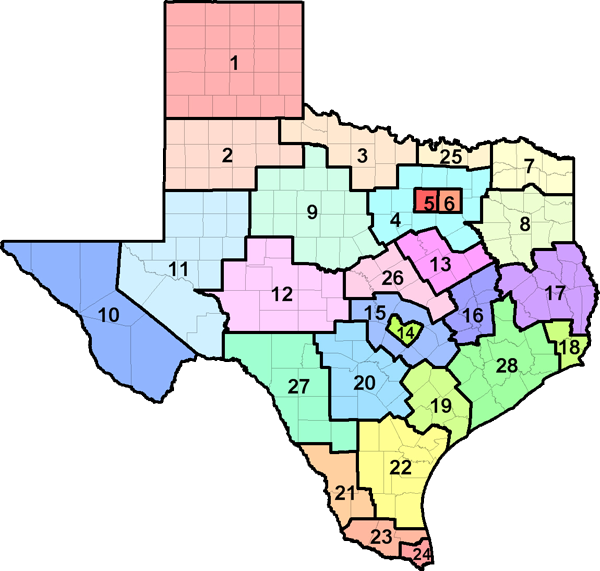
TEXAS COUNTY MAP BY WORKFORCE DEVELOPMENT AREA
* Due to confidentiality rules, not all regions may have the data displayed. The sum of all the regions may not be equal to the state total.


Top 10 Relevant Knowledge Areas Relevant Importance Levels
Computers and Electronics
Knowledge of circuit boards, processors, chips, electronic equipment, and computer hardware and software, including applications and programming.
99.20%
Telecommunications
Knowledge of transmission, broadcasting, switching, control, and operation of telecommunications systems.
75.80%
Customer and Personal Service
Knowledge of principles and processes for providing customer and personal services. This includes customer needs assessment, meeting quality standards for services, and evaluation of customer satisfaction.
69.00%
Engineering and Technology
Knowledge of the practical application of engineering science and technology. This includes applying principles, techniques, procedures, and equipment to the design and production of various goods and services.
68.00%
English Language
Knowledge of the structure and content of the English language including the meaning and spelling of words, rules of composition, and grammar.
66.20%
Administration and Management
Knowledge of business and management principles involved in strategic planning, resource allocation, human resources modeling, leadership technique, production methods, and coordination of people and resources.
62.40%
Communications and Media
Knowledge of media production, communication, and dissemination techniques and methods. This includes alternative ways to inform and entertain via written, oral, and visual media.
59.80%
Education and Training
Knowledge of principles and methods for curriculum and training design, teaching and instruction for individuals and groups, and the measurement of training effects.
59.00%
Administrative
Knowledge of administrative and office procedures and systems such as word processing, managing files and records, stenography and transcription, designing forms, and workplace terminology.
58.20%
Design
Knowledge of design techniques, tools, and principles involved in production of precision technical plans, blueprints, drawings, and models.
52.60%


Top 10 Relevant Skill Areas Relevant Importance Levels
Critical Thinking
Using logic and reasoning to identify the strengths and weaknesses of alternative solutions, conclusions, or approaches to problems.
75.00%
Active Listening
Giving full attention to what other people are saying, taking time to understand the points being made, asking questions as appropriate, and not interrupting at inappropriate times.
70.00%
Reading Comprehension
Understanding written sentences and paragraphs in work-related documents.
67.60%
Judgment and Decision Making
Considering the relative costs and benefits of potential actions to choose the most appropriate one.
67.60%
Complex Problem Solving
Identifying complex problems and reviewing related information to develop and evaluate options and implement solutions.
65.00%
Active Learning
Understanding the implications of new information for both current and future problem-solving and decision-making.
65.00%
Speaking
Talking to others to convey information effectively.
65.00%
Monitoring
Monitoring/Assessing performance of yourself, other individuals, or organizations to make improvements or take corrective action.
65.00%
Systems Analysis
Determining how a system should work and how changes in conditions, operations, and the environment will affect outcomes.
62.40%
Troubleshooting
Determining causes of operating errors and deciding what to do about it.
62.40%


Top 10 Relevant Abilities Relevant Importance Levels
Problem Sensitivity
The ability to tell when something is wrong or is likely to go wrong. It does not involve solving the problem, only recognizing that there is a problem.
77.60%
Deductive Reasoning
The ability to apply general rules to specific problems to produce answers that make sense.
77.60%
Oral Comprehension
The ability to listen to and understand information and ideas presented through spoken words and sentences.
77.60%
Inductive Reasoning
The ability to combine pieces of information to form general rules or conclusions (includes finding a relationship among seemingly unrelated events).
75.00%
Oral Expression
The ability to communicate information and ideas in speaking so others will understand.
75.00%
Written Comprehension
The ability to read and understand information and ideas presented in writing.
72.40%
Information Ordering
The ability to arrange things or actions in a certain order or pattern according to a specific rule or set of rules (e.g., patterns of numbers, letters, words, pictures, mathematical operations).
70.00%
Written Expression
The ability to communicate information and ideas in writing so others will understand.
67.60%
Near Vision
The ability to see details at close range (within a few feet of the observer).
67.60%
Speech Recognition
The ability to identify and understand the speech of another person.
67.60%


  • Working with Computers
    -- Using computers and computer systems (including hardware and software) to program, write software, set up functions, enter data, or process information.
  • Updating and Using Relevant Knowledge
    -- Keeping up-to-date technically and applying new knowledge to your job.
  • Getting Information
    -- Observing, receiving, and otherwise obtaining information from all relevant sources.
  • Communicating with Supervisors, Peers, or Subordinates
    -- Providing information to supervisors, co-workers, and subordinates by telephone, in written form, e-mail, or in person.
  • Establishing and Maintaining Interpersonal Relationships
    -- Developing constructive and cooperative working relationships with others, and maintaining them over time.
Other Activities


  • Achievement
    - Occupations that satisfy this work value are results oriented and allow employees to use their strongest abilities, giving them a feeling of accomplishment. Corresponding needs are Ability Utilization and Achievement.
  • Support
    - Occupations that satisfy this work value offer supportive management that stands behind employees. Corresponding needs are Company Policies, Supervision: Human Relations and Supervision: Technical.


Tools

Access servers: Remote access servers;

Circuit tester: Continuity testers; Test lights;

Computer servers: Caching engines; Network address translation NAT appliances;

Hard disk arrays: Redundant array of independent disks RAID systems;

Laser fax machine: Laser facsimile machines;

Mainframe computers: Mainframe computers;

Network analyzers: Synchronous optical network SONET analyzers; T-Birds; Throughput testers; Asynchronous transfer mode ATM analyzers; Port analyzer adapters; Cisco Systems Cisco Application Visibility and Management AVM Traffic Collector; Communications analyzers; Fabric analyzers; Fibre channel protocol analyzers;

Notebook computers: Laptop computers;

Personal computers: Personal computers;

Photocopiers: Copy machines;

Power meters: Powerline monitors;

Screwdrivers: Screwdrivers;

Server load balancer: Load balancers;

Voltage or current meters: Cable testers;


Technology

Access software: Citrix cloud computing software;

Administration software: Cisco Systems CiscoWorks; Cisco Systems CiscoWorks LAN Management Solution; Hewlett-Packard HP Network Node Manager; ipconfig; ifconfig;

Backup or archival software: EMC NetWorker; NovaStor NovaBACKUP; Roxio Retrospect; Symantec Veritas NetBackup; Tape backup system software; Veritas NetBackup;

Cloud-based data access and sharing software: Microsoft SharePoint;

Cloud-based management software: IBM WebSphere; Splunk Enterprise;

Cloud-based protection or security software: SolarWinds;

Clustering software: VMware;

Communications server software: IBM Domino;

Computer aided design CAD software: Network design software;

Configuration management software: Microsoft Windows Sysprep; Patch and update management software; EMC Ionix Network Configuration Manager; Automated installation software; Application management software;

Customer relationship management CRM software: Customer relationship management CRM software;

Data base management system software: Database management software; MySQL; Teradata Database;

Data base user interface and query software: Structured query language SQL; Microsoft SQL Server; Microsoft Access;

Desktop communications software: Symantec pcAnywhere; Remote control software;

Development environment software: Ruby; Microsoft Visual Basic; Microsoft Visual Basic Scripting Edition VBScript; Microsoft PowerShell; Microsoft Azure software;

Document management software: Adobe Acrobat;

Electronic mail software: Microsoft Exchange; IBM Notes;

Enterprise application integration software: BMC Software Control-M;

Enterprise resource planning ERP software: Microsoft Dynamics;

Enterprise system management software: IBM Power Systems software;

Filesystem software: IBM Tivoli NetView Distribution Manager; File server software;

Helpdesk or call center software: Help desk software; BMC Software Remedy IT Service Management Suite;

Internet directory services software: Microsoft Active Directory; Novell eDirectory;

Internet protocol IP multimedia subsystem software: Voice over internet protocol VoIP system software;

Network monitoring software: WildPackets OmniPeek Network Analyzer; Wireshark; Zabbix; Traceroute; Tcpdump; Route; Nslookup; Network monitoring software; ngrep; Port scanners; OPNET SP Sentinel; Packet analyzers; Microsoft Network Monitor; Nagios; nbtstat; NetScout Sniffer Global Analyzer; NetScout Sniffer Portable Professional Analyzer; netstat; Network Instruments Observer Standard; LogMatrix NerveCenter; Ethereal; Ettercap NG; Fluke Networks Enterprise LANMeter; Cisco Systems Cisco NetFlow Collection Engine; Cisco Systems Cisco Traffic Analyzer; Arping; BitWizard B.V. mtr; B&W Port Scanner; Dig; Dartware InterMapper; Clarified Networks Clarified Analyzer; Colasoft Capsa Enterprise; Colasoft Capsa Free; Compuware ClientVantage Agentless Monitoring; Congruity Technologies Inspector;

Network operating system enhancement software: Traffic shapers;

Network security and virtual private network VPN equipment software: Virtual private networking VPN software; Network intrusion detection software; Firewall software;

Network security or virtual private network VPN management software: IBM Security Network Intrusion Prevention System; Intrusion prevention system IPS; Network and system vulnerability assessment software; NIKSUN NetDetector; Sonicwall SonicOS Enhanced; Security incident management software;

Object or component oriented development software: Python; Oracle Java; Perl;

Office suite software: Microsoft Office software;

Operating system software: Microsoft Windows; Microsoft Windows PowerShell; Microsoft Windows Server; Oracle Solaris; Operating system software; Red Hat Enterprise Linux; Shell script; Ubuntu; UNIX; UNIX Shell; Linux; Job control language JCL; KornShell; Microsoft Hyper-V Server; IBM AIX; Hewlett Packard HP-UX; Apple macOS; Bash; BlackBerry Enterprise Server;

Platform interconnectivity software: Connectivity software;

Presentation software: Microsoft PowerPoint;

Program testing software: Load testing software;

Project management software: Bentley Systems ProjectWise; Microsoft Project; Project planning software;

Spreadsheet software: Microsoft Excel;

Storage networking software: EMC Symmetrix DMX; Storage area network SAN software;

Transaction security and virus protection software: Root kit detection software; Ping Identity; Packet filter software; Norton AntiVirus; NortonLifeLock cybersecurity software; Encryption software; McAfee; Anti-spyware software; Antivirus software;

Transaction server software: Customer information control system CICS; Microsoft Internet Information Services (IIS);

Web platform development software: LAMP Stack; Apache Tomcat;

Word processing software: Microsoft Word;


Related O*NET occupational titles for Computer Network Support Specialists include:
  • 15-1241.00 Computer Network Architects
  • 15-1211.00 Computer Systems Analysts
  • 15-1299.08 Computer Systems Engineers/Architects
  • 15-1232.00 Computer User Support Specialists
  • 15-1242.00 Database Administrators
  • 15-1212.00 Information Security Analysts
  • 15-1299.05 Information Security Engineers
  • 15-1244.00 Network and Computer Systems Administrators
  • 15-1252.00 Software Developers
  • 15-1241.01 Telecommunications Engineering Specialists


Sources of Additional Information
  • For more information about computer support specialists, visit: Association of Support Professionals
  • Help Desk Institute (HDI)
  • Technology Services Industry Association
  • For more information about computer careers, visit: Association for Computing Machinery
  • Computing Research Association
  • Computing Technology Industry Association (CompTIA)
  • IEEE Computer Society
  • For information about opportunities for women pursuing information technology careers, visit: National Center for Women & Information Technology
  • Occupational Requirements Survey

  • For a profile highlighting selected BLS data on occupational requirements, see
  • Computer user support specialists (PDF)
  • Computer Network Support Specialists
  • Computer User Support Specialists

  • Contact Texas Workforce Commission
    Labor Market and Career Information  |  101 E. 15th Street, Annex Room 0252  |  Austin, Texas 78778
    Official Website  |  1-800-822-PLAN (7526)  |  512.936.3200

    ** The information in this report may be derived from many sources like O*NET, BLS (Bureau of Labor Statistics), OOH (Occupational Outlook Handbook), and Career One Stop.