Occupation Summary

Landscape Architects

O*NET 17-1012.00

Description:

Plan and design land areas for projects such as parks and other recreational facilities, airports, highways, hospitals, schools, land subdivisions, and commercial, industrial, and residential sites.

Annual Wages:
$81,339.00
Employment Rate:
Employment is expected to increase by %.
Education Level:
Bachelor's Degree. According to O*Net, the majority of people employed in this occupation have this level of education.
Endorsement:
Business and Industry

  1. Prepare graphic representations or drawings of proposed plans or designs.
  2. Collaborate with architects or related professionals on whole building design to maximize the aesthetic features of structures or surrounding land and to improve energy efficiency.
  3. Create landscapes that minimize water consumption such as by incorporating drought-resistant grasses or indigenous plants.
  4. Design and integrate rainwater harvesting or gray and reclaimed water systems to conserve water into building or land designs.
  5. Identify and select appropriate sustainable materials for use in landscape designs, such as recycled wood or recycled concrete boards for structural elements or recycled tires for playground bedding.
  6. Confer with clients, engineering personnel, or architects on landscape projects.
  7. Prepare site plans, specifications, or cost estimates for land development.
  8. Analyze data on conditions such as site location, drainage, or structure location for environmental reports or landscaping plans.
  9. Develop marketing materials, proposals, or presentations to generate new work opportunities.
  10. Inspect landscape work to ensure compliance with specifications, evaluate quality of materials or work, or advise clients or construction personnel.
  11. Present project plans or designs to public stakeholders, such as government agencies or community groups.
  12. Integrate existing land features or landscaping into designs.
  13. Manage the work of subcontractors to ensure quality control.
  14. Research latest products, technology, or design trends to stay current in the field.
  15. Inspect proposed sites to identify structural elements of land areas or other important site information, such as soil condition, existing landscaping, or the proximity of water management facilities.
  16. Develop planting plans to help clients garden productively or to achieve particular aesthetic effects.
  17. Collaborate with estimators to cost projects, create project plans, or coordinate bids from landscaping contractors.
  18. Prepare conceptual drawings, graphics, or other visual representations of land areas to show predicted growth or development of land areas over time.
  19. Provide follow-up consultations for clients to ensure landscape designs are maturing or developing as planned.


National Industry Employment Patterns


Industry % of Landscape Architects employed Annual Growth Rate
Architectural, engineering, and related services 45.3 0.37
Services to buildings and dwellings 17.4 0.24


Labor Market Information


2024 Statewide average hourly wage $39.11
2024 National average hourly wage $42.31


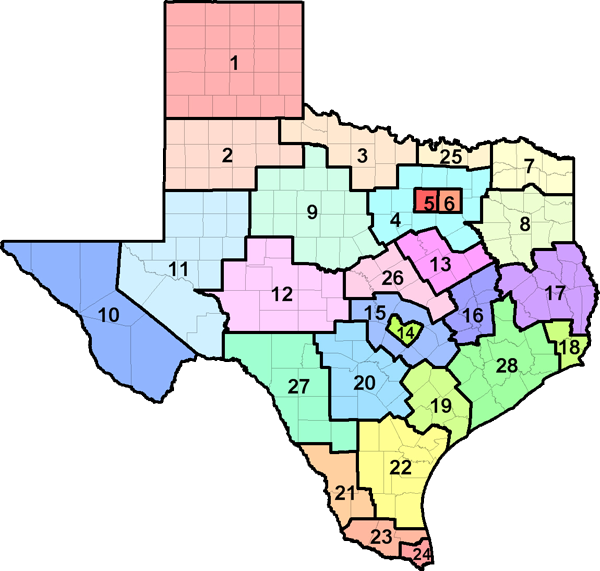
TEXAS COUNTY MAP BY WORKFORCE DEVELOPMENT AREA
Region Employment Projected Employment 2032 Projected
Annual Openings 2032
Annual
Growth Rate
Average Income
Texas (all regions) Unavailable Unavailable Unavailable Unavailable Unavailable
* Due to confidentiality rules, not all regions may have the data displayed. The sum of all the regions may not be equal to the state total.


Top 10 Relevant Knowledge Areas Relevant Importance Levels
Design
Knowledge of design techniques, tools, and principles involved in production of precision technical plans, blueprints, drawings, and models.
95.80%
Building and Construction
Knowledge of materials, methods, and the tools involved in the construction or repair of houses, buildings, or other structures such as highways and roads.
86.00%
Public Safety and Security
Knowledge of relevant equipment, policies, procedures, and strategies to promote effective local, state, or national security operations for the protection of people, data, property, and institutions.
79.20%
English Language
Knowledge of the structure and content of the English language including the meaning and spelling of words, rules of composition, and grammar.
78.60%
Engineering and Technology
Knowledge of the practical application of engineering science and technology. This includes applying principles, techniques, procedures, and equipment to the design and production of various goods and services.
75.60%
Customer and Personal Service
Knowledge of principles and processes for providing customer and personal services. This includes customer needs assessment, meeting quality standards for services, and evaluation of customer satisfaction.
72.80%
Law and Government
Knowledge of laws, legal codes, court procedures, precedents, government regulations, executive orders, agency rules, and the democratic political process.
72.80%
Computers and Electronics
Knowledge of circuit boards, processors, chips, electronic equipment, and computer hardware and software, including applications and programming.
72.40%
Administration and Management
Knowledge of business and management principles involved in strategic planning, resource allocation, human resources modeling, leadership technique, production methods, and coordination of people and resources.
70.80%
Mathematics
Knowledge of arithmetic, algebra, geometry, calculus, statistics, and their applications.
70.00%


Top 10 Relevant Skill Areas Relevant Importance Levels
Reading Comprehension
Understanding written sentences and paragraphs in work-related documents.
80.00%
Active Listening
Giving full attention to what other people are saying, taking time to understand the points being made, asking questions as appropriate, and not interrupting at inappropriate times.
80.00%
Speaking
Talking to others to convey information effectively.
77.60%
Critical Thinking
Using logic and reasoning to identify the strengths and weaknesses of alternative solutions, conclusions, or approaches to problems.
77.60%
Coordination
Adjusting actions in relation to others' actions.
77.60%
Complex Problem Solving
Identifying complex problems and reviewing related information to develop and evaluate options and implement solutions.
77.60%
Active Learning
Understanding the implications of new information for both current and future problem-solving and decision-making.
75.00%
Social Perceptiveness
Being aware of others' reactions and understanding why they react as they do.
75.00%
Writing
Communicating effectively in writing as appropriate for the needs of the audience.
75.00%
Judgment and Decision Making
Considering the relative costs and benefits of potential actions to choose the most appropriate one.
75.00%


Top 10 Relevant Abilities Relevant Importance Levels
Oral Comprehension
The ability to listen to and understand information and ideas presented through spoken words and sentences.
80.00%
Written Comprehension
The ability to read and understand information and ideas presented in writing.
80.00%
Oral Expression
The ability to communicate information and ideas in speaking so others will understand.
80.00%
Visualization
The ability to imagine how something will look after it is moved around or when its parts are moved or rearranged.
80.00%
Category Flexibility
The ability to generate or use different sets of rules for combining or grouping things in different ways.
77.60%
Originality
The ability to come up with unusual or clever ideas about a given topic or situation, or to develop creative ways to solve a problem.
77.60%
Problem Sensitivity
The ability to tell when something is wrong or is likely to go wrong. It does not involve solving the problem, only recognizing that there is a problem.
77.60%
Deductive Reasoning
The ability to apply general rules to specific problems to produce answers that make sense.
77.60%
Inductive Reasoning
The ability to combine pieces of information to form general rules or conclusions (includes finding a relationship among seemingly unrelated events).
77.60%
Information Ordering
The ability to arrange things or actions in a certain order or pattern according to a specific rule or set of rules (e.g., patterns of numbers, letters, words, pictures, mathematical operations).
75.00%


  • Getting Information
    -- Observing, receiving, and otherwise obtaining information from all relevant sources.
  • Thinking Creatively
    -- Developing, designing, or creating new applications, ideas, relationships, systems, or products, including artistic contributions.
  • Working with Computers
    -- Using computers and computer systems (including hardware and software) to program, write software, set up functions, enter data, or process information.
  • Drafting, Laying Out, and Specifying Technical Devices, Parts, and Equipment
    -- Providing documentation, detailed instructions, drawings, or specifications to tell others about how devices, parts, equipment, or structures are to be fabricated, constructed, assembled, modified, maintained, or used.
  • Making Decisions and Solving Problems
    -- Analyzing information and evaluating results to choose the best solution and solve problems.
Other Activities


  • Independence
    - Occupations that satisfy this work value allow employees to work on their own and make decisions. Corresponding needs are Creativity, Responsibility and Autonomy.
  • Working Conditions
    - Occupations that satisfy this work value offer job security and good working conditions. Corresponding needs are Activity, Compensation, Independence, Security, Variety and Working Conditions.


Tools

Desktop computers: Desktop computers;

Digital camcorders or video cameras: Digital camcorders;

Digital cameras: Digital cameras;

Global positioning system GPS receiver: Global positioning system GPS receivers;

Notebook computers: Laptop computers;

Personal computers: Personal computers;

Scanners: Computer scanners;


Technology

Computer aided design CAD software: Autodesk AutoCAD; Autodesk AutoCAD Civil 3D; Autodesk Revit; Bentley MicroStation; Coyote Software DynaSCAPE Design; Lumion; McNeel Rhinoceros 3D; Trimble SketchUp Pro;

Data base user interface and query software: Microsoft Access;

Desktop publishing software: Desktop publishing software; Adobe InDesign;

Document management software: Adobe Acrobat;

Electronic mail software: Microsoft Outlook;

Geographic information system: ESRI ArcGIS software; Geographic information system GIS systems;

Graphics or photo imaging software: Adobe Creative Cloud software; Adobe FreeHand MX; Adobe Illustrator; Corel CorelDraw Graphics Suite; Adobe Photoshop;

Internet browser software: Web browser software;

Office suite software: Microsoft Office software;

Presentation software: Microsoft PowerPoint;

Project management software: Microsoft Project;

Spreadsheet software: Microsoft Excel;

Video creation and editing software: Autodesk 3ds Max;

Word processing software: Microsoft Word;


Related O*NET occupational titles for Landscape Architects include:
  • 17-1011.00 Architects, Except Landscape and Naval
  • 17-3011.00 Architectural and Civil Drafters
  • 25-1031.00 Architecture Teachers, Postsecondary
  • 17-3022.00 Civil Engineering Technologists and Technicians
  • 17-2051.00 Civil Engineers
  • 11-9021.00 Construction Managers
  • 19-2041.02 Environmental Restoration Planners
  • 37-1012.00 First-Line Supervisors of Landscaping, Lawn Service, and Groundskeeping Workers
  • 13-1199.05 Sustainability Specialists
  • 19-3051.00 Urban and Regional Planners


Sources of Additional Information
  • For more information, including a list of colleges and universities offering accredited programs in landscape architecture, visit  
  • American Society of Landscape Architects
  • For information on registration or licensing requirements, visit  
  • Council of Landscape Architectural Registration Boards
  • Landscape Architects

  • Contact Texas Workforce Commission
    Labor Market and Career Information  |  101 E. 15th Street, Annex Room 0252  |  Austin, Texas 78778
    Official Website  |  1-800-822-PLAN (7526)  |  512.936.3200

    ** The information in this report may be derived from many sources like O*NET, BLS (Bureau of Labor Statistics), OOH (Occupational Outlook Handbook), and Career One Stop.