Occupation Summary

Water/Wastewater Engineers

O*NET 17-2051.02

Description:

Design or oversee projects involving provision of potable water, disposal of wastewater and sewage, or prevention of flood-related damage. Prepare environmental documentation for water resources, regulatory program compliance, data management and analysis, and field work. Perform hydraulic modeling and pipeline design.

Annual Wages:
$103,011.00
Employment Rate:
Employment is expected to increase by 15.49%.
Education Level:
Bachelor's Degree. According to O*Net, the majority of people employed in this occupation have this level of education.
Endorsement:
STEM

  1. Write technical reports or publications related to water resources development or water use efficiency.
  2. Review and critique proposals, plans, or designs related to water or wastewater treatment systems.
  3. Provide technical support on water resource or treatment issues to government agencies.
  4. Provide technical direction or supervision to junior engineers, engineering or computer-aided design (CAD) technicians, or other technical personnel.
  5. Identify design alternatives for the development of new water resources.
  6. Develop plans for new water resources or water efficiency programs.
  7. Design or select equipment for use in wastewater processing to ensure compliance with government standards.
  8. Conduct water quality studies to identify and characterize water pollutant sources.
  9. Perform mathematical modeling of underground or surface water resources, such as floodplains, ocean coastlines, streams, rivers, or wetlands.
  10. Perform hydrological analyses, using three-dimensional simulation software, to model the movement of water or forecast the dispersion of chemical pollutants in the water supply.
  11. Perform hydraulic analyses of water supply systems or water distribution networks to model flow characteristics, test for pressure losses, or to identify opportunities to mitigate risks and improve operational efficiency.
  12. Oversee the construction of decentralized or on-site wastewater treatment systems, including reclaimed water facilities.
  13. Gather and analyze water use data to forecast water demand.
  14. Conduct feasibility studies for the construction of facilities, such as water supply systems, runoff collection networks, water and wastewater treatment plants, or wastewater collection systems.
  15. Conduct environmental impact studies related to water and wastewater collection, treatment, or distribution.
  16. Conduct cost-benefit analyses for the construction of water supply systems, runoff collection networks, water and wastewater treatment plants, or wastewater collection systems.
  17. Analyze the efficiency of water delivery structures, such as dams, tainter gates, canals, pipes, penstocks, or cofferdams.
  18. Analyze storm water or floodplain drainage systems to control erosion, stabilize river banks, repair channel streams, or design bridges.
  19. Analyze and recommend sludge treatment or disposal methods.
  20. Analyze and recommend chemical, biological, or other wastewater treatment methods to prepare water for industrial or domestic use.
  21. Design water storage tanks or other water storage facilities.
  22. Design water runoff collection networks, water supply channels, or water supply system networks.
  23. Design water or wastewater lift stations, including water wells.
  24. Design water distribution systems for potable or non-potable water.
  25. Design sludge treatment plants.
  26. Design pumping systems, pumping stations, pipelines, force mains, or sewers for the collection of wastewater.
  27. Design domestic or industrial water or wastewater treatment plants, including advanced facilities with sequencing batch reactors (SBR), membranes, lift stations, headworks, surge overflow basins, ultraviolet disinfection systems, aerobic digesters, sludge lagoons, or control buildings.
  28. Evaluate the operation and maintenance of water or wastewater systems to identify ways to improve their efficiency.


National Industry Employment Patterns


Industry % of Water/Wastewater Engineers employed Annual Growth Rate
Architectural, engineering, and related services 49.8 0.50
Nonresidential building construction 6.1 0.58


Labor Market Information


2024 Statewide average hourly wage $49.52
2024 National average hourly wage $51.47
2022 National employment 326,300
2022 Texas employment 28,320
Texas projected employment by 2032 32,708
Texas projected annual employment and Turnover openings through 2032 2,223


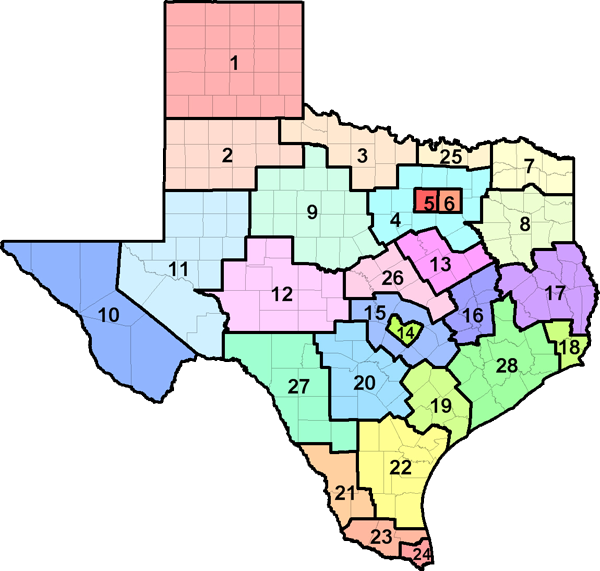
TEXAS COUNTY MAP BY WORKFORCE DEVELOPMENT AREA
* Due to confidentiality rules, not all regions may have the data displayed. The sum of all the regions may not be equal to the state total.


Top 10 Relevant Knowledge Areas Relevant Importance Levels
Engineering and Technology
Knowledge of the practical application of engineering science and technology. This includes applying principles, techniques, procedures, and equipment to the design and production of various goods and services.
94.00%
Design
Knowledge of design techniques, tools, and principles involved in production of precision technical plans, blueprints, drawings, and models.
89.60%
English Language
Knowledge of the structure and content of the English language including the meaning and spelling of words, rules of composition, and grammar.
84.60%
Mathematics
Knowledge of arithmetic, algebra, geometry, calculus, statistics, and their applications.
84.40%
Building and Construction
Knowledge of materials, methods, and the tools involved in the construction or repair of houses, buildings, or other structures such as highways and roads.
76.60%
Administration and Management
Knowledge of business and management principles involved in strategic planning, resource allocation, human resources modeling, leadership technique, production methods, and coordination of people and resources.
71.40%
Mechanical
Knowledge of machines and tools, including their designs, uses, repair, and maintenance.
70.40%
Physics
Knowledge and prediction of physical principles, laws, their interrelationships, and applications to understanding fluid, material, and atmospheric dynamics, and mechanical, electrical, atomic and sub-atomic structures and processes.
70.40%
Chemistry
Knowledge of the chemical composition, structure, and properties of substances and of the chemical processes and transformations that they undergo. This includes uses of chemicals and their interactions, danger signs, production techniques, and disposal methods.
69.00%
Customer and Personal Service
Knowledge of principles and processes for providing customer and personal services. This includes customer needs assessment, meeting quality standards for services, and evaluation of customer satisfaction.
68.60%


Top 10 Relevant Skill Areas Relevant Importance Levels
Reading Comprehension
Understanding written sentences and paragraphs in work-related documents.
80.00%
Writing
Communicating effectively in writing as appropriate for the needs of the audience.
80.00%
Critical Thinking
Using logic and reasoning to identify the strengths and weaknesses of alternative solutions, conclusions, or approaches to problems.
80.00%
Judgment and Decision Making
Considering the relative costs and benefits of potential actions to choose the most appropriate one.
80.00%
Systems Analysis
Determining how a system should work and how changes in conditions, operations, and the environment will affect outcomes.
77.60%
Systems Evaluation
Identifying measures or indicators of system performance and the actions needed to improve or correct performance, relative to the goals of the system.
77.60%
Mathematics
Using mathematics to solve problems.
77.60%
Active Listening
Giving full attention to what other people are saying, taking time to understand the points being made, asking questions as appropriate, and not interrupting at inappropriate times.
77.60%
Complex Problem Solving
Identifying complex problems and reviewing related information to develop and evaluate options and implement solutions.
77.60%
Speaking
Talking to others to convey information effectively.
75.00%


Top 10 Relevant Abilities Relevant Importance Levels
Oral Comprehension
The ability to listen to and understand information and ideas presented through spoken words and sentences.
80.00%
Written Comprehension
The ability to read and understand information and ideas presented in writing.
80.00%
Oral Expression
The ability to communicate information and ideas in speaking so others will understand.
80.00%
Written Expression
The ability to communicate information and ideas in writing so others will understand.
80.00%
Deductive Reasoning
The ability to apply general rules to specific problems to produce answers that make sense.
80.00%
Inductive Reasoning
The ability to combine pieces of information to form general rules or conclusions (includes finding a relationship among seemingly unrelated events).
80.00%
Information Ordering
The ability to arrange things or actions in a certain order or pattern according to a specific rule or set of rules (e.g., patterns of numbers, letters, words, pictures, mathematical operations).
80.00%
Fluency of Ideas
The ability to come up with a number of ideas about a topic (the number of ideas is important, not their quality, correctness, or creativity).
77.60%
Mathematical Reasoning
The ability to choose the right mathematical methods or formulas to solve a problem.
77.60%
Problem Sensitivity
The ability to tell when something is wrong or is likely to go wrong. It does not involve solving the problem, only recognizing that there is a problem.
77.60%


  • Making Decisions and Solving Problems
    -- Analyzing information and evaluating results to choose the best solution and solve problems.
  • Getting Information
    -- Observing, receiving, and otherwise obtaining information from all relevant sources.
  • Communicating with Supervisors, Peers, or Subordinates
    -- Providing information to supervisors, co-workers, and subordinates by telephone, in written form, e-mail, or in person.
  • Working with Computers
    -- Using computers and computer systems (including hardware and software) to program, write software, set up functions, enter data, or process information.
  • Analyzing Data or Information
    -- Identifying the underlying principles, reasons, or facts of information by breaking down information or data into separate parts.
Other Activities


  • Achievement
    - Occupations that satisfy this work value are results oriented and allow employees to use their strongest abilities, giving them a feeling of accomplishment. Corresponding needs are Ability Utilization and Achievement.
  • Working Conditions
    - Occupations that satisfy this work value offer job security and good working conditions. Corresponding needs are Activity, Compensation, Independence, Security, Variety and Working Conditions.


Tools

Desktop computers: Desktop computers;

Laser printers: Computer laser printers;

Notebook computers: Laptop computers;

Personal computers: Personal computers;

Plotter printers: Large-format plotters;

Scanners: Digitizers; Computer data input scanners;


Technology

Analytical or scientific software: Bentley StormCAD; DHI MIKE URBAN; EPA Storm Water Management Model SWMM; HEC-1; HEC-GeoRAS; HEC-HMS; HEC-RAS; Hydraulic modeling software; KYPipe; Minitab; MWH Soft InfoSWMM; NIWA Tideda; Wallingford Software InfoSewer; Wallingford Software InfoWorks WS; XP Software XPSWMM;

Computer aided design CAD software: OpenRoads Designer; Computer aided design and drafting software CADD; HydroCAD Software Solutions HydroCAD Stormwater Modeling System; Eagle Point LANDCADD; Bentley WaterCAD; Autodesk AutoCAD; Autodesk AutoCAD Civil 3D; Autodesk Revit; Bentley GEOPAK Civil Engineering Suite; Bentley InRoads Suite; Bentley MicroStation; Bentley SewerCAD;

Data base user interface and query software: Microsoft Access; Structured query language SQL;

Electronic mail software: Microsoft Outlook;

Enterprise resource planning ERP software: SAP software;

Geographic information system: ESRI ArcGIS software; ESRI software; Geographic information system GIS software; Geographic information system GIS systems;

Industrial control software: Supervisory control and data acquisition SCADA software;

Internet browser software: Web browser software; Google Chrome; Mozilla Firefox; Microsoft Internet Explorer;

Map creation software: MapInfo;

Object or component oriented development software: Oracle Java; Python;

Office suite software: Microsoft Office software; Business software applications;

Operating system software: Bash;

Presentation software: Microsoft PowerPoint;

Project management software: Microsoft Project;

Spreadsheet software: Microsoft Excel;

Word processing software: Microsoft Word; Word processing software;


Related O*NET occupational titles for Water/Wastewater Engineers include:
  • 11-9199.11 Brownfield Redevelopment Specialists and Site Managers
  • 17-2041.00 Chemical Engineers
  • 17-2051.00 Civil Engineers
  • 17-2199.03 Energy Engineers, Except Wind and Solar
  • 17-2081.00 Environmental Engineers
  • 19-4042.00 Environmental Science and Protection Technicians, Including Health
  • 17-2171.00 Petroleum Engineers
  • 17-2051.01 Transportation Engineers
  • 11-9121.02 Water Resource Specialists
  • 17-2199.10 Wind Energy Engineers


Sources of Additional Information
  • For information about general engineering education and career resources, visit: American Society for Engineering Education (ASEE)
  • Technology Student Association (TSA)
  • For more information about licensure, visit: National Council of Examiners for Engineering and Surveying (NCEES)
  • National Society of Professional Engineers (NSPE)
  • For information about accredited programs in civil engineering and civil engineering technology, visit: ABET
  • For more information about civil engineers, visit: American Society of Civil Engineers (ASCE)
  • Occupational Requirements Survey

  • For a profile highlighting selected BLS data on occupational requirements, see
  • Civil engineers (PDF)
  • CareerOneStop

  • For a career video on civil engineers, visit: Civil Engineers
  • Civil Engineers
  • Transportation Engineers
  • Water/Wastewater Engineers

  • Contact Texas Workforce Commission
    Labor Market and Career Information  |  101 E. 15th Street, Annex Room 0252  |  Austin, Texas 78778
    Official Website  |  1-800-822-PLAN (7526)  |  512.936.3200

    ** The information in this report may be derived from many sources like O*NET, BLS (Bureau of Labor Statistics), OOH (Occupational Outlook Handbook), and Career One Stop.