
The U.S. Department of Labor has developed an automated occupational information database, O*NET, that identifies and describes work content, work skills, and training requirements for all jobs across the country in all sectors of the economy. Much of the occupational information contained in this report is derived directly from the O*NET database, and supplemented with information from the Bureau of Labor Statistics, Census Bureau, and Labor Market and Career Information.
| Industry | % of Environmental Engineers employed | Annual Growth Rate |
|---|---|---|
| Architectural, engineering, and related services | 30.1 | 0.48 |
| Management, scientific, and technical consulting services | 19.8 | 1.11 |
| Remediation and other waste management services | 2.5 | 1.55 |
| 2024 Statewide average hourly wage | $57.05 |
| 2024 National average hourly wage | $53.16 |
| 2022 National employment | 47,300 |
| 2022 Texas employment | 2,478 |
| Texas projected employment by 2032 | 3,013 |
| Texas projected annual employment and Turnover openings through 2032 | 228 |
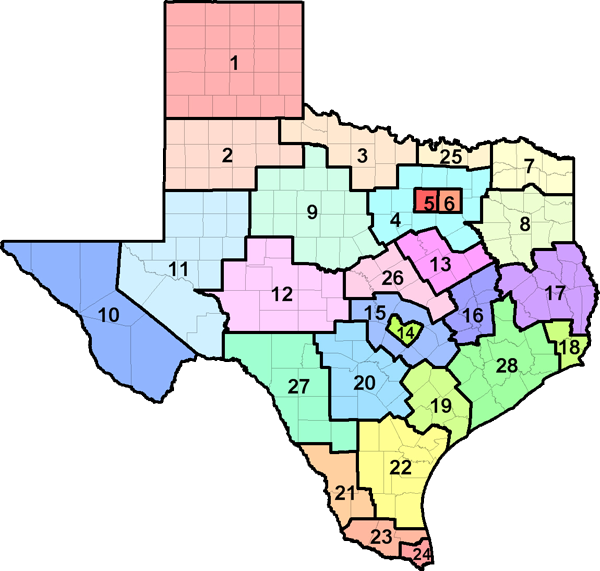
| Region | Employment | Projected Employment 2032 | Projected Annual Openings 2032 |
Annual Growth Rate |
Average Income |
|---|---|---|---|---|---|
| Texas (all regions) | 2,478 | 3,013 | 228 | 1.97% | $118,656.00 |
| Top 10 Relevant Knowledge Areas | Relevant Importance Levels |
|---|---|
| Engineering and Technology Knowledge of the practical application of engineering science and technology. This includes applying principles, techniques, procedures, and equipment to the design and production of various goods and services. |
|
| Design Knowledge of design techniques, tools, and principles involved in production of precision technical plans, blueprints, drawings, and models. |
|
| Chemistry Knowledge of the chemical composition, structure, and properties of substances and of the chemical processes and transformations that they undergo. This includes uses of chemicals and their interactions, danger signs, production techniques, and disposal methods. |
|
| Mathematics Knowledge of arithmetic, algebra, geometry, calculus, statistics, and their applications. |
|
| Building and Construction Knowledge of materials, methods, and the tools involved in the construction or repair of houses, buildings, or other structures such as highways and roads. |
|
| English Language Knowledge of the structure and content of the English language including the meaning and spelling of words, rules of composition, and grammar. |
|
| Physics Knowledge and prediction of physical principles, laws, their interrelationships, and applications to understanding fluid, material, and atmospheric dynamics, and mechanical, electrical, atomic and sub-atomic structures and processes. |
|
| Biology Knowledge of plant and animal organisms, their tissues, cells, functions, interdependencies, and interactions with each other and the environment. |
|
| Customer and Personal Service Knowledge of principles and processes for providing customer and personal services. This includes customer needs assessment, meeting quality standards for services, and evaluation of customer satisfaction. |
|
| Computers and Electronics Knowledge of circuit boards, processors, chips, electronic equipment, and computer hardware and software, including applications and programming. |
| Top 10 Relevant Skill Areas | Relevant Importance Levels |
|---|---|
| Reading Comprehension Understanding written sentences and paragraphs in work-related documents. |
|
| Active Listening Giving full attention to what other people are saying, taking time to understand the points being made, asking questions as appropriate, and not interrupting at inappropriate times. |
|
| Writing Communicating effectively in writing as appropriate for the needs of the audience. |
|
| Speaking Talking to others to convey information effectively. |
|
| Critical Thinking Using logic and reasoning to identify the strengths and weaknesses of alternative solutions, conclusions, or approaches to problems. |
|
| Monitoring Monitoring/Assessing performance of yourself, other individuals, or organizations to make improvements or take corrective action. |
|
| Complex Problem Solving Identifying complex problems and reviewing related information to develop and evaluate options and implement solutions. |
|
| Judgment and Decision Making Considering the relative costs and benefits of potential actions to choose the most appropriate one. |
|
| Coordination Adjusting actions in relation to others' actions. |
|
| Active Learning Understanding the implications of new information for both current and future problem-solving and decision-making. |
| Top 10 Relevant Abilities | Relevant Importance Levels |
|---|---|
| Oral Comprehension The ability to listen to and understand information and ideas presented through spoken words and sentences. |
|
| Written Comprehension The ability to read and understand information and ideas presented in writing. |
|
| Oral Expression The ability to communicate information and ideas in speaking so others will understand. |
|
| Written Expression The ability to communicate information and ideas in writing so others will understand. |
|
| Problem Sensitivity The ability to tell when something is wrong or is likely to go wrong. It does not involve solving the problem, only recognizing that there is a problem. |
|
| Deductive Reasoning The ability to apply general rules to specific problems to produce answers that make sense. |
|
| Inductive Reasoning The ability to combine pieces of information to form general rules or conclusions (includes finding a relationship among seemingly unrelated events). |
|
| Fluency of Ideas The ability to come up with a number of ideas about a topic (the number of ideas is important, not their quality, correctness, or creativity). |
|
| Originality The ability to come up with unusual or clever ideas about a given topic or situation, or to develop creative ways to solve a problem. |
|
| Information Ordering The ability to arrange things or actions in a certain order or pattern according to a specific rule or set of rules (e.g., patterns of numbers, letters, words, pictures, mathematical operations). |