Occupation Summary

Nuclear Engineers

O*NET 17-2161.00

Description:

Conduct research on nuclear engineering projects or apply principles and theory of nuclear science to problems concerned with release, control, and use of nuclear energy and nuclear waste disposal.

Annual Wages:
$106,694.00
Employment Rate:
Employment is expected to increase by 12.46%.
Education Level:
Bachelor's Degree. According to O*Net, the majority of people employed in this occupation have this level of education.
Endorsement:
STEM

  1. Examine accidents to obtain data for use in design of preventive measures.
  2. Monitor nuclear facility operations to identify any design, construction, or operation practices that violate safety regulations and laws or could jeopardize safe operations.
  3. Keep abreast of developments and changes in the nuclear field by reading technical journals or by independent study and research.
  4. Perform experiments that will provide information about acceptable methods of nuclear material usage, nuclear fuel reclamation, or waste disposal.
  5. Design or oversee construction or operation of nuclear reactors, power plants, or nuclear fuels reprocessing and reclamation systems.
  6. Design or develop nuclear equipment, such as reactor cores, radiation shielding, or associated instrumentation or control mechanisms.
  7. Initiate corrective actions or order plant shutdowns in emergency situations.
  8. Recommend preventive measures to be taken in the handling of nuclear technology, based on data obtained from operations monitoring or from evaluation of test results.
  9. Write operational instructions to be used in nuclear plant operation or nuclear fuel or waste handling and disposal.
  10. Conduct tests of nuclear fuel behavior and cycles or performance of nuclear machinery and equipment to optimize performance of existing plants.
  11. Direct operating or maintenance activities of nuclear power plants to ensure efficiency and conformity to safety standards.
  12. Conduct environmental studies on topics such as nuclear power generation, nuclear waste disposal, or nuclear weapon deployment.
  13. Design fuel cycle models or processes to reduce the quantity of radioactive waste generated from nuclear activities.
  14. Develop or contribute to the development of plans to remediate or restore environments affected by nuclear radiation, such as waste disposal sites.
  15. Direct environmental compliance activities associated with nuclear plant operations or maintenance.
  16. Prepare environmental impact statements, reports, or presentations for regulatory or other agencies.
  17. Prepare technical reports of findings or recommendations, based on synthesized analyses of test results.
  18. Design or direct nuclear research projects to develop, test, modify, or discover new uses for theoretical models.
  19. Consult with other scientists to determine parameters of experimentation or suitability of analytical models.
  20. Discuss construction project proposals with interested parties, such as vendors, contractors, or nuclear facility review boards.


National Industry Employment Patterns


Industry % of Nuclear Engineers employed Annual Growth Rate
Electric power generation, transmission and distribution 30.1 -0.25
Scientific research and development services 15.8 0.45
Architectural, engineering, and related services 8.2 0.87
Management, scientific, and technical consulting services 3.4 0.00


Labor Market Information


2024 Statewide average hourly wage $51.29
2024 National average hourly wage $64.89
2022 National employment 13,800
2022 Texas employment 345
Texas projected employment by 2032 388
Texas projected annual employment and Turnover openings through 2032 25


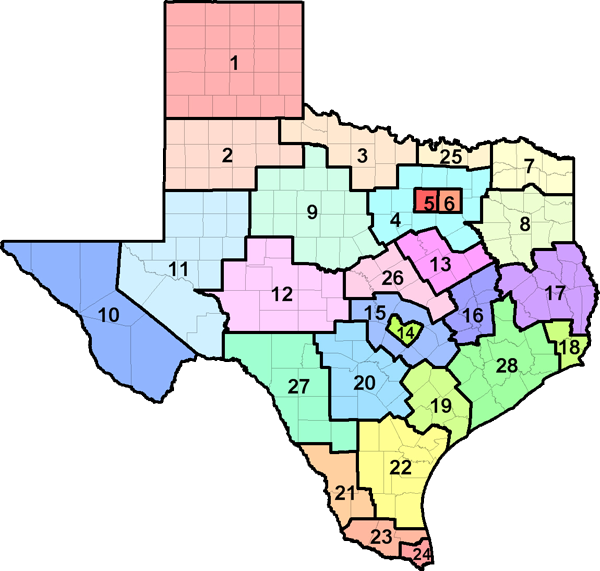
TEXAS COUNTY MAP BY WORKFORCE DEVELOPMENT AREA
* Due to confidentiality rules, not all regions may have the data displayed. The sum of all the regions may not be equal to the state total.


Top 10 Relevant Knowledge Areas Relevant Importance Levels
Engineering and Technology
Knowledge of the practical application of engineering science and technology. This includes applying principles, techniques, procedures, and equipment to the design and production of various goods and services.
91.40%
Physics
Knowledge and prediction of physical principles, laws, their interrelationships, and applications to understanding fluid, material, and atmospheric dynamics, and mechanical, electrical, atomic and sub-atomic structures and processes.
91.00%
Mathematics
Knowledge of arithmetic, algebra, geometry, calculus, statistics, and their applications.
88.00%
English Language
Knowledge of the structure and content of the English language including the meaning and spelling of words, rules of composition, and grammar.
81.00%
Public Safety and Security
Knowledge of relevant equipment, policies, procedures, and strategies to promote effective local, state, or national security operations for the protection of people, data, property, and institutions.
79.00%
Chemistry
Knowledge of the chemical composition, structure, and properties of substances and of the chemical processes and transformations that they undergo. This includes uses of chemicals and their interactions, danger signs, production techniques, and disposal methods.
77.20%
Design
Knowledge of design techniques, tools, and principles involved in production of precision technical plans, blueprints, drawings, and models.
73.40%
Computers and Electronics
Knowledge of circuit boards, processors, chips, electronic equipment, and computer hardware and software, including applications and programming.
73.40%
Mechanical
Knowledge of machines and tools, including their designs, uses, repair, and maintenance.
69.60%
Education and Training
Knowledge of principles and methods for curriculum and training design, teaching and instruction for individuals and groups, and the measurement of training effects.
68.00%


Top 10 Relevant Skill Areas Relevant Importance Levels
Science
Using scientific rules and methods to solve problems.
82.40%
Critical Thinking
Using logic and reasoning to identify the strengths and weaknesses of alternative solutions, conclusions, or approaches to problems.
82.40%
Reading Comprehension
Understanding written sentences and paragraphs in work-related documents.
80.00%
Active Listening
Giving full attention to what other people are saying, taking time to understand the points being made, asking questions as appropriate, and not interrupting at inappropriate times.
80.00%
Writing
Communicating effectively in writing as appropriate for the needs of the audience.
80.00%
Complex Problem Solving
Identifying complex problems and reviewing related information to develop and evaluate options and implement solutions.
80.00%
Monitoring
Monitoring/Assessing performance of yourself, other individuals, or organizations to make improvements or take corrective action.
80.00%
Mathematics
Using mathematics to solve problems.
80.00%
Judgment and Decision Making
Considering the relative costs and benefits of potential actions to choose the most appropriate one.
80.00%
Active Learning
Understanding the implications of new information for both current and future problem-solving and decision-making.
77.60%


Top 10 Relevant Abilities Relevant Importance Levels
Problem Sensitivity
The ability to tell when something is wrong or is likely to go wrong. It does not involve solving the problem, only recognizing that there is a problem.
92.40%
Written Expression
The ability to communicate information and ideas in writing so others will understand.
82.40%
Written Comprehension
The ability to read and understand information and ideas presented in writing.
80.00%
Oral Expression
The ability to communicate information and ideas in speaking so others will understand.
80.00%
Deductive Reasoning
The ability to apply general rules to specific problems to produce answers that make sense.
80.00%
Inductive Reasoning
The ability to combine pieces of information to form general rules or conclusions (includes finding a relationship among seemingly unrelated events).
80.00%
Information Ordering
The ability to arrange things or actions in a certain order or pattern according to a specific rule or set of rules (e.g., patterns of numbers, letters, words, pictures, mathematical operations).
80.00%
Category Flexibility
The ability to generate or use different sets of rules for combining or grouping things in different ways.
80.00%
Mathematical Reasoning
The ability to choose the right mathematical methods or formulas to solve a problem.
80.00%
Near Vision
The ability to see details at close range (within a few feet of the observer).
77.60%


  • Evaluating Information to Determine Compliance with Standards
    -- Using relevant information and individual judgment to determine whether events or processes comply with laws, regulations, or standards.
  • Working with Computers
    -- Using computers and computer systems (including hardware and software) to program, write software, set up functions, enter data, or process information.
  • Analyzing Data or Information
    -- Identifying the underlying principles, reasons, or facts of information by breaking down information or data into separate parts.
  • Making Decisions and Solving Problems
    -- Analyzing information and evaluating results to choose the best solution and solve problems.
  • Getting Information
    -- Observing, receiving, and otherwise obtaining information from all relevant sources.
Other Activities


  • Achievement
    - Occupations that satisfy this work value are results oriented and allow employees to use their strongest abilities, giving them a feeling of accomplishment. Corresponding needs are Ability Utilization and Achievement.
  • Recognition
    - Occupations that satisfy this work value offer advancement, potential for leadership, and are often considered prestigious. Corresponding needs are Advancement, Authority, Recognition and Social Status.


Tools

Desktop computers: Desktop computers;

Facial shields: Face masks;

Hazardous material protective apparel: Anticontamination clothing;

Nuclear reactor control rod systems: Reactivity computer systems;

Nuclear tools: Nuclear wireline logging instruments;

Personal computers: Personal computers;

Respirators: Respirators;


Technology

Analytical or scientific software: ANISN dose assessment computer code; BERMUDA nuclear transport computer codes; Discrete ordinates DORT dose assessment computer codes; Maplesoft Maple; Mathematical simulation software; MCNP dose assessment computer code; MERCURE dose assessment computer codes; Monte Carlo simulation software; MORSE-CG dose assessment computer code; Probabilistic risk assessment PRA software; QAD shielding computer code; Reactor excursion and release analysis program RELAP; SAS; SCALE ORIGEN-S point depletion and decay code; Scientech Safety Monitor; Scientech WinNUPRA; The MathWorks MATLAB; Transient reactor analysis code TRAC;

Computer aided design CAD software: Mathsoft Mathcad; Computer aided design CAD software;

Customer relationship management CRM software: Salesforce software;

Data base user interface and query software: Relational database software; Microsoft Access;

Desktop publishing software: Desktop publishing software;

Development environment software: FOLLOW code; Formula translation/translator FORTRAN; INCORE code; Software development tools; TOTE code;

Enterprise resource planning ERP software: SAP software;

Graphics or photo imaging software: Graphics software;

Object or component oriented development software: C++; Python; Oracle Java;

Office suite software: Microsoft Office software;

Operating system software: Linux; UNIX;

Presentation software: Microsoft PowerPoint; Presentation software;

Spreadsheet software: Spreadsheet software; Microsoft Excel;

Word processing software: Microsoft Word; Word processing software;


Related O*NET occupational titles for Nuclear Engineers include:
  • 11-9041.01 Biofuels/Biodiesel Technology and Product Development Managers
  • 17-2041.00 Chemical Engineers
  • 17-2071.00 Electrical Engineers
  • 17-2081.00 Environmental Engineers
  • 17-2141.01 Fuel Cell Engineers
  • 11-3051.02 Geothermal Production Managers
  • 19-4051.02 Nuclear Monitoring Technicians
  • 51-8011.00 Nuclear Power Reactor Operators
  • 19-4051.00 Nuclear Technicians
  • 51-8013.00 Power Plant Operators


Sources of Additional Information
  • For more information about general engineering education and career resources, visit: American Nuclear Society
  • American Society for Engineering Education
  • Health Physics Society
  • Nuclear Energy Institute
  • Technology Student Association
  • For more information about licensure as a nuclear engineer, visit: National Council of Examiners for Engineering and Surveying
  • National Society of Professional Engineers
  • For more information about accredited engineering programs, visit: ABET
  • For information about engineering summer camps, visit: Engineering For Kids
  • To see vacancies for nuclear engineer positions in the federal government, visit: USAJOBS
  • Nuclear Engineers

  • Contact Texas Workforce Commission
    Labor Market and Career Information  |  101 E. 15th Street, Annex Room 0252  |  Austin, Texas 78778
    Official Website  |  1-800-822-PLAN (7526)  |  512.936.3200

    ** The information in this report may be derived from many sources like O*NET, BLS (Bureau of Labor Statistics), OOH (Occupational Outlook Handbook), and Career One Stop.