Occupation Summary

Electrical and Electronic Engineering Technologists and Technicians

O*NET 17-3023.00

Description:

Apply electrical and electronic theory and related knowledge, usually under the direction of engineering staff, to design, build, repair, adjust, and modify electrical components, circuitry, controls, and machinery for subsequent evaluation and use by engineering staff in making engineering design decisions.

Annual Wages:
$70,906.00
Employment Rate:
Employment is expected to increase by 10.90%.
Education Level:
Post-Secondary Certificate - awarded for training completed after high school (for example, in agriculture or natural resources, computer services, personal or culinary services, engineering technologies, healthcare, construction trades, mechanic and repair technologies, or precision production). According to O*Net, the majority of people employed in this occupation have this level of education.
Endorsement:
STEM

  1. Modify, maintain, or repair electronics equipment or systems to ensure proper functioning.
  2. Replace defective components or parts, using hand tools and precision instruments.
  3. Set up and operate specialized or standard test equipment to diagnose, test, or analyze the performance of electronic components, assemblies, or systems.
  4. Read blueprints, wiring diagrams, schematic drawings, or engineering instructions for assembling electronics units, applying knowledge of electronic theory and components.
  5. Identify and resolve equipment malfunctions, working with manufacturers or field representatives as necessary to procure replacement parts.
  6. Assemble electrical systems or prototypes, using hand tools or measuring instruments.
  7. Review electrical engineering plans to ensure adherence to design specifications and compliance with applicable electrical codes and standards.
  8. Assemble, test, or maintain circuitry or electronic components, according to engineering instructions, technical manuals, or knowledge of electronics, using hand or power tools.
  9. Review existing electrical engineering criteria to identify necessary revisions, deletions, or amendments to outdated material.
  10. Maintain system logs or manuals to document testing or operation of equipment.
  11. Select electronics equipment, components, or systems to meet functional specifications.
  12. Calculate design specifications or cost, material, and resource estimates, and prepare project schedules and budgets.
  13. Educate equipment operators on the proper use of equipment.
  14. Supervise the installation or operation of electronic equipment or systems.
  15. Compile and maintain records documenting engineering schematics, installed equipment, installation or operational problems, resources used, repairs, or corrective action performed.
  16. Modify electrical prototypes, parts, assemblies, or systems to correct functional deviations.
  17. Integrate software or hardware components, using computer, microprocessor, or control architecture.
  18. Procure parts and maintain inventory and related documentation.
  19. Participate in training or continuing education activities to stay abreast of engineering or industry advances.
  20. Research equipment or component needs, sources, competitive prices, delivery times, or ongoing operational costs.
  21. Provide user applications or engineering support or recommendations for new or existing equipment with regard to installation, upgrades, or enhancements.
  22. Specify, coordinate, or conduct quality control or quality assurance programs or procedures.
  23. Produce electronics drawings or other graphics representing industrial control, instrumentation, sensors, or analog or digital telecommunications networks, using computer-aided design (CAD) software.
  24. Install or maintain electrical control systems, industrial automation systems, or electrical equipment, including control circuits, variable speed drives, or programmable logic controllers.
  25. Design or modify engineering schematics for electrical transmission and distribution systems or for electrical installation in residential, commercial, or industrial buildings, using computer-aided design (CAD) software.
  26. Interpret test information to resolve design-related problems.
  27. Conduct statistical studies to analyze or compare production costs for sustainable or nonsustainable designs.
  28. Construct and evaluate electrical components for consumer electronics applications such as fuel cells for consumer electronic devices, power saving devices for computers or televisions, or energy efficient power chargers.
  29. Participate in the development or testing of electrical aspects of new green technologies, such as lighting, optical data storage devices, and energy efficient televisions.
  30. Review, develop, or prepare maintenance standards.


National Industry Employment Patterns


Industry % of Electrical and Electronic Engineering Technologists and Technicians employed Annual Growth Rate
Architectural, engineering, and related services 14.2 0.54
Semiconductor and other electronic component manufacturing 11.7 -0.17
Electronic instrument manufacturing 7.2 -0.99
Electric power generation, transmission and distribution 5.1 -0.19
Scientific research and development services 4.3 0.66
Computer systems design and related services 3.2 1.42
Communications equipment manufacturing 2.5 -1.22
Other electrical equipment and component manufacturing 2.1 3.15


Labor Market Information


2024 Statewide average hourly wage $34.09
2024 National average hourly wage $37.78
2022 National employment 102,500
2022 Texas employment 7,375
Texas projected employment by 2032 8,179
Texas projected annual employment and Turnover openings through 2032 825


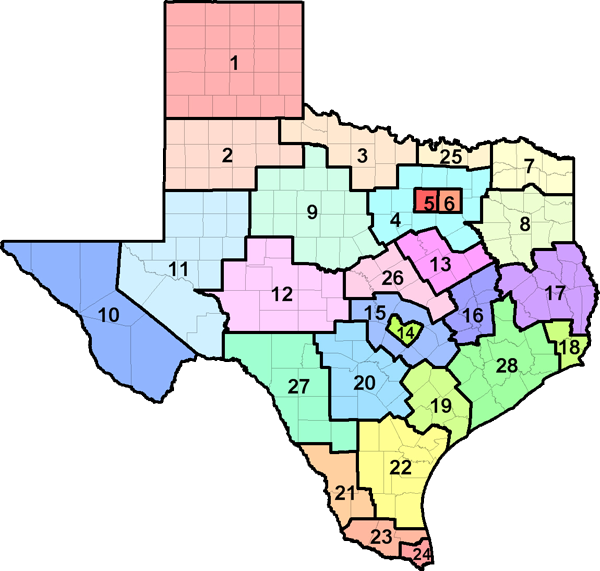
TEXAS COUNTY MAP BY WORKFORCE DEVELOPMENT AREA
* Due to confidentiality rules, not all regions may have the data displayed. The sum of all the regions may not be equal to the state total.


Top 10 Relevant Knowledge Areas Relevant Importance Levels
Computers and Electronics
Knowledge of circuit boards, processors, chips, electronic equipment, and computer hardware and software, including applications and programming.
87.60%
Engineering and Technology
Knowledge of the practical application of engineering science and technology. This includes applying principles, techniques, procedures, and equipment to the design and production of various goods and services.
87.20%
English Language
Knowledge of the structure and content of the English language including the meaning and spelling of words, rules of composition, and grammar.
75.20%
Design
Knowledge of design techniques, tools, and principles involved in production of precision technical plans, blueprints, drawings, and models.
72.40%
Mathematics
Knowledge of arithmetic, algebra, geometry, calculus, statistics, and their applications.
70.40%
Customer and Personal Service
Knowledge of principles and processes for providing customer and personal services. This includes customer needs assessment, meeting quality standards for services, and evaluation of customer satisfaction.
66.00%
Mechanical
Knowledge of machines and tools, including their designs, uses, repair, and maintenance.
65.80%
Production and Processing
Knowledge of raw materials, production processes, quality control, costs, and other techniques for maximizing the effective manufacture and distribution of goods.
64.20%
Telecommunications
Knowledge of transmission, broadcasting, switching, control, and operation of telecommunications systems.
62.60%
Physics
Knowledge and prediction of physical principles, laws, their interrelationships, and applications to understanding fluid, material, and atmospheric dynamics, and mechanical, electrical, atomic and sub-atomic structures and processes.
61.40%


Top 10 Relevant Skill Areas Relevant Importance Levels
Reading Comprehension
Understanding written sentences and paragraphs in work-related documents.
77.60%
Critical Thinking
Using logic and reasoning to identify the strengths and weaknesses of alternative solutions, conclusions, or approaches to problems.
75.00%
Active Listening
Giving full attention to what other people are saying, taking time to understand the points being made, asking questions as appropriate, and not interrupting at inappropriate times.
72.40%
Troubleshooting
Determining causes of operating errors and deciding what to do about it.
70.00%
Repairing
Repairing machines or systems using the needed tools.
70.00%
Complex Problem Solving
Identifying complex problems and reviewing related information to develop and evaluate options and implement solutions.
67.60%
Writing
Communicating effectively in writing as appropriate for the needs of the audience.
65.00%
Speaking
Talking to others to convey information effectively.
65.00%
Active Learning
Understanding the implications of new information for both current and future problem-solving and decision-making.
62.40%
Monitoring
Monitoring/Assessing performance of yourself, other individuals, or organizations to make improvements or take corrective action.
62.40%


Top 10 Relevant Abilities Relevant Importance Levels
Written Comprehension
The ability to read and understand information and ideas presented in writing.
77.60%
Deductive Reasoning
The ability to apply general rules to specific problems to produce answers that make sense.
77.60%
Inductive Reasoning
The ability to combine pieces of information to form general rules or conclusions (includes finding a relationship among seemingly unrelated events).
77.60%
Oral Comprehension
The ability to listen to and understand information and ideas presented through spoken words and sentences.
75.00%
Near Vision
The ability to see details at close range (within a few feet of the observer).
75.00%
Problem Sensitivity
The ability to tell when something is wrong or is likely to go wrong. It does not involve solving the problem, only recognizing that there is a problem.
72.40%
Information Ordering
The ability to arrange things or actions in a certain order or pattern according to a specific rule or set of rules (e.g., patterns of numbers, letters, words, pictures, mathematical operations).
70.00%
Oral Expression
The ability to communicate information and ideas in speaking so others will understand.
70.00%
Written Expression
The ability to communicate information and ideas in writing so others will understand.
67.60%
Visualization
The ability to imagine how something will look after it is moved around or when its parts are moved or rearranged.
67.60%


  • Working with Computers
    -- Using computers and computer systems (including hardware and software) to program, write software, set up functions, enter data, or process information.
  • Making Decisions and Solving Problems
    -- Analyzing information and evaluating results to choose the best solution and solve problems.
  • Getting Information
    -- Observing, receiving, and otherwise obtaining information from all relevant sources.
  • Communicating with Supervisors, Peers, or Subordinates
    -- Providing information to supervisors, co-workers, and subordinates by telephone, in written form, e-mail, or in person.
  • Evaluating Information to Determine Compliance with Standards
    -- Using relevant information and individual judgment to determine whether events or processes comply with laws, regulations, or standards.
Other Activities


  • Support
    - Occupations that satisfy this work value offer supportive management that stands behind employees. Corresponding needs are Company Policies, Supervision: Human Relations and Supervision: Technical.
  • Working Conditions
    - Occupations that satisfy this work value offer job security and good working conditions. Corresponding needs are Activity, Compensation, Independence, Security, Variety and Working Conditions.


Tools

Adjustable widemouth pliers: Adjustable widemouth pliers;

Adjustable wrenches: Adjustable wrenches;

Ammeters: Ammeters;

Amplifiers: Radio frequency RF amplifiers;

Antistatic wrist straps: Wrist anti-static straps;

Automatic soldering machine: Soldering stations; Desoldering stations;

Auxiliary generator: Dual power supplies;

Binocular light compound microscopes: Binocular light compound microscopes;

Brushless motor DC: Brushless direct current DC motors;

Capacitance meters: Inductance capacitance resistance LCR meters;

Desktop computers: Desktop computers;

Diesel generators: Alternating current AC generators;

Digital cameras: Digital cameras;

Dynamometers: Dynamometers;

Electronic counters: Nanosecond universal counters;

Electronic measuring probes: Probe stations; Voltage probes; Current probes;

Frequency analyzers: Harmonic analyzers; Spectrum analyzers; Radio frequency RF spectrum analyzers;

Frequency counters or timer or dividers: Frequency counters; Microwave frequency counters;

Goggles: Welding goggles;

Heel grounding straps: Anti-static heel grounders;

Impedance meters: Impedance meters;

Instrument transformers: Transformers;

Integrated circuit testers: Logic analyzers; Digital logic analyzers;

Laboratory mechanical convection ovens: Reflow ovens;

Laser printers: Laser printers;

Lasers: Lasers;

Level generators: Pulse generators;

Magnetic tools: Magnetic pickup tools;

Microcontrollers: Programmable logic controllers PLC;

Microprocessors: Microcomputers; Microprocessors;

Milling machines: Computerized numerical control CNC machining centers;

Multimeters: Analog multimeters; Digital multimeters; Multimeters; Signal measuring equipment;

Network analyzers: Network analyzers;

Notebook computers: Laptop computers; Notebook computers;

Ohmmeters: Ohmmeters;

Oscilloscopes: Oscilloscopes;

Personal computers: Personal computers;

Phase shifters: Phase shifters;

Phasemeters: Phase shift indicators;

Plotter printers: Digital plotters; Plotters;

Portable data input terminals: Dataloggers;

Potentiometers: Potentiometers; Direct current DC potentiometers;

Power drills: Power drills;

Power meters: Power meters; Power quality analyzers;

Power screwguns: Power screwdrivers;

Q Meters: Q meters;

Reflectometers: Optical time domain reflectometers OTDR;

Screwdrivers: Screwdrivers;

Signal generators: Signal generators; Radio frequency RF signal generators; Function generators;

Soldering iron: Soldering equipment;

Speed sensors: Stroboscopes;

Spot welding machine: Welders;

Stripping tools: Wire strippers;

Tachometers: Tachometers;

Tracer or duplicating or contouring lathe: Bench lathes;

Variable resistors or varistors: Metal-oxide varistors MOV;

Voltage or current meters: Voltage testers; Digital voltmeters DVM; Analog current meters; Standing wave ratio SWR meters;

Wattmeters: Wattmeters;

Welding masks: Welding hoods;

Wire cutters: Wire cutters;

Wire lug crimping tool: Wire crimpers;

Wire wrapping tool: Wire wrap guns;


Technology

Analytical or scientific software: Altera MAX; Altera Quartus II; Ansoft HFSS; Ansys Fluent; Anadigm Designer2 EDA; BSVC; Cadence OrCAD PSpice; Cadence PSpice; Circuit simulation software; Computer-aided engineering CAE software; Data acquisition software; GNU Octave; Gnuplot; MAGIC software; MathWorks Simulink; ngspice; OctTools; pMatlab; PowerWorld software; Proportional integral derivative control PID software; PTC Mathcad; Siemens ModelSim; Signal synthesizers; Simulation software; Spectrum Software Micro-Cap; SPLAT!; Root cause analysis software; The MathWorks MATLAB; Transmission line simulators; Wolfram Research Mathematica;

Business intelligence and data analysis software: IBM Cognos Impromptu;

Cloud-based management software: IBM WebSphere;

Computer aided design CAD software: Keysight Technologies Advanced Design System; KiCad; Logisim; Mentor Graphics PADS; National Instruments Multisim; OrCAD Capture; gEDA; EMA TimingDesigner; Agilent Advanced Design System ADS; CST Microwave Studio; Dassault Systemes SolidWorks; Computer aided design CAD software; Bentley MicroStation; Autodesk AutoCAD; Autodesk Revit; Altium Designer; Xcircuit; Tanner Research L-Edit; Static Free Software Electric VLSI Design System; PUFF; PTC Creo Parametric;

Data base user interface and query software: Database software; FileMaker Pro; Oracle Database; Microsoft Access;

Development environment software: Microchip MPLAB Integrated Development Environment (IDE); HP InfoTech CodeVisionAVR; Microsoft Visual Basic; Motorola Digital Signal Processing (DSP) Assembler; National Instruments LabVIEW; GE Fanuc Automation VersaPro; Eclipse IDE; Adobe ActionScript; Analog Devices VisualDSP++; Canu; C; Texas Instruments Code Composer Studio CCStudio; Verilog;

Document management software: Adobe Acrobat; FlukeView Forms;

Electronic mail software: Microsoft Outlook;

Enterprise resource planning ERP software: Oracle Hyperion; Oracle JD Edwards EnterpriseOne; Oracle Primavera Enterprise Project Portfolio Management; SAP software;

Graphics or photo imaging software: Graphics software;

Industrial control software: AVEVA InTouch HMI; Human machine interface HMI software; Supervisory control and data acquisition SCADA software; Programmable logic controller PLC software; Rockwell RSView;

Internet browser software: Microsoft Internet Explorer;

Network connectivity terminal emulation software: Terminal emulation software;

Object or component oriented development software: Python; Microsoft Visual Basic.NET; C++; Computer aided software engineering CASE tools;

Office suite software: Microsoft Office software;

Operating system software: Magellan Firmware; Linux; Microsoft Windows; Operating system software; Emulators; UNIX;

Presentation software: Microsoft PowerPoint;

Program testing software: Debugging software; Vector Software VectorCast; Rockwell RSLogix;

Project management software: Bentley Systems ProjectWise; Microsoft Project;

Spreadsheet software: Microsoft Excel; Spreadsheet software;

Web platform development software: JavaScript;

Word processing software: Microsoft Word; Word processing software;


Related O*NET occupational titles for Electrical and Electronic Engineering Technologists and Technicians include:
  • 17-3021.00 Aerospace Engineering and Operations Technologists and Technicians
  • 17-3028.00 Calibration Technologists and Technicians
  • 49-2093.00 Electrical and Electronics Installers and Repairers, Transportation Equipment
  • 49-2094.00 Electrical and Electronics Repairers, Commercial and Industrial Equipment
  • 17-3024.00 Electro-Mechanical and Mechatronics Technologists and Technicians
  • 51-2023.00 Electromechanical Equipment Assemblers
  • 17-2072.00 Electronics Engineers, Except Computer
  • 17-3026.00 Industrial Engineering Technologists and Technicians
  • 17-3027.00 Mechanical Engineering Technologists and Technicians
  • 17-3024.01 Robotics Technicians


Sources of Additional Information
  • For more information about general engineering education and career resources, visit: American Society for Engineering Education (ASEE)
  • Technology Student Association (TSA)
  • For more information about accredited programs, visit: ABET
  • For more information about certification, visit: ETA International
  • International Society of Automation (ISA)
  • National Institute for Certification in Engineering Technologies (NICET)
  • For information about working in automation, visit: Automation Federation
  • Electrical and Electronic Engineering Technologists and Technicians

  • Contact Texas Workforce Commission
    Labor Market and Career Information  |  101 E. 15th Street, Annex Room 0252  |  Austin, Texas 78778
    Official Website  |  1-800-822-PLAN (7526)  |  512.936.3200

    ** The information in this report may be derived from many sources like O*NET, BLS (Bureau of Labor Statistics), OOH (Occupational Outlook Handbook), and Career One Stop.