Occupation Summary

Environmental Engineering Technologists and Technicians

O*NET 17-3025.00

Description:

Apply theory and principles of environmental engineering to modify, test, and operate equipment and devices used in the prevention, control, and remediation of environmental problems, including waste treatment and site remediation, under the direction of engineering staff or scientists. May assist in the development of environmental remediation devices.

Annual Wages:
$58,721.00
Employment Rate:
Employment is expected to increase by 17.39%.
Education Level:
Bachelor's Degree. According to O*Net, the majority of people employed in this occupation have this level of education.
Endorsement:
Business and Industry, Science Technology Engineering and Math (STEM)

  1. Receive, set up, test, or decontaminate equipment.
  2. Maintain project logbook records or computer program files.
  3. Perform environmental quality work in field or office settings.
  4. Review technical documents to ensure completeness and conformance to requirements.
  5. Review work plans to schedule activities.
  6. Obtain product information, identify vendors or suppliers, or order materials or equipment to maintain inventory.
  7. Arrange for the disposal of lead, asbestos, or other hazardous materials.
  8. Inspect facilities to monitor compliance with regulations governing substances, such as asbestos, lead, or wastewater.
  9. Provide technical engineering support in the planning of projects, such as wastewater treatment plants, to ensure compliance with environmental regulations and policies.
  10. Improve chemical processes to reduce toxic emissions.
  11. Oversee support staff.
  12. Assist in the cleanup of hazardous material spills.
  13. Produce environmental assessment reports, tabulating data and preparing charts, graphs, or sketches.
  14. Maintain process parameters and evaluate process anomalies.
  15. Work with customers to assess the environmental impact of proposed construction or to develop pollution prevention programs.
  16. Perform statistical analysis and correction of air or water pollution data submitted by industry or other agencies.
  17. Develop work plans, including writing specifications or establishing material, manpower, or facilities needs.
  18. Assess the ability of environments to naturally remove or reduce conventional or emerging contaminants from air, water, or soil.
  19. Create models to demonstrate or predict the process by which pollutants move through or impact an environment.
  20. Decontaminate or test field equipment used to clean or test pollutants from soil, air, or water.
  21. Evaluate and select technologies to clean up polluted sites, restore polluted air, water, or soil, or rehabilitate degraded ecosystems.
  22. Model biological, chemical, or physical treatment processes to remove or degrade pollutants.
  23. Prepare and package environmental samples for shipping or testing.
  24. Prepare permit applications or review compliance with environmental permits.
  25. Record laboratory or field data, including numerical data, test results, photographs, or summaries of visual observations.
  26. Collect and analyze pollution samples, such as air or ground water.


National Industry Employment Patterns


Industry % of Environmental Engineering Technologists and Technicians employed Annual Growth Rate
Architectural, engineering, and related services 35.6 0.00
Management, scientific, and technical consulting services 17 0.41
Remediation and other waste management services 6.7 1.06
Waste treatment and disposal 3.1 0.00


Labor Market Information


2024 Statewide average hourly wage $28.23
2024 National average hourly wage $30.32
2022 National employment 13,900
2022 Texas employment 690
Texas projected employment by 2032 810
Texas projected annual employment and Turnover openings through 2032 79


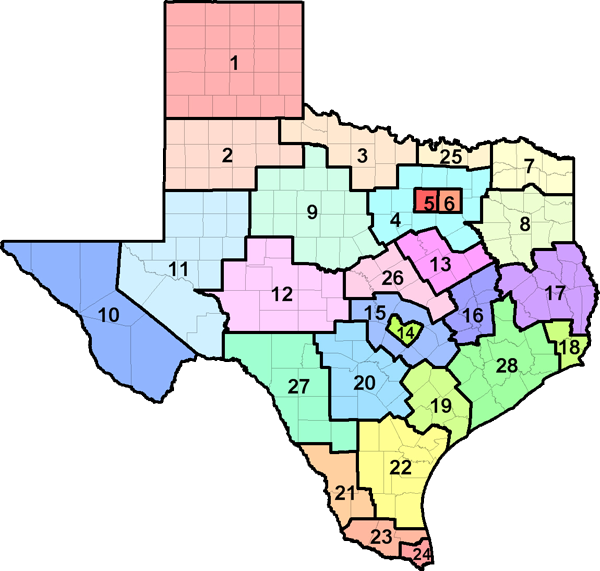
TEXAS COUNTY MAP BY WORKFORCE DEVELOPMENT AREA
* Due to confidentiality rules, not all regions may have the data displayed. The sum of all the regions may not be equal to the state total.


Top 10 Relevant Knowledge Areas Relevant Importance Levels
Engineering and Technology
Knowledge of the practical application of engineering science and technology. This includes applying principles, techniques, procedures, and equipment to the design and production of various goods and services.
74.20%
Mathematics
Knowledge of arithmetic, algebra, geometry, calculus, statistics, and their applications.
71.40%
Customer and Personal Service
Knowledge of principles and processes for providing customer and personal services. This includes customer needs assessment, meeting quality standards for services, and evaluation of customer satisfaction.
70.80%
English Language
Knowledge of the structure and content of the English language including the meaning and spelling of words, rules of composition, and grammar.
68.40%
Chemistry
Knowledge of the chemical composition, structure, and properties of substances and of the chemical processes and transformations that they undergo. This includes uses of chemicals and their interactions, danger signs, production techniques, and disposal methods.
67.00%
Mechanical
Knowledge of machines and tools, including their designs, uses, repair, and maintenance.
64.60%
Physics
Knowledge and prediction of physical principles, laws, their interrelationships, and applications to understanding fluid, material, and atmospheric dynamics, and mechanical, electrical, atomic and sub-atomic structures and processes.
64.20%
Public Safety and Security
Knowledge of relevant equipment, policies, procedures, and strategies to promote effective local, state, or national security operations for the protection of people, data, property, and institutions.
62.80%
Education and Training
Knowledge of principles and methods for curriculum and training design, teaching and instruction for individuals and groups, and the measurement of training effects.
59.00%
Building and Construction
Knowledge of materials, methods, and the tools involved in the construction or repair of houses, buildings, or other structures such as highways and roads.
59.00%


Top 10 Relevant Skill Areas Relevant Importance Levels
Reading Comprehension
Understanding written sentences and paragraphs in work-related documents.
77.60%
Active Listening
Giving full attention to what other people are saying, taking time to understand the points being made, asking questions as appropriate, and not interrupting at inappropriate times.
77.60%
Critical Thinking
Using logic and reasoning to identify the strengths and weaknesses of alternative solutions, conclusions, or approaches to problems.
77.60%
Active Learning
Understanding the implications of new information for both current and future problem-solving and decision-making.
75.00%
Science
Using scientific rules and methods to solve problems.
67.60%
Speaking
Talking to others to convey information effectively.
67.60%
Monitoring
Monitoring/Assessing performance of yourself, other individuals, or organizations to make improvements or take corrective action.
67.60%
Judgment and Decision Making
Considering the relative costs and benefits of potential actions to choose the most appropriate one.
65.00%
Time Management
Managing one's own time and the time of others.
62.40%
Quality Control Analysis
Conducting tests and inspections of products, services, or processes to evaluate quality or performance.
62.40%


Top 10 Relevant Abilities Relevant Importance Levels
Deductive Reasoning
The ability to apply general rules to specific problems to produce answers that make sense.
80.00%
Inductive Reasoning
The ability to combine pieces of information to form general rules or conclusions (includes finding a relationship among seemingly unrelated events).
80.00%
Written Comprehension
The ability to read and understand information and ideas presented in writing.
80.00%
Oral Expression
The ability to communicate information and ideas in speaking so others will understand.
77.60%
Oral Comprehension
The ability to listen to and understand information and ideas presented through spoken words and sentences.
77.60%
Problem Sensitivity
The ability to tell when something is wrong or is likely to go wrong. It does not involve solving the problem, only recognizing that there is a problem.
77.60%
Information Ordering
The ability to arrange things or actions in a certain order or pattern according to a specific rule or set of rules (e.g., patterns of numbers, letters, words, pictures, mathematical operations).
77.60%
Near Vision
The ability to see details at close range (within a few feet of the observer).
75.00%
Speech Clarity
The ability to speak clearly so others can understand you.
75.00%
Category Flexibility
The ability to generate or use different sets of rules for combining or grouping things in different ways.
72.40%


  • Communicating with Supervisors, Peers, or Subordinates
    -- Providing information to supervisors, co-workers, and subordinates by telephone, in written form, e-mail, or in person.
  • Getting Information
    -- Observing, receiving, and otherwise obtaining information from all relevant sources.
  • Documenting/Recording Information
    -- Entering, transcribing, recording, storing, or maintaining information in written or electronic/magnetic form.
  • Evaluating Information to Determine Compliance with Standards
    -- Using relevant information and individual judgment to determine whether events or processes comply with laws, regulations, or standards.
  • Inspecting Equipment, Structures, or Materials
    -- Inspecting equipment, structures, or materials to identify the cause of errors or other problems or defects.
Other Activities


  • Support
    - Occupations that satisfy this work value offer supportive management that stands behind employees. Corresponding needs are Company Policies, Supervision: Human Relations and Supervision: Technical.
  • Working Conditions
    - Occupations that satisfy this work value offer job security and good working conditions. Corresponding needs are Activity, Compensation, Independence, Security, Variety and Working Conditions.


Tools

Air pumps: Aeration pumps;

Air samplers or collectors: Airborne particulate samplers; Air monitoring equipment; Dichotomous particulate matter samplers; Multistage agar impactors;

Air velocity and temperature monitors: Air velocity meters;

Analytical balances: Analytical balances;

Anemometers: Anemometers;

Atomic absorption AA spectrometers: Atomic absorption AA spectrometers;

Bench refractometers or polarimeters: Interferometeric refractormeters;

Benchtop centrifuges: High-speed centrifuges;

Bi distillation units: Water distillation units;

Binocular light compound microscopes: Binocular light compound microscopes; Optical compound microscopes;

Calorimeters: Calorimeters;

Chemical absorption gas analyzers: Surface area analyzers;

Chemiluminescence or bioluminescence analyzers: Microtox toxicity systems;

Chemistry analyzers: Mercury analysis equipment;

Chromatographic detectors: Low pressure liquid chromatographs with fraction collectors;

Conductivity meters: Conductivity meters;

Darkfield microscopes: Phase contrast microscopes;

Density gradient fractionators: Universal fractionators;

Desktop computers: Desktop computers;

Dewatering equipment: Filter press simulators;

Digital cameras: Digital cameras;

Dissolved carbon dioxide analyzers: Respirometers;

Dissolved oxygen meters: Dissolved oxygen meters;

Dropping pipettes: Micropipettes;

Electronic counters: Particle counters;

Electrophoresis system accessories: Fraction collectors; Electrophoresis tanks; Zeta meters;

Extracting equipment for laboratories: Supercritical fluid extractors;

Filtering machinery: Particulate filters;

Flame ionization analyzers: Flame ionization detectors FID;

Flow injection analysis equipment: Flow injection analyzers;

Flowmeters: Flow meters;

Fluorescent microscopes: Total internal reflection fluorescence TIRF microscopes; Epifluorescence microscopes;

Forced air or mechanical convection general purpose incubators: Incubators;

Freeze dryers or lyopholizers: Freeze dryers;

French pressure cells: French presses;

Fume hoods or cupboards: Chemical fume hoods;

Gas chromatographs: Gas chromatographs GC;

Gel documentation systems: Gel documentation systems;

Global positioning system GPS receiver: Global positioning system GPS receivers;

Hazardous material protective apparel: Hazardous material protective clothing;

Heated walk in environmental or growth chambers: Heated environmental chambers;

Heating mantles or tapes: Heating mantles;

Heating or drying equipment or accessories: Dessicator chambers;

HEPA filtered enclosures: Biosafety cabinets;

High pressure liquid chromatograph chromatography: High pressure liquid chromatograph HPLC with ultraviolet/visible UV/Vis absorbance detectors;

Hydrocarbons analyzers or detectors: Total organic halide analyzers;

Inductively coupled plasma ICP spectrometers: Plasma spectrometers;

Instrumentation for capillary electrophoresis: Electrophoresis equipment;

Inverted microscopes: Inverted microscopes;

Ion chromatographs: Ion chromatographs;

Ion selective electrode: Specific ion probes;

Ion selective electrode ISE meters: Ion selective electrode ISE meters;

Isolation glove boxes: Anaerobic laboratory glove bags;

Laboratory adapters or connectors or fittings: Glassware adapters;

Laboratory bailers: Bailers;

Laboratory balances: Pan balances; Laboratory scales; Balances;

Laboratory beakers: Beakers;

Laboratory blenders or emulsifiers: Blenders;

Laboratory box furnaces: Muffle furnaces;

Laboratory centrifugal pumps: Laboratory centrifugal pumps;

Laboratory flasks: Erlenmeyer flasks;

Laboratory funnels: Funnels; Filtering funnels;

Laboratory graduated cylinders: Graduated cylinders;

Laboratory heat exchange condensers: Glassware condensers;

Laboratory mechanical convection ovens: Laboratory ovens; Mechanical convection ovens;

Laboratory mixers: Mixer mills;

Laboratory safety furnaces: Furnaces;

Laboratory vacuum pumps: Laboratory vacuum pumps;

Laminar flow cabinets or stations: Laminar flow hoods;

Land drilling rigs: Tractor mounted drill rigs;

Laser printers: Laser printers;

Lasers: Argon lasers;

Leak testing equipment: Tracer gas detectors;

Light scattering equipment: Simultaneous static and dynamic light scattering systems;

Liquid scintillation counters: Scintillation counters; Liquid scintillation equipment;

Magnetic stirrers: Magnetic stirrers;

Mainframe computers: Mainframe computers;

Mass spectrometers: Liquid mass spectroscopes; Gas mass spectroscopes;

Microcentrifuges: Microcentrifuges;

Microplate readers: Enzyme-linked immunosorbent assay ELISA plate readers;

Microscope slides: Microscope slides;

Multipurpose or general test tubes: Test tubes;

Nephelometers: Benchtop nephelometers;

Nitrogen or nitrate or nitrite analyzer: Soil carbon-nitrogen CN analyzers;

Notebook computers: Notebook computers;

Nuclear magnetic resonance NMR spectrometers: 13C nuclear magnetic resonance NMR spectrometers; Proton nuclear magnetic resonance NMR spectrometers;

Open stream water level recorders: Water level recorders;

Optical diffraction apparatus: Particle size analyzers;

Orbital shakers: Laboratory shakers;

Orbital shaking water baths: Fecal coliform constant temperature shaker baths;

Organic carbon analyzers: Carbon analyzers; Total organic carbon TOC analyzers;

Ozone analyzers: Ozone concentration percentage meters;

Ozone generator: Ozone generators; Ozone bubble contactors;

Particle size measuring apparatus: Soil particle size testers; Differential mobility analyzers;

Penetrometers: California bearing ratio CBR testing devices;

Peristaltic pumps: Peristaltic pumps;

Permeability testing apparatus: Soil permeability testers;

Personal computers: Personal computers;

pH meters: pH meters;

Photo attachments for microscopes: Camera-equipped microscopes;

Photometer: Photometer;

Portable data input terminals: Dataloggers;

Potentiometers: Potentiostats;

Rapid amplification or complementary deoxyribonucleic acid ends RACE technology products: Polymerase chain reaction PCR equipment;

Reactors or fermenters or digesters: Aerobic laboratory scale reactors; Anaerobic laboratory scale reactors; Digester apparatus; High-pressure/temperature reactors;

Reciprocating pumps: Reciprocating pumps;

Refrigerated benchtop centrifuges: Refrigerated centrifuges; Benchtop refrigerated centrifuges;

Respirators: Respirators;

Reverse osmosis equipment: Low pressure reverse osmosis water treatment systems;

Robotic or automated liquid handling systems: Liquid handling robots;

Sample oxidizer: Biological oxidizers;

Scanners: Flatbed scanners;

Scanning light or spinning disk or laser scanning microscopes: Scanning microscopes;

Scanning probe microscopes: Scanning probe microscopes SPM; Atomic force microscopes;

Shaking incubators: Incubator shakers;

Soil core sampling apparatus: Soil samplers;

Soil testing kits: Soil vapor sampling equipment; Soil expansion testers;

Spectrofluorimeters or fluorimeters: Spectrofluorimeters; Fluorimeters; Ultraviolet UV spectrometers;

Spectrometers: Visible spectrometers; Single particle spectroscopes;

Spectrophotometers: Spectrophotometers;

Standard fermentation units: Fermenters;

Steam autoclaves or sterilizers: Autoclaves;

Sterilization cabinets: Sterilizer chambers;

Stirring hotplates: Hot plate stirrers;

Surface tension measuring instruments: Drop volume tensiometers; Dynamic contact angle apparatus;

Thermal conductivity analyzers: Thermal conductivity detectors;

Thermocouples: Thermocouples;

Titration equipment: Autotitration systems; Titrators;

Transmission electron microscopes: Transmission electron microscopes TEM;

Turbidimeters: Turbidimeters;

Ultra cold or ultralow upright cabinets or freezers: Freezers;

Ultra pure water systems: Ultra pure water systems;

Ultrafiltration equipment: Ultrafiltration cells;

Ultrasonic cleaning equipment: Ultrasonic cleaners;

Vacuum or rotary evaporators: Rotavapors;

Video attachments for microscopes: Video microscopes;

Vortex mixers: Two-vortex mixers;

Water analyzers: Titrimeters; Toxicity analyzers; Water quality monitors; Streaming current detectors;

Water baths: Water baths;

Water meters: Meters;

Water samplers: Groundwater pumps; Groundwater sampling equipment; Water samplers; Water sampling pumps;


Technology

Analytical or scientific software: Air dispersion modeling software; ANSYS simulation software; DHI Water and Environment MIKE SHE; Ecological risk assessment software; Gas dispersion model software; HEC-RAS; Hydrologic simulation program fortan HSPF software; Insightful S-PLUS; Laboratory information management system LIMS; LINDO Systems optimization modeling software; Maplesoft Maple; Microscopic image capturing software; Neural network modeling software; PerkinElmer Turbochrom; RockWare MODFLOW; Rockwell Automation Arena; SAS; Scientific Software Group MIGRATE; Simulation software; Simultaneous location and mapping SLAM; Statistical software; Stochastic modeling software; Stormwater runoff modeling software; The MathWorks MATLAB; Thermal indoor climate simulation software; Visual MODFLOW Pro; WAM software; Water flow modeling software; Wind flow modeling software; Wolfram Research Mathematica; XP Software XPSWMM;

Categorization or classification software: GAEA Technologies WinSieve;

Compliance software: Site remediation management software; Regulatory compliance management software; Waste management software; Material safety data sheet MSDS software; Greenhouse gas management software; Hazardous materials management HMS software; Environmental health and safety documentation software; Continuous emission management software;

Computer aided design CAD software: Computer aided design and drafting CADD software; Autodesk AutoCAD; Autodesk AutoCAD Civil 3D; Bentley MicroStation; Mathsoft Mathcad; SofTech CADRA;

Data base user interface and query software: Structure query language SQL; Microsoft Access; Database software;

Desktop publishing software: Adobe PageMaker;

Development environment software: Formula translation/translator FORTRAN; National Instruments LabVIEW;

Document management software: Microsoft Office SharePoint Server MOSS; Gel documentation software;

Electronic mail software: Email software; Microsoft Outlook;

Geographic information system: ESRI ArcGIS software; Geographic information system GIS software; Geographic information system GIS systems;

Graphics or photo imaging software: Photogrammetric software;

Industrial control software: Fugitive emission leak detection software;

Internet browser software: Internet browser software;

Map creation software: Geomechanical design analysis GDA software; Soil mapping software;

Object or component oriented development software: Python; C++;

Office suite software: Microsoft Office software;

Presentation software: Presentation software; Microsoft PowerPoint;

Spreadsheet software: Spreadsheet software; Microsoft Excel;

Word processing software: Microsoft Word; Word processing software;


Related O*NET occupational titles for Environmental Engineering Technologists and Technicians include:
  • 17-3022.00 Civil Engineering Technologists and Technicians
  • 13-1041.01 Environmental Compliance Inspectors
  • 17-2081.00 Environmental Engineers
  • 19-4042.00 Environmental Science and Protection Technicians, Including Health
  • 19-2041.00 Environmental Scientists and Specialists, Including Health
  • 19-4043.00 Geological Technicians, Except Hydrologic Technicians
  • 17-3026.00 Industrial Engineering Technologists and Technicians
  • 17-2112.00 Industrial Engineers
  • 51-8031.00 Water and Wastewater Treatment Plant and System Operators
  • 17-2051.02 Water/Wastewater Engineers


Sources of Additional Information
  • For more information about accredited programs, visit: ABET
  • For more information about general engineering education and career resources, visit: Technology Student Association
  • For information about OSHA certification, visit: U.S. Department of Labor, Occupational Safety & Health Administration
  • Environmental Engineering Technologists and Technicians

  • Contact Texas Workforce Commission
    Labor Market and Career Information  |  101 E. 15th Street, Annex Room 0252  |  Austin, Texas 78778
    Official Website  |  1-800-822-PLAN (7526)  |  512.936.3200

    ** The information in this report may be derived from many sources like O*NET, BLS (Bureau of Labor Statistics), OOH (Occupational Outlook Handbook), and Career One Stop.