Occupation Summary

Mechanical Engineering Technologists and Technicians

O*NET 17-3027.00

Description:

Apply theory and principles of mechanical engineering to modify, develop, test, or adjust machinery and equipment under direction of engineering staff or physical scientists.

Annual Wages:
$72,456.00
Employment Rate:
Employment is expected to increase by 7.11%.
Education Level:
Bachelor's Degree. According to O*Net, the majority of people employed in this occupation have this level of education.
Endorsement:
Business and Industry, Science Technology Engineering and Math (STEM)

  1. Prepare parts sketches and write work orders and purchase requests to be furnished by outside contractors.
  2. Draft detail drawing or sketch for drafting room completion or to request parts fabrication by machine, sheet or wood shops.
  3. Review project instructions and blueprints to ascertain test specifications, procedures, and objectives, and test nature of technical problems such as redesign.
  4. Review project instructions and specifications to identify, modify and plan requirements fabrication, assembly and testing.
  5. Set up and conduct tests of complete units and components under operational conditions to investigate proposals for improving equipment performance.
  6. Analyze test results in relation to design or rated specifications and test objectives, and modify or adjust equipment to meet specifications.
  7. Evaluate tool drawing designs by measuring drawing dimensions and comparing with original specifications for form and function using engineering skills.
  8. Calculate required capacities for equipment of proposed system to obtain specified performance and submit data to engineering personnel for approval.
  9. Record test procedures and results, numerical and graphical data, and recommendations for changes in product or test methods.
  10. Read dials and meters to determine amperage, voltage, electrical output and input at specific operating temperature to analyze parts performance.
  11. Estimate cost factors including labor and material for purchased and fabricated parts and costs for assembly, testing, or installing.
  12. Set up prototype and test apparatus and operate test controlling equipment to observe and record prototype test results.
  13. Analyze energy requirements and distribution systems to maximize the use of intermittent or inflexible renewable energy sources, such as wind or nuclear.
  14. Analyze or estimate production costs, such as labor, equipment, and plant space.
  15. Assemble or disassemble complex mechanical systems.
  16. Assist engineers to design, develop, test, or manufacture industrial machinery, consumer products, or other equipment.
  17. Assist mechanical engineers in product testing through activities such as setting up instrumentation for automobile crash tests.
  18. Conduct failure analyses, document results, and recommend corrective actions.
  19. Conduct statistical studies to analyze or compare production costs for sustainable and nonsustainable designs.
  20. Design molds, tools, dies, jigs, or fixtures for use in manufacturing processes.
  21. Design specialized or customized equipment, machines, or structures.
  22. Devise, fabricate, or assemble new or modified mechanical components for products such as industrial machinery or equipment, and measuring instruments.
  23. Discuss changes in design, method of manufacture and assembly, or drafting techniques and procedures with staff and coordinate corrections.
  24. Interpret engineering sketches, specifications, or drawings.
  25. Prepare equipment inspection schedules, reliability schedules, work plans, or other records.
  26. Prepare layouts of machinery, tools, plants, or equipment.
  27. Prepare specifications, designs, or sketches for machines, components, or systems related to the generation, transmission, or use of mechanical or fluid energy.
  28. Provide technical support to other employees regarding mechanical design, fabrication, testing, or documentation.
  29. Test machines, components, materials, or products to determine characteristics such as performance, strength, or response to stress.
  30. Monitor, inspect, or test mechanical equipment.


National Industry Employment Patterns


Industry % of Mechanical Engineering Technologists and Technicians employed Annual Growth Rate
Architectural, engineering, and related services 21.1 0.45
Scientific research and development services 10.8 0.44
Electronic instrument manufacturing 4.6 -0.54
Motor vehicle parts manufacturing 4.3 -2.48
Aerospace product and parts manufacturing 2.7 0.00


Labor Market Information


2024 Statewide average hourly wage $34.83
2024 National average hourly wage $34.83
2022 National employment 41,100
2022 Texas employment 3,433
Texas projected employment by 2032 3,677
Texas projected annual employment and Turnover openings through 2032 343


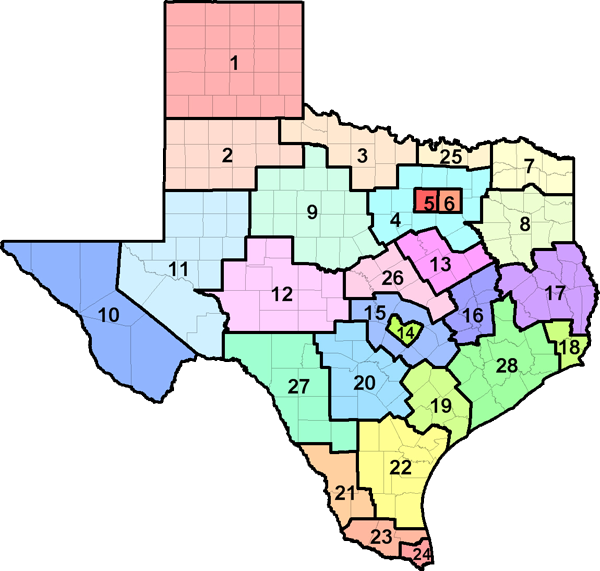
TEXAS COUNTY MAP BY WORKFORCE DEVELOPMENT AREA
* Due to confidentiality rules, not all regions may have the data displayed. The sum of all the regions may not be equal to the state total.


Top 10 Relevant Knowledge Areas Relevant Importance Levels
Engineering and Technology
Knowledge of the practical application of engineering science and technology. This includes applying principles, techniques, procedures, and equipment to the design and production of various goods and services.
83.00%
Mechanical
Knowledge of machines and tools, including their designs, uses, repair, and maintenance.
82.80%
Design
Knowledge of design techniques, tools, and principles involved in production of precision technical plans, blueprints, drawings, and models.
80.20%
Mathematics
Knowledge of arithmetic, algebra, geometry, calculus, statistics, and their applications.
73.20%
English Language
Knowledge of the structure and content of the English language including the meaning and spelling of words, rules of composition, and grammar.
69.80%
Computers and Electronics
Knowledge of circuit boards, processors, chips, electronic equipment, and computer hardware and software, including applications and programming.
67.40%
Production and Processing
Knowledge of raw materials, production processes, quality control, costs, and other techniques for maximizing the effective manufacture and distribution of goods.
66.00%
Physics
Knowledge and prediction of physical principles, laws, their interrelationships, and applications to understanding fluid, material, and atmospheric dynamics, and mechanical, electrical, atomic and sub-atomic structures and processes.
64.20%
Administrative
Knowledge of administrative and office procedures and systems such as word processing, managing files and records, stenography and transcription, designing forms, and workplace terminology.
60.40%
Customer and Personal Service
Knowledge of principles and processes for providing customer and personal services. This includes customer needs assessment, meeting quality standards for services, and evaluation of customer satisfaction.
56.80%


Top 10 Relevant Skill Areas Relevant Importance Levels
Reading Comprehension
Understanding written sentences and paragraphs in work-related documents.
75.00%
Active Listening
Giving full attention to what other people are saying, taking time to understand the points being made, asking questions as appropriate, and not interrupting at inappropriate times.
75.00%
Critical Thinking
Using logic and reasoning to identify the strengths and weaknesses of alternative solutions, conclusions, or approaches to problems.
75.00%
Complex Problem Solving
Identifying complex problems and reviewing related information to develop and evaluate options and implement solutions.
72.40%
Speaking
Talking to others to convey information effectively.
72.40%
Writing
Communicating effectively in writing as appropriate for the needs of the audience.
70.00%
Operations Monitoring
Watching gauges, dials, or other indicators to make sure a machine is working properly.
70.00%
Judgment and Decision Making
Considering the relative costs and benefits of potential actions to choose the most appropriate one.
67.60%
Systems Analysis
Determining how a system should work and how changes in conditions, operations, and the environment will affect outcomes.
65.00%
Quality Control Analysis
Conducting tests and inspections of products, services, or processes to evaluate quality or performance.
65.00%


Top 10 Relevant Abilities Relevant Importance Levels
Oral Comprehension
The ability to listen to and understand information and ideas presented through spoken words and sentences.
80.00%
Written Comprehension
The ability to read and understand information and ideas presented in writing.
80.00%
Information Ordering
The ability to arrange things or actions in a certain order or pattern according to a specific rule or set of rules (e.g., patterns of numbers, letters, words, pictures, mathematical operations).
77.60%
Near Vision
The ability to see details at close range (within a few feet of the observer).
77.60%
Speech Recognition
The ability to identify and understand the speech of another person.
75.00%
Problem Sensitivity
The ability to tell when something is wrong or is likely to go wrong. It does not involve solving the problem, only recognizing that there is a problem.
75.00%
Deductive Reasoning
The ability to apply general rules to specific problems to produce answers that make sense.
75.00%
Inductive Reasoning
The ability to combine pieces of information to form general rules or conclusions (includes finding a relationship among seemingly unrelated events).
75.00%
Oral Expression
The ability to communicate information and ideas in speaking so others will understand.
75.00%
Category Flexibility
The ability to generate or use different sets of rules for combining or grouping things in different ways.
70.00%


  • Getting Information
    -- Observing, receiving, and otherwise obtaining information from all relevant sources.
  • Documenting/Recording Information
    -- Entering, transcribing, recording, storing, or maintaining information in written or electronic/magnetic form.
  • Inspecting Equipment, Structures, or Materials
    -- Inspecting equipment, structures, or materials to identify the cause of errors or other problems or defects.
  • Making Decisions and Solving Problems
    -- Analyzing information and evaluating results to choose the best solution and solve problems.
  • Communicating with Supervisors, Peers, or Subordinates
    -- Providing information to supervisors, co-workers, and subordinates by telephone, in written form, e-mail, or in person.
Other Activities


  • Support
    - Occupations that satisfy this work value offer supportive management that stands behind employees. Corresponding needs are Company Policies, Supervision: Human Relations and Supervision: Technical.
  • Working Conditions
    - Occupations that satisfy this work value offer job security and good working conditions. Corresponding needs are Activity, Compensation, Independence, Security, Variety and Working Conditions.


Tools

Accelerometers: Accelerometers;

Adjustable wrenches: Adjustable wrenches;

Air compressors: Air compressors;

Ammeters: Clamp-on ammeters;

Amplifiers: Linear amplifiers; High-voltage amplifiers; Switched amplifiers;

Analytical balances: Analytical balances;

Anemometers: Anemometers;

Angle grinder: Angle grinders;

Belt sander: Belt sanders;

Bench scales: Computerized scales;

Benchtop centrifuges: Dual centrifuges;

Binocular light compound microscopes: Binocular compound microscopes; Optical compound microscopes;

Boring machines: Boring machines;

C clamps: C clamps;

Calipers: Dial calipers; Vernier calipers;

Calorimeters: Oxygen bomb calorimeters;

Claw hammer: Claw hammers;

Comparators: Electronic comparators; Optical comparators;

Compression testers: Hydraulic universal testers; Compression testers; Compression testing machines; Universal testing machines;

Coordinate measuring machines CMM: Coordinate measuring machines CMM;

Cutting die: Metal cutting dies;

Cylinder gauge: Ring gauges;

Dial indicator or dial gauge: Dial indicators;

Drill press or radial drill: Punch presses; Drill presses;

Dynamometers: Absorption dynamometers; Dynamometers;

Extruders: Extrusion machines;

Fatigue testers: Fatigue testers; Fatigue testing machines;

Flow sensors: Microfluidic particle imaging velocimetry PIV systems; Fluid meters;

Flow transmitters: Wind tunnels;

Force or torque sensors: Force sensors; Torque meters;

Forklifts: Forklifts;

Form tools or toolbits: Twist drills;

Fume hoods or cupboards: Fume hoods;

Fused deposition modeling machine: Fused deposition modeling FDM machines;

Gage block set: Plane-parallel gauge blocks;

Gas welding or brazing or cutting apparatus: Gas welding equipment; Dry rod ovens; Oxyacetylene welding equipment;

Go or no go gauge: Go/no-go gauges;

Goggles: Safety goggles;

Graphics tablets: Digitizing tablets;

Hacksaw: Hacksaws;

Hardness testers: Durometers; Hardness testers; Digital hardness testers;

Height gauges: Vernier height gauges;

Hex keys: Hex keys;

Hole gauge: Bore gauges;

Horizontal turning center: Computerized numerical control CNC lathes;

Hydraulic press frames: Hydraulic presses;

Impact testers: Impact testers;

Induction heaters: Heat treatment furnaces;

Injection molding machines: Injection molding machines; Plastic injection molding machines; Rotational molders;

Inverted microscopes: Metallographs;

Laboratory benches: Hydrostatics benches; Hydraulic benches;

Laminated object manufacturing machine: Laminated object manufacturing LOM systems;

Levels: Spirit levels;

Lifter plate: Granite surface plates;

Load frame: Servohydraulic load frames; Manual load frames;

Loadcells: Load cells;

Locking pliers: Locking pliers;

Longnose pliers: Long nose pliers;

Manual press brake: Hand brakes;

Metal band sawing machine: Band saws;

Metal inert gas welding machine: Metal inert gas MIG welders; Metal inert gas MIG welding equipment;

Metal markers or holders: Marking gauges;

Metal polishing machine: Polishing machines;

Metal slitting saw: Sheet metal slitters;

Metal testing instruments: Guided bend weld test units; Bend test fixtures;

Microcontrollers: Programmable logic controllers PLC;

Micrometers: Screw gauge micrometers; Micrometers;

Microprocessors: Microprocessors;

Mill saw file: Mill files;

Milling machines: Micro mills; Milling machines;

Multimeters: Digital multimeters;

Notebook computers: Laptop computers;

Nut drivers: Nut drivers;

Offset screw driver: Offset screwdrivers;

Oscilloscopes: Oscilloscopes;

Personal computers: Personal computers;

Photoelastic testing instruments: Photoelastic testing machines;

Pitch measuring instruments: Screw pitch gauges;

Plasma cutting machine: Track burning machines;

Plotter printers: Drafting plotters;

Pneumatic impact wrenches: Pneumatic ratchets;

Polarimeters: Polarimeters;

Polishing machines: Superfinishing machines;

Positioning jig: Positioning jigs;

Power drills: Power drills;

Power grinders: Power grinders; Pedestal grinders; Bench grinders; Centerless grinding machines; Cylindrical grinders; Internal grinding machines; Grinding machines; Tool grinders;

Power saws: Dual column bandsaws; Cold cut chop saws;

Pressure indicators: Open channel flow apparatuses;

Pressure sensors: Pressure sensors;

Protective gloves: Safety gloves;

Protractors: Protractors;

Punches or nail sets or drifts: Center punches;

Rotameters: Rotameters;

Rulers: Steel rules;

Scanners: Three-dimensional laser digitizers;

Screwdrivers: Phillips head screwdrivers; Slotted screwdrivers; Straight screwdrivers;

Scribers: Scribers;

Scroll saw: Scroll saws;

Selective laser sintering machine: Selective laser sintering SLS systems;

Shear strength testers: Shear testers;

Shears: Power shears; Power sheet metal shears;

Shielded metal arc welding or stick welding machine: Shielded arc welding tools; Arc welding equipment; Stick welding machines;

Signal conditioners: Signal conditioners;

Signal generators: Signal generators;

Sine bar: Sine bars;

Slip or groove joint pliers: Slip joint pliers; Arc-joint pliers;

Socket sets: Socket wrench sets;

Sound measuring apparatus or decibel meter: Sound level meters;

Spectrometers: Spectrometers;

Spot welding machine: Spot welders; Portable welding equipment;

Squares: Layout squares; Combination squares;

Strain gauges: Strain gauges; Electronic strain gauges;

Stripping tools: Wire strippers;

Surface grinding machine: Surface grinding machines;

Tape measures: Measuring tapes;

Taper gauge: Taper plug gauges;

Taps: Metal cutting taps;

Temperature transmitters: Temperature sensors;

Tension testers: Tensile testers;

Thermal differential analyzers: Dynamic mechanical analyzers DMA;

Thickness measuring devices: Snap gauges;

Thread counters or gauges: Screw thread gauges;

Three dimensional printing machine: Three-dimensional prototyping printer;

Torsion testers: Torsion testers;

Tracer or duplicating or contouring lathe: Lathes; Micro lathes;

Tumblers or polishers: Lapping machines;

Tungsten inert gas welding machine: Tungsten inert gas TIG welding equipment;

Twin screw extruder: Twin-screw extruders;

Ultrasonic examination equipment: Ultrasound inspection equipment;

Universal milling machine: Combination milling machines;

Utility knives: Utility knives;

Vacuum molding machines: Vacuum molders;

Vacuum pumps: Freon recovery equipment;

Vertical machining center: Computerized numerical control CNC vertical milling machines;

Vibration testers: Vibration monitors; Vibration testers;

Water baths: Constant temperature baths;

Wave soldering machine: Soldering equipment;

Welder torch: Brazing equipment;

Welding masks: Welding masks;

Wire cutters: Wire cutters;


Technology

Analytical or scientific software: Ansys Fluent; ANSYS Mechanical; ANSYS simulation software; Data acquisition software; Finite element method FEM software; Intellisense Intellisuite; MSC Software Adams; Spectral Dynamics Star Acoustics; Spectral Dynamics Star Modal; The MathWorks MATLAB; Wolfram Research Mathematica;

Cloud-based data access and sharing software: Microsoft SharePoint;

Computer aided design CAD software: PTC Creo Parametric; PTC Pro/ENGINEER Mechanica; Mathsoft Mathcad; IBM CATIA; Dassault Systemes CATIA; Dassault Systemes SolidWorks; Computer aided design CAD software; Autodesk AutoCAD; Autodesk AutoCAD Mechanical; Autodesk Inventor; Autodesk Revit; Bentley MicroStation;

Computer aided manufacturing CAM software: Computer aided manufacturing CAM software; CNC Mastercam; Three-dimensional 3D solid modeling software; Stereolithography SLA rapid prototyping systems; TekSoft CAMWorks;

Data base user interface and query software: Microsoft Access;

Development environment software: Microsoft Visual Basic; National Instruments LabVIEW;

Electronic mail software: Microsoft Outlook;

Enterprise resource planning ERP software: SAP software;

Industrial control software: Soft Servo Systems LadderWorks PLC; Robotic control software; Computerized numerical control CNC programming software;

Internet browser software: Web browser software;

Object or component oriented development software: C++;

Office suite software: Corel WordPerfect Office Suite; Microsoft Office software;

Presentation software: Microsoft PowerPoint;

Process mapping and design software: ProModel;

Project management software: Microsoft Project;

Spreadsheet software: Microsoft Excel;

Word processing software: Microsoft Word;


Related O*NET occupational titles for Mechanical Engineering Technologists and Technicians include:
  • 17-3021.00 Aerospace Engineering and Operations Technologists and Technicians
  • 17-3027.01 Automotive Engineering Technicians
  • 17-3028.00 Calibration Technologists and Technicians
  • 17-3022.00 Civil Engineering Technologists and Technicians
  • 17-3023.00 Electrical and Electronic Engineering Technologists and Technicians
  • 17-3026.00 Industrial Engineering Technologists and Technicians
  • 17-3013.00 Mechanical Drafters
  • 17-3026.01 Nanotechnology Engineering Technologists and Technicians
  • 17-3029.08 Photonics Technicians
  • 17-3024.01 Robotics Technicians


Sources of Additional Information
  • For more information about general engineering education and career resources, visit: American Society for Engineering Education
  • American Society of Mechanical Engineers
  • Technology Student Association
  • For information about accredited programs, visit: ABET
  • For information about certification, visit: The National Institute for Certification in Engineering Technologies (NICET) 
  • Automotive Engineering Technicians
  • Mechanical Engineering Technologists and Technicians

  • Contact Texas Workforce Commission
    Labor Market and Career Information  |  101 E. 15th Street, Annex Room 0252  |  Austin, Texas 78778
    Official Website  |  1-800-822-PLAN (7526)  |  512.936.3200

    ** The information in this report may be derived from many sources like O*NET, BLS (Bureau of Labor Statistics), OOH (Occupational Outlook Handbook), and Career One Stop.