Occupation Summary

Zoologists and Wildlife Biologists

O*NET 19-1023.00

Description:

Study the origins, behavior, diseases, genetics, and life processes of animals and wildlife. May specialize in wildlife research and management. May collect and analyze biological data to determine the environmental effects of present and potential use of land and water habitats.

Annual Wages:
$62,311.00
Employment Rate:
Employment is expected to increase by 12.92%.
Education Level:
Bachelor's Degree. According to O*Net, the majority of people employed in this occupation have this level of education.
Endorsement:
Business and Industry, Science Technology Engineering and Math (STEM)

  1. Study animals in their natural habitats, assessing effects of environment and industry on animals, interpreting findings and recommending alternative operating conditions for industry.
  2. Inventory or estimate plant and wildlife populations.
  3. Analyze characteristics of animals to identify and classify them.
  4. Disseminate information by writing reports and scientific papers or journal articles, and by making presentations and giving talks for schools, clubs, interest groups and park interpretive programs.
  5. Study characteristics of animals, such as origin, interrelationships, classification, life histories, diseases, development, genetics, and distribution.
  6. Perform administrative duties, such as fundraising, public relations, budgeting, and supervision of zoo staff.
  7. Organize and conduct experimental studies with live animals in controlled or natural surroundings.
  8. Coordinate preventive programs to control the outbreak of wildlife diseases.
  9. Prepare collections of preserved specimens or microscopic slides for species identification and study of development or disease.
  10. Collect and dissect animal specimens and examine specimens under microscope.
  11. Inform and respond to public regarding wildlife and conservation issues, such as plant identification, hunting ordinances, and nuisance wildlife.
  12. Check for, and ensure compliance with, environmental laws, and notify law enforcement when violations are identified.
  13. Develop, or make recommendations on, management systems and plans for wildlife populations and habitat, consulting with stakeholders and the public at large to explore options.
  14. Conduct literature reviews.


National Industry Employment Patterns


Industry % of Zoologists and Wildlife Biologists employed Annual Growth Rate
Management, scientific, and technical consulting services 8.4 1.18
Social advocacy organizations 6.6 0.74
Scientific research and development services 5.4 0.96
Colleges, universities, and professional schools 4.3 1.18
Architectural, engineering, and related services 2.7 0.00


Labor Market Information


2024 Statewide average hourly wage $29.96
2024 National average hourly wage $37.46
2022 National employment 19,100
2022 Texas employment 240
Texas projected employment by 2032 271
Texas projected annual employment and Turnover openings through 2032 21


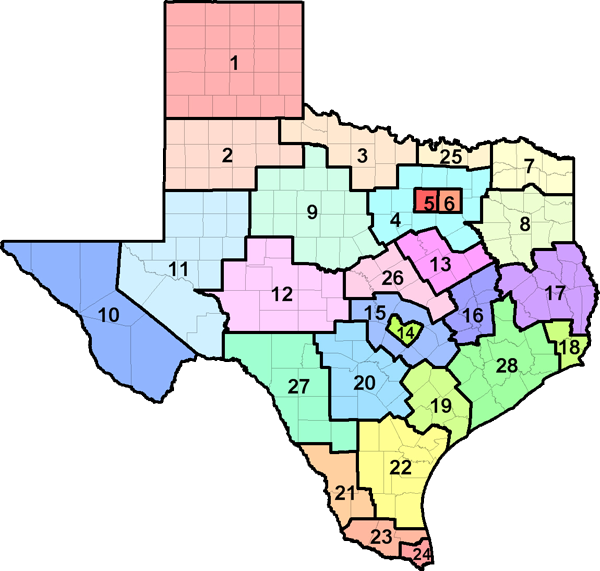
TEXAS COUNTY MAP BY WORKFORCE DEVELOPMENT AREA
* Due to confidentiality rules, not all regions may have the data displayed. The sum of all the regions may not be equal to the state total.


Top 10 Relevant Knowledge Areas Relevant Importance Levels
Biology
Knowledge of plant and animal organisms, their tissues, cells, functions, interdependencies, and interactions with each other and the environment.
96.20%
English Language
Knowledge of the structure and content of the English language including the meaning and spelling of words, rules of composition, and grammar.
75.40%
Customer and Personal Service
Knowledge of principles and processes for providing customer and personal services. This includes customer needs assessment, meeting quality standards for services, and evaluation of customer satisfaction.
74.60%
Mathematics
Knowledge of arithmetic, algebra, geometry, calculus, statistics, and their applications.
68.20%
Geography
Knowledge of principles and methods for describing the features of land, sea, and air masses, including their physical characteristics, locations, interrelationships, and distribution of plant, animal, and human life.
67.40%
Law and Government
Knowledge of laws, legal codes, court procedures, precedents, government regulations, executive orders, agency rules, and the democratic political process.
66.20%
Administration and Management
Knowledge of business and management principles involved in strategic planning, resource allocation, human resources modeling, leadership technique, production methods, and coordination of people and resources.
66.00%
Communications and Media
Knowledge of media production, communication, and dissemination techniques and methods. This includes alternative ways to inform and entertain via written, oral, and visual media.
60.00%
Computers and Electronics
Knowledge of circuit boards, processors, chips, electronic equipment, and computer hardware and software, including applications and programming.
59.60%
Education and Training
Knowledge of principles and methods for curriculum and training design, teaching and instruction for individuals and groups, and the measurement of training effects.
59.40%


Top 10 Relevant Skill Areas Relevant Importance Levels
Reading Comprehension
Understanding written sentences and paragraphs in work-related documents.
80.00%
Active Listening
Giving full attention to what other people are saying, taking time to understand the points being made, asking questions as appropriate, and not interrupting at inappropriate times.
80.00%
Speaking
Talking to others to convey information effectively.
80.00%
Critical Thinking
Using logic and reasoning to identify the strengths and weaknesses of alternative solutions, conclusions, or approaches to problems.
80.00%
Complex Problem Solving
Identifying complex problems and reviewing related information to develop and evaluate options and implement solutions.
80.00%
Judgment and Decision Making
Considering the relative costs and benefits of potential actions to choose the most appropriate one.
80.00%
Science
Using scientific rules and methods to solve problems.
77.60%
Writing
Communicating effectively in writing as appropriate for the needs of the audience.
77.60%
Coordination
Adjusting actions in relation to others' actions.
75.00%
Active Learning
Understanding the implications of new information for both current and future problem-solving and decision-making.
72.40%


Top 10 Relevant Abilities Relevant Importance Levels
Deductive Reasoning
The ability to apply general rules to specific problems to produce answers that make sense.
80.00%
Inductive Reasoning
The ability to combine pieces of information to form general rules or conclusions (includes finding a relationship among seemingly unrelated events).
80.00%
Oral Comprehension
The ability to listen to and understand information and ideas presented through spoken words and sentences.
80.00%
Written Comprehension
The ability to read and understand information and ideas presented in writing.
80.00%
Oral Expression
The ability to communicate information and ideas in speaking so others will understand.
80.00%
Written Expression
The ability to communicate information and ideas in writing so others will understand.
80.00%
Problem Sensitivity
The ability to tell when something is wrong or is likely to go wrong. It does not involve solving the problem, only recognizing that there is a problem.
75.00%
Information Ordering
The ability to arrange things or actions in a certain order or pattern according to a specific rule or set of rules (e.g., patterns of numbers, letters, words, pictures, mathematical operations).
75.00%
Speech Clarity
The ability to speak clearly so others can understand you.
75.00%
Speech Recognition
The ability to identify and understand the speech of another person.
72.40%


  • Communicating with People Outside the Organization
    -- Communicating with people outside the organization, representing the organization to customers, the public, government, and other external sources. This information can be exchanged in person, in writing, or by telephone or e-mail.
  • Working with Computers
    -- Using computers and computer systems (including hardware and software) to program, write software, set up functions, enter data, or process information.
  • Getting Information
    -- Observing, receiving, and otherwise obtaining information from all relevant sources.
  • Communicating with Supervisors, Peers, or Subordinates
    -- Providing information to supervisors, co-workers, and subordinates by telephone, in written form, e-mail, or in person.
  • Making Decisions and Solving Problems
    -- Analyzing information and evaluating results to choose the best solution and solve problems.
Other Activities


  • Achievement
    - Occupations that satisfy this work value are results oriented and allow employees to use their strongest abilities, giving them a feeling of accomplishment. Corresponding needs are Ability Utilization and Achievement.
  • Recognition
    - Occupations that satisfy this work value offer advancement, potential for leadership, and are often considered prestigious. Corresponding needs are Advancement, Authority, Recognition and Social Status.


Tools

Adjustable widemouth pliers: Adjustable widemouth pliers;

Air compressors: Air compressors;

Air rifles or air handguns: Dart guns;

All terrain vehicles tracked or wheeled: Four wheel drive 4WD vehicles; All terrain vehicles ATV;

Animal control traps: Animal traps;

Archery bows: Archery bows;

Axes: Axes;

Benchtop centrifuges: Benchtop centrifuges;

Binocular light compound microscopes: Compound binocular light microscopes; Compound microscopes;

Binoculars: Binoculars;

Boat Trailer: Boat trailers;

Calipers: Vernier calipers;

Calorimeters: Calorimeters;

Canoes or kayaks: Canoes;

Clinometers: Clinometers;

Commercial fishing nets: Plankton nets; Seines; Gill nets; Jellyfish scoops; Bongo nets; D-ring nets; Dip net samplers;

Compasses: Compasses;

Conductivity meters: Conductivity meters;

Counters: Counting chambers;

Desktop computers: Desktop computers;

Digital camcorders or video cameras: Tree top peeper and video probe systems;

Digital cameras: Digital cameras;

Dissection kits or supplies: Dissecting tools;

Dissolved oxygen meters: Dissolved oxygen meters;

Diving instruments or accessories: Self-contained underwater breathing apparatus SCUBA equipment;

Dropping pipettes: Dropping pipettes;

Dry heat or hot air sterilizers: Sterilizing ovens;

Drying cabinets or ovens: Drying ovens;

Egg inspection or collecting equipment: Egg candlers;

Entomological catching equipment: Aerial nets; Sweeping nets; Odonata nets;

Flow sensors: Flow meters;

Flying insect control traps: Light traps;

Forced air or mechanical convection general purpose incubators: Laboratory mechanical convection incubators;

Forestry increment borers: Tree corers;

Fume hoods or cupboards: Fume hoods;

Global positioning system GPS receiver: Geodetic ground global positioning system GPS receivers;

Handheld refractometers or polarimeters: Portable refractometers;

Handheld thermometer: Water thermometers;

Hard hats: Hard hats;

Laboratory balances: Monopan balances; Laboratory balances;

Laboratory beakers: Laboratory beakers;

Laboratory forceps: Laboratory forceps;

Laboratory funnels: Laboratory funnels;

Laboratory graduated cylinders: Graduated glass laboratory cylinders;

Ladders: Extension ladders;

Laser printers: Laser printers;

Magnifiers: Hand lenses;

Masks or accessories: Dust masks;

Masks or fins or snorkels: Snorkels;

Micrometers: Micrometers;

Notebook computers: Notebook computers;

Personal computers: Personal computers;

Personal motorized watercraft: Jet skis;

Petri plates or dishes: Petri dishes;

pH meters: pH meters;

Photo attachments for microscopes: Photomicroscopes;

Pisciculture supplies: Fish traps;

Portable data input terminals: Dataloggers;

Protective gloves: Leather gloves; Nitrile gloves;

Pull spring balances: Spring scales;

Radio frequency transmitters or receivers: Animal transmitters; Radio telemetry equipment;

Rafts: Rubber rafts;

Rangefinders: Laser hypsometers;

Recreational motorboats: Small power boats;

Rulers: Rulers;

Safety glasses: Safety glasses;

Safety harnesses or belts: Climbing belts;

Salinity meter: Salinity meters;

Sample changers: Folsom plankton splitters;

Single gas monitors: Carbon dioxide CO2 monitors;

Sledge hammer: Sledgehammers;

Snowmobiles or snow scooter: Snowmobiles;

Specimen collection container: Water sample collection containers; Scintillation vials; Specimen collection containers;

Spectrometers: Spectrometers;

Sporting traps: Culvert traps; Foot snares; Mist nets;

Steam autoclaves or sterilizers: Steam autoclaves;

Stereo or dissecting light microscopes: Dissecting microscopes;

Still cameras: 35 millimeter cameras;

Surface thermometers: Field thermometers;

Surgical scalpels or knives or blades or trephines: Stainless steel scalpel blades;

Tape measures: Metric measuring tapes;

Telescopes: Spotting scopes;

Test sieves: Mesh sieves; Sieve buckets;

Two way radios: Two way radios;

Ultra cold or ultralow upright cabinets or freezers: Laboratory freezers;

Volumeters: Volumeters;

Water pumps: Water pumps;

Water samplers: Ekman dredges; Multiplate samplers; Benthic samplers; Secchi disks; Water samplers;


Technology

Analytical or scientific software: Computer modeling software; HATPRO; SAS; Statistical software;

Data base user interface and query software: Relational database software; Database management software; Microsoft Access;

Electronic mail software: Microsoft Outlook; Email software;

Geographic information system: ESRI ArcGIS software; ESRI ArcView; Geographic information system GIS software; Geographic information system GIS systems;

Internet browser software: Web browser software;

Mobile location based services software: Global positioning system GPS software;

Object or component oriented development software: Python; R;

Office suite software: Corel WordPerfect Office Suite; Microsoft Office software;

Presentation software: Microsoft PowerPoint;

Project management software: Microsoft Project;

Spreadsheet software: Microsoft Excel; IBM Lotus 1-2-3; Spreadsheet software;

Web platform development software: Microsoft Active Server Pages ASP;

Word processing software: Microsoft Word; Word processing software;


Related O*NET occupational titles for Zoologists and Wildlife Biologists include:
  • 19-1011.00 Animal Scientists
  • 19-1029.04 Biologists
  • 19-1031.00 Conservation Scientists
  • 19-2041.02 Environmental Restoration Planners
  • 19-2041.00 Environmental Scientists and Specialists, Including Health
  • 33-3031.00 Fish and Game Wardens
  • 19-1032.00 Foresters
  • 19-2042.00 Geoscientists, Except Hydrologists and Geographers
  • 19-1031.02 Range Managers
  • 19-1013.00 Soil and Plant Scientists


Sources of Additional Information
  • For more information about zoologists and wildlife biologists, visit: American Ornithological Society (AOS)
  • American Society of Ichthyologists and Herpetologists (ASIH)
  • American Society of Mammalogists (ASM)
  • Association of Zoos and Aquariums (AZA)
  • MarineBio
  • The Wildlife Society (TWS)
  • Zoological Association of America (ZAA)
  • For information about topics related to zoology and wildlife biology, visit: National Park Service
  • U.S. Fish and Wildlife Service
  • To find job openings for zoologists and wildlife biologists in the federal government, visit: USAJOBS
  • CareerOneStop

  • For a career video on zoologists and wildlife biologists, visit: Zoologists and Wildlife Biologists
  • Zoologists and Wildlife Biologists

  • Contact Texas Workforce Commission
    Labor Market and Career Information  |  101 E. 15th Street, Annex Room 0252  |  Austin, Texas 78778
    Official Website  |  1-800-822-PLAN (7526)  |  512.936.3200

    ** The information in this report may be derived from many sources like O*NET, BLS (Bureau of Labor Statistics), OOH (Occupational Outlook Handbook), and Career One Stop.