Occupation Summary

Molecular and Cellular Biologists

O*NET 19-1029.02

Description:

Research and study cellular molecules and organelles to understand cell function and organization.

Annual Wages:
$90,184.00
Employment Rate:
Employment is expected to increase by 14.66%.
Education Level:
Bachelor's Degree. According to O*Net, the majority of people employed in this occupation have this level of education.
Endorsement:
STEM

  1. Verify all financial, physical, and human resources assigned to research or development projects are used as planned.
  2. Participate in all levels of bioproduct development, including proposing new products, performing market analyses, designing and performing experiments, and collaborating with operations and quality control teams during product launches.
  3. Evaluate new supplies and equipment to ensure operability in specific laboratory settings.
  4. Develop guidelines for procedures such as the management of viruses.
  5. Coordinate molecular or cellular research activities with scientists specializing in other fields.
  6. Confer with vendors to evaluate new equipment or reagents or to discuss the customization of product lines to meet user requirements.
  7. Supervise technical personnel and postdoctoral research fellows.
  8. Provide scientific direction for project teams regarding the evaluation or handling of devices, drugs, or cells for in vitro and in vivo disease models.
  9. Perform laboratory procedures following protocols including deoxyribonucleic acid (DNA) sequencing, cloning and extraction, ribonucleic acid (RNA) purification, or gel electrophoresis.
  10. Monitor or operate specialized equipment, such as gas chromatographs and high pressure liquid chromatographs, electrophoresis units, thermocyclers, fluorescence activated cell sorters, and phosphorimagers.
  11. Maintain accurate laboratory records and data.
  12. Instruct undergraduate and graduate students within the areas of cellular or molecular biology.
  13. Evaluate new technologies to enhance or complement current research.
  14. Direct, coordinate, organize, or prioritize biological laboratory activities.
  15. Develop assays that monitor cell characteristics.
  16. Design databases, such as mutagenesis libraries.
  17. Design molecular or cellular laboratory experiments, oversee their execution, and interpret results.
  18. Compile and analyze molecular or cellular experimental data and adjust experimental designs as necessary.
  19. Conduct research on cell organization and function, including mechanisms of gene expression, cellular bioinformatics, cell signaling, or cell differentiation.
  20. Conduct applied research aimed at improvements in areas such as disease testing, crop quality, pharmaceuticals, and the harnessing of microbes to recycle waste.
  21. Write grant applications to obtain funding.
  22. Prepare or review reports, manuscripts, or meeting presentations.


National Industry Employment Patterns


Industry % of Molecular and Cellular Biologists employed Annual Growth Rate
Scientific research and development services 28.7 0.62
Colleges, universities, and professional schools 10.2 0.32
Management, scientific, and technical consulting services 5.6 0.85
Pharmaceutical and medicine manufacturing 4.6 0.69


Labor Market Information


2024 Statewide average hourly wage $43.36
2024 National average hourly wage $48.29
2022 National employment 60,400
2022 Texas employment 2,135
Texas projected employment by 2032 2,448
Texas projected annual employment and Turnover openings through 2032 196


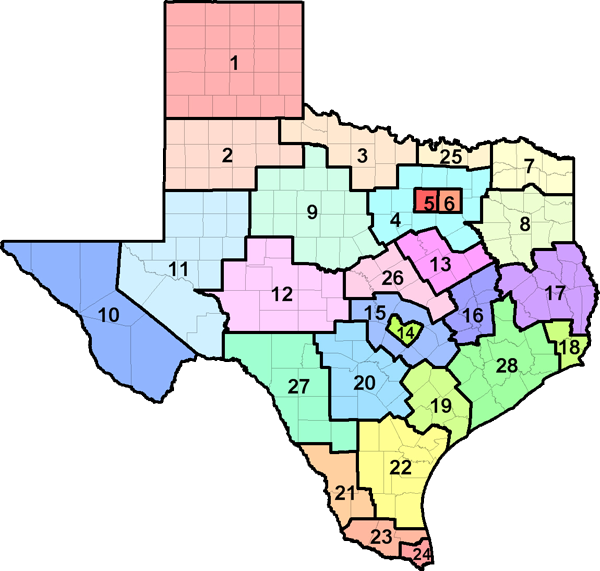
TEXAS COUNTY MAP BY WORKFORCE DEVELOPMENT AREA
* Due to confidentiality rules, not all regions may have the data displayed. The sum of all the regions may not be equal to the state total.


Top 10 Relevant Knowledge Areas Relevant Importance Levels
Biology
Knowledge of plant and animal organisms, their tissues, cells, functions, interdependencies, and interactions with each other and the environment.
96.20%
English Language
Knowledge of the structure and content of the English language including the meaning and spelling of words, rules of composition, and grammar.
88.80%
Chemistry
Knowledge of the chemical composition, structure, and properties of substances and of the chemical processes and transformations that they undergo. This includes uses of chemicals and their interactions, danger signs, production techniques, and disposal methods.
82.40%
Mathematics
Knowledge of arithmetic, algebra, geometry, calculus, statistics, and their applications.
76.20%
Education and Training
Knowledge of principles and methods for curriculum and training design, teaching and instruction for individuals and groups, and the measurement of training effects.
71.60%
Computers and Electronics
Knowledge of circuit boards, processors, chips, electronic equipment, and computer hardware and software, including applications and programming.
67.60%
Medicine and Dentistry
Knowledge of the information and techniques needed to diagnose and treat human injuries, diseases, and deformities. This includes symptoms, treatment alternatives, drug properties and interactions, and preventive health-care measures.
61.60%
Administration and Management
Knowledge of business and management principles involved in strategic planning, resource allocation, human resources modeling, leadership technique, production methods, and coordination of people and resources.
56.20%
Communications and Media
Knowledge of media production, communication, and dissemination techniques and methods. This includes alternative ways to inform and entertain via written, oral, and visual media.
55.40%
Administrative
Knowledge of administrative and office procedures and systems such as word processing, managing files and records, stenography and transcription, designing forms, and workplace terminology.
54.40%


Top 10 Relevant Skill Areas Relevant Importance Levels
Science
Using scientific rules and methods to solve problems.
95.00%
Reading Comprehension
Understanding written sentences and paragraphs in work-related documents.
87.60%
Writing
Communicating effectively in writing as appropriate for the needs of the audience.
85.00%
Critical Thinking
Using logic and reasoning to identify the strengths and weaknesses of alternative solutions, conclusions, or approaches to problems.
82.40%
Speaking
Talking to others to convey information effectively.
80.00%
Active Listening
Giving full attention to what other people are saying, taking time to understand the points being made, asking questions as appropriate, and not interrupting at inappropriate times.
80.00%
Complex Problem Solving
Identifying complex problems and reviewing related information to develop and evaluate options and implement solutions.
80.00%
Judgment and Decision Making
Considering the relative costs and benefits of potential actions to choose the most appropriate one.
80.00%
Active Learning
Understanding the implications of new information for both current and future problem-solving and decision-making.
77.60%
Learning Strategies
Selecting and using training/instructional methods and procedures appropriate for the situation when learning or teaching new things.
77.60%


Top 10 Relevant Abilities Relevant Importance Levels
Written Comprehension
The ability to read and understand information and ideas presented in writing.
92.40%
Oral Comprehension
The ability to listen to and understand information and ideas presented through spoken words and sentences.
85.00%
Oral Expression
The ability to communicate information and ideas in speaking so others will understand.
82.40%
Written Expression
The ability to communicate information and ideas in writing so others will understand.
82.40%
Inductive Reasoning
The ability to combine pieces of information to form general rules or conclusions (includes finding a relationship among seemingly unrelated events).
82.40%
Problem Sensitivity
The ability to tell when something is wrong or is likely to go wrong. It does not involve solving the problem, only recognizing that there is a problem.
80.00%
Deductive Reasoning
The ability to apply general rules to specific problems to produce answers that make sense.
80.00%
Category Flexibility
The ability to generate or use different sets of rules for combining or grouping things in different ways.
80.00%
Mathematical Reasoning
The ability to choose the right mathematical methods or formulas to solve a problem.
77.60%
Information Ordering
The ability to arrange things or actions in a certain order or pattern according to a specific rule or set of rules (e.g., patterns of numbers, letters, words, pictures, mathematical operations).
77.60%


  • Analyzing Data or Information
    -- Identifying the underlying principles, reasons, or facts of information by breaking down information or data into separate parts.
  • Getting Information
    -- Observing, receiving, and otherwise obtaining information from all relevant sources.
  • Documenting/Recording Information
    -- Entering, transcribing, recording, storing, or maintaining information in written or electronic/magnetic form.
  • Updating and Using Relevant Knowledge
    -- Keeping up-to-date technically and applying new knowledge to your job.
  • Processing Information
    -- Compiling, coding, categorizing, calculating, tabulating, auditing, or verifying information or data.
Other Activities


  • Independence
    - Occupations that satisfy this work value allow employees to work on their own and make decisions. Corresponding needs are Creativity, Responsibility and Autonomy.
  • Working Conditions
    - Occupations that satisfy this work value offer job security and good working conditions. Corresponding needs are Activity, Compensation, Independence, Security, Variety and Working Conditions.


Tools

Automated microscope stages: Automated microscopes;

Benchtop centrifuges: Tabletop centrifuges;

Binocular light compound microscopes: Laboratory binocular optical microscopes;

Centrifuge tubes: Centrifuge tubes;

Chemical or gas sterilizers: Laboratory chemical autoclaves;

Complementary deoxyribonucleic acid cDNA synthesis kits: Deoxyribonucleic acid DNA synthesizers;

Deoxyribonucleic sequence analyzers: Automated DNA sequencing equipment;

Desktop computers: Desktop computers;

Dry baths or heating blocks: Heat blocks;

Dry wall single chamber carbon dioxide incubators: Automatic carbon dioxide CO2 incubators;

Electron guns: Phosphorimagers;

Electronic multichannel pipetters: Multichannel micropipettes;

Electrophoresis system accessories: Electrophoresis cameras;

Eyewashers or eye wash stations: Emergency eye wash stations;

Floor centrifuges: Laboratory floor centrifuges;

Fluorescent microscopes: Fluorescence microscopes;

Fume hoods or cupboards: Chemical hoods;

Gas chromatographs: Gas chromatography equipment;

Gel documentation systems: Gel electrophoresis equipment;

General cloning vectors: Cloning kits;

General purpose refrigerators or refrigerator freezers: Laboratory freezers;

Heating or drying equipment or accessories: Dessicators;

High pressure liquid chromatograph chromatography: High pressure liquid chromatograph HPLC equipment;

Hybridization ovens or incubators: Nucleic acid hybridization ovens;

Immunology or serology test kits or supplies: Serological kits;

Inverted microscopes: Inverted binocular microscopes;

Laboratory balances: Microbalances;

Laboratory beakers: Glass beakers;

Laboratory dishes: Cloning cylinders;

Laboratory vacuum pumps: Laboratory vacuum pumps;

Laminar flow cabinets or stations: Laminar flow hoods;

Manual or electronic hematology differential cell counters: Automated cell counters;

Manual single channel positive displacement pipetters: Manual single channel positive displacement pipettes;

Manual single channel repeating pipetters: Manual single channel repeating pipetters;

Mass spectrometers: Mass spectrometers;

Medical computed tomography CT or CAT scanners or tubes: Computerized axial tomography CAT scanners;

Medical magnetic resonance imaging MRI scanners: Magnetic resonance imaging MRI systems;

Microbiology analyzers: Flow cytometers;

Microcentrifuges: Microcentrifuges;

Microplate readers: Microplate readers;

Notebook computers: Laptop computers;

Nuclear magnetic resonance NMR spectrometers: Nuclear magnetic resonance NMR spectroscopes;

Orbital shakers: Laboratory orbital shakers;

Pasteur or transfer pipettes: Laboratory transfer pipettes;

Personal computers: Personal computers;

pH meters: pH analyzers;

Photo attachments for microscopes: Charge-coupled device CCD cameras;

Plate incubators: Bacterial plate incubators;

Protective gloves: Safety gloves;

Rapid amplification or complementary deoxyribonucleic acid ends RACE technology products: Polymerase chain reaction PCR equipment;

Refrigerated benchtop centrifuges: Cooled benchtop centrifuges;

Robotic or automated liquid handling systems: Robotic fluidics stations;

Scanning light or spinning disk or laser scanning microscopes: Scanning laser confocal microscopes;

Spectrofluorimeters or fluorimeters: Fluorimeters;

Spectrophotometers: Spectrophotometers; Ultraviolet-Visible UV/VIS spectrophotometers;

Stereo or dissecting light microscopes: Dissecting microscopes;

Stirring hotplates: Magnetic stirring hot plates;

Temperature cycling chambers or thermal cyclers: Polymerase chain reaction PCR thermocyclers; Thermocyclers; Gradiant thermocyclers;

Tissue culture incubators: Yeast culture incubators;

Transilluminators: Gel imaging apparatus;

Ultra pure water systems: Water purification systems;

Volumetric pipettes: Variable volume pipettes;

Vortex mixers: Vortex rotators;

Water baths: Laboratory water baths;


Technology

Analytical or scientific software: Agilent CGH Analytics; Agilent Technologies GeneSpring GX; Basic Local Alignment Search Tool BLAST; Blast Output Browser BOB; AcaClone pDRAW32; ClustalW; CRI-MAP; Delila; EnzymeX; FASTA; FASTLINK; Gene Recognition and Assembly Internet Link GRAIL; Genotyping software; Geospiza GeneSifter; GraphPad Software GraphPad Prism; Laboratory information management system LIMS; Magma Design Automation software; Mendel; Michigan State University MSU ProFlex; Minitab; NetPrimer; PHYLIP; Primer3; RasMol; Textco BioSoftware Gene Inspector; The MathWorks MATLAB; Wolfram Research Mathematica;

Computer aided design CAD software: Mathsoft Mathcad;

Data base user interface and query software: Microsoft Access; Deoxyribonucleic acid DNA libraries;

Data mining software: Data mining software;

File versioning software: Git;

Graphics or photo imaging software: Corel CorelDraw Graphics Suite; Adobe Illustrator; Molecular Devices Corporation MetaMorph;

Internet browser software: Web browser software;

Object or component oriented development software: Python; R; C++;

Office suite software: Corel WordPerfect Office Suite; Microsoft Office software;

Presentation software: Microsoft PowerPoint;

Spreadsheet software: Microsoft Excel;

Word processing software: Microsoft Word;


Related O*NET occupational titles for Molecular and Cellular Biologists include:
  • 19-1021.00 Biochemists and Biophysicists
  • 17-2031.00 Bioengineers and Biomedical Engineers
  • 19-1029.01 Bioinformatics Scientists
  • 25-1042.00 Biological Science Teachers, Postsecondary
  • 19-1029.04 Biologists
  • 29-2011.01 Cytogenetic Technologists
  • 19-1029.03 Geneticists
  • 29-2011.00 Medical and Clinical Laboratory Technologists
  • 19-1042.00 Medical Scientists, Except Epidemiologists
  • 19-1022.00 Microbiologists


No sources of additional information found.

Contact Texas Workforce Commission
Labor Market and Career Information  |  101 E. 15th Street, Annex Room 0252  |  Austin, Texas 78778
Official Website  |  1-800-822-PLAN (7526)  |  512.936.3200

** The information in this report may be derived from many sources like O*NET, BLS (Bureau of Labor Statistics), OOH (Occupational Outlook Handbook), and Career One Stop.