Occupation Summary

Medical Scientists, Except Epidemiologists

O*NET 19-1042.00

Description:

Conduct research dealing with the understanding of human diseases and the improvement of human health. Engage in clinical investigation, research and development, or other related activities.

Annual Wages:
$90,146.00
Employment Rate:
Employment is expected to increase by 23.26%.
Education Level:
Doctoral Degree. According to O*Net, the majority of people employed in this occupation have this level of education.
Endorsement:
Public Service, Science Technology Engineering and Math (STEM)

  1. Plan and direct studies to investigate human or animal disease, preventive methods, and treatments for disease.
  2. Follow strict safety procedures when handling toxic materials to avoid contamination.
  3. Evaluate effects of drugs, gases, pesticides, parasites, and microorganisms at various levels.
  4. Teach principles of medicine and medical and laboratory procedures to physicians, residents, students, and technicians.
  5. Prepare and analyze organ, tissue, and cell samples to identify toxicity, bacteria, or microorganisms or to study cell structure.
  6. Standardize drug dosages, methods of immunization, and procedures for manufacture of drugs and medicinal compounds.
  7. Investigate cause, progress, life cycle, or mode of transmission of diseases or parasites.
  8. Confer with health departments, industry personnel, physicians, and others to develop health safety standards and public health improvement programs.
  9. Study animal and human health and physiological processes.
  10. Consult with and advise physicians, educators, researchers, and others regarding medical applications of physics, biology, and chemistry.
  11. Use equipment such as atomic absorption spectrometers, electron microscopes, flow cytometers, or chromatography systems.
  12. Conduct research to develop methodologies, instrumentation, and procedures for medical application, analyzing data and presenting findings to the scientific audience and general public.
  13. Write and publish articles in scientific journals.
  14. Write applications for research grants.


National Industry Employment Patterns


Industry % of Medical Scientists, Except Epidemiologists employed Annual Growth Rate
Scientific research and development services 36.7 1.11
Colleges, universities, and professional schools 19.2 1.39
General medical and surgical hospitals 16.1 0.31
Medical and diagnostic laboratories 4.7 0.86
Pharmaceutical and medicine manufacturing 3.9 0.63
Specialty (except psychiatric and substance abuse) hospitals 3 0.54
Outpatient care centers 2 1.55


Labor Market Information


2024 Statewide average hourly wage $43.34
2024 National average hourly wage $54.18
2022 National employment 119,000
2022 Texas employment 8,397
Texas projected employment by 2032 10,350
Texas projected annual employment and Turnover openings through 2032 667


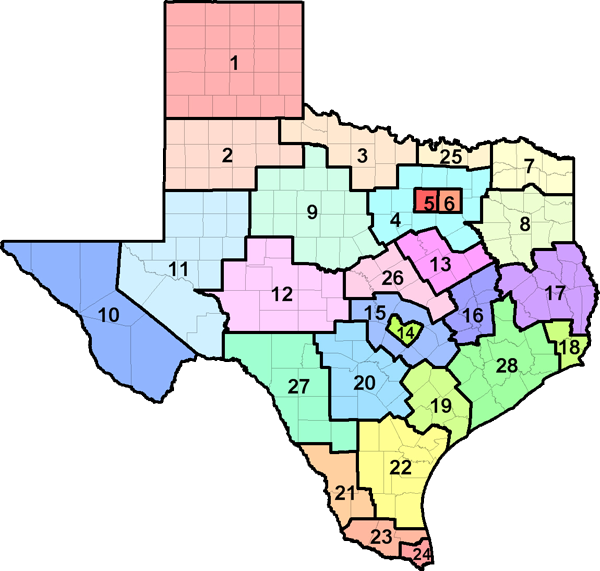
TEXAS COUNTY MAP BY WORKFORCE DEVELOPMENT AREA
* Due to confidentiality rules, not all regions may have the data displayed. The sum of all the regions may not be equal to the state total.


Top 10 Relevant Knowledge Areas Relevant Importance Levels
Biology
Knowledge of plant and animal organisms, their tissues, cells, functions, interdependencies, and interactions with each other and the environment.
94.00%
English Language
Knowledge of the structure and content of the English language including the meaning and spelling of words, rules of composition, and grammar.
82.20%
Medicine and Dentistry
Knowledge of the information and techniques needed to diagnose and treat human injuries, diseases, and deformities. This includes symptoms, treatment alternatives, drug properties and interactions, and preventive health-care measures.
73.40%
Chemistry
Knowledge of the chemical composition, structure, and properties of substances and of the chemical processes and transformations that they undergo. This includes uses of chemicals and their interactions, danger signs, production techniques, and disposal methods.
68.80%
Mathematics
Knowledge of arithmetic, algebra, geometry, calculus, statistics, and their applications.
64.40%
Computers and Electronics
Knowledge of circuit boards, processors, chips, electronic equipment, and computer hardware and software, including applications and programming.
59.60%
Education and Training
Knowledge of principles and methods for curriculum and training design, teaching and instruction for individuals and groups, and the measurement of training effects.
57.00%
Administration and Management
Knowledge of business and management principles involved in strategic planning, resource allocation, human resources modeling, leadership technique, production methods, and coordination of people and resources.
56.80%
Administrative
Knowledge of administrative and office procedures and systems such as word processing, managing files and records, stenography and transcription, designing forms, and workplace terminology.
42.40%
Physics
Knowledge and prediction of physical principles, laws, their interrelationships, and applications to understanding fluid, material, and atmospheric dynamics, and mechanical, electrical, atomic and sub-atomic structures and processes.
42.40%


Top 10 Relevant Skill Areas Relevant Importance Levels
Writing
Communicating effectively in writing as appropriate for the needs of the audience.
85.00%
Speaking
Talking to others to convey information effectively.
82.40%
Science
Using scientific rules and methods to solve problems.
82.40%
Active Learning
Understanding the implications of new information for both current and future problem-solving and decision-making.
82.40%
Critical Thinking
Using logic and reasoning to identify the strengths and weaknesses of alternative solutions, conclusions, or approaches to problems.
80.00%
Reading Comprehension
Understanding written sentences and paragraphs in work-related documents.
80.00%
Active Listening
Giving full attention to what other people are saying, taking time to understand the points being made, asking questions as appropriate, and not interrupting at inappropriate times.
80.00%
Judgment and Decision Making
Considering the relative costs and benefits of potential actions to choose the most appropriate one.
80.00%
Complex Problem Solving
Identifying complex problems and reviewing related information to develop and evaluate options and implement solutions.
77.60%
Systems Analysis
Determining how a system should work and how changes in conditions, operations, and the environment will affect outcomes.
75.00%


Top 10 Relevant Abilities Relevant Importance Levels
Oral Expression
The ability to communicate information and ideas in speaking so others will understand.
82.40%
Written Expression
The ability to communicate information and ideas in writing so others will understand.
82.40%
Inductive Reasoning
The ability to combine pieces of information to form general rules or conclusions (includes finding a relationship among seemingly unrelated events).
82.40%
Information Ordering
The ability to arrange things or actions in a certain order or pattern according to a specific rule or set of rules (e.g., patterns of numbers, letters, words, pictures, mathematical operations).
80.00%
Category Flexibility
The ability to generate or use different sets of rules for combining or grouping things in different ways.
80.00%
Oral Comprehension
The ability to listen to and understand information and ideas presented through spoken words and sentences.
80.00%
Written Comprehension
The ability to read and understand information and ideas presented in writing.
80.00%
Deductive Reasoning
The ability to apply general rules to specific problems to produce answers that make sense.
80.00%
Speech Clarity
The ability to speak clearly so others can understand you.
80.00%
Problem Sensitivity
The ability to tell when something is wrong or is likely to go wrong. It does not involve solving the problem, only recognizing that there is a problem.
77.60%


  • Updating and Using Relevant Knowledge
    -- Keeping up-to-date technically and applying new knowledge to your job.
  • Communicating with Supervisors, Peers, or Subordinates
    -- Providing information to supervisors, co-workers, and subordinates by telephone, in written form, e-mail, or in person.
  • Thinking Creatively
    -- Developing, designing, or creating new applications, ideas, relationships, systems, or products, including artistic contributions.
  • Getting Information
    -- Observing, receiving, and otherwise obtaining information from all relevant sources.
  • Making Decisions and Solving Problems
    -- Analyzing information and evaluating results to choose the best solution and solve problems.
Other Activities


  • Achievement
    - Occupations that satisfy this work value are results oriented and allow employees to use their strongest abilities, giving them a feeling of accomplishment. Corresponding needs are Ability Utilization and Achievement.
  • Recognition
    - Occupations that satisfy this work value offer advancement, potential for leadership, and are often considered prestigious. Corresponding needs are Advancement, Authority, Recognition and Social Status.


Tools

Atomic absorption AA spectrometers: Atomic absorption AA spectrophotometers;

Benchtop centrifuges: High-speed centrifuges; Centrifuges; Automated centrifuges; Tabletop centrifuges;

Beta counters: Beta counters;

Binocular light compound microscopes: Binocular light compound microscopes;

Blood gas analyzers: Blood gas machines;

Calorimeters: Bomb calorimeters;

Chemistry analyzers: Chemistry analyzers; Mercury analyzers;

Chromatography tubing: Chromatographic tubes; Absorption tubes;

Coagulation analyzers: Coagulation machines;

Colorimeters: Colorimeters;

Complementary deoxyribonucleic acid cDNA synthesis kits: Deoxyribonucleic acid DNA synthesizers;

Conductivity meters: Electrical conductivity meters;

Cuvettes: Cuvettes;

Deoxyribonucleic sequence analyzers: Automated deoxyribonucleic acid DNA sequencers;

Desktop computers: Desktop computers;

Dropping pipettes: Pipettes;

Dry baths or heating blocks: Heating blocks;

Dry wall single chamber carbon dioxide incubators: Carbon dioxide CO2 incubators;

Electrocardiography EKG units: Electrocardiography EKG machines;

Electron microscopes: Electron microscopes;

Electrophoresis system power supplies: Electrophoresis power systems;

Extracting equipment for laboratories: Steam distillation apparatus;

Forced air or mechanical convection general purpose incubators: Incubators;

Fume hoods or cupboards: Fume hoods;

Gamma counters: Gamma counters;

Gas chromatographs: Gas chromatographs GC;

Gel boxes: Gel electrophoresis boxes;

Gel documentation systems: Gel documentation systems;

Gel dryers: Gel dryers;

Hematology analyzers: Hematology analyzers;

Hematology or chemistry mixers: Peptide synthesizers;

High pressure liquid chromatograph chromatography: High-pressure liquid chromatographs;

Homogenizers: Homogenizers;

Instrumentation for capillary electrophoresis: Capillary electrophoresis equipment;

Ion chromatographs: Ion chromatographs;

Ion selective electrode ISE meters: Selective ion meters;

Laboratory balances: Balances;

Laboratory blenders or emulsifiers: Blenders;

Laboratory evaporators: Laboratory evaporators;

Laboratory filtration hardware or accessories: Crossflow filtration systems;

Laboratory flasks: Volumetric flasks; Flasks; Erlenmeyer flasks;

Laboratory funnels: Filter funnels; Powder funnels;

Laboratory graduated cylinders: Measuring cylinders;

Laboratory heaters: Heat lamps;

Laboratory hotplates: Hot plates;

Laboratory mechanical convection ovens: Hot air ovens;

Laboratory sprayers: Spray atomizers;

Laboratory washing machines: Glassware washers;

Laminar flow cabinets or stations: Laminar flow hoods;

Laser printers: Laser printers;

Liquid scintillation counters: Scintillation counters;

Magnetic stirrers: Magnetic stirrers;

Mainframe computers: Mainframe computers;

Manual or electronic hematology differential cell counters: Coulter counters; Differential cell counters;

Mass spectrometers: Mass spectrometers;

Medical computed tomography CT or CAT scanners or tubes: Computerized axial tomography CAT scanners;

Medical magnetic resonance imaging MRI scanners: Medical magnetic resonance imaging MRI equipment; High-resolution functional magnetic resonance imaging MRI equipment;

Medical positron emission tomography PET units: Positron emission tomography PET scanners;

Medical ultrasound bone densitometers: Bone ultrasound densitometers;

Medical ultrasound or doppler or pulse echocardiograph or echocardiograph units for general diagnostic use: Ultrasound imaging scanners;

Microbiology analyzers: Flow cytometers;

Microcentrifuges: Fixed-angle microfuges;

Microplate readers: Microplate readers;

Microplate washers: Plate washers;

Microplates: Thin layer chromatography plates;

Mobile or transportable medical linear accelerators: Cyclotrons;

Notebook computers: Laptop computers;

Nuclear magnetic resonance NMR spectrometers: Nuclear magnetic resonance NMR spectroscopes;

Pasteur or transfer pipettes: Pasteur pipettes;

Personal computers: Personal computers;

Petri plates or dishes: Petri dishes; Microdiffusion dishes;

pH meters: pH meters;

Photometer: Flame photometers;

Refrigerated benchtop centrifuges: Refrigerated centrifuges; Refrigerated swinging bucket centrifuges;

Robotic or automated liquid handling systems: Microarrayer scanners; Liquid handling robots;

Scanning light or spinning disk or laser scanning microscopes: Confocal microscopes;

Shaking incubators: Shaking incubators;

Spectrophotometers: Flame atomic absorption spectrophotometers; Fourier Transform IR spectrophotometers; Graphite furnace atomic absorption spectrophotometers; Cold vapor atomic absorption spectrophotometers; Ultraviolet-Visible UV/VIS spectrophotometers; Recording spectrophotometers;

Standard fermentation units: Fermenters;

Steam autoclaves or sterilizers: Autoclaves;

Temperature cycling chambers or thermal cyclers: Thermal cyclers;

Thin layer chromatography tanks: Developing tanks;

Thinlayer chromatographs: Thin layer chromatography equipment;

Ultra cold or ultralow upright cabinets or freezers: Ultralow freezers;

Ultracentrifuges: Ultracentrifuges;

Ultrasonic disintegrators: Cell disruptors;

Ultraviolet crosslinkers: Ultraviolet UV crosslinkers;

Vacuum or centrifugal concentrators: Speed vacs;

Vacuum or rotary evaporators: Rotary evaporators;

Videoscopes: Microscope/video camera stations;

Vortex mixers: Vortex mixers;


Technology

Analytical or scientific software: BioArray Software Environment BASE; IBM SPSS Statistics; Medical Scientists HybridAI; Medical Scientists MediSave; Minitab; PerkinElmer TurboMass; StataCorp Stata; Statistical software; The MathWorks MATLAB; Thermo ToxLab; Triple G ULTRA Laboratory Information System; SAS; Waters MassLynx; Waters Millennium32; Waters Q-DIS/QM LIMS;

Data base user interface and query software: Waters eLab Notebook; Waters Empower 2; Database software; FileMaker Pro;

Desktop publishing software: Microsoft Publisher;

Development environment software: Microsoft Visual Basic; National Instruments LabVIEW; Integrated development environment IDE software;

Electronic mail software: IBM Notes; Microsoft Exchange;

Enterprise resource planning ERP software: Microsoft Dynamics;

Geographic information system: ESRI ArcGIS software;

Graphics or photo imaging software: Adobe Photoshop;

Information retrieval or search software: LexisNexis;

Object or component oriented development software: Python; R;

Office suite software: Microsoft Office software;

Operating system software: Linux; UNIX;

Presentation software: Presentation software; Microsoft PowerPoint;

Project management software: Microsoft Project;

Spreadsheet software: Microsoft Excel; Spreadsheet software;

Word processing software: Microsoft Word; Word processing software;


Related O*NET occupational titles for Medical Scientists, Except Epidemiologists include:
  • 19-1021.00 Biochemists and Biophysicists
  • 19-3039.03 Clinical Neuropsychologists
  • 29-2011.01 Cytogenetic Technologists
  • 19-1041.00 Epidemiologists
  • 19-1029.03 Geneticists
  • 29-2011.04 Histotechnologists
  • 29-2011.00 Medical and Clinical Laboratory Technologists
  • 19-1022.00 Microbiologists
  • 19-1029.02 Molecular and Cellular Biologists
  • 29-1222.00 Physicians, Pathologists

Contact Texas Workforce Commission
Labor Market and Career Information  |  101 E. 15th Street, Annex Room 0252  |  Austin, Texas 78778
Official Website  |  1-800-822-PLAN (7526)  |  512.936.3200

** The information in this report may be derived from many sources like O*NET, BLS (Bureau of Labor Statistics), OOH (Occupational Outlook Handbook), and Career One Stop.