Occupation Summary

Environmental Scientists and Specialists, Including Health

O*NET 19-2041.00

Description:

Conduct research or perform investigation for the purpose of identifying, abating, or eliminating sources of pollutants or hazards that affect either the environment or public health. Using knowledge of various scientific disciplines, may collect, synthesize, study, report, and recommend action based on data derived from measurements or observations of air, food, soil, water, and other sources.

Annual Wages:
$88,231.00
Employment Rate:
Employment is expected to increase by 21.16%.
Education Level:
Bachelor's Degree. According to O*Net, the majority of people employed in this occupation have this level of education.
Endorsement:
STEM

  1. Conduct environmental audits or inspections or investigations of violations.
  2. Evaluate violations or problems discovered during inspections to determine appropriate regulatory actions or to provide advice on the development and prosecution of regulatory cases.
  3. Review and implement environmental technical standards, guidelines, policies, and formal regulations that meet all appropriate requirements.
  4. Provide advice on proper standards and regulations or the development of policies, strategies, or codes of practice for environmental management.
  5. Analyze data to determine validity, quality, and scientific significance and to interpret correlations between human activities and environmental effects.
  6. Determine data collection methods to be employed in research projects or surveys.
  7. Prepare charts or graphs from data samples, providing summary information on the environmental relevance of the data.
  8. Develop the technical portions of legal documents, administrative orders, or consent decrees.
  9. Investigate and report on accidents affecting the environment.
  10. Monitor environmental impacts of development activities.
  11. Develop programs designed to obtain the most productive, non-damaging use of land.
  12. Research sources of pollution to determine their effects on the environment and to develop theories or methods of pollution abatement or control.
  13. Monitor effects of pollution or land degradation and recommend means of prevention or control.
  14. Design or direct studies to obtain technical environmental information about planned projects.
  15. Develop methods to minimize the impact of production processes on the environment, based on the study and assessment of industrial production, environmental legislation, and physical, biological, and social environments.
  16. Plan or develop research models, using knowledge of mathematical and statistical concepts.
  17. Collect, synthesize, analyze, manage, and report environmental data, such as pollution emission measurements, atmospheric monitoring measurements, meteorological or mineralogical information, or soil or water samples.
  18. Communicate scientific or technical information to the public, organizations, or internal audiences through oral briefings, written documents, workshops, conferences, training sessions, or public hearings.
  19. Provide scientific or technical guidance, support, coordination, or oversight to governmental agencies, environmental programs, industry, or the public.
  20. Process and review environmental permits, licenses, or related materials.
  21. Supervise or train students, environmental technologists, technicians, or other related staff.
  22. Conduct applied research on environmental topics, such as waste control or treatment or pollution abatement methods.


National Industry Employment Patterns


Industry % of Environmental Scientists and Specialists, Including Health employed Annual Growth Rate
Management, scientific, and technical consulting services 21.1 1.12
Architectural, engineering, and related services 12.9 0.56
Scientific research and development services 3.4 0.69
Colleges, universities, and professional schools 3.4 0.35


Labor Market Information


2024 Statewide average hourly wage $42.42
2024 National average hourly wage $42.62
2022 National employment 80,500
2022 Texas employment 3,809
Texas projected employment by 2032 4,615
Texas projected annual employment and Turnover openings through 2032 407


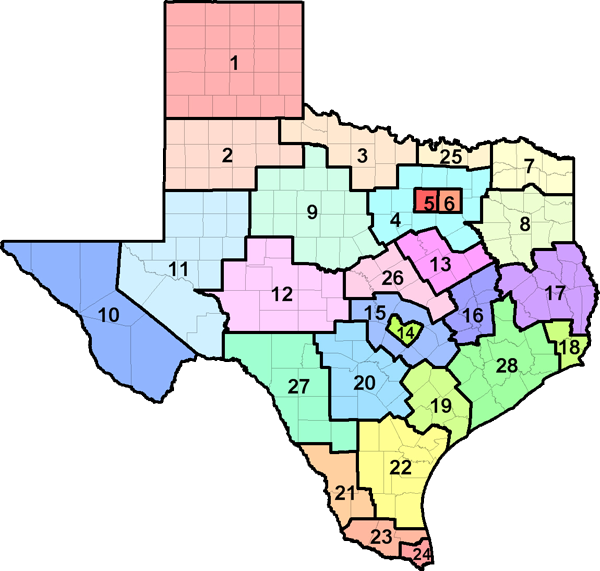
TEXAS COUNTY MAP BY WORKFORCE DEVELOPMENT AREA
* Due to confidentiality rules, not all regions may have the data displayed. The sum of all the regions may not be equal to the state total.


Top 10 Relevant Knowledge Areas Relevant Importance Levels
English Language
Knowledge of the structure and content of the English language including the meaning and spelling of words, rules of composition, and grammar.
90.20%
Biology
Knowledge of plant and animal organisms, their tissues, cells, functions, interdependencies, and interactions with each other and the environment.
77.20%
Customer and Personal Service
Knowledge of principles and processes for providing customer and personal services. This includes customer needs assessment, meeting quality standards for services, and evaluation of customer satisfaction.
73.60%
Law and Government
Knowledge of laws, legal codes, court procedures, precedents, government regulations, executive orders, agency rules, and the democratic political process.
70.40%
Computers and Electronics
Knowledge of circuit boards, processors, chips, electronic equipment, and computer hardware and software, including applications and programming.
68.60%
Public Safety and Security
Knowledge of relevant equipment, policies, procedures, and strategies to promote effective local, state, or national security operations for the protection of people, data, property, and institutions.
66.00%
Chemistry
Knowledge of the chemical composition, structure, and properties of substances and of the chemical processes and transformations that they undergo. This includes uses of chemicals and their interactions, danger signs, production techniques, and disposal methods.
64.20%
Administrative
Knowledge of administrative and office procedures and systems such as word processing, managing files and records, stenography and transcription, designing forms, and workplace terminology.
62.00%
Mathematics
Knowledge of arithmetic, algebra, geometry, calculus, statistics, and their applications.
61.80%
Education and Training
Knowledge of principles and methods for curriculum and training design, teaching and instruction for individuals and groups, and the measurement of training effects.
61.40%


Top 10 Relevant Skill Areas Relevant Importance Levels
Reading Comprehension
Understanding written sentences and paragraphs in work-related documents.
80.00%
Active Listening
Giving full attention to what other people are saying, taking time to understand the points being made, asking questions as appropriate, and not interrupting at inappropriate times.
80.00%
Writing
Communicating effectively in writing as appropriate for the needs of the audience.
80.00%
Speaking
Talking to others to convey information effectively.
80.00%
Science
Using scientific rules and methods to solve problems.
80.00%
Complex Problem Solving
Identifying complex problems and reviewing related information to develop and evaluate options and implement solutions.
80.00%
Critical Thinking
Using logic and reasoning to identify the strengths and weaknesses of alternative solutions, conclusions, or approaches to problems.
77.60%
Active Learning
Understanding the implications of new information for both current and future problem-solving and decision-making.
75.00%
Monitoring
Monitoring/Assessing performance of yourself, other individuals, or organizations to make improvements or take corrective action.
72.40%
Coordination
Adjusting actions in relation to others' actions.
72.40%


Top 10 Relevant Abilities Relevant Importance Levels
Problem Sensitivity
The ability to tell when something is wrong or is likely to go wrong. It does not involve solving the problem, only recognizing that there is a problem.
82.40%
Deductive Reasoning
The ability to apply general rules to specific problems to produce answers that make sense.
82.40%
Oral Comprehension
The ability to listen to and understand information and ideas presented through spoken words and sentences.
82.40%
Written Comprehension
The ability to read and understand information and ideas presented in writing.
82.40%
Oral Expression
The ability to communicate information and ideas in speaking so others will understand.
80.00%
Written Expression
The ability to communicate information and ideas in writing so others will understand.
80.00%
Inductive Reasoning
The ability to combine pieces of information to form general rules or conclusions (includes finding a relationship among seemingly unrelated events).
80.00%
Information Ordering
The ability to arrange things or actions in a certain order or pattern according to a specific rule or set of rules (e.g., patterns of numbers, letters, words, pictures, mathematical operations).
77.60%
Category Flexibility
The ability to generate or use different sets of rules for combining or grouping things in different ways.
77.60%
Speech Recognition
The ability to identify and understand the speech of another person.
75.00%


  • Evaluating Information to Determine Compliance with Standards
    -- Using relevant information and individual judgment to determine whether events or processes comply with laws, regulations, or standards.
  • Getting Information
    -- Observing, receiving, and otherwise obtaining information from all relevant sources.
  • Working with Computers
    -- Using computers and computer systems (including hardware and software) to program, write software, set up functions, enter data, or process information.
  • Communicating with People Outside the Organization
    -- Communicating with people outside the organization, representing the organization to customers, the public, government, and other external sources. This information can be exchanged in person, in writing, or by telephone or e-mail.
  • Analyzing Data or Information
    -- Identifying the underlying principles, reasons, or facts of information by breaking down information or data into separate parts.
Other Activities


  • Achievement
    - Occupations that satisfy this work value are results oriented and allow employees to use their strongest abilities, giving them a feeling of accomplishment. Corresponding needs are Ability Utilization and Achievement.
  • Recognition
    - Occupations that satisfy this work value offer advancement, potential for leadership, and are often considered prestigious. Corresponding needs are Advancement, Authority, Recognition and Social Status.


Tools

Air samplers or collectors: Atmospheric deposition collectors; Air quality dataloggers; Ambient air quality monitoring systems; Particulate samplers; Lead air sampling kits; Mercury monitors;

All terrain vehicles tracked or wheeled: All terrain vehicles ATV;

Anemometers: Anemometers;

Coliwasas: Liquid samplers;

Colorimeters: Colorimeters;

Combustible or hazardous gas detectors for power generators: Combustible gas monitors;

Desktop computers: Desktop computers;

Digital cameras: Digital cameras;

Dosimeters: Dosimeters;

Electromagnetic field meters: Electromagnetic field EMF meters;

Explosimeters: Explosimeters;

Flow sensors: Closed pipe Doppler water flow meters;

Flowmeters: Fiberglass metering manholes;

Gas chromatographs: Gas chromatographs GC;

Global positioning system GPS receiver: Global positioning system GPS receivers;

Heat stress monitors: Heat stress monitors;

Ion analyzers: HNu photoionization detectors PID; Photoionization detectors PID;

Ionization chambers: Ionization chambers;

Laboratory bailers: Bailers;

Leak testing equipment: Smoke generators;

Liquid scintillation counters: Scintillation counters;

Logging instruments for water wells: Submersible water data loggers; Depth meters;

Mainframe computers: Mainframe computers;

Manometers: Manometers;

Mass spectrometers: Mass spectrometers;

Moisture meters: Moisture meters;

Multi gas monitors: Chlorine dioxide meters; Gas spillage detectors;

Nephelometers: Nephelometers;

Notebook computers: Notebook computers;

Oil content monitors analyzers: Oil water interface meters;

Open stream current meters: Water velocity flow meters;

Ozone analyzers: Ozone meters;

Personal computers: Personal computers; Pocket personal computers PC;

pH meters: pH meters;

Photometer: Water quality testing photometers;

Portable data input terminals: Dataloggers;

Precipitation or evaporation recorders: Evaporation gauge sensors;

Psychrometers: Psychrometers;

Radiation detectors: Geiger-Mueller meters; Scintillation probes; Analog survey meters; Digital survey meters; Field radiological measuring devices;

Radon detectors: Radon monitors;

Recreational motorboats: Airboats;

Sample preparation bombs: Bomb samplers;

Single gas monitors: Ammonia meters; Chlorine meters; Carbon monoxide meters;

Soil core sampling apparatus: Hand held augers; Core samplers; Bottom dredge samplers; Soil probes;

Soil testing kits: Soil analysis kits; Soil gas sampling systems;

Sound measuring apparatus or decibel meter: Sound level meters; Noise dosimeters;

Spectrometers: Aerosol spectrometers; Multichannel analyzers;

Spectrophotometers: Spectrophotometers;

Temperature transmitters: Fuel temperature sensors; Air/soil temperature sensors;

Toxicology test kits or supplies: Toxic mold test kits;

Turbidimeters: Turbidimeters;

Viscosimeters: Viscosity meters;

Water analyzers: Multiparameter water quality instruments; Drop count industrial water test kits; Coliform testing systems; Comparator water test kits;

Water samplers: Groundwater monitoring systems; Rain water samplers; Lead water sampling kits; Automatic samplers; Stormwater samplers;


Technology

Analytical or scientific software: ADMS pollution modeling software; CAP88-PC; CERC EMIT; Chemicals and Irrigation CANDI; Compass software; Ecotech WinCollect; DQO ELIPGRID-PC; Hotspot; IBM SPSS Statistics; Laboratory information management system LIMS; Lakes Environmental EcoRisk View; Lakes Environmental ISC-AERMOD View; Lakes Environmental SLAB View; Link Microtek; Rad Pro Calculator; RSA RadCalc; SoundPLAN; Statistical software; TANKS; Wolfel IMMI;

Compliance software: MIRS Compliance; Ecotech WinAQMS; Material safety data sheet MSDS software; Emissions tracking software;

Computer aided design CAD software: Autodesk AutoCAD; Bentley MicroStation;

Data base user interface and query software: Chemical management tracking software; Microsoft Access; Lakes Environmental Emissions View; EarthSoft EQuIS Geology; Database software; DataPipe EHS; Tucows ChemBase; Waters eLab Notebook; Structured query language SQL; Smart Data Solutions RS Solutions;

Development environment software: Microsoft Visual Basic;

Document management software: Microsoft Office SharePoint Server MOSS; Adobe Acrobat;

Electronic mail software: Microsoft Outlook;

Enterprise resource planning ERP software: SAP software;

Geographic information system: ESRI ArcGIS software; ESRI ArcInfo; ESRI ArcView; Geographic information system GIS software; Geographic information system GIS systems;

Graphics or photo imaging software: Adobe Illustrator; Corel CorelDraw Graphics Suite; Graphics software; SmugMug Flickr;

Internet browser software: Web browser software;

Map creation software: RockWare ArcMap; Mapping software; Geomechanical design analysis GDA software; Golden Software Surfer;

Object or component oriented development software: C++; Sun Microsystems Java;

Office suite software: Microsoft Office software;

Presentation software: Microsoft PowerPoint;

Project management software: Microsoft Project;

Spreadsheet software: Spreadsheet software; Microsoft Excel;

Word processing software: Microsoft Word; Word processing software;


Related O*NET occupational titles for Environmental Scientists and Specialists, Including Health include:
  • 11-9199.11 Brownfield Redevelopment Specialists and Site Managers
  • 19-2041.01 Climate Change Policy Analysts
  • 19-1031.00 Conservation Scientists
  • 13-1041.01 Environmental Compliance Inspectors
  • 17-3025.00 Environmental Engineering Technologists and Technicians
  • 17-2081.00 Environmental Engineers
  • 19-2041.02 Environmental Restoration Planners
  • 19-4042.00 Environmental Science and Protection Technicians, Including Health
  • 19-4044.00 Hydrologic Technicians
  • 19-2041.03 Industrial Ecologists


Sources of Additional Information
  • For more information about environmental scientists and specialists, including training, visit: American Geosciences Institute (AGI)
  • University Corporation for Atmospheric Research (UCAR)
  • For more information about certification as a Certified Hazardous Materials Manager, visit: Institute of Hazardous Materials Management (IHMM)
  • For more information about certification as an ecologist, visit: Ecological Society of America (ESA)
  • For information about environmental health specialists and related occupations, visit: National Environmental Health Association (NEHA)

  • Climate Change Policy Analysts
  • Environmental Restoration Planners
  • Environmental Scientists and Specialists, Including Health
  • Industrial Ecologists

  • Contact Texas Workforce Commission
    Labor Market and Career Information  |  101 E. 15th Street, Annex Room 0252  |  Austin, Texas 78778
    Official Website  |  1-800-822-PLAN (7526)  |  512.936.3200

    ** The information in this report may be derived from many sources like O*NET, BLS (Bureau of Labor Statistics), OOH (Occupational Outlook Handbook), and Career One Stop.