Occupation Summary

Hydrologists

O*NET 19-2043.00

Description:

Research the distribution, circulation, and physical properties of underground and surface waters; and study the form and intensity of precipitation and its rate of infiltration into the soil, movement through the earth, and return to the ocean and atmosphere.

Annual Wages:
$91,114.00
Employment Rate:
Employment is expected to increase by 8.29%.
Education Level:
Master's Degree. According to O*Net, the majority of people employed in this occupation have this level of education.
Endorsement:
STEM

  1. Study and document quantities, distribution, disposition, and development of underground and surface waters.
  2. Coordinate and supervise the work of professional and technical staff, including research assistants, technologists, and technicians.
  3. Prepare hydrogeologic evaluations of known or suspected hazardous waste sites and land treatment and feedlot facilities.
  4. Design and conduct scientific hydrogeological investigations to ensure that accurate and appropriate information is available for use in water resource management decisions.
  5. Study public water supply issues, including flood and drought risks, water quality, wastewater, and impacts on wetland habitats.
  6. Collect and analyze water samples as part of field investigations or to validate data from automatic monitors.
  7. Apply research findings to help minimize the environmental impacts of pollution, waterborne diseases, erosion, and sedimentation.
  8. Measure and graph phenomena such as lake levels, stream flows, and changes in water volumes.
  9. Investigate complaints or conflicts related to the alteration of public waters, gathering information, recommending alternatives, informing participants of progress, and preparing draft orders.
  10. Answer questions and provide technical assistance and information to contractors or the public regarding issues such as well drilling, code requirements, hydrology, and geology.
  11. Develop or modify methods for conducting hydrologic studies.
  12. Install, maintain, and calibrate instruments such as those that monitor water levels, rainfall, and sediments.
  13. Evaluate data and provide recommendations regarding the feasibility of municipal projects, such as hydroelectric power plants, irrigation systems, flood warning systems, and waste treatment facilities.
  14. Conduct short- and long-term climate assessments and study storm occurrences.
  15. Study and analyze the physical aspects of the earth in terms of hydrological components, including atmosphere, hydrosphere, and interior structure.
  16. Conduct research and communicate information to promote the conservation and preservation of water resources.
  17. Design civil works associated with hydrographic activities and supervise their construction, installation, and maintenance.
  18. Review applications for site plans and permits and recommend approval, denial, modification, or further investigative action.
  19. Evaluate research data in terms of its impact on issues such as soil and water conservation, flood control planning, and water supply forecasting.
  20. Monitor the work of well contractors, exploratory borers, and engineers and enforce rules regarding their activities.
  21. Administer programs designed to ensure the proper sealing of abandoned wells.
  22. Compile and evaluate hydrologic information to prepare navigational charts and maps and to predict atmospheric conditions.
  23. Investigate properties, origins, and activities of glaciers, ice, snow, and permafrost.
  24. Develop computer models for hydrologic predictions.
  25. Prepare written and oral reports describing research results, using illustrations, maps, appendices, and other information.

Watch a video about Hydrologists

Career videos are provided by: CareerOneStop.org


National Industry Employment Patterns


Industry % of Hydrologists employed Annual Growth Rate
Management, scientific, and technical consulting services 22.2 0.00
Architectural, engineering, and related services 15 0.00


Labor Market Information


2024 Statewide average hourly wage $43.80
2024 National average hourly wage $47.18
2022 National employment 6,600
2022 Texas employment 205
Texas projected employment by 2032 222
Texas projected annual employment and Turnover openings through 2032 19


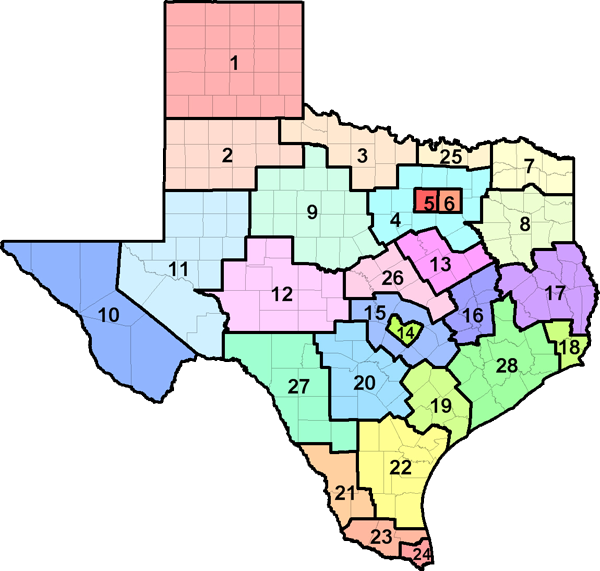
TEXAS COUNTY MAP BY WORKFORCE DEVELOPMENT AREA
* Due to confidentiality rules, not all regions may have the data displayed. The sum of all the regions may not be equal to the state total.


Top 10 Relevant Knowledge Areas Relevant Importance Levels
Mathematics
Knowledge of arithmetic, algebra, geometry, calculus, statistics, and their applications.
87.00%
Physics
Knowledge and prediction of physical principles, laws, their interrelationships, and applications to understanding fluid, material, and atmospheric dynamics, and mechanical, electrical, atomic and sub-atomic structures and processes.
82.60%
Engineering and Technology
Knowledge of the practical application of engineering science and technology. This includes applying principles, techniques, procedures, and equipment to the design and production of various goods and services.
80.00%
English Language
Knowledge of the structure and content of the English language including the meaning and spelling of words, rules of composition, and grammar.
78.20%
Geography
Knowledge of principles and methods for describing the features of land, sea, and air masses, including their physical characteristics, locations, interrelationships, and distribution of plant, animal, and human life.
77.40%
Computers and Electronics
Knowledge of circuit boards, processors, chips, electronic equipment, and computer hardware and software, including applications and programming.
69.60%
Chemistry
Knowledge of the chemical composition, structure, and properties of substances and of the chemical processes and transformations that they undergo. This includes uses of chemicals and their interactions, danger signs, production techniques, and disposal methods.
67.80%
Biology
Knowledge of plant and animal organisms, their tissues, cells, functions, interdependencies, and interactions with each other and the environment.
64.40%
Customer and Personal Service
Knowledge of principles and processes for providing customer and personal services. This includes customer needs assessment, meeting quality standards for services, and evaluation of customer satisfaction.
54.80%
Administration and Management
Knowledge of business and management principles involved in strategic planning, resource allocation, human resources modeling, leadership technique, production methods, and coordination of people and resources.
53.00%


Top 10 Relevant Skill Areas Relevant Importance Levels
Critical Thinking
Using logic and reasoning to identify the strengths and weaknesses of alternative solutions, conclusions, or approaches to problems.
80.00%
Reading Comprehension
Understanding written sentences and paragraphs in work-related documents.
77.60%
Active Listening
Giving full attention to what other people are saying, taking time to understand the points being made, asking questions as appropriate, and not interrupting at inappropriate times.
77.60%
Science
Using scientific rules and methods to solve problems.
77.60%
Complex Problem Solving
Identifying complex problems and reviewing related information to develop and evaluate options and implement solutions.
75.00%
Speaking
Talking to others to convey information effectively.
75.00%
Mathematics
Using mathematics to solve problems.
75.00%
Writing
Communicating effectively in writing as appropriate for the needs of the audience.
72.40%
Active Learning
Understanding the implications of new information for both current and future problem-solving and decision-making.
72.40%
Monitoring
Monitoring/Assessing performance of yourself, other individuals, or organizations to make improvements or take corrective action.
70.00%


Top 10 Relevant Abilities Relevant Importance Levels
Oral Comprehension
The ability to listen to and understand information and ideas presented through spoken words and sentences.
80.00%
Written Comprehension
The ability to read and understand information and ideas presented in writing.
80.00%
Oral Expression
The ability to communicate information and ideas in speaking so others will understand.
80.00%
Written Expression
The ability to communicate information and ideas in writing so others will understand.
80.00%
Problem Sensitivity
The ability to tell when something is wrong or is likely to go wrong. It does not involve solving the problem, only recognizing that there is a problem.
77.60%
Deductive Reasoning
The ability to apply general rules to specific problems to produce answers that make sense.
77.60%
Inductive Reasoning
The ability to combine pieces of information to form general rules or conclusions (includes finding a relationship among seemingly unrelated events).
77.60%
Mathematical Reasoning
The ability to choose the right mathematical methods or formulas to solve a problem.
77.60%
Category Flexibility
The ability to generate or use different sets of rules for combining or grouping things in different ways.
75.00%
Near Vision
The ability to see details at close range (within a few feet of the observer).
75.00%


  • Analyzing Data or Information
    -- Identifying the underlying principles, reasons, or facts of information by breaking down information or data into separate parts.
  • Getting Information
    -- Observing, receiving, and otherwise obtaining information from all relevant sources.
  • Working with Computers
    -- Using computers and computer systems (including hardware and software) to program, write software, set up functions, enter data, or process information.
  • Making Decisions and Solving Problems
    -- Analyzing information and evaluating results to choose the best solution and solve problems.
  • Documenting/Recording Information
    -- Entering, transcribing, recording, storing, or maintaining information in written or electronic/magnetic form.
Other Activities


  • Achievement
    - Occupations that satisfy this work value are results oriented and allow employees to use their strongest abilities, giving them a feeling of accomplishment. Corresponding needs are Ability Utilization and Achievement.
  • Working Conditions
    - Occupations that satisfy this work value offer job security and good working conditions. Corresponding needs are Activity, Compensation, Independence, Security, Variety and Working Conditions.


Tools

Calipers: Calipers;

Clinometers: Clinometers;

Commercial fishing nets: Dip nets;

Conductivity meters: Conductivity meters;

Desktop computers: Desktop computers;

Dissolution or disintegration testers: Erosion monitors;

Dissolved oxygen meters: Dissolved oxygen meters;

Dropping pipettes: Pipettes;

Extensometers: Extensometers;

Filters or other spare parts for samplers: Sounding reels;

Flowmeters: Surface water velocity measurement probes;

Global positioning system GPS receiver: Global positioning system GPS receivers;

Heating or drying equipment or accessories: Dessicators;

Hydrometers: Specific gravity hydrometers;

Laboratory bailers: Bailers;

Laboratory flasks: Filter flasks;

Laboratory mechanical convection ovens: Laboratory ovens;

Laboratory sifting equipment: Sieve shakers;

Laboratory vacuum pumps: Laboratory vacuum pumps;

Laser printers: Laser printers;

Levels: Levels;

Logging instruments for water wells: Groundwater data logging instruments; Wireless data collection systems;

Lux or light meter: Light density meters;

Mainframe computers: Mainframe computers;

Micrometers: Micrometers;

Notebook computers: Notebook computers;

Oil content monitors analyzers: Oil water interface meters;

Open stream current meters: Stream flow gauges; Hydrological current meters;

Open stream water level recorders: Water level recorders; Cellular telemetry system water level monitors;

Peristaltic pumps: Groundwater sampling peristaltic pumps;

Personal computers: Personal computers;

pH meters: pH meters;

Pitch measuring instruments: Inclinometers;

Portable data input terminals: Handheld data collection units;

Portable seismic apparatus: Hydraulic fracturing systems;

Pressure sensors: Pore pressure piezometers; Drive-point piezometers;

Pull spring balances: Spring scales;

Radarbased surveillance systems: Radar equipment;

Radiation detectors: Radiological monitoring equipment;

Remote reading thermometers: Underwater temperature recorders;

Respirators: Respirators;

Salinity meter: Salinity meters;

Sampling pumps: Portable pumping and sampling systems;

Soil core sampling apparatus: Core samplers; Soil samplers;

Sonars: Doppler current and depth meters;

Spectrofluorimeters or fluorimeters: Flow-through field fluorometers;

Surface data logging sensors: Data logging pressure/temperature sensors;

Surface data logging units: Well/surface water dataloggers;

Templates: Map templates;

Theodolites: Total stations;

Thickness measuring devices: Ice meters;

Turbidimeters: Turbidimeters;

Two way radios: Two way radios;

Underwater cameras: Underwater video cameras;

Water analyzers: Multi-port sampling systems to monitor groundwater; Multiparameter water quality instruments; Submersible pressure and level sensors; Submersible water quality sensors;

Water samplers: Biological oxygen demand water samplers; Double-packer systems; Instream sediment collectors; In-situ pore water samplers; Sediment samplers; Subsurface grab water samplers; Suction samplers; Swing water samplers;

Well logging downhole test equipment: Standpipe multi-packer systems for long-term monitoring of deep boreholes;


Technology

Analytical or scientific software: Argus ONE Open Numerical Environments; Bentley Systems gINT; Biodegration flow and transport modeling software; Clover Technology GALENA; Data visualization software; EarthVision; Electric Rain Swift 3D; EnviroData Solutions; Fitts Geosolutions TWODAN; Formlink HydroGEN; Environmental Software and Services SUTRA; Golden Software Strater; Groundwater modeling system GMS; Groundwater Software QuickCross/Fence; Groundwater Software QuickLog; Groundwater Vistas; HEC-1; HEC-2; HEC-RAS; Hydrologic simulation program fortan HSPF software; HydroSOLVE AQTESOLV; Laboratory information management system LIMS; Logger data manager LDM; Logplot software; MLPU; Parameter Estimation PEST; PRINCE; Revised universal soil loss equation RUSLE software; RockWare ChemFlux; RockWare Geochemist's Workbench GWB; RockWare MODFLOW; Scientific Software Group FEFLOW; Scientific Software Group Filter Drain FD; Scientific Software Group GFLOW; Scientific Software Group HydroGeo Analyst; Scientific Software Group HYDROGEOCHEM; Scientific Software Group Infinite Extent; Scientific Software Group MARS 2-D/3-D; Scientific Software Group MIDUSS; Scientific Software Group MIGRATE; Scientific Software Group MINTEQA2; Scientific Software Group MOCDENSE; Scientific Software Group MODFLOWT; Scientific Software Group MODPUMP; Scientific Software Group MODRET; Scientific Software Group MOFAT; Scientific Software Group MohrView; Scientific Software Group MOVER; Scientific Software Group MS-VMS; Scientific Software Group MT3D99; Scientific Software Group OILVOL; Scientific Software Group POLLUTE; Scientific Software Group QHM; Scientific Software Group QuickSoil; Scientific Software Group RISC WorkBench; Scientific Software Group AQUA3D; Scientific Software Group AquaDyn; Scientific Software Group AQUASEA; Scientific Software Group Aquifer win32; Scientific Software Group AQUIPACK; Scientific Software Group AT123D; Scientific Software Group BIO1D; Scientific Software Group BIOF&T; Scientific Software Group BIOSLURP; Scientific Software Group BioTrends; Scientific Software Group CHASM; Scientific Software Group SEQUENCE; Scientific Software Group SESOIL; Scientific Software Group SLAEM/MLAEM; Scientific Software Group Soil Vapor Extraction BioSVE; Scientific Software Group SOILPARA; Scientific Software Group SOLUTRANS; Scientific Software Group StepMaster; Scientific Software Group SVFlux; Scientific Software Group SVHeat; Scientific Software Group TUFLOW; Scientific Software Group VAM2D; Scientific Software Group WinFlow; Scientific Software Group WinTran; Scientific Software Group EnviroScape; Scientific Software GroupWinFence; SoilVision Systems SVGrainsize; Starpint Software Super Slug; Surface water modeling system SMS software; The MathWorks MATLAB; Vieux & Associates Vflow; Visual MODFLOW Pro; Waterloo Hydrogeologic AquaChem; Waterloo Hydrogeologic AquiferTest Pro; Waterloo Hydrogeologic RBC Tier 2 Analyzer; Watershed modeling system WMS software;

Categorization or classification software: GAEA Technologies WinSieve;

Compliance software: National pollutant discharge elimination system NPDES compliance software;

Computer aided design CAD software: Scientific Software Group 3DFATMIC; Scientific Software Group 3DFEMFAT; Integrated Environmental Services 3D Master; Advanced Logic Technology WellCAD; Carlson SurvCADD; BOSS International Visual Groundwater; Autodesk AutoCAD; Autodesk AutoCAD Civil 3D; Autodesk AutoCAD Map 3D; Autodesk Land Desktop; Bentley MicroStation; SEDCAD; Scientific Software Group EVS;

Data base user interface and query software: Scientific Software GroupWHI UnSAT Suite; Scientific Software Group Enviro-Base Pro; Structure query language SQL; SoilVision Systems SVOFFICE; Waters eLab Notebook; Scientific Software Group ChemGraph; ChemStat; Database software; EarthSoft EQuIS Geology; Groundwater Software Visual Site Manager; Microsoft Access; GIS/Solutions GIS/Key; Satellite database software; River Lake Altimetry Product; RIVERMorph;

Development environment software: Microsoft Visual Basic; Formula translation/translator FORTRAN;

Electronic mail software: Email software;

Geographic information system: Geographic information system GIS software; Geographic information system GIS systems; ESRI ArcGIS software; ESRI ArcView; RockWare RockWorks; Trimble TerraSync;

Graphics or photo imaging software: StatPoint StatGraphics Plus; RockWare SieveGraph; Graphics software; Amtec Engineering Tecplot;

Internet browser software: Web browser software;

Map creation software: Trimble Pathfinder Office; Softree Technical Systems Terrain Tools; Scientific Software Group DTM; Scientific Software Group SURF; Scientific Software Group RMT; Golden Software Surfer; Geomechanical design analysis GDA software;

Object or component oriented development software: C++; Python;

Office suite software: Microsoft Office software;

Operating system software: Microsoft Windows Vista Business;

Presentation software: Microsoft PowerPoint; EnviroInsite;

Spreadsheet software: Microsoft Excel; Spreadsheet software;

Web platform development software: Microsoft Active Server Pages ASP;

Word processing software: Microsoft Word; GAEA Technologies Packet ESA; GAEA Technologies WinLog; Word processing software;


Related O*NET occupational titles for Hydrologists include:
  • 19-1031.00 Conservation Scientists
  • 17-2081.00 Environmental Engineers
  • 19-2041.02 Environmental Restoration Planners
  • 19-4042.00 Environmental Science and Protection Technicians, Including Health
  • 19-2041.00 Environmental Scientists and Specialists, Including Health
  • 19-2042.00 Geoscientists, Except Hydrologists and Geographers
  • 19-2041.03 Industrial Ecologists
  • 19-1013.00 Soil and Plant Scientists
  • 11-9121.02 Water Resource Specialists
  • 17-2051.02 Water/Wastewater Engineers


Sources of Additional Information
  • For more information about hydrology and the work of hydrologists in the federal government, visit: U.S. Geological Survey (USGS)
  • For information on federal government requirements for hydrology positions, visit: U.S. Office of Personnel Management (OPM)
  • To find job openings for hydrologists in the federal government, visit: USAJOBS
  • For more information about careers in hydrology, visit: American Geophysical Union (AGU)
  • American Geosciences Institute (AGI)
  • American Institute of Hydrology (AIH)
  • American Water Resources Association (AWRA)
  • Hydrologists

  • Contact Texas Workforce Commission
    Labor Market and Career Information  |  101 E. 15th Street, Annex Room 0252  |  Austin, Texas 78778
    Official Website  |  1-800-822-PLAN (7526)  |  512.936.3200

    ** The information in this report may be derived from many sources like O*NET, BLS (Bureau of Labor Statistics), OOH (Occupational Outlook Handbook), and Career One Stop.