Occupation Summary

Economists

O*NET 19-3011.00

Description:

Conduct research, prepare reports, or formulate plans to address economic problems related to the production and distribution of goods and services or monetary and fiscal policy. May collect and process economic and statistical data using sampling techniques and econometric methods.

Annual Wages:
$122,402.00
Employment Rate:
Employment is expected to increase by 17.06%.
Education Level:
Master's Degree. According to O*Net, the majority of people employed in this occupation have this level of education.
Endorsement:
Business and Industry

  1. Study economic and statistical data in area of specialization, such as finance, labor, or agriculture.
  2. Provide advice and consultation on economic relationships to businesses, public and private agencies, and other employers.
  3. Compile, analyze, and report data to explain economic phenomena and forecast market trends, applying mathematical models and statistical techniques.
  4. Formulate recommendations, policies, or plans to solve economic problems or to interpret markets.
  5. Develop economic guidelines and standards, and prepare points of view used in forecasting trends and formulating economic policy.
  6. Testify at regulatory or legislative hearings concerning the estimated effects of changes in legislation or public policy, and present recommendations based on cost-benefit analyses.
  7. Supervise research projects and students' study projects.
  8. Forecast production and consumption of renewable resources and supply, consumption, and depletion of non-renewable resources.
  9. Teach theories, principles, and methods of economics.
  10. Provide litigation support, such as writing reports for expert testimony or testifying as an expert witness.
  11. Study the socioeconomic impacts of new public policies, such as proposed legislation, taxes, services, and regulations.
  12. Conduct research on economic issues, and disseminate research findings through technical reports or scientific articles in journals.
  13. Explain economic impact of policies to the public.
  14. Review documents written by others.

Watch a video about Economists

Career videos are provided by: CareerOneStop.org


National Industry Employment Patterns


Industry % of Economists employed Annual Growth Rate
Management, scientific, and technical consulting services 19.7 1.84
Scientific research and development services 10.6 0.00
Business, professional, labor, political, and similar organizations 3.6 0.00
Other professional, scientific, and technical services 3.1 1.84
Colleges, universities, and professional schools 2.1 0.00


Labor Market Information


2024 Statewide average hourly wage $58.85
2024 National average hourly wage $62.94
2022 National employment 17,600
2022 Texas employment 469
Texas projected employment by 2032 549
Texas projected annual employment and Turnover openings through 2032 39


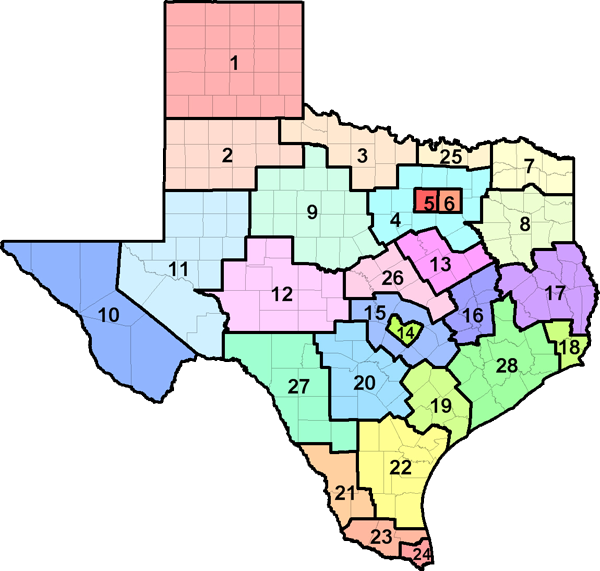
TEXAS COUNTY MAP BY WORKFORCE DEVELOPMENT AREA
* Due to confidentiality rules, not all regions may have the data displayed. The sum of all the regions may not be equal to the state total.


Top 10 Relevant Knowledge Areas Relevant Importance Levels
Mathematics
Knowledge of arithmetic, algebra, geometry, calculus, statistics, and their applications.
90.80%
Economics and Accounting
Knowledge of economic and accounting principles and practices, the financial markets, banking, and the analysis and reporting of financial data.
89.20%
English Language
Knowledge of the structure and content of the English language including the meaning and spelling of words, rules of composition, and grammar.
80.80%
Computers and Electronics
Knowledge of circuit boards, processors, chips, electronic equipment, and computer hardware and software, including applications and programming.
75.60%
Education and Training
Knowledge of principles and methods for curriculum and training design, teaching and instruction for individuals and groups, and the measurement of training effects.
62.40%
Communications and Media
Knowledge of media production, communication, and dissemination techniques and methods. This includes alternative ways to inform and entertain via written, oral, and visual media.
55.00%
Law and Government
Knowledge of laws, legal codes, court procedures, precedents, government regulations, executive orders, agency rules, and the democratic political process.
53.40%
Administration and Management
Knowledge of business and management principles involved in strategic planning, resource allocation, human resources modeling, leadership technique, production methods, and coordination of people and resources.
52.40%
Sociology and Anthropology
Knowledge of group behavior and dynamics, societal trends and influences, human migrations, ethnicity, cultures, and their history and origins.
50.00%
History and Archeology
Knowledge of historical events and their causes, indicators, and effects on civilizations and cultures.
48.40%


Top 10 Relevant Skill Areas Relevant Importance Levels
Critical Thinking
Using logic and reasoning to identify the strengths and weaknesses of alternative solutions, conclusions, or approaches to problems.
82.40%
Reading Comprehension
Understanding written sentences and paragraphs in work-related documents.
82.40%
Mathematics
Using mathematics to solve problems.
82.40%
Active Listening
Giving full attention to what other people are saying, taking time to understand the points being made, asking questions as appropriate, and not interrupting at inappropriate times.
80.00%
Writing
Communicating effectively in writing as appropriate for the needs of the audience.
80.00%
Speaking
Talking to others to convey information effectively.
80.00%
Judgment and Decision Making
Considering the relative costs and benefits of potential actions to choose the most appropriate one.
80.00%
Complex Problem Solving
Identifying complex problems and reviewing related information to develop and evaluate options and implement solutions.
75.00%
Active Learning
Understanding the implications of new information for both current and future problem-solving and decision-making.
75.00%
Instructing
Teaching others how to do something.
65.00%


Top 10 Relevant Abilities Relevant Importance Levels
Written Comprehension
The ability to read and understand information and ideas presented in writing.
82.40%
Inductive Reasoning
The ability to combine pieces of information to form general rules or conclusions (includes finding a relationship among seemingly unrelated events).
82.40%
Mathematical Reasoning
The ability to choose the right mathematical methods or formulas to solve a problem.
82.40%
Deductive Reasoning
The ability to apply general rules to specific problems to produce answers that make sense.
80.00%
Oral Comprehension
The ability to listen to and understand information and ideas presented through spoken words and sentences.
80.00%
Oral Expression
The ability to communicate information and ideas in speaking so others will understand.
80.00%
Written Expression
The ability to communicate information and ideas in writing so others will understand.
80.00%
Speech Clarity
The ability to speak clearly so others can understand you.
80.00%
Fluency of Ideas
The ability to come up with a number of ideas about a topic (the number of ideas is important, not their quality, correctness, or creativity).
77.60%
Problem Sensitivity
The ability to tell when something is wrong or is likely to go wrong. It does not involve solving the problem, only recognizing that there is a problem.
72.40%


  • Analyzing Data or Information
    -- Identifying the underlying principles, reasons, or facts of information by breaking down information or data into separate parts.
  • Getting Information
    -- Observing, receiving, and otherwise obtaining information from all relevant sources.
  • Working with Computers
    -- Using computers and computer systems (including hardware and software) to program, write software, set up functions, enter data, or process information.
  • Processing Information
    -- Compiling, coding, categorizing, calculating, tabulating, auditing, or verifying information or data.
  • Interpreting the Meaning of Information for Others
    -- Translating or explaining what information means and how it can be used.
Other Activities


  • Independence
    - Occupations that satisfy this work value allow employees to work on their own and make decisions. Corresponding needs are Creativity, Responsibility and Autonomy.
  • Working Conditions
    - Occupations that satisfy this work value offer job security and good working conditions. Corresponding needs are Activity, Compensation, Independence, Security, Variety and Working Conditions.


Tools

Desktop calculator: 10-key calculators;

Desktop computers: Desktop computers;

Mainframe computers: Maintrame computers;

Notebook computers: Laptop computers;

Personal computers: Personal computers;

Scanners: Data scanners;


Technology

Analytical or scientific software: Aptech Systems GAUSS; Camfit Data Limited Microfit; Econometric Software LIMDEP; Estima Regression Analysis of Time Series RATS; Estimates Delivery System EDS; Global Insight AREMOS; IBM SPSS Statistics; Insightful S-PLUS; MacKichan Software Scientific Notebook; Maplesoft Maple; Mathsoft Mathcad; Minitab; Quantitative Micro Software EViews; SAS; StataCorp Stata; The MathWorks MATLAB; Timberlake Consultants OxMetrics; TreeAge Software TreeAge Pro; Wolfram Research Mathematica;

Business intelligence and data analysis software: Tableau;

Data base management system software: Teradata Database; MySQL;

Data base user interface and query software: Microsoft Access; Microsoft SQL Server; Structured query language SQL;

Desktop publishing software: LaTeX;

Development environment software: Formula translation/translator FORTRAN; Microsoft Visual Basic; Microsoft Visual Basic for Applications VBA;

Electronic mail software: Microsoft Outlook;

Financial analysis software: Palisade @Risk;

Geographic information system: ESRI ArcView;

Internet browser software: Mozilla Firefox; Microsoft Internet Explorer; Web browser software;

Object or component oriented development software: R; Microsoft Visual C# .NET; Python; Oracle Java; C++;

Office suite software: Microsoft Office software; Corel WordPerfect Office Suite;

Operating system software: UNIX; UNIX Shell;

Presentation software: Microsoft PowerPoint;

Spreadsheet software: Microsoft Excel; Corel QuattroPro; IBM Lotus 1-2-3;

Web page creation and editing software: MediaWiki;

Word processing software: Microsoft Word;


Related O*NET occupational titles for Economists include:
  • 25-1011.00 Business Teachers, Postsecondary
  • 15-2051.00 Data Scientists
  • 25-1063.00 Economics Teachers, Postsecondary
  • 19-3011.01 Environmental Economists
  • 13-2051.00 Financial and Investment Analysts
  • 13-2099.01 Financial Quantitative Analysts
  • 13-2054.00 Financial Risk Specialists
  • 11-3031.03 Investment Fund Managers
  • 19-3094.00 Political Scientists
  • 15-2041.00 Statisticians


Sources of Additional Information
  • For more information about economists, visit: American Economic Association
  • For information about careers in business economics, visit: National Association for Business Economics
  • To find job openings for economists in the federal government, visit: USAJOBS
  • Economists
  • Environmental Economists

  • Contact Texas Workforce Commission
    Labor Market and Career Information  |  101 E. 15th Street, Annex Room 0252  |  Austin, Texas 78778
    Official Website  |  1-800-822-PLAN (7526)  |  512.936.3200

    ** The information in this report may be derived from many sources like O*NET, BLS (Bureau of Labor Statistics), OOH (Occupational Outlook Handbook), and Career One Stop.