
The U.S. Department of Labor has developed an automated occupational information database, O*NET, that identifies and describes work content, work skills, and training requirements for all jobs across the country in all sectors of the economy. Much of the occupational information contained in this report is derived directly from the O*NET database, and supplemented with information from the Bureau of Labor Statistics, Census Bureau, and Labor Market and Career Information.
| Industry | % of Political Scientists employed | Annual Growth Rate |
|---|---|---|
| Scientific research and development services | 13.6 | 1.18 |
| Social advocacy organizations | 7.7 | 0.00 |
| Colleges, universities, and professional schools | 5 | 0.00 |
| 2024 Statewide average hourly wage | $52.57 |
| 2024 National average hourly wage | $66.15 |
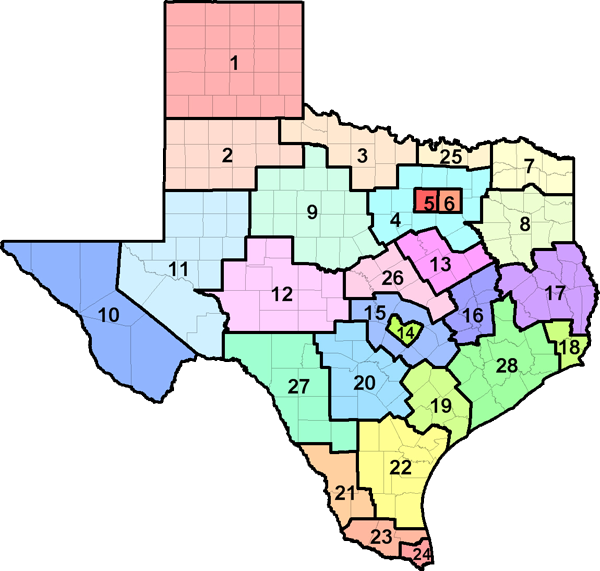
| Region | Employment | Projected Employment 2032 | Projected Annual Openings 2032 |
Annual Growth Rate |
Average Income |
|---|---|---|---|---|---|
| Texas (all regions) |
|
|
|
|
|
| Top 10 Relevant Knowledge Areas | Relevant Importance Levels |
|---|---|
| Law and Government Knowledge of laws, legal codes, court procedures, precedents, government regulations, executive orders, agency rules, and the democratic political process. |
|
| English Language Knowledge of the structure and content of the English language including the meaning and spelling of words, rules of composition, and grammar. |
|
| Education and Training Knowledge of principles and methods for curriculum and training design, teaching and instruction for individuals and groups, and the measurement of training effects. |
|
| History and Archeology Knowledge of historical events and their causes, indicators, and effects on civilizations and cultures. |
|
| Mathematics Knowledge of arithmetic, algebra, geometry, calculus, statistics, and their applications. |
|
| Communications and Media Knowledge of media production, communication, and dissemination techniques and methods. This includes alternative ways to inform and entertain via written, oral, and visual media. |
|
| Sociology and Anthropology Knowledge of group behavior and dynamics, societal trends and influences, human migrations, ethnicity, cultures, and their history and origins. |
|
| Geography Knowledge of principles and methods for describing the features of land, sea, and air masses, including their physical characteristics, locations, interrelationships, and distribution of plant, animal, and human life. |
|
| Philosophy and Theology Knowledge of different philosophical systems and religions. This includes their basic principles, values, ethics, ways of thinking, customs, practices, and their impact on human culture. |
|
| Computers and Electronics Knowledge of circuit boards, processors, chips, electronic equipment, and computer hardware and software, including applications and programming. |
| Top 10 Relevant Skill Areas | Relevant Importance Levels |
|---|---|
| Reading Comprehension Understanding written sentences and paragraphs in work-related documents. |
|
| Active Listening Giving full attention to what other people are saying, taking time to understand the points being made, asking questions as appropriate, and not interrupting at inappropriate times. |
|
| Speaking Talking to others to convey information effectively. |
|
| Active Learning Understanding the implications of new information for both current and future problem-solving and decision-making. |
|
| Writing Communicating effectively in writing as appropriate for the needs of the audience. |
|
| Critical Thinking Using logic and reasoning to identify the strengths and weaknesses of alternative solutions, conclusions, or approaches to problems. |
|
| Social Perceptiveness Being aware of others' reactions and understanding why they react as they do. |
|
| Complex Problem Solving Identifying complex problems and reviewing related information to develop and evaluate options and implement solutions. |
|
| Judgment and Decision Making Considering the relative costs and benefits of potential actions to choose the most appropriate one. |
|
| Learning Strategies Selecting and using training/instructional methods and procedures appropriate for the situation when learning or teaching new things. |
| Top 10 Relevant Abilities | Relevant Importance Levels |
|---|---|
| Written Comprehension The ability to read and understand information and ideas presented in writing. |
|
| Oral Expression The ability to communicate information and ideas in speaking so others will understand. |
|
| Oral Comprehension The ability to listen to and understand information and ideas presented through spoken words and sentences. |
|
| Written Expression The ability to communicate information and ideas in writing so others will understand. |
|
| Inductive Reasoning The ability to combine pieces of information to form general rules or conclusions (includes finding a relationship among seemingly unrelated events). |
|
| Speech Clarity The ability to speak clearly so others can understand you. |
|
| Speech Recognition The ability to identify and understand the speech of another person. |
|
| Deductive Reasoning The ability to apply general rules to specific problems to produce answers that make sense. |
|
| Problem Sensitivity The ability to tell when something is wrong or is likely to go wrong. It does not involve solving the problem, only recognizing that there is a problem. |
|
| Near Vision The ability to see details at close range (within a few feet of the observer). |