Occupation Summary

Food Science Technicians

O*NET 19-4013.00

Description:

Work with food scientists or technologists to perform standardized qualitative and quantitative tests to determine physical or chemical properties of food or beverage products. Includes technicians who assist in research and development of production technology, quality control, packaging, processing, and use of foods.

Annual Wages:
$50,128.00
Employment Rate:
Employment is expected to increase by 14.17%.
Education Level:
Bachelor's Degree. According to O*Net, the majority of people employed in this occupation have this level of education.
Endorsement:
Business and Industry, Science Technology Engineering and Math (STEM)

  1. Conduct standardized tests on food, beverages, additives, or preservatives to ensure compliance with standards and regulations regarding factors such as color, texture, or nutrients.
  2. Provide assistance to food scientists or technologists in research and development, production technology, or quality control.
  3. Compute moisture or salt content, percentages of ingredients, formulas, or other product factors, using mathematical and chemical procedures.
  4. Record or compile test results or prepare graphs, charts, or reports.
  5. Analyze test results to classify products or compare results with standard tables.
  6. Taste or smell foods or beverages to ensure that flavors meet specifications or to select samples with specific characteristics.
  7. Examine chemical or biological samples to identify cell structures or to locate bacteria or extraneous material, using a microscope.
  8. Mix, blend, or cultivate ingredients to make reagents or to manufacture food or beverage products.
  9. Measure, test, or weigh bottles, cans, or other containers to ensure that hardness, strength, or dimensions meet specifications.
  10. Order supplies needed to maintain inventories in laboratories or in storage facilities of food or beverage processing plants.
  11. Maintain records of testing results or other documents as required by state or other governing agencies.
  12. Monitor and control temperature of products.
  13. Perform regular maintenance of laboratory equipment by inspecting, calibrating, cleaning, or sterilizing.
  14. Train newly hired laboratory personnel.
  15. Prepare or incubate slides with cell cultures.
  16. Supervise other food science technicians.


National Industry Employment Patterns


Industry % of Food Science Technicians employed Annual Growth Rate
Dairy product manufacturing 10.6 0.45
Other food manufacturing 8.3 1.55
Animal slaughtering and processing 6.1 0.00
Fruit and vegetable preserving and specialty food manufacturing 6.1 0.00
Beverage manufacturing 6 0.74
Grain and oilseed milling 3.6 0.00
Bakeries and tortilla manufacturing 3.2 0.00
Architectural, engineering, and related services 2.6 1.84
Scientific research and development services 2.4 0.00
Restaurants and other eating places 2.2 0.00


Labor Market Information


2024 Statewide average hourly wage $24.10
2024 National average hourly wage $26.15
2022 National employment 21,200
2022 Texas employment 2,033
Texas projected employment by 2032 2,321
Texas projected annual employment and Turnover openings through 2032 319


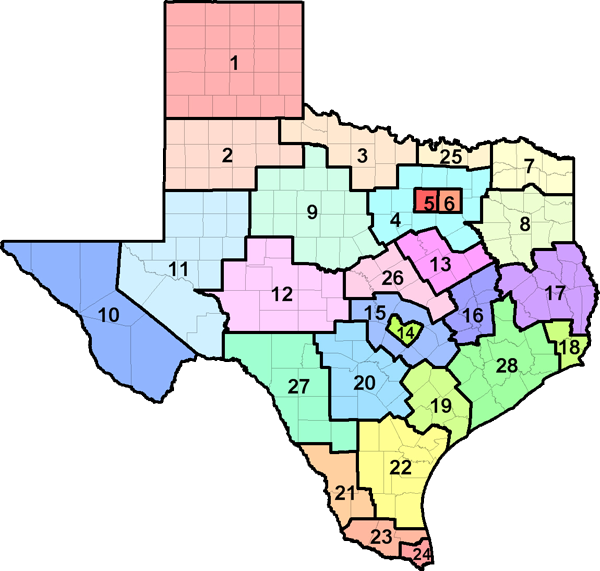
TEXAS COUNTY MAP BY WORKFORCE DEVELOPMENT AREA
* Due to confidentiality rules, not all regions may have the data displayed. The sum of all the regions may not be equal to the state total.


Top 10 Relevant Knowledge Areas Relevant Importance Levels
Food Production
Knowledge of techniques and equipment for planting, growing, and harvesting food products (both plant and animal) for consumption, including storage/handling techniques.
75.20%
Production and Processing
Knowledge of raw materials, production processes, quality control, costs, and other techniques for maximizing the effective manufacture and distribution of goods.
73.60%
Chemistry
Knowledge of the chemical composition, structure, and properties of substances and of the chemical processes and transformations that they undergo. This includes uses of chemicals and their interactions, danger signs, production techniques, and disposal methods.
69.00%
English Language
Knowledge of the structure and content of the English language including the meaning and spelling of words, rules of composition, and grammar.
68.60%
Computers and Electronics
Knowledge of circuit boards, processors, chips, electronic equipment, and computer hardware and software, including applications and programming.
62.60%
Biology
Knowledge of plant and animal organisms, their tissues, cells, functions, interdependencies, and interactions with each other and the environment.
62.00%
Mathematics
Knowledge of arithmetic, algebra, geometry, calculus, statistics, and their applications.
60.80%
Administrative
Knowledge of administrative and office procedures and systems such as word processing, managing files and records, stenography and transcription, designing forms, and workplace terminology.
52.20%
Customer and Personal Service
Knowledge of principles and processes for providing customer and personal services. This includes customer needs assessment, meeting quality standards for services, and evaluation of customer satisfaction.
51.80%
Education and Training
Knowledge of principles and methods for curriculum and training design, teaching and instruction for individuals and groups, and the measurement of training effects.
49.40%


Top 10 Relevant Skill Areas Relevant Importance Levels
Reading Comprehension
Understanding written sentences and paragraphs in work-related documents.
75.00%
Active Listening
Giving full attention to what other people are saying, taking time to understand the points being made, asking questions as appropriate, and not interrupting at inappropriate times.
70.00%
Writing
Communicating effectively in writing as appropriate for the needs of the audience.
70.00%
Speaking
Talking to others to convey information effectively.
70.00%
Science
Using scientific rules and methods to solve problems.
65.00%
Critical Thinking
Using logic and reasoning to identify the strengths and weaknesses of alternative solutions, conclusions, or approaches to problems.
65.00%
Monitoring
Monitoring/Assessing performance of yourself, other individuals, or organizations to make improvements or take corrective action.
62.40%
Coordination
Adjusting actions in relation to others' actions.
62.40%
Complex Problem Solving
Identifying complex problems and reviewing related information to develop and evaluate options and implement solutions.
62.40%
Quality Control Analysis
Conducting tests and inspections of products, services, or processes to evaluate quality or performance.
62.40%


Top 10 Relevant Abilities Relevant Importance Levels
Near Vision
The ability to see details at close range (within a few feet of the observer).
77.60%
Oral Comprehension
The ability to listen to and understand information and ideas presented through spoken words and sentences.
75.00%
Written Comprehension
The ability to read and understand information and ideas presented in writing.
75.00%
Oral Expression
The ability to communicate information and ideas in speaking so others will understand.
75.00%
Written Expression
The ability to communicate information and ideas in writing so others will understand.
75.00%
Deductive Reasoning
The ability to apply general rules to specific problems to produce answers that make sense.
72.40%
Inductive Reasoning
The ability to combine pieces of information to form general rules or conclusions (includes finding a relationship among seemingly unrelated events).
72.40%
Problem Sensitivity
The ability to tell when something is wrong or is likely to go wrong. It does not involve solving the problem, only recognizing that there is a problem.
70.00%
Visual Color Discrimination
The ability to match or detect differences between colors, including shades of color and brightness.
65.00%
Speech Recognition
The ability to identify and understand the speech of another person.
65.00%


  • Training and Teaching Others
    -- Identifying the educational needs of others, developing formal educational or training programs or classes, and teaching or instructing others.
  • Monitoring Processes, Materials, or Surroundings
    -- Monitoring and reviewing information from materials, events, or the environment, to detect or assess problems.
  • Working with Computers
    -- Using computers and computer systems (including hardware and software) to program, write software, set up functions, enter data, or process information.
  • Documenting/Recording Information
    -- Entering, transcribing, recording, storing, or maintaining information in written or electronic/magnetic form.
  • Communicating with Supervisors, Peers, or Subordinates
    -- Providing information to supervisors, co-workers, and subordinates by telephone, in written form, e-mail, or in person.
Other Activities


  • Relationships
    - Occupations that satisfy this work value allow employees to provide service to others and work with co-workers in a friendly non-competitive environment. Corresponding needs are Co-workers, Moral Values and Social Service.
  • Support
    - Occupations that satisfy this work value offer supportive management that stands behind employees. Corresponding needs are Company Policies, Supervision: Human Relations and Supervision: Technical.


Tools

Anaerobic jars or accessories: Anaerobic jars;

Bench scales: Precision scales;

Benchtop centrifuges: Benchtop centrifuges;

Binocular light compound microscopes: Compound binocular light microscopes;

Calorimeters: Calorimeters;

Chemical absorption gas analyzers: Gas analyzers;

Colorimeters: Color testing equipment;

Decontamination shower: Safety showers;

Desktop computers: Desktop computers;

Dropping pipettes: Dropping pipettes;

Electronic counters: Colony counters;

Electronic toploading balances: Electronic toploading balances;

Extracting equipment for laboratories: Distilling equipment; Siphons;

Eyewashers or eye wash stations: Eyewash fountains;

Fire extinguishers: Fire extinguishers;

Fluorescent microscopes: Fluorescent microscopes;

Forced air or mechanical convection general purpose incubators: Laboratory mechanical convection incubators;

Fume hoods or cupboards: Fume hoods;

Gas burners: Bunsen burners;

Goggles: Safety goggles;

Handheld thermometer: Handheld thermometers; Dry bulb thermometers;

Heating or drying equipment or accessories: Dessicators;

Homogenizers: Homogenizers;

Inoculating devices: Inoculation tubes;

Lab coats: Laboratory coats;

Laboratory balances: Laboratory balances;

Laboratory beakers: Laboratory beakers;

Laboratory blenders or emulsifiers: Laboratory blenders;

Laboratory burets: Laboratory glass burets;

Laboratory clamps: Laboratory clamps;

Laboratory flasks: Erlenmeyer flasks;

Laboratory funnels: Laboratory funnels;

Laboratory hotplates: Laboratory hot plates;

Laboratory knives: Laboratory knives;

Laboratory mechanical convection ovens: Hot air ovens; Laboratory convection ovens;

Laboratory mills: Grinders;

Laboratory mixers: Laboratory mixers;

Laboratory separators: Laboratory strainers;

Laboratory stirring rods: Laboratory stirring rods;

Laboratory tongs: Laboratory tongs;

Laser printers: Laser printers;

Magnetic spin bars or stir bars or stirring beads: Magnetic stir bars;

Magnetic stirrers: Magnetic stirrers;

Magnetic tools: Magnetic retrievers;

Metal detectors: Metal detectors;

Microbiology analyzers: Bioluminometers;

Microplate readers: Microwell readers; Enzyme-linked immunosorbent assay ELISA plate readers;

Microscope slides: Microscope slides;

Moisture balances: Moisture balances;

Moisture meters: Moisture meters;

Multipurpose or general test tubes: General purpose laboratory test tubes;

Notebook computers: Notebook computers;

Optical diffraction apparatus: Particle size testing equipment;

Pasteur or transfer pipettes: Pasteur pipettes;

Personal computers: Personal computers;

Pestle or mortars: Mortars and pestles;

Petri plates or dishes: Petri dishes;

pH meters: Universal indicators; pH meters;

Protective gloves: Safety gloves;

Psychrometers: Wet bulb thermometers;

Remote reading thermometers: Temperature probes;

Specialty plates for bacteria: Agar plates;

Steam autoclaves or sterilizers: Steam autoclaves; Steam sterilizers;

Triple beam balances: Triple beam balances;

Ultraviolet UV lamps: Ultraviolet UV lights;

Vacuum ovens: Vacuum ovens;

Viscosimeters: Viscosity testing equipment; Zhan cups;

Water analysis systems: Water activity meters;

Water baths: Boiling water baths;


Technology

Analytical or scientific software: SAS;

Application server software: Red Hat WildFly; Oracle WebLogic Server;

Cloud-based management software: IBM WebSphere;

Data base user interface and query software: Microsoft Access; Database software; Microsoft SQL Server; Structure query language SQL;

Electronic mail software: IBM Lotus Notes; Microsoft Outlook;

Enterprise resource planning ERP software: SAP software;

Graphical user interface development software: Graphical user interface GUI design software;

Graphics or photo imaging software: Graphics software;

Object or component oriented development software: Apache JMeter;

Office suite software: Microsoft Office software;

Operating system software: Linux;

Presentation software: Microsoft PowerPoint; Presentation software;

Process mapping and design software: Microsoft Visio;

Spreadsheet software: Microsoft Excel; Spreadsheet software;

Web platform development software: Apache Struts;

Word processing software: Microsoft Word; Word processing software;


Related O*NET occupational titles for Food Science Technicians include:
  • 45-2011.00 Agricultural Inspectors
  • 19-4012.00 Agricultural Technicians
  • 17-3028.00 Calibration Technologists and Technicians
  • 19-4031.00 Chemical Technicians
  • 51-3091.00 Food and Tobacco Roasting, Baking, and Drying Machine Operators and Tenders
  • 19-1012.00 Food Scientists and Technologists
  • 17-3026.00 Industrial Engineering Technologists and Technicians
  • 51-9061.00 Inspectors, Testers, Sorters, Samplers, and Weighers
  • 19-4099.01 Quality Control Analysts
  • 11-3051.01 Quality Control Systems Managers


Contact Texas Workforce Commission
Labor Market and Career Information  |  101 E. 15th Street, Annex Room 0252  |  Austin, Texas 78778
Official Website  |  1-800-822-PLAN (7526)  |  512.936.3200

** The information in this report may be derived from many sources like O*NET, BLS (Bureau of Labor Statistics), OOH (Occupational Outlook Handbook), and Career One Stop.