Occupation Summary

Nuclear Technicians

O*NET 19-4051.00

Description:

Assist nuclear physicists, nuclear engineers, or other scientists in laboratory, power generation, or electricity production activities. May operate, maintain, or provide quality control for nuclear testing and research equipment. May monitor radiation.

Annual Wages:
$102,422.00
Employment Rate:
Employment is expected to increase by %.
Education Level:
Bachelor's Degree. According to O*Net, the majority of people employed in this occupation have this level of education.
Endorsement:
STEM

  1. Follow nuclear equipment operational policies and procedures that ensure environmental safety.
  2. Conduct surveillance testing to determine safety of nuclear equipment.
  3. Monitor nuclear reactor equipment performance to identify operational inefficiencies, hazards, or needs for maintenance or repair.
  4. Test plant equipment to ensure it is operating properly.
  5. Apply safety tags to equipment needing maintenance.
  6. Follow policies and procedures for radiation workers to ensure personnel safety.
  7. Modify, devise, or maintain nuclear equipment used in operations.
  8. Monitor instruments, gauges, or recording devices under direction of nuclear experimenters.
  9. Perform testing, maintenance, repair, or upgrading of accelerator systems.
  10. Warn maintenance workers of radiation hazards and direct workers to vacate hazardous areas.
  11. Calculate equipment operating factors, such as radiation times, dosages, temperatures, gamma intensities, or pressures, using standard formulas and conversion tables.
  12. Measure the intensity and identify the types of radiation in work areas, equipment, or materials, using radiation detectors or other instruments.
  13. Communicate with accelerator maintenance personnel to ensure readiness of support systems, such as vacuum, water cooling, or radio frequency power sources.
  14. Identify and implement appropriate decontamination procedures, based on equipment and the size, nature, and type of contamination.
  15. Decontaminate objects by cleaning them using soap or solvents or by abrading using brushes, buffing machines, or sandblasting machines.
  16. Collect air, water, gas or solid samples for testing to determine radioactivity levels or to ensure appropriate radioactive containment.
  17. Determine or recommend radioactive decontamination procedures, according to the size and nature of equipment and the degree of contamination.
  18. Set up equipment that automatically detects area radiation deviations and test detection equipment to ensure its accuracy.


National Industry Employment Patterns


Industry % of Nuclear Technicians employed Annual Growth Rate
Electric power generation, transmission and distribution 61.3 -0.57
Scientific research and development services 12.1 1.34
Architectural, engineering, and related services 6.9 0.00


Labor Market Information


2024 Statewide average hourly wage $49.24
2024 National average hourly wage $48.43


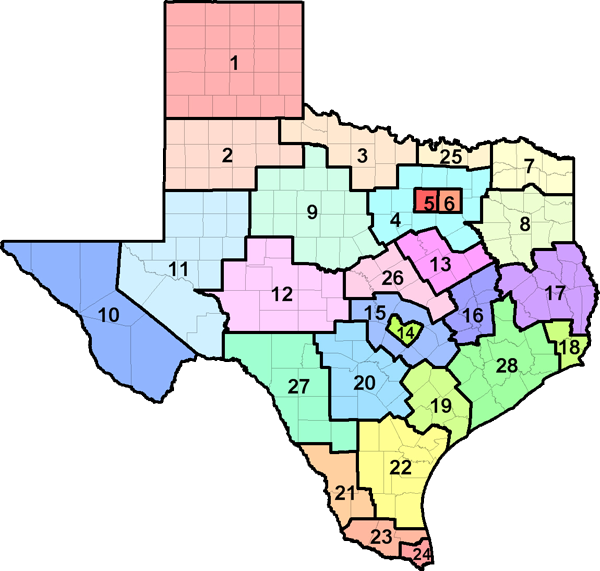
TEXAS COUNTY MAP BY WORKFORCE DEVELOPMENT AREA
Region Employment Projected Employment 2032 Projected
Annual Openings 2032
Annual
Growth Rate
Average Income
Texas (all regions) Unavailable Unavailable Unavailable Unavailable Unavailable
* Due to confidentiality rules, not all regions may have the data displayed. The sum of all the regions may not be equal to the state total.


Top 10 Relevant Knowledge Areas Relevant Importance Levels
Public Safety and Security
Knowledge of relevant equipment, policies, procedures, and strategies to promote effective local, state, or national security operations for the protection of people, data, property, and institutions.
84.00%
Mechanical
Knowledge of machines and tools, including their designs, uses, repair, and maintenance.
81.00%
Physics
Knowledge and prediction of physical principles, laws, their interrelationships, and applications to understanding fluid, material, and atmospheric dynamics, and mechanical, electrical, atomic and sub-atomic structures and processes.
80.20%
Engineering and Technology
Knowledge of the practical application of engineering science and technology. This includes applying principles, techniques, procedures, and equipment to the design and production of various goods and services.
73.20%
Education and Training
Knowledge of principles and methods for curriculum and training design, teaching and instruction for individuals and groups, and the measurement of training effects.
72.20%
Chemistry
Knowledge of the chemical composition, structure, and properties of substances and of the chemical processes and transformations that they undergo. This includes uses of chemicals and their interactions, danger signs, production techniques, and disposal methods.
70.80%
English Language
Knowledge of the structure and content of the English language including the meaning and spelling of words, rules of composition, and grammar.
69.60%
Computers and Electronics
Knowledge of circuit boards, processors, chips, electronic equipment, and computer hardware and software, including applications and programming.
67.00%
Mathematics
Knowledge of arithmetic, algebra, geometry, calculus, statistics, and their applications.
66.20%
Law and Government
Knowledge of laws, legal codes, court procedures, precedents, government regulations, executive orders, agency rules, and the democratic political process.
60.00%


Top 10 Relevant Skill Areas Relevant Importance Levels
Operations Monitoring
Watching gauges, dials, or other indicators to make sure a machine is working properly.
77.60%
Monitoring
Monitoring/Assessing performance of yourself, other individuals, or organizations to make improvements or take corrective action.
75.00%
Critical Thinking
Using logic and reasoning to identify the strengths and weaknesses of alternative solutions, conclusions, or approaches to problems.
72.40%
Reading Comprehension
Understanding written sentences and paragraphs in work-related documents.
72.40%
Active Listening
Giving full attention to what other people are saying, taking time to understand the points being made, asking questions as appropriate, and not interrupting at inappropriate times.
72.40%
Quality Control Analysis
Conducting tests and inspections of products, services, or processes to evaluate quality or performance.
70.00%
Active Learning
Understanding the implications of new information for both current and future problem-solving and decision-making.
67.60%
Writing
Communicating effectively in writing as appropriate for the needs of the audience.
65.00%
Speaking
Talking to others to convey information effectively.
65.00%
Complex Problem Solving
Identifying complex problems and reviewing related information to develop and evaluate options and implement solutions.
65.00%


Top 10 Relevant Abilities Relevant Importance Levels
Problem Sensitivity
The ability to tell when something is wrong or is likely to go wrong. It does not involve solving the problem, only recognizing that there is a problem.
80.00%
Oral Comprehension
The ability to listen to and understand information and ideas presented through spoken words and sentences.
77.60%
Written Comprehension
The ability to read and understand information and ideas presented in writing.
77.60%
Information Ordering
The ability to arrange things or actions in a certain order or pattern according to a specific rule or set of rules (e.g., patterns of numbers, letters, words, pictures, mathematical operations).
77.60%
Oral Expression
The ability to communicate information and ideas in speaking so others will understand.
72.40%
Inductive Reasoning
The ability to combine pieces of information to form general rules or conclusions (includes finding a relationship among seemingly unrelated events).
72.40%
Perceptual Speed
The ability to quickly and accurately compare similarities and differences among sets of letters, numbers, objects, pictures, or patterns. The things to be compared may be presented at the same time or one after the other. This ability also includes comparing a presented object with a remembered object.
72.40%
Deductive Reasoning
The ability to apply general rules to specific problems to produce answers that make sense.
70.00%
Near Vision
The ability to see details at close range (within a few feet of the observer).
70.00%
Speech Recognition
The ability to identify and understand the speech of another person.
67.60%


  • Monitoring Processes, Materials, or Surroundings
    -- Monitoring and reviewing information from materials, events, or the environment, to detect or assess problems.
  • Inspecting Equipment, Structures, or Materials
    -- Inspecting equipment, structures, or materials to identify the cause of errors or other problems or defects.
  • Documenting/Recording Information
    -- Entering, transcribing, recording, storing, or maintaining information in written or electronic/magnetic form.
  • Identifying Objects, Actions, and Events
    -- Identifying information by categorizing, estimating, recognizing differences or similarities, and detecting changes in circumstances or events.
  • Communicating with Supervisors, Peers, or Subordinates
    -- Providing information to supervisors, co-workers, and subordinates by telephone, in written form, e-mail, or in person.
Other Activities


  • Support
    - Occupations that satisfy this work value offer supportive management that stands behind employees. Corresponding needs are Company Policies, Supervision: Human Relations and Supervision: Technical.
  • Working Conditions
    - Occupations that satisfy this work value offer job security and good working conditions. Corresponding needs are Activity, Compensation, Independence, Security, Variety and Working Conditions.


Tools

Air compressors: Air compressors;

Borescope inspection equipment: Video borescopes;

Bridge cranes: Gantry cranes;

Cryostats: Cryostats;

Diesel generators: Emergency diesel generators;

Digital camcorders or video cameras: Pipe camera inspection systems;

Dosimeters: Pocket dosimeters;

Eddy current examination equipment: Eddy current testing equipment;

Elevators: New fuel elevators;

Footwear covers: Protective shoe covers;

Frequency analyzers: Digital signal analyzers; Digital spectrum analyzers;

Gamma counters: Area gamma monitors; Scintillation detectors;

Gas welding or brazing or cutting apparatus: Metal active gas MAG welding equipment;

Hot cell remote handling equipment: Master-slave manipulators;

Hot cell remote viewing device: Hot cell remote viewing devices;

Leak testing equipment: Leak detection equipment;

Level sensors or transmitters: Level transmitters;

Metal inert gas welding machine: Metal inert gas MIG welding equipment;

Nuclear fuel rod: Fuel handling systems;

Nuclear reactor control rod systems: Control rod drives;

Nuclear reactor earthquake instrumentation: Seismic monitoring instruments;

Personal computers: Personal computers;

Pressure or steam cleaners: Pressure cleaners;

Protective coveralls: Protective coveralls;

Protective gloves: Protective gloves;

Radiation detectors: Contamination probes; Gamma exit/entrance contamination monitors; Digital ratemeters; Portal monitors; Radiation survey meters;

Radioactive waste disposal systems: Spent fuel handling machines;

Remote reading thermometers: Non-contact thermometers;

Respiration air supplying self contained breathing apparatus or accessories: Self-contained breathing apparatus;

Respirators: Pressure demand respirators; Atmosphere supplying respirators; Air purifying respirators; Airline respirators;

Spectrometers: Multichannel analyzers;

Two way radios: Portable two way radios;

Ultrasonic examination equipment: Ultrasonic flaw detectors; Ultrasonic thickness gauges;

Vibration testers: Vibration monitors;

Videoscopes: Videoscopes;

Water purification equipment: Condensate demineralizers;

Welder torch: Plasma arc cutting torches;


Technology

Application server software: VMWare ESX Server;

Clustering software: VMware;

Data base user interface and query software: Structured query language SQL; Data logging software; Database software; Microsoft Access;

Industrial control software: Supervisory control and data acquisition SCADA software;

Office suite software: Microsoft Office software;

Operating system software: Microsoft operating system; Microsoft Windows; Linux;

Presentation software: Microsoft PowerPoint;

Spreadsheet software: Microsoft Excel; Spreadsheet software;

Word processing software: Word processing software; Microsoft Word;


Related O*NET occupational titles for Nuclear Technicians include:
  • 17-3021.00 Aerospace Engineering and Operations Technologists and Technicians
  • 51-8013.03 Biomass Plant Technicians
  • 17-3028.00 Calibration Technologists and Technicians
  • 49-9099.01 Geothermal Technicians
  • 51-8013.04 Hydroelectric Plant Technicians
  • 19-4051.02 Nuclear Monitoring Technicians
  • 51-8011.00 Nuclear Power Reactor Operators
  • 51-8012.00 Power Distributors and Dispatchers
  • 51-8013.00 Power Plant Operators
  • 51-8021.00 Stationary Engineers and Boiler Operators


Sources of Additional Information
  • For more information about nuclear technicians, visit: Get Into Energy
  • Nuclear Energy Institute
  • Nuclear Monitoring Technicians
  • Nuclear Technicians

  • Contact Texas Workforce Commission
    Labor Market and Career Information  |  101 E. 15th Street, Annex Room 0252  |  Austin, Texas 78778
    Official Website  |  1-800-822-PLAN (7526)  |  512.936.3200

    ** The information in this report may be derived from many sources like O*NET, BLS (Bureau of Labor Statistics), OOH (Occupational Outlook Handbook), and Career One Stop.