Occupation Summary

Rehabilitation Counselors

O*NET 21-1015.00

Description:

Counsel individuals to maximize the independence and employability of persons coping with personal, social, and vocational difficulties that result from birth defects, illness, disease, accidents, aging, or the stress of daily life. Coordinate activities for residents of care and treatment facilities. Assess client needs and design and implement rehabilitation programs that may include personal and vocational counseling, training, and job placement.

Annual Wages:
$50,296.00
Employment Rate:
Employment is expected to increase by 13.07%.
Education Level:
Bachelor's Degree. According to O*Net, the majority of people employed in this occupation have this level of education.
Endorsement:
Public Service, Science Technology Engineering and Math (STEM)

  1. Monitor and record clients' progress to ensure that goals and objectives are met.
  2. Confer with clients to discuss their options and goals so that rehabilitation programs and plans for accessing needed services can be developed.
  3. Prepare and maintain records and case files, including documentation, such as clients' personal and eligibility information, services provided, narratives of client contacts, or relevant correspondence.
  4. Arrange for physical, mental, academic, vocational, and other evaluations to obtain information for assessing clients' needs and developing rehabilitation plans.
  5. Analyze information from interviews, educational and medical records, consultation with other professionals, and diagnostic evaluations to assess clients' abilities, needs, and eligibility for services.
  6. Develop rehabilitation plans that fit clients' aptitudes, education levels, physical abilities, and career goals.
  7. Maintain close contact with clients during job training and placements to resolve problems and evaluate placement adequacy.
  8. Develop and maintain relationships with community referral sources, such as schools or community groups.
  9. Locate barriers to client employment, such as inaccessible work sites, inflexible schedules, or transportation problems, and work with clients to develop strategies for overcoming these barriers.
  10. Arrange for on-site job coaching or assistive devices, such as specially equipped wheelchairs, to help clients adapt to work or school environments.
  11. Confer with physicians, psychologists, occupational therapists, and other professionals to develop and implement client rehabilitation programs.
  12. Develop diagnostic procedures to determine clients' needs.
  13. Participate in job development and placement programs, contacting prospective employers, placing clients in jobs, and evaluating the success of placements.
  14. Collaborate with clients' families to implement rehabilitation plans, such as behavioral, residential, social, or employment goals.
  15. Collaborate with community agencies to establish facilities and programs for persons with disabilities.
  16. Manage budgets and direct case service allocations, authorizing expenditures and payments.
  17. Supervise rehabilitation counselors and staff.


National Industry Employment Patterns


Industry % of Rehabilitation Counselors employed Annual Growth Rate
Vocational rehabilitation services 32.6 -1.02
Individual and family services 13.6 1.91
Residential mental health facilities 11.3 0.41
Outpatient care centers 2.7 1.99


Labor Market Information


2024 Statewide average hourly wage $24.18
2024 National average hourly wage $24.64
2022 National employment 84,800
2022 Texas employment 1,676
Texas projected employment by 2032 1,895
Texas projected annual employment and Turnover openings through 2032 159


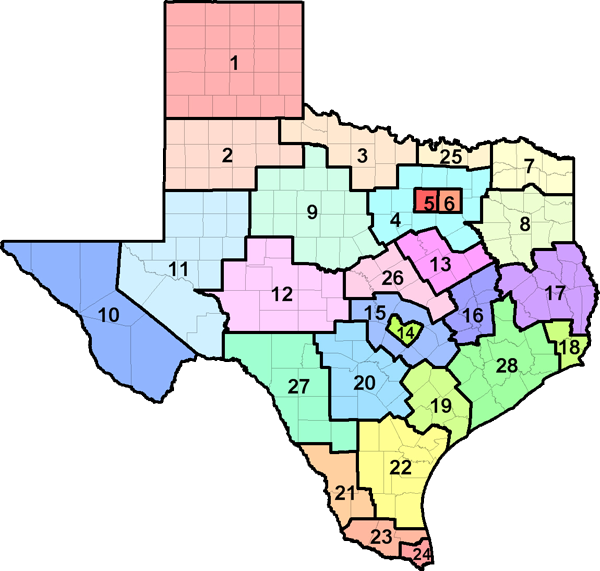
TEXAS COUNTY MAP BY WORKFORCE DEVELOPMENT AREA
* Due to confidentiality rules, not all regions may have the data displayed. The sum of all the regions may not be equal to the state total.


Top 10 Relevant Knowledge Areas Relevant Importance Levels
Customer and Personal Service
Knowledge of principles and processes for providing customer and personal services. This includes customer needs assessment, meeting quality standards for services, and evaluation of customer satisfaction.
82.80%
Therapy and Counseling
Knowledge of principles, methods, and procedures for diagnosis, treatment, and rehabilitation of physical and mental dysfunctions, and for career counseling and guidance.
82.00%
Psychology
Knowledge of human behavior and performance; individual differences in ability, personality, and interests; learning and motivation; psychological research methods; and the assessment and treatment of behavioral and affective disorders.
79.00%
Education and Training
Knowledge of principles and methods for curriculum and training design, teaching and instruction for individuals and groups, and the measurement of training effects.
78.80%
English Language
Knowledge of the structure and content of the English language including the meaning and spelling of words, rules of composition, and grammar.
77.60%
Administrative
Knowledge of administrative and office procedures and systems such as word processing, managing files and records, stenography and transcription, designing forms, and workplace terminology.
77.00%
Computers and Electronics
Knowledge of circuit boards, processors, chips, electronic equipment, and computer hardware and software, including applications and programming.
72.40%
Sociology and Anthropology
Knowledge of group behavior and dynamics, societal trends and influences, human migrations, ethnicity, cultures, and their history and origins.
66.80%
Personnel and Human Resources
Knowledge of principles and procedures for personnel recruitment, selection, training, compensation and benefits, labor relations and negotiation, and personnel information systems.
65.80%
Administration and Management
Knowledge of business and management principles involved in strategic planning, resource allocation, human resources modeling, leadership technique, production methods, and coordination of people and resources.
65.60%


Top 10 Relevant Skill Areas Relevant Importance Levels
Active Listening
Giving full attention to what other people are saying, taking time to understand the points being made, asking questions as appropriate, and not interrupting at inappropriate times.
80.00%
Speaking
Talking to others to convey information effectively.
80.00%
Social Perceptiveness
Being aware of others' reactions and understanding why they react as they do.
80.00%
Service Orientation
Actively looking for ways to help people.
80.00%
Monitoring
Monitoring/Assessing performance of yourself, other individuals, or organizations to make improvements or take corrective action.
77.60%
Reading Comprehension
Understanding written sentences and paragraphs in work-related documents.
75.00%
Critical Thinking
Using logic and reasoning to identify the strengths and weaknesses of alternative solutions, conclusions, or approaches to problems.
72.40%
Writing
Communicating effectively in writing as appropriate for the needs of the audience.
72.40%
Coordination
Adjusting actions in relation to others' actions.
72.40%
Judgment and Decision Making
Considering the relative costs and benefits of potential actions to choose the most appropriate one.
67.60%


Top 10 Relevant Abilities Relevant Importance Levels
Oral Expression
The ability to communicate information and ideas in speaking so others will understand.
80.00%
Oral Comprehension
The ability to listen to and understand information and ideas presented through spoken words and sentences.
80.00%
Speech Clarity
The ability to speak clearly so others can understand you.
80.00%
Written Comprehension
The ability to read and understand information and ideas presented in writing.
77.60%
Written Expression
The ability to communicate information and ideas in writing so others will understand.
77.60%
Problem Sensitivity
The ability to tell when something is wrong or is likely to go wrong. It does not involve solving the problem, only recognizing that there is a problem.
77.60%
Deductive Reasoning
The ability to apply general rules to specific problems to produce answers that make sense.
77.60%
Inductive Reasoning
The ability to combine pieces of information to form general rules or conclusions (includes finding a relationship among seemingly unrelated events).
75.00%
Speech Recognition
The ability to identify and understand the speech of another person.
75.00%
Near Vision
The ability to see details at close range (within a few feet of the observer).
65.00%


  • Communicating with Supervisors, Peers, or Subordinates
    -- Providing information to supervisors, co-workers, and subordinates by telephone, in written form, e-mail, or in person.
  • Making Decisions and Solving Problems
    -- Analyzing information and evaluating results to choose the best solution and solve problems.
  • Establishing and Maintaining Interpersonal Relationships
    -- Developing constructive and cooperative working relationships with others, and maintaining them over time.
  • Documenting/Recording Information
    -- Entering, transcribing, recording, storing, or maintaining information in written or electronic/magnetic form.
  • Communicating with People Outside the Organization
    -- Communicating with people outside the organization, representing the organization to customers, the public, government, and other external sources. This information can be exchanged in person, in writing, or by telephone or e-mail.
Other Activities


  • Achievement
    - Occupations that satisfy this work value are results oriented and allow employees to use their strongest abilities, giving them a feeling of accomplishment. Corresponding needs are Ability Utilization and Achievement.
  • Relationships
    - Occupations that satisfy this work value allow employees to provide service to others and work with co-workers in a friendly non-competitive environment. Corresponding needs are Co-workers, Moral Values and Social Service.


Tools

Computer mouse: Alternative mouse options;

Desktop computers: Desktop computers;

Digital telephones: Voice over internet protocol VoIP systems;

Global positioning system GPS receiver: Global positioning system GPS receivers;

Intercom systems: Intercom systems;

Keyboards: Alternative computer keyboards;

Laser fax machine: Laser facsimile machines;

Laser printers: Laser printers;

Lasers: Laser pointers;

Liquid crystal display projector: Liquid crystal display LCD projectors;

Mobile phones: Smartphones;

Notebook computers: Notebook computers;

Personal computers: Personal computers;

Photocopiers: Photocopiers;

Pocket calculator: Handheld calculators;

Scanners: Scanners;

Special purpose telephones: Multi-line telephone systems;

Tablet computers: Tablet computers;

Voice synthesizers for the physically challenged: Voice output communication aids;


Technology

Accounting software: Budgeting software;

Analytical or scientific software: Test interpretation software;

Calendar and scheduling software: Scheduling software; Fanatic Software Informant; Microsoft Office Outlook;

Data base user interface and query software: Data input software; SkillTRAN Job Browser Pro; SkillTRAN OASYS;

Document management software: Adobe Acrobat Reader;

Electronic mail software: Microsoft Outlook; Email software;

Internet browser software: Microsoft Internet Explorer; Microsoft Mobile Explorer MME; Netscape Navigator; Web browser software;

Medical software: Electronic medical record EMR software; Chart Links; Client information database software;

Mobile location based services software: Global positioning system GPS software;

Mobile operator specific application software: Microsoft ActiveSync;

Office suite software: Microsoft Office Mobile; Microsoft Office software;

Presentation software: Microsoft PowerPoint;

Spreadsheet software: Microsoft Excel; Spreadsheet software;

Transaction security and virus protection software: Virus protection software; Encryption software;

Voice recognition software: Voice recognition software; Word recognition software;

Word processing software: Word processing software; Microsoft Word;


Related O*NET occupational titles for Rehabilitation Counselors include:
  • 21-1021.00 Child, Family, and School Social Workers
  • 19-3033.00 Clinical and Counseling Psychologists
  • 21-1022.00 Healthcare Social Workers
  • 21-1023.00 Mental Health and Substance Abuse Social Workers
  • 21-1014.00 Mental Health Counselors
  • 29-1122.00 Occupational Therapists
  • 31-2012.00 Occupational Therapy Aides
  • 29-2053.00 Psychiatric Technicians
  • 29-1125.00 Recreational Therapists
  • 11-9151.00 Social and Community Service Managers


Sources of Additional Information
  • For more information about counseling and information about counseling specialties, visit: American Counseling Association
  • American Rehabilitation Counseling Association
  • For more information about accredited degree programs in rehabilitation counseling, visit: Council for Accreditation of Counseling & Related Educational Programs
  • For more information about the Certified Rehabilitation Counselors certification and state licensing boards, visit: Commission on Rehabilitation Counselor Certification
  • Rehabilitation Counselors

  • Contact Texas Workforce Commission
    Labor Market and Career Information  |  101 E. 15th Street, Annex Room 0252  |  Austin, Texas 78778
    Official Website  |  1-800-822-PLAN (7526)  |  512.936.3200

    ** The information in this report may be derived from many sources like O*NET, BLS (Bureau of Labor Statistics), OOH (Occupational Outlook Handbook), and Career One Stop.