Occupation Summary

Community Health Workers

O*NET 21-1094.00

Description:

Promote health within a community by assisting individuals to adopt healthy behaviors. Serve as an advocate for the health needs of individuals by assisting community residents in effectively communicating with healthcare providers or social service agencies. Act as liaison or advocate and implement programs that promote, maintain, and improve individual and overall community health. May deliver health-related preventive services such as blood pressure, glaucoma, and hearing screenings. May collect data to help identify community health needs.

Annual Wages:
$48,719.00
Employment Rate:
Employment is expected to increase by 17.96%.
Education Level:
Bachelor's Degree. According to O*Net, the majority of people employed in this occupation have this level of education.
Endorsement:
Public Service

  1. Administer immunizations or other basic preventive treatments.
  2. Advise clients or community groups on issues related to diagnostic screenings, such as breast cancer screening, pap smears, glaucoma tests, or diabetes screenings.
  3. Advise clients or community groups on issues related to improving general health, such as diet or exercise.
  4. Advise clients or community groups on issues related to risk or prevention of conditions, such as lead poisoning, human immunodeficiency virus (HIV), prenatal substance abuse, or domestic violence.
  5. Advise clients or community groups on issues related to sanitation or hygiene, such as flossing or hand washing.
  6. Advise clients or community groups on issues related to self-care, such as diabetes management.
  7. Advise clients or community groups on issues related to social or intellectual development, such as education, childcare, or problem solving.
  8. Advise clients or community groups to ensure parental understanding of the importance of childhood immunizations and how to access immunization services.
  9. Advocate for individual or community health needs with government agencies or health service providers.
  10. Attend community meetings or health fairs to understand community issues or build relationships with community members.
  11. Conduct home visits for pregnant women, newborn infants, or other high-risk individuals to monitor their progress or assess their needs.
  12. Contact clients in person, by phone, or in writing to ensure they have completed required or recommended actions.
  13. Distribute flyers, brochures, or other informational or educational documents to inform members of a targeted community.
  14. Identify or contact members of high-risk or otherwise targeted groups, such as members of minority populations, low-income populations, or pregnant women.
  15. Identify the particular health care needs of individuals in a community or target area.
  16. Interpret, translate, or provide cultural mediation related to health services or information for community members.
  17. Maintain updated client records with plans, notes, appropriate forms, or related information.
  18. Monitor nutrition of children, elderly, or other high-risk groups.
  19. Perform basic diagnostic procedures, such as blood pressure screening, breast cancer screening, or communicable disease screening.
  20. Provide basic health services, such as first aid.
  21. Provide feedback to health service providers regarding improving service accessibility or acceptability.
  22. Refer community members to needed health services.
  23. Teach classes or otherwise disseminate medical or dental health information to school groups, community groups, or targeted families or individuals, in a manner consistent with cultural norms.
  24. Assist families to apply for social services, including Medicaid or Women, Infants, and Children (WIC).
  25. Collect information from individuals to compile vital statistics about the general health of community members.
  26. Develop plans or formal contracts for individuals, families, or community groups to improve overall health.
  27. Report incidences of child or elder abuse, neglect, or threats of harm to authorities, as required.
  28. Transport or accompany clients to scheduled health appointments or referral sites.


National Industry Employment Patterns


Industry % of Community Health Workers employed Annual Growth Rate
Individual and family services 16 1.10
Offices of physicians 8 0.96
Outpatient care centers 8 1.96
Insurance carriers 5 1.26
Social advocacy organizations 3 0.96
Community food and housing, and emergency and other relief services 3 1.64
Grantmaking and giving services 3 1.34
Home health care services 2 2.26
Residential mental health facilities 2 1.44


Labor Market Information


2025 Statewide median hourly wage $23.42
2025 National median hourly wage $24.93
2024 National employment 65,100
2024 Texas employment 4,526
Texas projected employment by 2034 5,339
Texas projected annual employment and Turnover openings through 2034 591


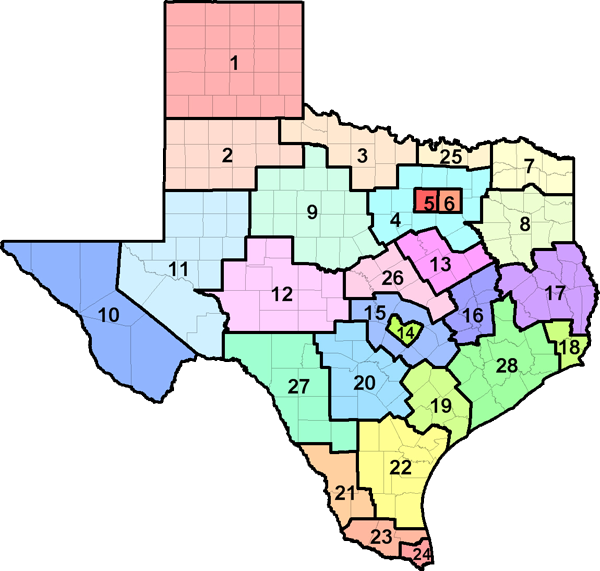
TEXAS COUNTY MAP BY WORKFORCE DEVELOPMENT AREA
* Due to confidentiality rules, not all regions may have the data displayed. The sum of all the regions may not be equal to the state total.


Top 10 Relevant Knowledge Areas Relevant Importance Levels
Customer and Personal Service
Knowledge of principles and processes for providing customer and personal services. This includes customer needs assessment, meeting quality standards for services, and evaluation of customer satisfaction.
90.00%
English Language
Knowledge of the structure and content of the English language including the meaning and spelling of words, rules of composition, and grammar.
79.00%
Education and Training
Knowledge of principles and methods for curriculum and training design, teaching and instruction for individuals and groups, and the measurement of training effects.
76.40%
Administration and Management
Knowledge of business and management principles involved in strategic planning, resource allocation, human resources modeling, leadership technique, production methods, and coordination of people and resources.
74.00%
Medicine and Dentistry
Knowledge of the information and techniques needed to diagnose and treat human injuries, diseases, and deformities. This includes symptoms, treatment alternatives, drug properties and interactions, and preventive health-care measures.
72.00%
Psychology
Knowledge of human behavior and performance; individual differences in ability, personality, and interests; learning and motivation; psychological research methods; and the assessment and treatment of behavioral and affective disorders.
71.40%
Administrative
Knowledge of administrative and office procedures and systems such as word processing, managing files and records, stenography and transcription, designing forms, and workplace terminology.
67.00%
Computers and Electronics
Knowledge of circuit boards, processors, chips, electronic equipment, and computer hardware and software, including applications and programming.
59.60%
Personnel and Human Resources
Knowledge of principles and procedures for personnel recruitment, selection, training, compensation and benefits, labor relations and negotiation, and personnel information systems.
59.60%
Therapy and Counseling
Knowledge of principles, methods, and procedures for diagnosis, treatment, and rehabilitation of physical and mental dysfunctions, and for career counseling and guidance.
59.20%


Top 10 Relevant Skill Areas Relevant Importance Levels
Active Listening
Giving full attention to what other people are saying, taking time to understand the points being made, asking questions as appropriate, and not interrupting at inappropriate times.
82.40%
Speaking
Talking to others to convey information effectively.
82.40%
Social Perceptiveness
Being aware of others' reactions and understanding why they react as they do.
82.40%
Writing
Communicating effectively in writing as appropriate for the needs of the audience.
80.00%
Reading Comprehension
Understanding written sentences and paragraphs in work-related documents.
77.60%
Service Orientation
Actively looking for ways to help people.
77.60%
Critical Thinking
Using logic and reasoning to identify the strengths and weaknesses of alternative solutions, conclusions, or approaches to problems.
75.00%
Active Learning
Understanding the implications of new information for both current and future problem-solving and decision-making.
72.40%
Coordination
Adjusting actions in relation to others' actions.
72.40%
Persuasion
Persuading others to change their minds or behavior.
70.00%


Top 10 Relevant Abilities Relevant Importance Levels
Oral Comprehension
The ability to listen to and understand information and ideas presented through spoken words and sentences.
85.00%
Oral Expression
The ability to communicate information and ideas in speaking so others will understand.
82.40%
Written Comprehension
The ability to read and understand information and ideas presented in writing.
77.60%
Written Expression
The ability to communicate information and ideas in writing so others will understand.
75.00%
Problem Sensitivity
The ability to tell when something is wrong or is likely to go wrong. It does not involve solving the problem, only recognizing that there is a problem.
75.00%
Speech Recognition
The ability to identify and understand the speech of another person.
75.00%
Speech Clarity
The ability to speak clearly so others can understand you.
75.00%
Near Vision
The ability to see details at close range (within a few feet of the observer).
72.40%
Deductive Reasoning
The ability to apply general rules to specific problems to produce answers that make sense.
72.40%
Inductive Reasoning
The ability to combine pieces of information to form general rules or conclusions (includes finding a relationship among seemingly unrelated events).
70.00%


  • Communicating with People Outside the Organization
    -- Communicating with people outside the organization, representing the organization to customers, the public, government, and other external sources. This information can be exchanged in person, in writing, or by telephone or e-mail.
  • Establishing and Maintaining Interpersonal Relationships
    -- Developing constructive and cooperative working relationships with others, and maintaining them over time.
  • Organizing, Planning, and Prioritizing Work
    -- Developing specific goals and plans to prioritize, organize, and accomplish your work.
  • Communicating with Supervisors, Peers, or Subordinates
    -- Providing information to supervisors, co-workers, and subordinates by telephone, in written form, e-mail, or in person.
  • Performing for or Working Directly with the Public
    -- Performing for people or dealing directly with the public. This includes serving customers in restaurants and stores, and receiving clients or guests.
Other Activities


  • Achievement
    - Occupations that satisfy this work value are results oriented and allow employees to use their strongest abilities, giving them a feeling of accomplishment. Corresponding needs are Ability Utilization and Achievement.
  • Relationships
    - Occupations that satisfy this work value allow employees to provide service to others and work with co-workers in a friendly non-competitive environment. Corresponding needs are Co-workers, Moral Values and Social Service.


Tools

Automobiles or cars: Passenger cars;

Electronic blood pressure units: Automated blood pressure cuffs;

Glucose monitors or meters: Blood glucose monitoring equipment;

Inkjet printers: Computer ink jet printers;

Laser fax machine: Laser facsimile machines;

Laser printers: Computer laser printers;

Mercury blood pressure units: Manual blood pressure cuffs;

Mobile medical services first aid kits: Emergency first aid kits;

Notebook computers: Laptop computers;

Personal computers: Personal computers;

Photocopiers: Photocopying equipment;

Special purpose telephones: Multi-line telephone systems;


Technology

Data base user interface and query software: Client databases; Microsoft Access;

Desktop publishing software: Microsoft Publisher;

Electronic mail software: Microsoft Outlook;

Graphics or photo imaging software: SmugMug Flickr;

Internet browser software: Web browser software;

Medical software: Electronic health record EHR software;

Office suite software: Google Workspace software; Microsoft Office software;

Operating system software: Apple macOS;

Presentation software: Microsoft PowerPoint;

Spreadsheet software: Microsoft Excel;

Video conferencing software: Zoom;

Word processing software: Microsoft Word;


Related O*NET occupational titles for Community Health Workers include:
  • 21-1021.00 Child, Family, and School Social Workers
  • 11-9179.01 Fitness and Wellness Coordinators
  • 21-1091.00 Health Education Specialists
  • 21-1022.00 Healthcare Social Workers
  • 21-1023.00 Mental Health and Substance Abuse Social Workers
  • 21-1014.00 Mental Health Counselors
  • 29-2099.08 Patient Representatives
  • 21-1015.00 Rehabilitation Counselors
  • 11-9151.00 Social and Community Service Managers
  • 21-1093.00 Social and Human Service Assistants


Sources of Additional Information
  • For more information about community health workers, visit: American Public Health Association
  • Association of State and Territorial Health Officials
  • National Association of Community Health Representatives
  • National Association of Community Health Workers
  • National Association of Peer Supporters
  • Visión y Compromiso
  • Occupational Requirements Survey

  • For a profile highlighting selected BLS data on occupational requirements, see
  • Community health workers (PDF)
  • Community Health Workers

  • Contact Texas Workforce Commission
    Labor Market and Career Information  |  101 E. 15th Street, Annex Room 0252  |  Austin, Texas 78778
    Official Website  |  1-800-822-PLAN (7526)  |  512.936.3200

    ** The information in this report may be derived from many sources like O*NET, BLS (Bureau of Labor Statistics), OOH (Occupational Outlook Handbook), and Career One Stop.