Occupation Summary

Economics Teachers, Postsecondary

O*NET 25-1063.00

Description:

Teach courses in economics. Includes both teachers primarily engaged in teaching and those who do a combination of teaching and research.

Annual Wages:
$132,301.00
Employment Rate:
Employment is expected to increase by 9.40%.
Education Level:
Doctoral Degree. According to O*Net, the majority of people employed in this occupation have this level of education.
Endorsement:
Public Service

  1. Prepare and deliver lectures to undergraduate or graduate students on topics such as econometrics, price theory, and macroeconomics.
  2. Prepare course materials, such as syllabi, homework assignments, and handouts.
  3. Evaluate and grade students' class work, assignments, and papers.
  4. Compile, administer, and grade examinations, or assign this work to others.
  5. Keep abreast of developments in the field by reading current literature, talking with colleagues, and participating in professional conferences.
  6. Maintain student attendance records, grades, and other required records.
  7. Initiate, facilitate, and moderate classroom discussions.
  8. Maintain regularly scheduled office hours to advise and assist students.
  9. Select and obtain materials and supplies, such as textbooks.
  10. Plan, evaluate, and revise curricula, course content, course materials, and methods of instruction.
  11. Conduct research in a particular field of knowledge and publish findings in professional journals, books, or electronic media.
  12. Supervise undergraduate or graduate teaching, internship, and research work.
  13. Advise students on academic and vocational curricula and on career issues.
  14. Serve on academic or administrative committees that deal with institutional policies, departmental matters, and academic issues.
  15. Collaborate with colleagues to address teaching and research issues.
  16. Compile bibliographies of specialized materials for outside reading assignments.
  17. Participate in student recruitment, registration, and placement activities.
  18. Perform administrative duties, such as serving as department head.
  19. Write grant proposals to procure external research funding.
  20. Participate in campus and community events.
  21. Provide professional consulting services to government or industry.
  22. Act as advisers to student organizations.


National Industry Employment Patterns


Industry % of Economics Teachers, Postsecondary employed Annual Growth Rate
Colleges, universities, and professional schools 90 0.44
Junior colleges 9.6 0.00


Labor Market Information


2022 National employment 14,800
2022 Texas employment 926
Texas projected employment by 2032 1,013
Texas projected annual employment and Turnover openings through 2032 85


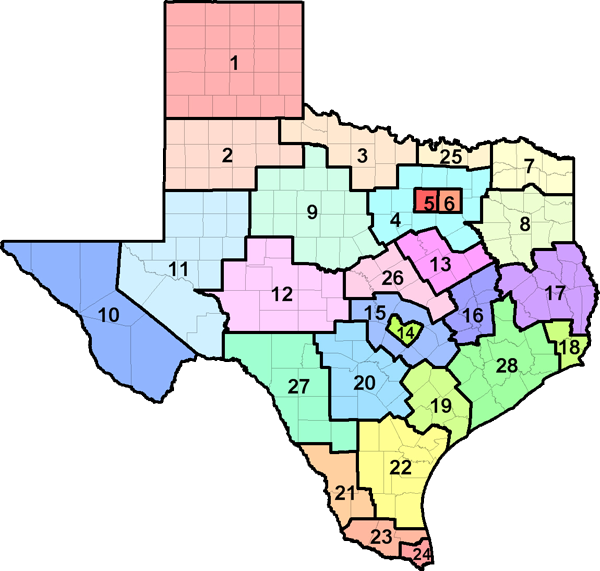
TEXAS COUNTY MAP BY WORKFORCE DEVELOPMENT AREA
* Due to confidentiality rules, not all regions may have the data displayed. The sum of all the regions may not be equal to the state total.


Top 10 Relevant Knowledge Areas Relevant Importance Levels
Mathematics
Knowledge of arithmetic, algebra, geometry, calculus, statistics, and their applications.
90.20%
Education and Training
Knowledge of principles and methods for curriculum and training design, teaching and instruction for individuals and groups, and the measurement of training effects.
86.40%
Economics and Accounting
Knowledge of economic and accounting principles and practices, the financial markets, banking, and the analysis and reporting of financial data.
84.60%
English Language
Knowledge of the structure and content of the English language including the meaning and spelling of words, rules of composition, and grammar.
82.60%
Computers and Electronics
Knowledge of circuit boards, processors, chips, electronic equipment, and computer hardware and software, including applications and programming.
57.80%
Administration and Management
Knowledge of business and management principles involved in strategic planning, resource allocation, human resources modeling, leadership technique, production methods, and coordination of people and resources.
57.60%
Law and Government
Knowledge of laws, legal codes, court procedures, precedents, government regulations, executive orders, agency rules, and the democratic political process.
57.20%
Sociology and Anthropology
Knowledge of group behavior and dynamics, societal trends and influences, human migrations, ethnicity, cultures, and their history and origins.
55.20%
Customer and Personal Service
Knowledge of principles and processes for providing customer and personal services. This includes customer needs assessment, meeting quality standards for services, and evaluation of customer satisfaction.
50.40%
Personnel and Human Resources
Knowledge of principles and procedures for personnel recruitment, selection, training, compensation and benefits, labor relations and negotiation, and personnel information systems.
50.20%


Top 10 Relevant Skill Areas Relevant Importance Levels
Speaking
Talking to others to convey information effectively.
82.40%
Reading Comprehension
Understanding written sentences and paragraphs in work-related documents.
80.00%
Active Listening
Giving full attention to what other people are saying, taking time to understand the points being made, asking questions as appropriate, and not interrupting at inappropriate times.
80.00%
Writing
Communicating effectively in writing as appropriate for the needs of the audience.
80.00%
Instructing
Teaching others how to do something.
80.00%
Critical Thinking
Using logic and reasoning to identify the strengths and weaknesses of alternative solutions, conclusions, or approaches to problems.
77.60%
Learning Strategies
Selecting and using training/instructional methods and procedures appropriate for the situation when learning or teaching new things.
77.60%
Active Learning
Understanding the implications of new information for both current and future problem-solving and decision-making.
75.00%
Judgment and Decision Making
Considering the relative costs and benefits of potential actions to choose the most appropriate one.
67.60%
Complex Problem Solving
Identifying complex problems and reviewing related information to develop and evaluate options and implement solutions.
65.00%


Top 10 Relevant Abilities Relevant Importance Levels
Oral Expression
The ability to communicate information and ideas in speaking so others will understand.
82.40%
Written Expression
The ability to communicate information and ideas in writing so others will understand.
80.00%
Oral Comprehension
The ability to listen to and understand information and ideas presented through spoken words and sentences.
80.00%
Written Comprehension
The ability to read and understand information and ideas presented in writing.
80.00%
Speech Clarity
The ability to speak clearly so others can understand you.
80.00%
Deductive Reasoning
The ability to apply general rules to specific problems to produce answers that make sense.
77.60%
Inductive Reasoning
The ability to combine pieces of information to form general rules or conclusions (includes finding a relationship among seemingly unrelated events).
75.00%
Speech Recognition
The ability to identify and understand the speech of another person.
72.40%
Near Vision
The ability to see details at close range (within a few feet of the observer).
70.00%
Problem Sensitivity
The ability to tell when something is wrong or is likely to go wrong. It does not involve solving the problem, only recognizing that there is a problem.
67.60%


  • Getting Information
    -- Observing, receiving, and otherwise obtaining information from all relevant sources.
  • Training and Teaching Others
    -- Identifying the educational needs of others, developing formal educational or training programs or classes, and teaching or instructing others.
  • Updating and Using Relevant Knowledge
    -- Keeping up-to-date technically and applying new knowledge to your job.
  • Thinking Creatively
    -- Developing, designing, or creating new applications, ideas, relationships, systems, or products, including artistic contributions.
  • Identifying Objects, Actions, and Events
    -- Identifying information by categorizing, estimating, recognizing differences or similarities, and detecting changes in circumstances or events.
Other Activities


  • Achievement
    - Occupations that satisfy this work value are results oriented and allow employees to use their strongest abilities, giving them a feeling of accomplishment. Corresponding needs are Ability Utilization and Achievement.
  • Independence
    - Occupations that satisfy this work value allow employees to work on their own and make decisions. Corresponding needs are Creativity, Responsibility and Autonomy.


Tools

Compact disk players or recorders: Compact disk CD players;

Desktop computers: Desktop computers;

Digital camcorders or video cameras: Digital video cameras;

Digital cameras: Compact digital cameras;

Digital video disk players or recorders: Digital video disk DVD players;

Epidiascopes: Opaque projectors;

High capacity removable media drives: Universal serial bus USB flash drives;

Inkjet printers: Poster printers;

Laser fax machine: Laser facsimile machines;

Laser printers: Computer laser printers;

Liquid crystal display projector: Liquid crystal display LCD projectors;

Microphone stand: Microphone podiums;

Microphones: Handheld microphones; Wireless microphones;

MP3 players or recorders: MP3 digital voice recorders;

Multimedia projectors: Multimedia projection equipment; Computer projectors;

Notebook computers: Laptop computers;

Overhead projectors: Overhead data projectors;

Photocopiers: Photocopying equipment;

Portable data input terminals: Interactive whiteboard controllers; Student response systems;

Projection screens or displays: Projector screens;

Scanners: Computer data input scanners;

Scientific calculator: Digital calculators;

Slide projectors: Carousel slide projectors;

Special purpose telephones: Multi-line telephone systems;

Tablet computers: Tablet computers;

Teleconference equipment: Conference telephones;

Televisions: Television monitors; Liquid crystal display LCD televisions;

Touch screen monitors: Interactive whiteboards;

Videoconferencing systems: Videoconferencing equipment;

Web cameras: Webcams;


Technology

Analytical or scientific software: Aptech Systems GAUSS; Econometric Software LIMDEP; Econport; Estima RATS; FEAR; Gnuplot; Insightful S-PLUS; Minitab; Python Experimental Economics Toolkit PEET; StataCorp Stata; The MathWorks MATLAB; Time series modeling TSM software; z-Tree; Zocalo;

Calendar and scheduling software: Calendar and scheduling software;

Computer based training software: Blackboard Learn; Course management system software; Desire2Learn LMS software; Sakai CLE; Moodle; Learning management system LMS;

Data base user interface and query software: Microsoft Access;

Electronic mail software: Microsoft Outlook; Email software;

Financial analysis software: JessX stock simulator software;

Information retrieval or search software: iParadigms Turnitin; DOC Cop;

Internet browser software: Web browser software;

Object or component oriented development software: Sun Microsystems Java; Python; R;

Office suite software: Microsoft Office software;

Optical character reader OCR or scanning software: Image scanning software;

Presentation software: Microsoft PowerPoint;

Spreadsheet software: Microsoft Excel;

Web page creation and editing software: Facebook;

Word processing software: Google Docs; Collaborative editing software; Microsoft Word; Word processing software;


Related O*NET occupational titles for Economics Teachers, Postsecondary include:
  • 25-1011.00 Business Teachers, Postsecondary
  • 19-3011.00 Economists
  • 25-1081.00 Education Teachers, Postsecondary
  • 25-1192.00 Family and Consumer Sciences Teachers, Postsecondary
  • 25-1112.00 Law Teachers, Postsecondary
  • 25-1022.00 Mathematical Science Teachers, Postsecondary
  • 25-1065.00 Political Science Teachers, Postsecondary
  • 25-1066.00 Psychology Teachers, Postsecondary
  • 25-1113.00 Social Work Teachers, Postsecondary
  • 25-1067.00 Sociology Teachers, Postsecondary


Sources of Additional Information
  • For more information about postsecondary teachers, visit: American Association of University Professors
  • Council of Graduate Schools
  • Agricultural Sciences Teachers, Postsecondary
  • Anthropology and Archeology Teachers, Postsecondary
  • Architecture Teachers, Postsecondary
  • Area, Ethnic, and Cultural Studies Teachers, Postsecondary
  • Art, Drama, and Music Teachers, Postsecondary
  • Atmospheric, Earth, Marine, and Space Sciences Teachers, Postsecondary
  • Biological Science Teachers, Postsecondary
  • Business Teachers, Postsecondary
  • Chemistry Teachers, Postsecondary
  • Communications Teachers, Postsecondary
  • Computer Science Teachers, Postsecondary
  • Criminal Justice and Law Enforcement Teachers, Postsecondary
  • Economics Teachers, Postsecondary
  • Education Teachers, Postsecondary
  • Engineering Teachers, Postsecondary
  • English Language and Literature Teachers, Postsecondary
  • Environmental Science Teachers, Postsecondary
  • Family and Consumer Sciences Teachers, Postsecondary
  • Foreign Language and Literature Teachers, Postsecondary
  • Forestry and Conservation Science Teachers, Postsecondary
  • Geography Teachers, Postsecondary
  • Health Specialties Teachers, Postsecondary
  • History Teachers, Postsecondary
  • Law Teachers, Postsecondary
  • Library Science Teachers, Postsecondary
  • Mathematical Science Teachers, Postsecondary
  • Nursing Instructors and Teachers, Postsecondary
  • Philosophy and Religion Teachers, Postsecondary
  • Physics Teachers, Postsecondary
  • Political Science Teachers, Postsecondary
  • Psychology Teachers, Postsecondary
  • Recreation and Fitness Studies Teachers, Postsecondary
  • Social Sciences Teachers, Postsecondary, All Other
  • Social Work Teachers, Postsecondary
  • Sociology Teachers, Postsecondary

  • Contact Texas Workforce Commission
    Labor Market and Career Information  |  101 E. 15th Street, Annex Room 0252  |  Austin, Texas 78778
    Official Website  |  1-800-822-PLAN (7526)  |  512.936.3200

    ** The information in this report may be derived from many sources like O*NET, BLS (Bureau of Labor Statistics), OOH (Occupational Outlook Handbook), and Career One Stop.