Occupation Summary

Commercial and Industrial Designers

O*NET 27-1021.00

Description:

Design and develop manufactured products, such as cars, home appliances, and children's toys. Combine artistic talent with research on product use, marketing, and materials to create the most functional and appealing product design.

Annual Wages:
$85,673.00
Employment Rate:
Employment is expected to increase by 20.30%.
Education Level:
Bachelor's Degree. According to O*Net, the majority of people employed in this occupation have this level of education.
Endorsement:
Business and Industry

  1. Prepare sketches of ideas, detailed drawings, illustrations, artwork, or blueprints, using drafting instruments, paints and brushes, or computer-aided design equipment.
  2. Direct and coordinate the fabrication of models or samples and the drafting of working drawings and specification sheets from sketches.
  3. Modify and refine designs, using working models, to conform with customer specifications, production limitations, or changes in design trends.
  4. Coordinate the look and function of product lines.
  5. Confer with engineering, marketing, production, or sales departments, or with customers, to establish and evaluate design concepts for manufactured products.
  6. Present designs and reports to customers or design committees for approval and discuss need for modification.
  7. Evaluate feasibility of design ideas, based on factors such as appearance, safety, function, serviceability, budget, production costs/methods, and market characteristics.
  8. Read publications, attend showings, and study competing products and design styles and motifs to obtain perspective and generate design concepts.
  9. Research production specifications, costs, production materials, and manufacturing methods and provide cost estimates and itemized production requirements.
  10. Design graphic material for use as ornamentation, illustration, or advertising on manufactured materials and packaging or containers.
  11. Develop manufacturing procedures and monitor the manufacture of their designs in a factory to improve operations and product quality.
  12. Supervise assistants' work throughout the design process.
  13. Fabricate models or samples in paper, wood, glass, fabric, plastic, metal, or other materials, using hand or power tools.
  14. Investigate product characteristics such as the product's safety and handling qualities, its market appeal, how efficiently it can be produced, and ways of distributing, using, and maintaining it.
  15. Develop industrial standards and regulatory guidelines.
  16. Participate in new product planning or market research, including studying the potential need for new products.
  17. Advise corporations on issues involving corporate image projects or problems.


National Industry Employment Patterns


Industry % of Commercial and Industrial Designers employed Annual Growth Rate
Specialized design services 9.4 0.33
Architectural, engineering, and related services 9.1 0.67
Other miscellaneous manufacturing 3.8 0.00
Ship and boat building 2.1 0.00
Management, scientific, and technical consulting services 2 0.00


Labor Market Information


2024 Statewide average hourly wage $41.19
2024 National average hourly wage $42.31
2022 National employment 32,400
2022 Texas employment 1,286
Texas projected employment by 2032 1,547
Texas projected annual employment and Turnover openings through 2032 120


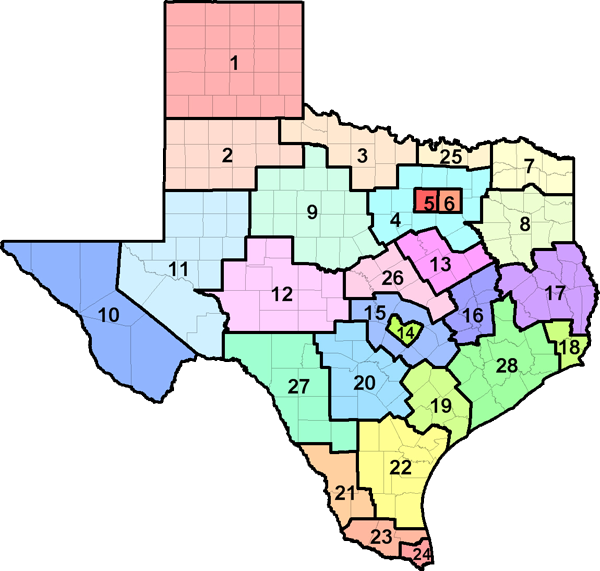
TEXAS COUNTY MAP BY WORKFORCE DEVELOPMENT AREA
* Due to confidentiality rules, not all regions may have the data displayed. The sum of all the regions may not be equal to the state total.


Top 10 Relevant Knowledge Areas Relevant Importance Levels
Design
Knowledge of design techniques, tools, and principles involved in production of precision technical plans, blueprints, drawings, and models.
94.20%
Engineering and Technology
Knowledge of the practical application of engineering science and technology. This includes applying principles, techniques, procedures, and equipment to the design and production of various goods and services.
94.00%
Mechanical
Knowledge of machines and tools, including their designs, uses, repair, and maintenance.
80.80%
Production and Processing
Knowledge of raw materials, production processes, quality control, costs, and other techniques for maximizing the effective manufacture and distribution of goods.
80.80%
Computers and Electronics
Knowledge of circuit boards, processors, chips, electronic equipment, and computer hardware and software, including applications and programming.
78.00%
Mathematics
Knowledge of arithmetic, algebra, geometry, calculus, statistics, and their applications.
74.40%
English Language
Knowledge of the structure and content of the English language including the meaning and spelling of words, rules of composition, and grammar.
71.40%
Physics
Knowledge and prediction of physical principles, laws, their interrelationships, and applications to understanding fluid, material, and atmospheric dynamics, and mechanical, electrical, atomic and sub-atomic structures and processes.
62.00%
Sales and Marketing
Knowledge of principles and methods for showing, promoting, and selling products or services. This includes marketing strategy and tactics, product demonstration, sales techniques, and sales control systems.
60.60%
Administrative
Knowledge of administrative and office procedures and systems such as word processing, managing files and records, stenography and transcription, designing forms, and workplace terminology.
60.20%


Top 10 Relevant Skill Areas Relevant Importance Levels
Active Listening
Giving full attention to what other people are saying, taking time to understand the points being made, asking questions as appropriate, and not interrupting at inappropriate times.
80.00%
Reading Comprehension
Understanding written sentences and paragraphs in work-related documents.
77.60%
Critical Thinking
Using logic and reasoning to identify the strengths and weaknesses of alternative solutions, conclusions, or approaches to problems.
75.00%
Complex Problem Solving
Identifying complex problems and reviewing related information to develop and evaluate options and implement solutions.
75.00%
Speaking
Talking to others to convey information effectively.
70.00%
Operations Analysis
Analyzing needs and product requirements to create a design.
65.00%
Judgment and Decision Making
Considering the relative costs and benefits of potential actions to choose the most appropriate one.
65.00%
Time Management
Managing one's own time and the time of others.
65.00%
Technology Design
Generating or adapting equipment and technology to serve user needs.
62.40%
Writing
Communicating effectively in writing as appropriate for the needs of the audience.
62.40%


Top 10 Relevant Abilities Relevant Importance Levels
Fluency of Ideas
The ability to come up with a number of ideas about a topic (the number of ideas is important, not their quality, correctness, or creativity).
77.60%
Originality
The ability to come up with unusual or clever ideas about a given topic or situation, or to develop creative ways to solve a problem.
77.60%
Near Vision
The ability to see details at close range (within a few feet of the observer).
77.60%
Deductive Reasoning
The ability to apply general rules to specific problems to produce answers that make sense.
75.00%
Oral Comprehension
The ability to listen to and understand information and ideas presented through spoken words and sentences.
75.00%
Written Comprehension
The ability to read and understand information and ideas presented in writing.
75.00%
Oral Expression
The ability to communicate information and ideas in speaking so others will understand.
75.00%
Visualization
The ability to imagine how something will look after it is moved around or when its parts are moved or rearranged.
75.00%
Information Ordering
The ability to arrange things or actions in a certain order or pattern according to a specific rule or set of rules (e.g., patterns of numbers, letters, words, pictures, mathematical operations).
72.40%
Problem Sensitivity
The ability to tell when something is wrong or is likely to go wrong. It does not involve solving the problem, only recognizing that there is a problem.
72.40%


  • Drafting, Laying Out, and Specifying Technical Devices, Parts, and Equipment
    -- Providing documentation, detailed instructions, drawings, or specifications to tell others about how devices, parts, equipment, or structures are to be fabricated, constructed, assembled, modified, maintained, or used.
  • Making Decisions and Solving Problems
    -- Analyzing information and evaluating results to choose the best solution and solve problems.
  • Working with Computers
    -- Using computers and computer systems (including hardware and software) to program, write software, set up functions, enter data, or process information.
  • Communicating with Supervisors, Peers, or Subordinates
    -- Providing information to supervisors, co-workers, and subordinates by telephone, in written form, e-mail, or in person.
  • Getting Information
    -- Observing, receiving, and otherwise obtaining information from all relevant sources.
Other Activities


  • Achievement
    - Occupations that satisfy this work value are results oriented and allow employees to use their strongest abilities, giving them a feeling of accomplishment. Corresponding needs are Ability Utilization and Achievement.
  • Relationships
    - Occupations that satisfy this work value allow employees to provide service to others and work with co-workers in a friendly non-competitive environment. Corresponding needs are Co-workers, Moral Values and Social Service.


Tools

Desktop computers: Desktop computers;

Digital cameras: Compact digital cameras;

High capacity removable media drives: Universal serial bus USB flash drives;

Liquid crystal display projector: Liquid crystal display LCD video projectors;

Notebook computers: Laptop computers;

Personal computers: Personal computers;


Technology

Analytical or scientific software: Finite element analysis software; Minitab; The MathWorks MATLAB;

Cloud-based data access and sharing software: Software as a service SaaS;

Computer aided design CAD software: Siemens UGS NX; PTC Creo Parametric; McNeel Rhinoceros 3D; Dassault Systemes CATIA; Dassault Systemes SolidWorks; Ashlar-Vellum Cobalt; Autodesk AliasStudio; Autodesk AutoCAD; Autodesk Maya; Autodesk Revit;

Computer aided manufacturing CAM software: 1CadCam Unigraphics; Computer aided manufacturing CAM software; Geometric CAMWorks; Siemens NX;

Data base user interface and query software: Microsoft Access;

Desktop communications software: Eko;

Desktop publishing software: Adobe InDesign; Microsoft Publisher; QuarkXPress;

Development environment software: National Instruments LabVIEW; Verilog; Apache Maven; C;

Document management software: Adobe Acrobat;

Electronic mail software: Email software; IBM Notes;

Enterprise resource planning ERP software: SAP software;

Financial analysis software: Delphi Technology;

Geographic information system: ESRI ArcGIS software;

Graphical user interface development software: Figma;

Graphics or photo imaging software: Corel CorelDraw Graphics Suite; Corel Painter; Adobe Creative Cloud software; Adobe FreeHand MX; Adobe Illustrator; Adobe Photoshop; Trimble SketchUp Pro; Xara Designer Pro;

Internet browser software: Web browser software;

Object or component oriented development software: Python; C#; C++; jQuery;

Office suite software: Microsoft Office software;

Operating system software: Apple iOS;

Presentation software: Microsoft PowerPoint;

Process mapping and design software: InVision software;

Project management software: Microsoft Project;

Spreadsheet software: Microsoft Excel;

Video creation and editing software: Chaos Group V-Ray; Kapwing; Maxon Cinema 4D; Autodesk 3ds Max; Adobe After Effects;

Web platform development software: Cascading style sheets CSS; JavaScript; Hypertext markup language HTML;

Word processing software: Microsoft Word;


Related O*NET occupational titles for Commercial and Industrial Designers include:
  • 27-1012.00 Craft Artists
  • 51-6092.00 Fabric and Apparel Patternmakers
  • 27-1022.00 Fashion Designers
  • 17-2112.00 Industrial Engineers
  • 51-4192.00 Layout Workers, Metal and Plastic
  • 17-2131.00 Materials Engineers
  • 17-3013.00 Mechanical Drafters
  • 17-3027.00 Mechanical Engineering Technologists and Technicians
  • 51-4061.00 Model Makers, Metal and Plastic
  • 51-4062.00 Patternmakers, Metal and Plastic


Sources of Additional Information
  • For more information about industrial designers, visit: Industrial Designers Society of America
  • For more information about accredited college-level programs in art and design, visit: National Association of Schools of Art and Design
  • Commercial and Industrial Designers

  • Contact Texas Workforce Commission
    Labor Market and Career Information  |  101 E. 15th Street, Annex Room 0252  |  Austin, Texas 78778
    Official Website  |  1-800-822-PLAN (7526)  |  512.936.3200

    ** The information in this report may be derived from many sources like O*NET, BLS (Bureau of Labor Statistics), OOH (Occupational Outlook Handbook), and Career One Stop.