Occupation Summary

Fashion Designers

O*NET 27-1022.00

Description:

Design clothing and accessories. Create original designs or adapt fashion trends.

Annual Wages:
Unavailable
Employment Rate:
Employment is expected to increase by 14.51%.
Education Level:
Bachelor's Degree. According to O*Net, the majority of people employed in this occupation have this level of education.
Endorsement:
Business and Industry

  1. Direct and coordinate workers involved in drawing and cutting patterns and constructing samples or finished garments.
  2. Examine sample garments on and off models, modifying designs to achieve desired effects.
  3. Sketch rough and detailed drawings of apparel or accessories, and write specifications such as color schemes, construction, material types, and accessory requirements.
  4. Confer with sales and management executives or with clients to discuss design ideas.
  5. Identify target markets for designs, looking at factors such as age, gender, and socioeconomic status.
  6. Attend fashion shows and review garment magazines and manuals to gather information about fashion trends and consumer preferences.
  7. Select materials and production techniques to be used for products.
  8. Provide sample garments to agents and sales representatives, and arrange for showings of sample garments at sales meetings or fashion shows.
  9. Adapt other designers' ideas for the mass market.
  10. Purchase new or used clothing and accessory items as needed to complete designs.
  11. Visit textile showrooms to keep up-to-date on the latest fabrics.
  12. Collaborate with other designers to coordinate special products and designs.
  13. Design custom clothing and accessories for individuals, retailers, or theatrical, television, or film productions.
  14. Determine prices for styles.
  15. Draw patterns for articles designed, cut patterns, and cut material according to patterns, using measuring instruments and scissors.
  16. Develop a group of products or accessories, and market them through venues such as boutiques or mail-order catalogs.
  17. Read scripts and consult directors and other production staff to develop design concepts and plan productions.
  18. Test fabrics or oversee testing so that garment care labels can be created.
  19. Sew together sections of material to form mockups or samples of garments or articles, using sewing equipment.
  20. Research the styles and periods of clothing needed for film or theatrical productions.


National Industry Employment Patterns


Industry % of Fashion Designers employed Annual Growth Rate
Apparel, piece goods, and notions merchant wholesalers 30.7 0.64
Clothing and clothing accessories retailers 12.5 0.00
Motion picture and video industries 3.2 1.18
Specialized design services 2.8 1.34
Employment services 2.3 0.00


Labor Market Information


2022 National employment 24,900
2022 Texas employment 1,661
Texas projected employment by 2032 1,902
Texas projected annual employment and Turnover openings through 2032 183


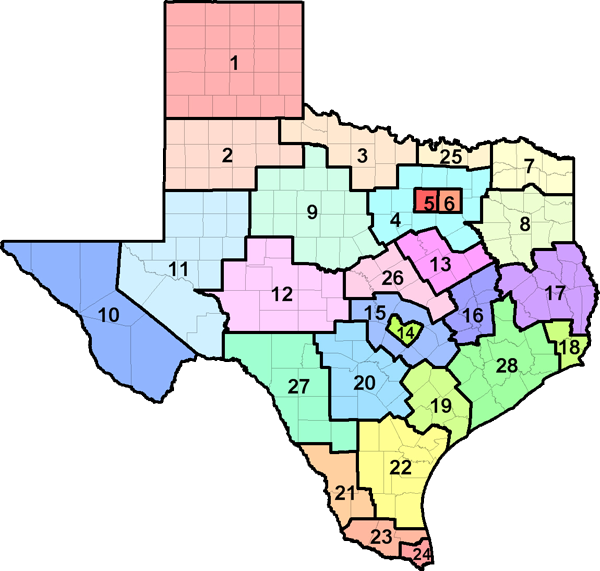
TEXAS COUNTY MAP BY WORKFORCE DEVELOPMENT AREA
* Due to confidentiality rules, not all regions may have the data displayed. The sum of all the regions may not be equal to the state total.


Top 10 Relevant Knowledge Areas Relevant Importance Levels
Design
Knowledge of design techniques, tools, and principles involved in production of precision technical plans, blueprints, drawings, and models.
88.20%
Computers and Electronics
Knowledge of circuit boards, processors, chips, electronic equipment, and computer hardware and software, including applications and programming.
67.00%
Production and Processing
Knowledge of raw materials, production processes, quality control, costs, and other techniques for maximizing the effective manufacture and distribution of goods.
65.00%
Sales and Marketing
Knowledge of principles and methods for showing, promoting, and selling products or services. This includes marketing strategy and tactics, product demonstration, sales techniques, and sales control systems.
63.80%
English Language
Knowledge of the structure and content of the English language including the meaning and spelling of words, rules of composition, and grammar.
62.60%
Fine Arts
Knowledge of the theory and techniques required to compose, produce, and perform works of music, dance, visual arts, drama, and sculpture.
54.00%
Administration and Management
Knowledge of business and management principles involved in strategic planning, resource allocation, human resources modeling, leadership technique, production methods, and coordination of people and resources.
51.40%
Personnel and Human Resources
Knowledge of principles and procedures for personnel recruitment, selection, training, compensation and benefits, labor relations and negotiation, and personnel information systems.
48.80%
Mathematics
Knowledge of arithmetic, algebra, geometry, calculus, statistics, and their applications.
45.60%
Education and Training
Knowledge of principles and methods for curriculum and training design, teaching and instruction for individuals and groups, and the measurement of training effects.
44.80%


Top 10 Relevant Skill Areas Relevant Importance Levels
Active Listening
Giving full attention to what other people are saying, taking time to understand the points being made, asking questions as appropriate, and not interrupting at inappropriate times.
77.60%
Speaking
Talking to others to convey information effectively.
77.60%
Critical Thinking
Using logic and reasoning to identify the strengths and weaknesses of alternative solutions, conclusions, or approaches to problems.
77.60%
Active Learning
Understanding the implications of new information for both current and future problem-solving and decision-making.
75.00%
Social Perceptiveness
Being aware of others' reactions and understanding why they react as they do.
75.00%
Coordination
Adjusting actions in relation to others' actions.
75.00%
Judgment and Decision Making
Considering the relative costs and benefits of potential actions to choose the most appropriate one.
75.00%
Time Management
Managing one's own time and the time of others.
75.00%
Persuasion
Persuading others to change their minds or behavior.
72.40%
Negotiation
Bringing others together and trying to reconcile differences.
72.40%


Top 10 Relevant Abilities Relevant Importance Levels
Originality
The ability to come up with unusual or clever ideas about a given topic or situation, or to develop creative ways to solve a problem.
85.00%
Written Comprehension
The ability to read and understand information and ideas presented in writing.
77.60%
Oral Expression
The ability to communicate information and ideas in speaking so others will understand.
77.60%
Fluency of Ideas
The ability to come up with a number of ideas about a topic (the number of ideas is important, not their quality, correctness, or creativity).
77.60%
Oral Comprehension
The ability to listen to and understand information and ideas presented through spoken words and sentences.
75.00%
Visualization
The ability to imagine how something will look after it is moved around or when its parts are moved or rearranged.
75.00%
Near Vision
The ability to see details at close range (within a few feet of the observer).
75.00%
Visual Color Discrimination
The ability to match or detect differences between colors, including shades of color and brightness.
75.00%
Speech Recognition
The ability to identify and understand the speech of another person.
75.00%
Category Flexibility
The ability to generate or use different sets of rules for combining or grouping things in different ways.
72.40%


  • Thinking Creatively
    -- Developing, designing, or creating new applications, ideas, relationships, systems, or products, including artistic contributions.
  • Organizing, Planning, and Prioritizing Work
    -- Developing specific goals and plans to prioritize, organize, and accomplish your work.
  • Establishing and Maintaining Interpersonal Relationships
    -- Developing constructive and cooperative working relationships with others, and maintaining them over time.
  • Communicating with Supervisors, Peers, or Subordinates
    -- Providing information to supervisors, co-workers, and subordinates by telephone, in written form, e-mail, or in person.
  • Getting Information
    -- Observing, receiving, and otherwise obtaining information from all relevant sources.
Other Activities


  • Achievement
    - Occupations that satisfy this work value are results oriented and allow employees to use their strongest abilities, giving them a feeling of accomplishment. Corresponding needs are Ability Utilization and Achievement.
  • Working Conditions
    - Occupations that satisfy this work value offer job security and good working conditions. Corresponding needs are Activity, Compensation, Independence, Security, Variety and Working Conditions.


Tools

Cloth cutting machines: Industrial fabric cutting machines;

Curves: Drafting curves;

Desktop computers: Desktop computers;

Domestic clothing irons: Steam irons;

Full body form or mannequin: Dress forms;

Graphics tablets: Computer drawing tablets;

Ironing machines or presses: Fabric pressing equipment;

Laser printers: Computer laser printers;

Notebook computers: Laptop computers;

Personal computers: Personal computers;

Scales: Drawing scales;

Scanners: Computer data input scanners;

Sewing machines: Industrial sewing machines; Sergers;

Sewing needles: Sewing needles;

Sewing patterns: Garment templates;

Shears: Fabric shears;

Steam pressing machines: Fabric steamers;

T squares: Layout T-squares;

Tape measures: Measuring tapes;


Technology

Accounting software: Financial accounting software;

Analytical or scientific software: SAS;

Computer aided design CAD software: StartingAClothingLine.com Digital Fashion Pro; Trimble SketchUp Pro; Optitex 3D Suite; Patternmaking software; Autodesk AutoCAD Design Suite; Autodesk Revit; Fashion Toolbox; C-DESIGN Fashion; CLO Virtual Fashion Marvelous Designer; Computer aided design and drafting software CADD;

Desktop publishing software: Adobe InDesign;

Document management software: Adobe Acrobat;

Electronic mail software: Microsoft Outlook;

Graphics or photo imaging software: Adobe Creative Cloud software; Adobe Illustrator; Adobe Photoshop; Corel CorelDraw Graphics Suite; Corel Painter; Lectra Prima Vision Print Repeat; Autodesk SketchBook Pro;

Internet browser software: Web browser software;

Office suite software: Microsoft Office software;

Presentation software: Microsoft PowerPoint;

Program testing software: User interface design software;

Spreadsheet software: Microsoft Excel;

Web platform development software: JavaScript;

Word processing software: Microsoft Word;


Related O*NET occupational titles for Fashion Designers include:
  • 27-1021.00 Commercial and Industrial Designers
  • 39-3092.00 Costume Attendants
  • 27-1012.00 Craft Artists
  • 51-6092.00 Fabric and Apparel Patternmakers
  • 27-1024.00 Graphic Designers
  • 27-1025.00 Interior Designers
  • 51-9071.00 Jewelers and Precious Stone and Metal Workers
  • 27-1026.00 Merchandise Displayers and Window Trimmers
  • 51-6051.00 Sewers, Hand
  • 51-6052.00 Tailors, Dressmakers, and Custom Sewers


Sources of Additional Information
  • For more information about careers in fashion design, visit: Council of Fashion Designers of America
  • For more information about educational programs in fashion design, visit: National Association of Schools of Art and Design
  • Fashion Designers

  • Contact Texas Workforce Commission
    Labor Market and Career Information  |  101 E. 15th Street, Annex Room 0252  |  Austin, Texas 78778
    Official Website  |  1-800-822-PLAN (7526)  |  512.936.3200

    ** The information in this report may be derived from many sources like O*NET, BLS (Bureau of Labor Statistics), OOH (Occupational Outlook Handbook), and Career One Stop.