Occupation Summary

Music Directors and Composers

O*NET 27-2041.00

Description:

Conduct, direct, plan, and lead instrumental or vocal performances by musical artists or groups, such as orchestras, bands, choirs, and glee clubs; or create original works of music.

Annual Wages:
$81,656.00
Employment Rate:
Employment is expected to increase by 10.16%.
Education Level:
Master's Degree. According to O*Net, the majority of people employed in this occupation have this level of education.
Endorsement:
Business and Industry

  1. Use gestures to shape the music being played, communicating desired tempo, phrasing, tone, color, pitch, volume, and other performance aspects.
  2. Direct groups at rehearsals and live or recorded performances to achieve desired effects such as tonal and harmonic balance dynamics, rhythm, and tempo.
  3. Study scores to learn the music in detail, and to develop interpretations.
  4. Apply elements of music theory to create musical and tonal structures, including harmonies and melodies.
  5. Consider such factors as ensemble size and abilities, availability of scores, and the need for musical variety, to select music to be performed.
  6. Determine voices, instruments, harmonic structures, rhythms, tempos, and tone balances required to achieve the effects desired in a musical composition.
  7. Experiment with different sounds, and types and pieces of music, using synthesizers and computers as necessary to test and evaluate ideas.
  8. Transcribe ideas for musical compositions into musical notation, using instruments, pen and paper, or computers.
  9. Audition and select performers for musical presentations.
  10. Plan and schedule rehearsals and performances, and arrange details such as locations, accompanists, and instrumentalists.
  11. Write musical scores for orchestras, bands, choral groups, or individual instrumentalists or vocalists, using knowledge of music theory and of instrumental and vocal capabilities.
  12. Position members within groups to obtain balance among instrumental or vocal sections.
  13. Perform administrative tasks such as applying for grants, developing budgets, negotiating contracts, and designing and printing programs and other promotional materials.
  14. Confer with producers and directors to define the nature and placement of film or television music.
  15. Meet with soloists and concertmasters to discuss and prepare for performances.
  16. Fill in details of orchestral sketches, such as adding vocal parts to scores.
  17. Explore and develop musical ideas based on sources such as imagination or sounds in the environment.
  18. Write music for commercial mediums, including advertising jingles or film soundtracks.
  19. Transpose music from one voice or instrument to another to accommodate particular musicians.
  20. Rewrite original musical scores in different musical styles by changing rhythms, harmonies, or tempos.
  21. Arrange music composed by others, changing the music to achieve desired effects.
  22. Assign and review staff work in such areas as scoring, arranging, and copying music, and vocal coaching.
  23. Study films or scripts to determine how musical scores can be used to create desired effects or moods.
  24. Transcribe musical compositions and melodic lines to adapt them to a particular group, or to create a particular musical style.
  25. Create original musical forms, or write within circumscribed musical forms such as sonatas, symphonies, or operas.
  26. Collaborate with other colleagues, such as copyists, to complete final scores.
  27. Copy parts from scores for individual performers.
  28. Coordinate and organize tours, or hire touring companies to arrange concert dates, venues, accommodations, and transportation for longer tours.
  29. Produce recordings of music.
  30. Stay abreast of the latest trends in music and music technology.


National Industry Employment Patterns


Industry % of Music Directors and Composers employed Annual Growth Rate
Performing arts companies 7.5 -0.26


Labor Market Information


2024 Statewide average hourly wage $39.26
2024 National average hourly wage $40.50
2022 National employment 51,800
2022 Texas employment 1,929
Texas projected employment by 2032 2,125
Texas projected annual employment and Turnover openings through 2032 217


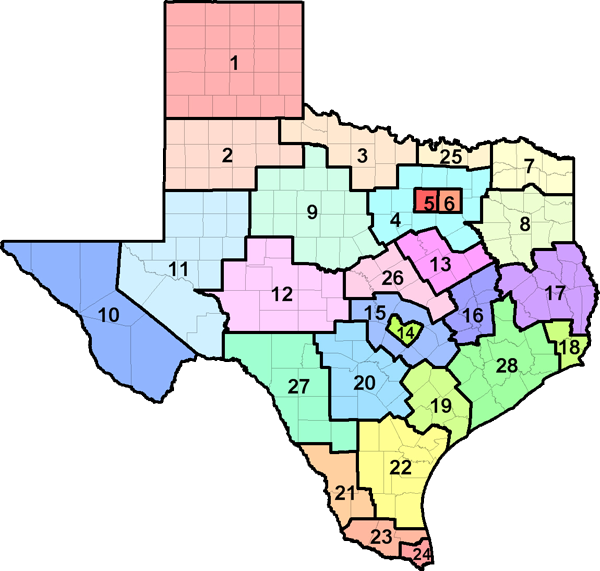
TEXAS COUNTY MAP BY WORKFORCE DEVELOPMENT AREA
* Due to confidentiality rules, not all regions may have the data displayed. The sum of all the regions may not be equal to the state total.


Top 10 Relevant Knowledge Areas Relevant Importance Levels
Fine Arts
Knowledge of the theory and techniques required to compose, produce, and perform works of music, dance, visual arts, drama, and sculpture.
94.40%
English Language
Knowledge of the structure and content of the English language including the meaning and spelling of words, rules of composition, and grammar.
75.80%
Education and Training
Knowledge of principles and methods for curriculum and training design, teaching and instruction for individuals and groups, and the measurement of training effects.
69.80%
Computers and Electronics
Knowledge of circuit boards, processors, chips, electronic equipment, and computer hardware and software, including applications and programming.
67.80%
Customer and Personal Service
Knowledge of principles and processes for providing customer and personal services. This includes customer needs assessment, meeting quality standards for services, and evaluation of customer satisfaction.
61.80%
Philosophy and Theology
Knowledge of different philosophical systems and religions. This includes their basic principles, values, ethics, ways of thinking, customs, practices, and their impact on human culture.
61.60%
Administrative
Knowledge of administrative and office procedures and systems such as word processing, managing files and records, stenography and transcription, designing forms, and workplace terminology.
58.80%
Communications and Media
Knowledge of media production, communication, and dissemination techniques and methods. This includes alternative ways to inform and entertain via written, oral, and visual media.
57.60%
Administration and Management
Knowledge of business and management principles involved in strategic planning, resource allocation, human resources modeling, leadership technique, production methods, and coordination of people and resources.
56.20%
Psychology
Knowledge of human behavior and performance; individual differences in ability, personality, and interests; learning and motivation; psychological research methods; and the assessment and treatment of behavioral and affective disorders.
51.60%


Top 10 Relevant Skill Areas Relevant Importance Levels
Active Listening
Giving full attention to what other people are saying, taking time to understand the points being made, asking questions as appropriate, and not interrupting at inappropriate times.
77.60%
Speaking
Talking to others to convey information effectively.
72.40%
Critical Thinking
Using logic and reasoning to identify the strengths and weaknesses of alternative solutions, conclusions, or approaches to problems.
70.00%
Reading Comprehension
Understanding written sentences and paragraphs in work-related documents.
70.00%
Judgment and Decision Making
Considering the relative costs and benefits of potential actions to choose the most appropriate one.
70.00%
Active Learning
Understanding the implications of new information for both current and future problem-solving and decision-making.
67.60%
Writing
Communicating effectively in writing as appropriate for the needs of the audience.
67.60%
Coordination
Adjusting actions in relation to others' actions.
67.60%
Persuasion
Persuading others to change their minds or behavior.
65.00%
Monitoring
Monitoring/Assessing performance of yourself, other individuals, or organizations to make improvements or take corrective action.
65.00%


Top 10 Relevant Abilities Relevant Importance Levels
Hearing Sensitivity
The ability to detect or tell the differences between sounds that vary in pitch and loudness.
85.00%
Written Comprehension
The ability to read and understand information and ideas presented in writing.
75.00%
Fluency of Ideas
The ability to come up with a number of ideas about a topic (the number of ideas is important, not their quality, correctness, or creativity).
75.00%
Originality
The ability to come up with unusual or clever ideas about a given topic or situation, or to develop creative ways to solve a problem.
75.00%
Information Ordering
The ability to arrange things or actions in a certain order or pattern according to a specific rule or set of rules (e.g., patterns of numbers, letters, words, pictures, mathematical operations).
75.00%
Oral Expression
The ability to communicate information and ideas in speaking so others will understand.
72.40%
Oral Comprehension
The ability to listen to and understand information and ideas presented through spoken words and sentences.
72.40%
Auditory Attention
The ability to focus on a single source of sound in the presence of other distracting sounds.
72.40%
Near Vision
The ability to see details at close range (within a few feet of the observer).
70.00%
Speech Recognition
The ability to identify and understand the speech of another person.
70.00%


  • Thinking Creatively
    -- Developing, designing, or creating new applications, ideas, relationships, systems, or products, including artistic contributions.
  • Establishing and Maintaining Interpersonal Relationships
    -- Developing constructive and cooperative working relationships with others, and maintaining them over time.
  • Getting Information
    -- Observing, receiving, and otherwise obtaining information from all relevant sources.
  • Communicating with Supervisors, Peers, or Subordinates
    -- Providing information to supervisors, co-workers, and subordinates by telephone, in written form, e-mail, or in person.
  • Scheduling Work and Activities
    -- Scheduling events, programs, and activities, as well as the work of others.
Other Activities


  • Achievement
    - Occupations that satisfy this work value are results oriented and allow employees to use their strongest abilities, giving them a feeling of accomplishment. Corresponding needs are Ability Utilization and Achievement.
  • Independence
    - Occupations that satisfy this work value allow employees to work on their own and make decisions. Corresponding needs are Creativity, Responsibility and Autonomy.


Tools

Audio monitor: Studio recording monitors;

Bells: Handbells;

Cassette players or recorders: Audio tape recorders;

Conductors batons: Conducting batons;

Desktop computers: Desktop computers;

Digital audio workstation DAW: Digital audio workstations;

Drums: Drum sets;

Guitars: Bass guitars; Acoustic guitars;

Laser printers: Computer laser printers;

Loudspeakers: Portable loudspeakers;

Microphones: Condenser microphones;

Musical instrument digital interface MIDI interfaces: Audio interfaces; Musical instrument digital interface MIDI sequencers;

Musical instrument effects unit: Expression pedals; Foot switches; Sustain pedals;

Musical organs: Pipe organs; Electronic organs;

Notebook computers: Laptop computers;

Pen or flash drive: Flash drives;

Personal computers: Personal computers;

Photocopiers: Copy machines;

Pianos: Grand pianos; Pianos;

Portable hard disk storage device: External hard drives;

Synthesizer: Keyboard synthesizers; Synthesizer keyboards;

Tablet computers: Tablet computers;


Technology

Data base user interface and query software: Music Director Pro;

Desktop publishing software: Microsoft Publisher;

Electronic mail software: Microsoft Outlook;

Music or sound editing software: Anvil Studio; MIDI Maestro; MIDI Score Creator; MidiSwing; Mozart Music Software Mozart; MuseScore; Musical Palette; MusicDevelopments RapidComposer; MusicGraph; Musilogic HarmonyBuilder; Myriad Software Harmony Assistant; Notation Software Notation Composer; NoteWorthy Software NoteWorthy Composer; Open Song Composer; PianoFX STUDIO; PianoRollComposer; Power Tab Editor; Proxima Controller; Renoise; Rhythm Rascal; Sonoma Wire Works RiffWorks; Storm Music Studio; SVArTracker; SwarMala; TabIt; TablEdit; Tonality Systems Symoblic Composer; Truepianos; TuxGuitar; Twelve Tone Matrix Calculator; Twelve Tone Row Analyzer; Underware Design DTAB; VBRhapsody; Visiv SharpEye; Widisoft WIDI Recognition System; Wusik Wusikstation VSTi; Xitona Software Voice Composer; XT Software energyXT; ZynAddSubFX; Apple MainStage; Arobas Music Guitar Pro; Arpege Music Pizzicato; Audacity; Audio Chaos Soundscape Generator; Audiveris; Avid Pro Tools; Avid Technology Sibelius; Azemus FS; Basic Music Composer; Cakewalk SONAR; Canorus; ChordWizard Software Soundtrix Gold; Click MusicalKEYS; Curto Drum; D'accord Music Software iChords; Denemo; Desktop Piano and Drums; DigiPiano; Dream Computer Piano; Easy Music Composer Free; Epinoisis Software Digital Ear; FlexiMusic Composer; GenieSoft Overture; HS Virtual Piano; IK Multimedia GrooveMaker; Image-Line FL Studio; Impro-Visor; Jackbeat; Javamin Composer; Korg EM-1 Editor; Lauriso Software Music Publisher; Little Piano; MadTracker; Maestro Music Software MagicScore; MAGIX Music Maker; MakeMusic Finale; Making Waves Audio Making Waves;

Office suite software: Microsoft Office software;

Presentation software: Microsoft PowerPoint; MediaShout;

Spreadsheet software: Microsoft Excel;

Video creation and editing software: Apple Final Cut Pro;

Word processing software: Microsoft Word;


Related O*NET occupational titles for Music Directors and Composers include:
  • 27-1011.00 Art Directors
  • 25-1121.00 Art, Drama, and Music Teachers, Postsecondary
  • 27-2032.00 Choreographers
  • 27-4032.00 Film and Video Editors
  • 27-2012.03 Media Programming Directors
  • 29-1129.02 Music Therapists
  • 27-2042.00 Musicians and Singers
  • 27-3043.05 Poets, Lyricists and Creative Writers
  • 27-2012.00 Producers and Directors
  • 27-2012.04 Talent Directors


Sources of Additional Information
  • For more information about music degree programs, visit: National Association of Schools of Music
  • For more information about careers in music, visit: Future of Music Coalition
  • Music Directors and Composers

  • Contact Texas Workforce Commission
    Labor Market and Career Information  |  101 E. 15th Street, Annex Room 0252  |  Austin, Texas 78778
    Official Website  |  1-800-822-PLAN (7526)  |  512.936.3200

    ** The information in this report may be derived from many sources like O*NET, BLS (Bureau of Labor Statistics), OOH (Occupational Outlook Handbook), and Career One Stop.