Occupation Summary

Editors

O*NET 27-3041.00

Description:

Plan, coordinate, revise, or edit written material. May review proposals and drafts for possible publication.

Annual Wages:
$47,597.00
Employment Rate:
Employment is expected to increase by 0.81%.
Education Level:
Bachelor's Degree. According to O*Net, the majority of people employed in this occupation have this level of education.
Endorsement:
Business and Industry

  1. Prepare, rewrite and edit copy to improve readability, or supervise others who do this work.
  2. Read copy or proof to detect and correct errors in spelling, punctuation, and syntax.
  3. Allocate print space for story text, photos, and illustrations according to space parameters and copy significance, using knowledge of layout principles.
  4. Plan the contents of publications according to the publication's style, editorial policy, and publishing requirements.
  5. Verify facts, dates, and statistics, using standard reference sources.
  6. Review and approve proofs submitted by composing room prior to publication production.
  7. Develop story or content ideas, considering reader or audience appeal.
  8. Oversee publication production, including artwork, layout, computer typesetting, and printing, ensuring adherence to deadlines and budget requirements.
  9. Confer with management and editorial staff members regarding placement and emphasis of developing news stories.
  10. Assign topics, events and stories to individual writers or reporters for coverage.
  11. Read, evaluate and edit manuscripts or other materials submitted for publication, and confer with authors regarding changes in content, style or organization, or publication.
  12. Monitor news-gathering operations to ensure utilization of all news sources, such as press releases, telephone contacts, radio, television, wire services, and other reporters.
  13. Meet frequently with artists, typesetters, layout personnel, marketing directors, and production managers to discuss projects and resolve problems.
  14. Supervise and coordinate work of reporters and other editors.
  15. Make manuscript acceptance or revision recommendations to the publisher.
  16. Select local, state, national, and international news items received from wire services, based on assessment of items' significance and interest value.
  17. Interview and hire writers and reporters or negotiate contracts, royalties, and payments for authors or freelancers.
  18. Direct the policies and departments of newspapers, magazines and other publishing establishments.
  19. Arrange for copyright permissions.
  20. Read material to determine index items and arrange them alphabetically or topically, indicating page or chapter location.
  21. Write text, such as stories, articles, editorials, or newsletters.

Watch a video about Editors

Career videos are provided by: CareerOneStop.org


National Industry Employment Patterns


Industry % of Editors employed Annual Growth Rate
Motion picture and video industries 9.4 0.59
Advertising, public relations, and related services 4.5 1.04
Management, scientific, and technical consulting services 3.2 0.98
Colleges, universities, and professional schools 3.2 0.50
Business, professional, labor, political, and similar organizations 2.8 0.28
Employment services 2 0.00


Labor Market Information


2024 Statewide average hourly wage $22.88
2024 National average hourly wage $41.20
2022 National employment 122,100
2022 Texas employment 5,527
Texas projected employment by 2032 5,572
Texas projected annual employment and Turnover openings through 2032 564


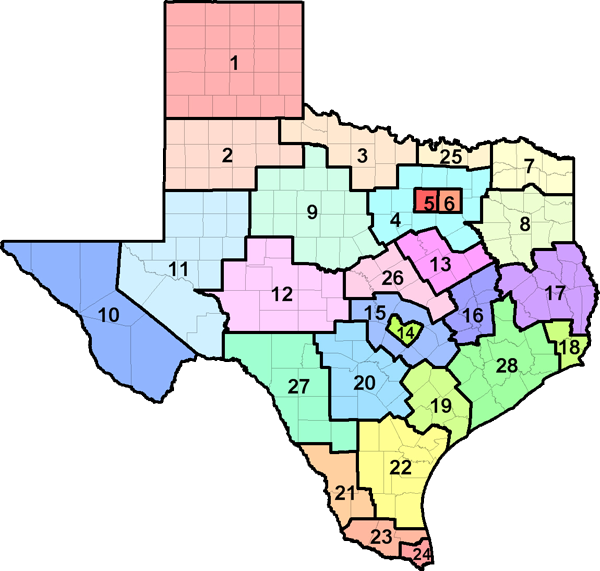
TEXAS COUNTY MAP BY WORKFORCE DEVELOPMENT AREA
* Due to confidentiality rules, not all regions may have the data displayed. The sum of all the regions may not be equal to the state total.


Top 10 Relevant Knowledge Areas Relevant Importance Levels
English Language
Knowledge of the structure and content of the English language including the meaning and spelling of words, rules of composition, and grammar.
96.00%
Communications and Media
Knowledge of media production, communication, and dissemination techniques and methods. This includes alternative ways to inform and entertain via written, oral, and visual media.
90.40%
Administration and Management
Knowledge of business and management principles involved in strategic planning, resource allocation, human resources modeling, leadership technique, production methods, and coordination of people and resources.
66.80%
Administrative
Knowledge of administrative and office procedures and systems such as word processing, managing files and records, stenography and transcription, designing forms, and workplace terminology.
65.20%
Education and Training
Knowledge of principles and methods for curriculum and training design, teaching and instruction for individuals and groups, and the measurement of training effects.
65.00%
Customer and Personal Service
Knowledge of principles and processes for providing customer and personal services. This includes customer needs assessment, meeting quality standards for services, and evaluation of customer satisfaction.
62.20%
Computers and Electronics
Knowledge of circuit boards, processors, chips, electronic equipment, and computer hardware and software, including applications and programming.
61.20%
Law and Government
Knowledge of laws, legal codes, court procedures, precedents, government regulations, executive orders, agency rules, and the democratic political process.
53.80%
Telecommunications
Knowledge of transmission, broadcasting, switching, control, and operation of telecommunications systems.
53.00%
Geography
Knowledge of principles and methods for describing the features of land, sea, and air masses, including their physical characteristics, locations, interrelationships, and distribution of plant, animal, and human life.
53.00%


Top 10 Relevant Skill Areas Relevant Importance Levels
Reading Comprehension
Understanding written sentences and paragraphs in work-related documents.
97.60%
Writing
Communicating effectively in writing as appropriate for the needs of the audience.
85.00%
Active Listening
Giving full attention to what other people are saying, taking time to understand the points being made, asking questions as appropriate, and not interrupting at inappropriate times.
77.60%
Critical Thinking
Using logic and reasoning to identify the strengths and weaknesses of alternative solutions, conclusions, or approaches to problems.
77.60%
Speaking
Talking to others to convey information effectively.
75.00%
Time Management
Managing one's own time and the time of others.
67.60%
Quality Control Analysis
Conducting tests and inspections of products, services, or processes to evaluate quality or performance.
65.00%
Judgment and Decision Making
Considering the relative costs and benefits of potential actions to choose the most appropriate one.
62.40%
Systems Analysis
Determining how a system should work and how changes in conditions, operations, and the environment will affect outcomes.
62.40%
Active Learning
Understanding the implications of new information for both current and future problem-solving and decision-making.
62.40%


Top 10 Relevant Abilities Relevant Importance Levels
Written Comprehension
The ability to read and understand information and ideas presented in writing.
97.60%
Written Expression
The ability to communicate information and ideas in writing so others will understand.
92.40%
Oral Expression
The ability to communicate information and ideas in speaking so others will understand.
80.00%
Oral Comprehension
The ability to listen to and understand information and ideas presented through spoken words and sentences.
80.00%
Fluency of Ideas
The ability to come up with a number of ideas about a topic (the number of ideas is important, not their quality, correctness, or creativity).
77.60%
Near Vision
The ability to see details at close range (within a few feet of the observer).
77.60%
Speech Recognition
The ability to identify and understand the speech of another person.
77.60%
Speech Clarity
The ability to speak clearly so others can understand you.
77.60%
Category Flexibility
The ability to generate or use different sets of rules for combining or grouping things in different ways.
72.40%
Originality
The ability to come up with unusual or clever ideas about a given topic or situation, or to develop creative ways to solve a problem.
70.00%


  • Working with Computers
    -- Using computers and computer systems (including hardware and software) to program, write software, set up functions, enter data, or process information.
  • Getting Information
    -- Observing, receiving, and otherwise obtaining information from all relevant sources.
  • Communicating with Supervisors, Peers, or Subordinates
    -- Providing information to supervisors, co-workers, and subordinates by telephone, in written form, e-mail, or in person.
  • Thinking Creatively
    -- Developing, designing, or creating new applications, ideas, relationships, systems, or products, including artistic contributions.
  • Communicating with People Outside the Organization
    -- Communicating with people outside the organization, representing the organization to customers, the public, government, and other external sources. This information can be exchanged in person, in writing, or by telephone or e-mail.
Other Activities


  • Achievement
    - Occupations that satisfy this work value are results oriented and allow employees to use their strongest abilities, giving them a feeling of accomplishment. Corresponding needs are Ability Utilization and Achievement.
  • Independence
    - Occupations that satisfy this work value allow employees to work on their own and make decisions. Corresponding needs are Creativity, Responsibility and Autonomy.


Tools

Desktop computers: Desktop computers;

Digital camcorders or video cameras: Digital video cameras;

Digital cameras: Digital still cameras;

Flash memory storage card: Universal serial bus USB flash drives;

Notebook computers: Laptop computers;

Personal computers: Personal computers;

Rulers: Precision rulers;

Special purpose telephones: Multi-line telephone systems;

Teleconference equipment: Teleconferencing equipment;

Video editors: Video editing equipment;

Videoconferencing systems: Videoconferencing equipment;


Technology

Cloud-based data access and sharing software: Google Drive; Microsoft SharePoint;

Computer based training software: InScribe; Adobe Captivate;

Data base user interface and query software: FileMaker Pro; Style guide databases;

Data mining software: Google Analytics;

Desktop publishing software: Adobe FrameMaker; Adobe InDesign; QuarkXPress; Microsoft Publisher;

Document management software: Adobe Acrobat;

Electronic mail software: Microsoft Outlook;

Enterprise application integration software: Extensible markup language XML;

Graphics or photo imaging software: Adobe Creative Cloud software; Adobe Photoshop; Adobe Illustrator;

Information retrieval or search software: LexisNexis;

Instant messaging software: Twitter;

Internet browser software: Web browser software;

Internet protocol IP multimedia subsystem software: File transfer protocol FTP software;

Office suite software: Microsoft Office software;

Operating system software: Apple macOS;

Presentation software: Apple iWork Keynote; Microsoft PowerPoint;

Process mapping and design software: Microsoft Visio;

Project management software: Microsoft Project;

Spreadsheet software: Microsoft Excel;

Video conferencing software: Polycom RealPresence;

Video creation and editing software: YouTube; Avid Technology Media Composer; Apple Final Cut Pro; Adobe After Effects;

Web page creation and editing software: Adobe Dreamweaver; CCI NewsGate; Facebook; LinkedIn; HP Autonomy TeamSite; WordPress; Social media sites; Web content management system CMS software;

Web platform development software: Hypertext markup language HTML; Cascading style sheets CSS; Extensible hypertext markup language XHTML; Drupal;

Word processing software: Editor Software Stylewriter; Elite Minds RightWriter; AutoCrit Editing Wizard; Adobe InCopy; After the Deadline; Google Docs; Grammarly Editor; WhiteSmoke; Microsoft Word; myWriterTools; Orpheus Technology Pro Writing Aid;


Related O*NET occupational titles for Editors include:
  • 27-1011.00 Art Directors
  • 43-9031.00 Desktop Publishers
  • 27-4032.00 Film and Video Editors
  • 27-3023.00 News Analysts, Reporters, and Journalists
  • 27-3043.05 Poets, Lyricists and Creative Writers
  • 27-2012.00 Producers and Directors
  • 43-9081.00 Proofreaders and Copy Markers
  • 27-3031.00 Public Relations Specialists
  • 27-3042.00 Technical Writers
  • 27-3043.00 Writers and Authors


Sources of Additional Information
  • For more information about editors, visit: American Copy Editors Society
  • American Society of Magazine Editors
  • Association of Alternative Newsmedia
  • Radio Television Digital News Association
  • Occupational Requirements Survey

  • For a profile highlighting selected BLS data on occupational requirements, see
  • Editors (PDF)
  • Editors

  • Contact Texas Workforce Commission
    Labor Market and Career Information  |  101 E. 15th Street, Annex Room 0252  |  Austin, Texas 78778
    Official Website  |  1-800-822-PLAN (7526)  |  512.936.3200

    ** The information in this report may be derived from many sources like O*NET, BLS (Bureau of Labor Statistics), OOH (Occupational Outlook Handbook), and Career One Stop.