Occupation Summary

Audio and Video Technicians

O*NET 27-4011.00

Description:

Set up, maintain, and dismantle audio and video equipment, such as microphones, sound speakers, connecting wires and cables, sound and mixing boards, video cameras, video monitors and servers, and related electronic equipment for live or recorded events, such as concerts, meetings, conventions, presentations, podcasts, news conferences, and sporting events.

Annual Wages:
$51,963.00
Employment Rate:
Employment is expected to increase by 14.32%.
Education Level:
Bachelor's Degree. According to O*Net, the majority of people employed in this occupation have this level of education.
Endorsement:
Business and Industry

  1. Notify supervisors when major equipment repairs are needed.
  2. Monitor incoming and outgoing pictures and sound feeds to ensure quality and notify directors of any possible problems.
  3. Mix and regulate sound inputs and feeds or coordinate audio feeds with television pictures.
  4. Design layouts of audio and video equipment and perform upgrades and maintenance.
  5. Perform minor repairs and routine cleaning of audio and video equipment.
  6. Switch sources of video input from one camera or studio to another, from film to live programming, or from network to local programming.
  7. Meet with directors and senior members of camera crews to discuss assignments and determine filming sequences, camera movements, and picture composition.
  8. Construct and position properties, sets, lighting equipment, and other equipment.
  9. Compress, digitize, duplicate, and store audio and video data.
  10. Obtain, set up, and load videotapes for scheduled productions or broadcasts.
  11. Edit videotapes by erasing and removing portions of programs and adding video or sound as required.
  12. Direct and coordinate activities of assistants and other personnel during production.
  13. Plan and develop pre-production ideas into outlines, scripts, story boards, and graphics, using own ideas or specifications of assignments.
  14. Maintain inventories of audio and videotapes and related supplies.
  15. Determine formats, approaches, content, levels, and mediums to effectively meet objectives within budgetary constraints, using research, knowledge, and training.
  16. Record and edit audio material, such as movie soundtracks, using audio recording and editing equipment.
  17. Inform users of audio and videotaping service policies and procedures.
  18. Obtain and preview musical performance programs prior to events to become familiar with the order and approximate times of pieces.
  19. Produce rough and finished graphics and graphic designs.
  20. Locate and secure settings, properties, effects, and other production necessities.
  21. Control the lights and sound of events, such as live concerts, before and after performances, and during intermissions.
  22. Conduct training sessions on selection, use, and design of audio-visual materials and on operation of presentation equipment.
  23. Organize and maintain compliance, license, and warranty information related to audio and video facilities.
  24. Develop manuals, texts, workbooks, or related materials for use in conjunction with production materials or for training.
  25. Perform narration of productions or present announcements.
  26. Install, adjust, and operate electronic equipment to record, edit, and transmit radio and television programs, motion pictures, video conferencing, or multimedia presentations.
  27. Diagnose and resolve media system problems.
  28. Reserve audio-visual equipment and facilities, such as meeting rooms.
  29. Analyze and maintain data logs for audio-visual activities.


National Industry Employment Patterns


Industry % of Audio and Video Technicians employed Annual Growth Rate
Motion picture and video industries 12.1 0.65
Colleges, universities, and professional schools 7.4 0.35
Promoters of performing arts, sports, and similar events 4.3 1.18
Performing arts companies 3.5 0.38
Elementary and secondary schools 2.3 0.00
Employment services 2.2 0.61
Accounting, tax preparation, bookkeeping, and payroll services 2.1 0.00


Labor Market Information


2024 Statewide average hourly wage $24.98
2024 National average hourly wage $29.51
2022 National employment 74,800
2022 Texas employment 4,846
Texas projected employment by 2032 5,540
Texas projected annual employment and Turnover openings through 2032 525


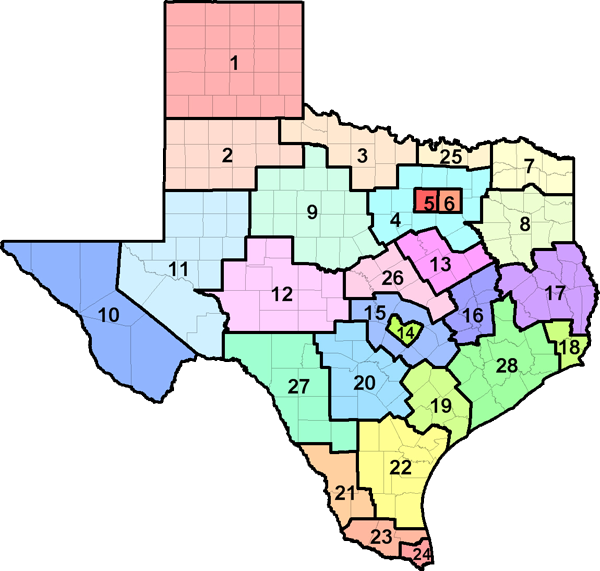
TEXAS COUNTY MAP BY WORKFORCE DEVELOPMENT AREA
* Due to confidentiality rules, not all regions may have the data displayed. The sum of all the regions may not be equal to the state total.


Top 10 Relevant Knowledge Areas Relevant Importance Levels
Computers and Electronics
Knowledge of circuit boards, processors, chips, electronic equipment, and computer hardware and software, including applications and programming.
82.20%
Communications and Media
Knowledge of media production, communication, and dissemination techniques and methods. This includes alternative ways to inform and entertain via written, oral, and visual media.
81.40%
English Language
Knowledge of the structure and content of the English language including the meaning and spelling of words, rules of composition, and grammar.
80.60%
Telecommunications
Knowledge of transmission, broadcasting, switching, control, and operation of telecommunications systems.
74.20%
Fine Arts
Knowledge of the theory and techniques required to compose, produce, and perform works of music, dance, visual arts, drama, and sculpture.
72.00%
Engineering and Technology
Knowledge of the practical application of engineering science and technology. This includes applying principles, techniques, procedures, and equipment to the design and production of various goods and services.
71.20%
Customer and Personal Service
Knowledge of principles and processes for providing customer and personal services. This includes customer needs assessment, meeting quality standards for services, and evaluation of customer satisfaction.
67.60%
Education and Training
Knowledge of principles and methods for curriculum and training design, teaching and instruction for individuals and groups, and the measurement of training effects.
61.80%
Public Safety and Security
Knowledge of relevant equipment, policies, procedures, and strategies to promote effective local, state, or national security operations for the protection of people, data, property, and institutions.
61.60%
Administration and Management
Knowledge of business and management principles involved in strategic planning, resource allocation, human resources modeling, leadership technique, production methods, and coordination of people and resources.
60.00%


Top 10 Relevant Skill Areas Relevant Importance Levels
Monitoring
Monitoring/Assessing performance of yourself, other individuals, or organizations to make improvements or take corrective action.
75.00%
Critical Thinking
Using logic and reasoning to identify the strengths and weaknesses of alternative solutions, conclusions, or approaches to problems.
70.00%
Reading Comprehension
Understanding written sentences and paragraphs in work-related documents.
70.00%
Operations Monitoring
Watching gauges, dials, or other indicators to make sure a machine is working properly.
70.00%
Complex Problem Solving
Identifying complex problems and reviewing related information to develop and evaluate options and implement solutions.
65.00%
Coordination
Adjusting actions in relation to others' actions.
62.40%
Service Orientation
Actively looking for ways to help people.
62.40%
Active Listening
Giving full attention to what other people are saying, taking time to understand the points being made, asking questions as appropriate, and not interrupting at inappropriate times.
62.40%
Writing
Communicating effectively in writing as appropriate for the needs of the audience.
62.40%
Speaking
Talking to others to convey information effectively.
62.40%


Top 10 Relevant Abilities Relevant Importance Levels
Near Vision
The ability to see details at close range (within a few feet of the observer).
80.00%
Oral Expression
The ability to communicate information and ideas in speaking so others will understand.
77.60%
Oral Comprehension
The ability to listen to and understand information and ideas presented through spoken words and sentences.
75.00%
Problem Sensitivity
The ability to tell when something is wrong or is likely to go wrong. It does not involve solving the problem, only recognizing that there is a problem.
75.00%
Information Ordering
The ability to arrange things or actions in a certain order or pattern according to a specific rule or set of rules (e.g., patterns of numbers, letters, words, pictures, mathematical operations).
75.00%
Written Comprehension
The ability to read and understand information and ideas presented in writing.
70.00%
Written Expression
The ability to communicate information and ideas in writing so others will understand.
70.00%
Deductive Reasoning
The ability to apply general rules to specific problems to produce answers that make sense.
67.60%
Inductive Reasoning
The ability to combine pieces of information to form general rules or conclusions (includes finding a relationship among seemingly unrelated events).
65.00%
Visual Color Discrimination
The ability to match or detect differences between colors, including shades of color and brightness.
65.00%


  • Working with Computers
    -- Using computers and computer systems (including hardware and software) to program, write software, set up functions, enter data, or process information.
  • Updating and Using Relevant Knowledge
    -- Keeping up-to-date technically and applying new knowledge to your job.
  • Getting Information
    -- Observing, receiving, and otherwise obtaining information from all relevant sources.
  • Identifying Objects, Actions, and Events
    -- Identifying information by categorizing, estimating, recognizing differences or similarities, and detecting changes in circumstances or events.
  • Thinking Creatively
    -- Developing, designing, or creating new applications, ideas, relationships, systems, or products, including artistic contributions.
Other Activities


  • Relationships
    - Occupations that satisfy this work value allow employees to provide service to others and work with co-workers in a friendly non-competitive environment. Corresponding needs are Co-workers, Moral Values and Social Service.
  • Support
    - Occupations that satisfy this work value offer supportive management that stands behind employees. Corresponding needs are Company Policies, Supervision: Human Relations and Supervision: Technical.


Tools

Assistive listening devices: Assistive amplification systems;

Audio mixing consoles: Microphone mixers; Sound boards;

Audioconferencing systems: Audioconferencing systems;

Cassette players or recorders: Cassette players; Videotape duplicating equipment;

Claw hammer: Claw hammers;

Compact disk players or recorders: Compact disk CD burners or players;

Desktop computers: Desktop computers;

Digital camcorders or video cameras: Digital camcorders; Digital video cameras;

Digital video disk players or recorders: Digital video disk DVD players;

Digital voice recorders: Digital audio recorders;

Film projectors: Motion picture projectors;

Ladders: Step ladders;

Lasers: Laser pointers;

Liquid crystal display projection panels: Liquid crystal display LCD projection systems;

Loudspeakers: Portable speaker systems; Integrated speaker systems; Loudspeaker sets;

Manlift or personnel lift: Man lifts;

Media control systems: Audiovisual A/V mixers; Master control switchers;

Microphones: Wired microphones; Wireless microphones;

Notebook computers: Laptop computers;

Oscilloscopes: Digital oscilloscopes;

Overhead projectors: Overhead display projectors;

Personal computers: Personal computers;

Plasma screens: Plasma televisions;

Power drills: Power drills;

Projection screens or displays: Projection screens;

Public address systems: Audio presentation systems;

Screwdrivers: Screwdrivers;

Slide projectors: Slide projectors;

Soldering iron: Soldering irons;

Sound measuring apparatus or decibel meter: Noise meters;

Stage or projection or studio lighting system: Light boards;

Televisions: Television monitors;

Touch screen monitors: Interactive whiteboards;

Videoconferencing systems: Videoconferencing equipment;

Voltage or current meters: Digital voltmeters DVM;


Technology

Computer aided design CAD software: Computer aided design CAD software;

Data base user interface and query software: Microsoft Access; Blackboard software;

Desktop publishing software: Adobe InDesign;

Electronic mail software: Microsoft Outlook;

Graphics or photo imaging software: Adobe Illustrator; Adobe Photoshop;

Internet browser software: Web browser software;

Internet protocol IP multimedia subsystem software: Voice over internet protocol VoIP system software;

Office suite software: Microsoft Office software;

Operating system software: Microsoft Windows; Cisco IOS; Linux;

Presentation software: Microsoft PowerPoint;

Spreadsheet software: Microsoft Excel;

Video conferencing software: Cisco Webex; Zoom;

Video creation and editing software: YouTube; Adobe After Effects; Apple Final Cut Pro; Apple iMovie; Corel Ulead DVD Workshop;

Web page creation and editing software: Adobe Dreamweaver;

Word processing software: Microsoft Word;


Related O*NET occupational titles for Audio and Video Technicians include:
  • 49-2097.00 Audiovisual Equipment Installers and Repairers
  • 27-4012.00 Broadcast Technicians
  • 17-3028.00 Calibration Technologists and Technicians
  • 27-4031.00 Camera Operators, Television, Video, and Film
  • 17-3023.00 Electrical and Electronic Engineering Technologists and Technicians
  • 49-2094.00 Electrical and Electronics Repairers, Commercial and Industrial Equipment
  • 27-4015.00 Lighting Technicians
  • 39-3021.00 Motion Picture Projectionists
  • 17-3024.01 Robotics Technicians
  • 27-4014.00 Sound Engineering Technicians


Sources of Additional Information
  • For more career information and links to employment resources, visit: National Association of Broadcasters
  • Audio Engineering Society
  • For more information about certification and links to employment information for broadcast technicians, visit: Society of Broadcast Engineers
  • For more information on certification and career information for audio and video technicians, visit: Audiovisual and Integrated Experience Association
  • Audio and Video Technicians
  • Broadcast Technicians
  • Lighting Technicians
  • Sound Engineering Technicians

  • Contact Texas Workforce Commission
    Labor Market and Career Information  |  101 E. 15th Street, Annex Room 0252  |  Austin, Texas 78778
    Official Website  |  1-800-822-PLAN (7526)  |  512.936.3200

    ** The information in this report may be derived from many sources like O*NET, BLS (Bureau of Labor Statistics), OOH (Occupational Outlook Handbook), and Career One Stop.