Occupation Summary

Orthodontists

O*NET 29-1023.00

Description:

Examine, diagnose, and treat dental malocclusions and oral cavity anomalies. Design and fabricate appliances to realign teeth and jaws to produce and maintain normal function and to improve appearance.

Annual Wages:
$272,370.00
Employment Rate:
Employment is expected to increase by %.
Education Level:
Post-Doctoral Training. According to O*Net, the majority of people employed in this occupation have this level of education.
Endorsement:
Public Service, Science Technology Engineering and Math (STEM)

  1. Fit dental appliances in patients' mouths to alter the position and relationship of teeth and jaws or to realign teeth.
  2. Study diagnostic records, such as medical or dental histories, plaster models of the teeth, photos of a patient's face and teeth, and X-rays, to develop patient treatment plans.
  3. Diagnose teeth and jaw or other dental-facial abnormalities.
  4. Examine patients to assess abnormalities of jaw development, tooth position, and other dental-facial structures.
  5. Prepare diagnostic and treatment records.
  6. Adjust dental appliances to produce and maintain normal function.
  7. Provide patients with proposed treatment plans and cost estimates.
  8. Instruct dental officers and technical assistants in orthodontic procedures and techniques.
  9. Coordinate orthodontic services with other dental and medical services.
  10. Design and fabricate appliances, such as space maintainers, retainers, and labial and lingual arch wires.
  11. Advise patients to comply with treatment plans.

Watch a video about Orthodontists

Career videos are provided by: CareerOneStop.org


National Industry Employment Patterns


Industry % of Orthodontists employed Annual Growth Rate
Offices of dentists 83.6 0.65


Labor Market Information


2024 Statewide average hourly wage $130.95
2024 National average hourly wage


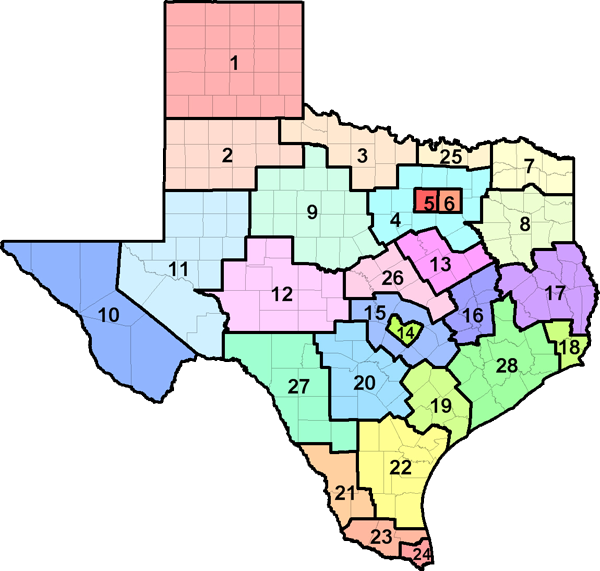
TEXAS COUNTY MAP BY WORKFORCE DEVELOPMENT AREA
Region Employment Projected Employment 2032 Projected
Annual Openings 2032
Annual
Growth Rate
Average Income
Texas (all regions) Unavailable Unavailable Unavailable Unavailable Unavailable
* Due to confidentiality rules, not all regions may have the data displayed. The sum of all the regions may not be equal to the state total.


Top 10 Relevant Knowledge Areas Relevant Importance Levels
Medicine and Dentistry
Knowledge of the information and techniques needed to diagnose and treat human injuries, diseases, and deformities. This includes symptoms, treatment alternatives, drug properties and interactions, and preventive health-care measures.
99.00%
Customer and Personal Service
Knowledge of principles and processes for providing customer and personal services. This includes customer needs assessment, meeting quality standards for services, and evaluation of customer satisfaction.
85.00%
English Language
Knowledge of the structure and content of the English language including the meaning and spelling of words, rules of composition, and grammar.
73.80%
Biology
Knowledge of plant and animal organisms, their tissues, cells, functions, interdependencies, and interactions with each other and the environment.
73.60%
Computers and Electronics
Knowledge of circuit boards, processors, chips, electronic equipment, and computer hardware and software, including applications and programming.
65.20%
Mathematics
Knowledge of arithmetic, algebra, geometry, calculus, statistics, and their applications.
64.40%
Administration and Management
Knowledge of business and management principles involved in strategic planning, resource allocation, human resources modeling, leadership technique, production methods, and coordination of people and resources.
63.60%
Education and Training
Knowledge of principles and methods for curriculum and training design, teaching and instruction for individuals and groups, and the measurement of training effects.
62.80%
Physics
Knowledge and prediction of physical principles, laws, their interrelationships, and applications to understanding fluid, material, and atmospheric dynamics, and mechanical, electrical, atomic and sub-atomic structures and processes.
61.40%
Engineering and Technology
Knowledge of the practical application of engineering science and technology. This includes applying principles, techniques, procedures, and equipment to the design and production of various goods and services.
61.00%


Top 10 Relevant Skill Areas Relevant Importance Levels
Active Listening
Giving full attention to what other people are saying, taking time to understand the points being made, asking questions as appropriate, and not interrupting at inappropriate times.
80.00%
Speaking
Talking to others to convey information effectively.
80.00%
Critical Thinking
Using logic and reasoning to identify the strengths and weaknesses of alternative solutions, conclusions, or approaches to problems.
80.00%
Monitoring
Monitoring/Assessing performance of yourself, other individuals, or organizations to make improvements or take corrective action.
80.00%
Complex Problem Solving
Identifying complex problems and reviewing related information to develop and evaluate options and implement solutions.
80.00%
Social Perceptiveness
Being aware of others' reactions and understanding why they react as they do.
77.60%
Coordination
Adjusting actions in relation to others' actions.
77.60%
Reading Comprehension
Understanding written sentences and paragraphs in work-related documents.
77.60%
Active Learning
Understanding the implications of new information for both current and future problem-solving and decision-making.
75.00%
Judgment and Decision Making
Considering the relative costs and benefits of potential actions to choose the most appropriate one.
75.00%


Top 10 Relevant Abilities Relevant Importance Levels
Problem Sensitivity
The ability to tell when something is wrong or is likely to go wrong. It does not involve solving the problem, only recognizing that there is a problem.
82.40%
Deductive Reasoning
The ability to apply general rules to specific problems to produce answers that make sense.
80.00%
Inductive Reasoning
The ability to combine pieces of information to form general rules or conclusions (includes finding a relationship among seemingly unrelated events).
80.00%
Oral Comprehension
The ability to listen to and understand information and ideas presented through spoken words and sentences.
80.00%
Written Comprehension
The ability to read and understand information and ideas presented in writing.
80.00%
Oral Expression
The ability to communicate information and ideas in speaking so others will understand.
80.00%
Written Expression
The ability to communicate information and ideas in writing so others will understand.
80.00%
Arm-Hand Steadiness
The ability to keep your hand and arm steady while moving your arm or while holding your arm and hand in one position.
80.00%
Finger Dexterity
The ability to make precisely coordinated movements of the fingers of one or both hands to grasp, manipulate, or assemble very small objects.
80.00%
Near Vision
The ability to see details at close range (within a few feet of the observer).
80.00%


  • Making Decisions and Solving Problems
    -- Analyzing information and evaluating results to choose the best solution and solve problems.
  • Updating and Using Relevant Knowledge
    -- Keeping up-to-date technically and applying new knowledge to your job.
  • Establishing and Maintaining Interpersonal Relationships
    -- Developing constructive and cooperative working relationships with others, and maintaining them over time.
  • Developing and Building Teams
    -- Encouraging and building mutual trust, respect, and cooperation among team members.
  • Documenting/Recording Information
    -- Entering, transcribing, recording, storing, or maintaining information in written or electronic/magnetic form.
Other Activities


  • Achievement
    - Occupations that satisfy this work value are results oriented and allow employees to use their strongest abilities, giving them a feeling of accomplishment. Corresponding needs are Ability Utilization and Achievement.
  • Independence
    - Occupations that satisfy this work value allow employees to work on their own and make decisions. Corresponding needs are Creativity, Responsibility and Autonomy.


Tools

Chemical or gas sterilizers: Cold sterilizers;

Cosmetic dentistry curing lights: Dental curing light sources;

Dental files or rasps: Interproximal strippers;

Dental mirrors or mirror handles: Mouth mirrors;

Dental mouth prop or bite block or gag: Boone gauges; Dontrix gauges;

Dental placement instruments: Lingual torquing keys; Mathieu needle holders; Positive positioners; Twirl-ons; Ligature directors; Double-ended band seaters;

Dental probes or explorers: Single-end explorers; Dental explorers;

Dental retractors: Cheek retractors;

Dental scalers: Dental scalers;

Dental scissors: Distal end cutters; Orthodontic wire cutters;

Dental tweezers: College tweezers;

Dental x ray units: Dental digital panoramic x ray units; Dental digital x ray machines;

Desktop computers: Desktop computers;

Digital cameras: Digital cameras; Digital stereoscopic cameras;

Dry heat or hot air sterilizers: Dry heat sterilizers;

Medical computed tomography CT or CAT scanners or tubes: Dental cone beam computed tomography CT equipment;

Micrometers: Dental micrometers;

Notebook computers: Laptop computers;

Orthodontic band drivers or pushers or setters: Band pushers;

Orthodontic pliers: Hemostat pliers; Hollow chop pliers; Ligature tying pliers; Light wire pliers; Lingual arch forming pliers; Jarabak pliers; Bracket removing pliers; Cap removing pliers; Band removers; Band slitting pliers; Bird beak pliers; Adhesive removing pliers; Band contouring pliers; Pin and ligature cutters; Mathieu pliers; Loop forming pliers; Posterior band removing pliers; Rectangular arch forming pliers; Surgical hook crimping pliers; Tie-back pliers; Weingart utility pliers;

Personal computers: Personal computers;

Safety glasses: Safety glasses;

Scanners: Laser scanners; Intraoral 3-D imaging devices;

Steam autoclaves or sterilizers: Autoclave sterilizers;

Surgical gloves: Surgical gloves;

Surgical isolation or surgical masks: Surgical masks;

Tablet computers: Tablet computers;

Ultrasonic cleaning equipment: Ultrasonic cleaners;


Technology

Calendar and scheduling software: EZappt;

Development environment software: Ada;

Graphics or photo imaging software: American Orthodontics Compu-Ceph; American Orthodontics Photo-Eze; FYI Technologies Dr. Ceph; FYI Technologies Dr. View; GAC International OrthoPlex;

Internet browser software: Web browser software;

Medical software: New Horizons Software OrthoExec; Oasys structural design and analysis software; Ortho Computer Systems ViewPoint; OrthoChart; Orthoease; Patient management software; PerfectByte Ortho; Solutions by Design ScreenPlay; ICE Dental Systems; IMS Specialty Services IMS Digital Office; Innovative Software Inn-Soft Office Manager; Katchitek Corporation OrthoManager; Kodak Dental Systems Kodak ORTHOWARE; Dolphin Imaging & Management Solutions Dolphin Management; Adstra Systems ADSTRA Management; Advance Ortho Systems Program Director; Algorithm Compu-Ceph;

Office suite software: Microsoft Office software;

Web page creation and editing software: Facebook;


Related O*NET occupational titles for Orthodontists include:
  • 29-1212.00 Cardiologists
  • 29-1011.00 Chiropractors
  • 31-9091.00 Dental Assistants
  • 29-1021.00 Dentists, General
  • 29-1213.00 Dermatologists
  • 29-1241.00 Ophthalmologists, Except Pediatric
  • 29-1022.00 Oral and Maxillofacial Surgeons
  • 29-1242.00 Orthopedic Surgeons, Except Pediatric
  • 29-1243.00 Pediatric Surgeons
  • 29-1024.00 Prosthodontists

Contact Texas Workforce Commission
Labor Market and Career Information  |  101 E. 15th Street, Annex Room 0252  |  Austin, Texas 78778
Official Website  |  1-800-822-PLAN (7526)  |  512.936.3200

** The information in this report may be derived from many sources like O*NET, BLS (Bureau of Labor Statistics), OOH (Occupational Outlook Handbook), and Career One Stop.