Occupation Summary

Prosthodontists

O*NET 29-1024.00

Description:

Diagnose, treat, rehabilitate, design, and fit prostheses that maintain oral function, health, and appearance for patients with clinical conditions associated with teeth, oral and maxillofacial tissues, or the jaw.

Annual Wages:
Unavailable
Employment Rate:
Employment is expected to increase by %.
Education Level:
Post-Doctoral Training. According to O*Net, the majority of people employed in this occupation have this level of education.
Endorsement:
Public Service, Science Technology Engineering and Math (STEM)

  1. Fit prostheses to patients, making any necessary adjustments and modifications.
  2. Design and fabricate dental prostheses, or supervise dental technicians and laboratory bench workers who construct the devices.
  3. Measure and take impressions of patients' jaws and teeth to determine the shape and size of dental prostheses, using face bows, dental articulators, recording devices, and other materials.
  4. Collaborate with general dentists, specialists, and other health professionals to develop solutions to dental and oral health concerns.
  5. Repair, reline, or rebase dentures.
  6. Restore function and aesthetics to traumatic injury survivors, or to individuals with diseases or congenital disabilities.
  7. Use bonding technology on the surface of the teeth to change tooth shape or to close gaps.
  8. Treat facial pain and jaw joint problems.
  9. Place veneers onto teeth to conceal defects.
  10. Bleach discolored teeth to brighten and whiten them.
  11. Replace missing teeth and associated oral structures with permanent fixtures, such as implant-supported prostheses, crowns and bridges, or removable fixtures, such as dentures.
  12. Examine patients to diagnose oral health conditions and diseases.


No Industry Employment Patterns found.

Labor Market Information


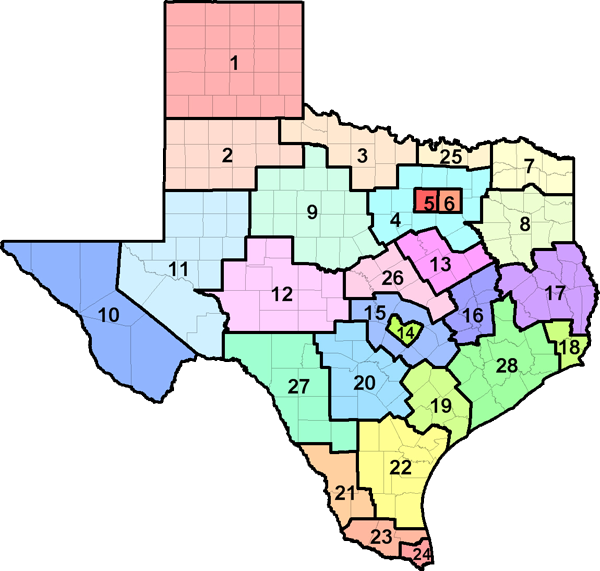
TEXAS COUNTY MAP BY WORKFORCE DEVELOPMENT AREA
Region Employment Projected Employment 2032 Projected
Annual Openings 2032
Annual
Growth Rate
Average Income
Texas (all regions) Unavailable Unavailable Unavailable Unavailable Unavailable
* Due to confidentiality rules, not all regions may have the data displayed. The sum of all the regions may not be equal to the state total.


Top 10 Relevant Knowledge Areas Relevant Importance Levels
Medicine and Dentistry
Knowledge of the information and techniques needed to diagnose and treat human injuries, diseases, and deformities. This includes symptoms, treatment alternatives, drug properties and interactions, and preventive health-care measures.
99.20%
Customer and Personal Service
Knowledge of principles and processes for providing customer and personal services. This includes customer needs assessment, meeting quality standards for services, and evaluation of customer satisfaction.
82.60%
Administration and Management
Knowledge of business and management principles involved in strategic planning, resource allocation, human resources modeling, leadership technique, production methods, and coordination of people and resources.
67.40%
English Language
Knowledge of the structure and content of the English language including the meaning and spelling of words, rules of composition, and grammar.
65.40%
Biology
Knowledge of plant and animal organisms, their tissues, cells, functions, interdependencies, and interactions with each other and the environment.
64.20%
Education and Training
Knowledge of principles and methods for curriculum and training design, teaching and instruction for individuals and groups, and the measurement of training effects.
61.80%
Psychology
Knowledge of human behavior and performance; individual differences in ability, personality, and interests; learning and motivation; psychological research methods; and the assessment and treatment of behavioral and affective disorders.
60.20%
Personnel and Human Resources
Knowledge of principles and procedures for personnel recruitment, selection, training, compensation and benefits, labor relations and negotiation, and personnel information systems.
58.40%
Computers and Electronics
Knowledge of circuit boards, processors, chips, electronic equipment, and computer hardware and software, including applications and programming.
58.40%
Administrative
Knowledge of administrative and office procedures and systems such as word processing, managing files and records, stenography and transcription, designing forms, and workplace terminology.
57.20%


Top 10 Relevant Skill Areas Relevant Importance Levels
Active Listening
Giving full attention to what other people are saying, taking time to understand the points being made, asking questions as appropriate, and not interrupting at inappropriate times.
80.00%
Speaking
Talking to others to convey information effectively.
80.00%
Critical Thinking
Using logic and reasoning to identify the strengths and weaknesses of alternative solutions, conclusions, or approaches to problems.
80.00%
Complex Problem Solving
Identifying complex problems and reviewing related information to develop and evaluate options and implement solutions.
75.00%
Monitoring
Monitoring/Assessing performance of yourself, other individuals, or organizations to make improvements or take corrective action.
72.40%
Social Perceptiveness
Being aware of others' reactions and understanding why they react as they do.
72.40%
Reading Comprehension
Understanding written sentences and paragraphs in work-related documents.
72.40%
Writing
Communicating effectively in writing as appropriate for the needs of the audience.
67.60%
Judgment and Decision Making
Considering the relative costs and benefits of potential actions to choose the most appropriate one.
67.60%
Time Management
Managing one's own time and the time of others.
65.00%


Top 10 Relevant Abilities Relevant Importance Levels
Problem Sensitivity
The ability to tell when something is wrong or is likely to go wrong. It does not involve solving the problem, only recognizing that there is a problem.
82.40%
Near Vision
The ability to see details at close range (within a few feet of the observer).
82.40%
Deductive Reasoning
The ability to apply general rules to specific problems to produce answers that make sense.
80.00%
Inductive Reasoning
The ability to combine pieces of information to form general rules or conclusions (includes finding a relationship among seemingly unrelated events).
80.00%
Oral Expression
The ability to communicate information and ideas in speaking so others will understand.
80.00%
Oral Comprehension
The ability to listen to and understand information and ideas presented through spoken words and sentences.
80.00%
Finger Dexterity
The ability to make precisely coordinated movements of the fingers of one or both hands to grasp, manipulate, or assemble very small objects.
77.60%
Written Comprehension
The ability to read and understand information and ideas presented in writing.
75.00%
Arm-Hand Steadiness
The ability to keep your hand and arm steady while moving your arm or while holding your arm and hand in one position.
72.40%
Manual Dexterity
The ability to quickly move your hand, your hand together with your arm, or your two hands to grasp, manipulate, or assemble objects.
72.40%


  • Assisting and Caring for Others
    -- Providing personal assistance, medical attention, emotional support, or other personal care to others such as coworkers, customers, or patients.
  • Documenting/Recording Information
    -- Entering, transcribing, recording, storing, or maintaining information in written or electronic/magnetic form.
  • Getting Information
    -- Observing, receiving, and otherwise obtaining information from all relevant sources.
  • Making Decisions and Solving Problems
    -- Analyzing information and evaluating results to choose the best solution and solve problems.
  • Updating and Using Relevant Knowledge
    -- Keeping up-to-date technically and applying new knowledge to your job.
Other Activities


  • Independence
    - Occupations that satisfy this work value allow employees to work on their own and make decisions. Corresponding needs are Creativity, Responsibility and Autonomy.
  • Relationships
    - Occupations that satisfy this work value allow employees to provide service to others and work with co-workers in a friendly non-competitive environment. Corresponding needs are Co-workers, Moral Values and Social Service.


Tools

Crown or bridge removers: Crown grippers; Crown removal pliers; Crown spreaders;

Dental anesthesia sets: Anesthetic injectors;

Dental articulators: Non-adjustable articulators; Face bows; Dental articulators; Adjustable articulators;

Dental burs: Dental bur attachments;

Dental cutting or separating discs: Rotary cutting instruments;

Dental dehydrators: Air injectors;

Dental elevators: Periosteal elevators;

Dental finishing or polishing discs: Rotary abrasive instruments;

Dental forceps: Articulating paper forceps; Titanium forceps;

Dental formers: Sprue formers;

Dental handpieces: High-speed handpieces; Low-speed handpieces;

Dental impression material syringes: Dental impression guns;

Dental impression trays: Partial impression trays; Crown and bridge trays; Edentulous impression trays;

Dental knives: Plaster knives;

Dental laboratory burners or torches: Dental laboratory alcohol torches;

Dental laboratory model trimmers: Dental laboratory die saws;

Dental laboratory vacuum units: Stone vacuum mixers;

Dental marking devices: Pantographic tracing instruments; Needle point tracers; Gothic arch tracers;

Dental mirrors or mirror handles: Mouth mirrors;

Dental mouth prop or bite block or gag: Dental thickness gauges; Fox planes; Dental mouth prop or bite block or gag; Dental caliper gauges; Boley gauges; Bracket positioning gauges; Willis gauges;

Dental placement instruments: Implant ratchets; Abutment drivers;

Dental probes or explorers: Dental explorers;

Dental scissors: Distal end cutters; Wire cutting scissors;

Dental shades: Shade guides;

Dental spatulas: Dental laboratory spatulas; Cement spatulas;

Dental wax carvers: Dental wax carvers; Dental wax knives; Modeling carvers;

Dental x ray units: Panoramic dental x ray units; Digital dental x ray units;

Desktop computers: Desktop computers;

Digital cameras: Digital cameras;

Gas burners: Bunsen burners;

Goggles: Safety goggles;

Notebook computers: Laptop computers;

Orthodontic band drivers or pushers or setters: Band pushers;

Orthodontic pliers: Bending pliers; Bird beak pliers; Forming pliers; Orthodontic wire bending pliers; Ligature tying pliers; Mosquito pliers; Serrated pliers; Placing pliers; Weingart utility pliers;

Scanners: Dental scanners;

Surgical gloves: Surgical gloves;

Surgical isolation or surgical masks: Surgical masks;

Surgical microscopes or loupes or magnifiers: Surgical dental microscopes;

Surgical needle holders: Surgical needle holders;

Suture removers: Suture scissors;

Teeth cleaning devices: Water injectors;

Videoscopes: Intraoral still cameras;

Water baths: Dental impression compound water baths;


Technology

Graphics or photo imaging software: Image management software;

Medical software: Kea Software impDAT; Kodak Dental Systems Kodak PRACTICEWORKS Practice management software PMS; Materialise Dental SimPLANT; Materialise Dental SurgiGuide; Patterson Dental Supply Patterson EagleSoft; Perio charting software; Planet DDS Denticon; Practice-Web Dental; Consult-PRO; Henry Schein DentalVision Professional; Henry Schein Dentrix; Henry Schein Easy Dental;

Operating system software: Apple iOS;


Related O*NET occupational titles for Prosthodontists include:
  • 29-1292.00 Dental Hygienists
  • 29-1021.00 Dentists, General
  • 29-1213.00 Dermatologists
  • 29-1241.00 Ophthalmologists, Except Pediatric
  • 29-1022.00 Oral and Maxillofacial Surgeons
  • 29-1023.00 Orthodontists
  • 29-1242.00 Orthopedic Surgeons, Except Pediatric
  • 29-1243.00 Pediatric Surgeons
  • 29-1081.00 Podiatrists
  • 29-1229.03 Urologists

Contact Texas Workforce Commission
Labor Market and Career Information  |  101 E. 15th Street, Annex Room 0252  |  Austin, Texas 78778
Official Website  |  1-800-822-PLAN (7526)  |  512.936.3200

** The information in this report may be derived from many sources like O*NET, BLS (Bureau of Labor Statistics), OOH (Occupational Outlook Handbook), and Career One Stop.