Occupation Summary

Optometrists

O*NET 29-1041.00

Description:

Diagnose, manage, and treat conditions and diseases of the human eye and visual system. Examine eyes and visual system, diagnose problems or impairments, prescribe corrective lenses, and provide treatment. May prescribe therapeutic drugs to treat specific eye conditions.

Annual Wages:
$132,370.00
Employment Rate:
Employment is expected to increase by 18.11%.
Education Level:
Doctoral Degree. According to O*Net, the majority of people employed in this occupation have this level of education.
Endorsement:
Public Service, Science Technology Engineering and Math (STEM)

  1. Examine eyes, using observation, instruments, and pharmaceutical agents, to determine visual acuity and perception, focus, and coordination and to diagnose diseases and other abnormalities, such as glaucoma or color blindness.
  2. Analyze test results and develop a treatment plan.
  3. Prescribe, supply, fit and adjust eyeglasses, contact lenses, and other vision aids.
  4. Prescribe medications to treat eye diseases if state laws permit.
  5. Educate and counsel patients on contact lens care, visual hygiene, lighting arrangements, and safety factors.
  6. Consult with and refer patients to ophthalmologist or other health care practitioner if additional medical treatment is determined necessary.
  7. Remove foreign bodies from the eye.
  8. Provide patients undergoing eye surgeries, such as cataract and laser vision correction, with pre- and post-operative care.
  9. Prescribe therapeutic procedures to correct or conserve vision.
  10. Provide vision therapy and low-vision rehabilitation.

Watch a video about Optometrists

Career videos are provided by: CareerOneStop.org


National Industry Employment Patterns


Industry % of Optometrists employed Annual Growth Rate
Offices of other health practitioners 56.1 0.79
Offices of physicians 16.9 1.77
Outpatient care centers 3.7 1.73


Labor Market Information


2024 Statewide average hourly wage $63.64
2024 National average hourly wage $67.76
2022 National employment 43,400
2022 Texas employment 2,905
Texas projected employment by 2032 3,431
Texas projected annual employment and Turnover openings through 2032 147


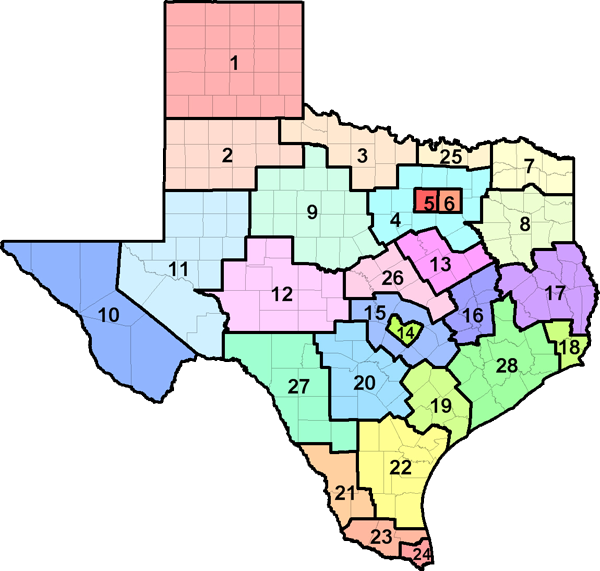
TEXAS COUNTY MAP BY WORKFORCE DEVELOPMENT AREA
* Due to confidentiality rules, not all regions may have the data displayed. The sum of all the regions may not be equal to the state total.


Top 10 Relevant Knowledge Areas Relevant Importance Levels
Medicine and Dentistry
Knowledge of the information and techniques needed to diagnose and treat human injuries, diseases, and deformities. This includes symptoms, treatment alternatives, drug properties and interactions, and preventive health-care measures.
96.20%
Biology
Knowledge of plant and animal organisms, their tissues, cells, functions, interdependencies, and interactions with each other and the environment.
90.40%
Customer and Personal Service
Knowledge of principles and processes for providing customer and personal services. This includes customer needs assessment, meeting quality standards for services, and evaluation of customer satisfaction.
88.00%
English Language
Knowledge of the structure and content of the English language including the meaning and spelling of words, rules of composition, and grammar.
78.00%
Mathematics
Knowledge of arithmetic, algebra, geometry, calculus, statistics, and their applications.
72.40%
Education and Training
Knowledge of principles and methods for curriculum and training design, teaching and instruction for individuals and groups, and the measurement of training effects.
71.40%
Therapy and Counseling
Knowledge of principles, methods, and procedures for diagnosis, treatment, and rehabilitation of physical and mental dysfunctions, and for career counseling and guidance.
71.00%
Psychology
Knowledge of human behavior and performance; individual differences in ability, personality, and interests; learning and motivation; psychological research methods; and the assessment and treatment of behavioral and affective disorders.
70.40%
Administration and Management
Knowledge of business and management principles involved in strategic planning, resource allocation, human resources modeling, leadership technique, production methods, and coordination of people and resources.
70.00%
Economics and Accounting
Knowledge of economic and accounting principles and practices, the financial markets, banking, and the analysis and reporting of financial data.
65.80%


Top 10 Relevant Skill Areas Relevant Importance Levels
Reading Comprehension
Understanding written sentences and paragraphs in work-related documents.
82.40%
Active Listening
Giving full attention to what other people are saying, taking time to understand the points being made, asking questions as appropriate, and not interrupting at inappropriate times.
82.40%
Critical Thinking
Using logic and reasoning to identify the strengths and weaknesses of alternative solutions, conclusions, or approaches to problems.
82.40%
Writing
Communicating effectively in writing as appropriate for the needs of the audience.
80.00%
Speaking
Talking to others to convey information effectively.
80.00%
Social Perceptiveness
Being aware of others' reactions and understanding why they react as they do.
77.60%
Science
Using scientific rules and methods to solve problems.
75.00%
Coordination
Adjusting actions in relation to others' actions.
67.60%
Complex Problem Solving
Identifying complex problems and reviewing related information to develop and evaluate options and implement solutions.
67.60%
Judgment and Decision Making
Considering the relative costs and benefits of potential actions to choose the most appropriate one.
67.60%


Top 10 Relevant Abilities Relevant Importance Levels
Problem Sensitivity
The ability to tell when something is wrong or is likely to go wrong. It does not involve solving the problem, only recognizing that there is a problem.
82.40%
Oral Expression
The ability to communicate information and ideas in speaking so others will understand.
82.40%
Oral Comprehension
The ability to listen to and understand information and ideas presented through spoken words and sentences.
80.00%
Written Comprehension
The ability to read and understand information and ideas presented in writing.
80.00%
Deductive Reasoning
The ability to apply general rules to specific problems to produce answers that make sense.
80.00%
Inductive Reasoning
The ability to combine pieces of information to form general rules or conclusions (includes finding a relationship among seemingly unrelated events).
80.00%
Near Vision
The ability to see details at close range (within a few feet of the observer).
80.00%
Information Ordering
The ability to arrange things or actions in a certain order or pattern according to a specific rule or set of rules (e.g., patterns of numbers, letters, words, pictures, mathematical operations).
77.60%
Flexibility of Closure
The ability to identify or detect a known pattern (a figure, object, word, or sound) that is hidden in other distracting material.
77.60%
Written Expression
The ability to communicate information and ideas in writing so others will understand.
77.60%


  • Assisting and Caring for Others
    -- Providing personal assistance, medical attention, emotional support, or other personal care to others such as coworkers, customers, or patients.
  • Making Decisions and Solving Problems
    -- Analyzing information and evaluating results to choose the best solution and solve problems.
  • Updating and Using Relevant Knowledge
    -- Keeping up-to-date technically and applying new knowledge to your job.
  • Documenting/Recording Information
    -- Entering, transcribing, recording, storing, or maintaining information in written or electronic/magnetic form.
  • Getting Information
    -- Observing, receiving, and otherwise obtaining information from all relevant sources.
Other Activities


  • Recognition
    - Occupations that satisfy this work value offer advancement, potential for leadership, and are often considered prestigious. Corresponding needs are Advancement, Authority, Recognition and Social Status.
  • Working Conditions
    - Occupations that satisfy this work value offer job security and good working conditions. Corresponding needs are Activity, Compensation, Independence, Security, Variety and Working Conditions.


Tools

Binocular vision test sets: Worth 4-dot tests;

Blood pressure cuff kits: Sphygmomanometers;

Color perception testing lanterns: Color vision testing devices;

Corneal topographers: Corneal topographers;

Depth perception apparatus: Randot stereo tests;

Desktop computers: Desktop computers;

Eye charts or vision cards: Pediatric near point cards; Pupil diameter PD rules; Single Lea symbol books; Snellen eye charts; Broken wheel visual acuity cards; Amsler grids; Fixation cards; HRR Hardy-Rand-Rittler plates; Lea symbols near vision cards; Ishihara plates;

Eye occluders: Multiple pin hole occluders; Multiple pinhole mask occluders; Combined cover paddle occluders;

Fundus cameras: Retinal cameras;

Keratometers: Autorefractors; Keratometers;

Lens measuring equipment: Lens clocks;

Loupes: Contact lens loupes;

Medical acoustic stethoscopes: Mechanical stethoscopes;

Notebook computers: Notebook computers;

Ophthalmic eye test lenses: Clear 20 diopter condensing lenses; Clear 78 diopter condensing lenses; Hruby lenses; Gonioscopy lenses; Trial lens sets; Yellow condensing lenses; Non-contact handheld fundus lenses;

Ophthalmic instrument table accessories: Adult fixation targets; Child fixation targets;

Ophthalmic irrigation or aspiration supplies: Lachrymal cannulae;

Ophthalmic lachrymal probes: Lachrymal dilators;

Ophthalmic lens holder: Halberg clips; 4-well lens holders; 8-well lens flippers;

Ophthalmic lensometers: Lensometers;

Ophthalmic prisms: Loose prisms; Horizontal prism bars;

Ophthalmic retinoscope accessories: Retinoscopy racks; Skiascopic lens rack;

Ophthalmic retinoscopes: Retinoscopes;

Ophthalmic slit lamps: Biomicroscopes;

Ophthalmic surgical knives or blades: Golf club spuds;

Ophthalmic tonometers: Tonometers;

Ophthalmic transilluminators: Ophthalmic transilluminators;

Ophthalmoscopes or otoscopes or scope sets: Ophthalmoscopes; Binocular indirect ophthalmoscopes;

Opticians tools: Lens calipers; Half nylon gripping pliers; Optical screwdrivers; Snipe nose pliers; Wide jaw angling pliers;

Personal computers: Personal computers;

Phoropter units: Phoroptors;

Photo attachments for microscopes: Fundus cameras;

Scleral shells: Scleral depressors;

Thickness measuring devices: Corneal pachymeters;


Technology

Accounting software: Intuit QuickBooks;

Calendar and scheduling software: Scheduling software;

Data base user interface and query software: Operational Data Store ODS software; Microsoft Access; Microsoft SQL Server;

Internet browser software: Web browser software;

Medical software: Prima Systems OPTIX; Universal Software Solutions VersaVision; VisionScience Software Acuity Pro; OfficeMate Software Solutions ExamWRITER; OfficeMate Software Solutions OfficeMate; MAX Systems Max-Gold7; MediNotes Charting Plus; Accra Med Software Filopto; AltaPoint Data Systems AltaPoint Vision; Babcock Winx Pro; Compulink Business Systems Eyecare Advantage; Digital Healthcare OptoMize; First Insight E-Z Frame; First Insight MaximEyes; HealthLine Systems Eyecom; Insight Software My Vision Express;

Spreadsheet software: Microsoft Excel;

Word processing software: Microsoft Word;


Related O*NET occupational titles for Optometrists include:
  • 29-1011.00 Chiropractors
  • 29-1213.00 Dermatologists
  • 29-1214.00 Emergency Medicine Physicians
  • 29-1216.00 General Internal Medicine Physicians
  • 29-1217.00 Neurologists
  • 29-1241.00 Ophthalmologists, Except Pediatric
  • 29-1022.00 Oral and Maxillofacial Surgeons
  • 29-1243.00 Pediatric Surgeons
  • 29-1229.04 Physical Medicine and Rehabilitation Physicians
  • 29-1229.03 Urologists


Sources of Additional Information
  • For more information about optometry, visit: American Optometric Association
  • For more information about optometrists, including a list of accredited optometric programs, visit: Association of Schools and Colleges of Optometry
  • For information on specific admission requirements and sources of financial aid, contact the admissions officers of individual optometry schools.
  • For more information about the national board exam, visit: National Boards of Examiners in Optometry
  • For more information about board certification, visit: American Board of Optometry
  • Optometrists

  • Contact Texas Workforce Commission
    Labor Market and Career Information  |  101 E. 15th Street, Annex Room 0252  |  Austin, Texas 78778
    Official Website  |  1-800-822-PLAN (7526)  |  512.936.3200

    ** The information in this report may be derived from many sources like O*NET, BLS (Bureau of Labor Statistics), OOH (Occupational Outlook Handbook), and Career One Stop.