Occupation Summary

Radiation Therapists

O*NET 29-1124.00

Description:

Provide radiation therapy to patients as prescribed by a radiation oncologist according to established practices and standards. Duties may include reviewing prescription and diagnosis; acting as liaison with physician and supportive care personnel; preparing equipment, such as immobilization, treatment, and protection devices; and maintaining records, reports, and files. May assist in dosimetry procedures and tumor localization.

Annual Wages:
$120,537.00
Employment Rate:
Employment is expected to increase by 14.33%.
Education Level:
Associate's Degree (or other 2-year degree). According to O*Net, the majority of people employed in this occupation have this level of education.
Endorsement:
Public Service, Science Technology Engineering and Math (STEM)

  1. Administer prescribed doses of radiation to specific body parts, using radiation therapy equipment according to established practices and standards.
  2. Position patients for treatment with accuracy, according to prescription.
  3. Enter data into computer and set controls to operate or adjust equipment or regulate dosage.
  4. Follow principles of radiation protection for patient, self, and others.
  5. Maintain records, reports, or files as required, including such information as radiation dosages, equipment settings, or patients' reactions.
  6. Review prescription, diagnosis, patient chart, and identification.
  7. Conduct most treatment sessions independently, in accordance with the long-term treatment plan and under the general direction of the patient's physician.
  8. Check radiation therapy equipment to ensure proper operation.
  9. Observe and reassure patients during treatment and report unusual reactions to physician or turn equipment off if unexpected adverse reactions occur.
  10. Check for side effects, such as skin irritation, nausea, or hair loss to assess patients' reaction to treatment.
  11. Educate, prepare, and reassure patients and their families by answering questions, providing physical assistance, and reinforcing physicians' advice regarding treatment reactions or post-treatment care.
  12. Calculate actual treatment dosages delivered during each session.
  13. Prepare or construct equipment, such as immobilization, treatment, or protection devices.
  14. Photograph treated area of patient and process film.
  15. Help physicians, radiation oncologists, or clinical physicists to prepare physical or technical aspects of radiation treatment plans, using information about patient condition and anatomy.
  16. Train or supervise student or subordinate radiotherapy technologists.
  17. Act as liaison with physicist and supportive care personnel.
  18. Provide assistance to other healthcare personnel during dosimetry procedures and tumor localization.
  19. Implement appropriate follow-up care plans.
  20. Store, sterilize, or prepare the special applicators containing the radioactive substance implanted by the physician.
  21. Assist in the preparation of sealed radioactive materials, such as cobalt, radium, cesium, or isotopes, for use in radiation treatments.
  22. Schedule patients for treatment times.


National Industry Employment Patterns


Industry % of Radiation Therapists employed Annual Growth Rate
General medical and surgical hospitals 59.1 0.11
Offices of physicians 24.2 0.26
Specialty (except psychiatric and substance abuse) hospitals 7.1 0.87
Outpatient care centers 3.3 1.84


Labor Market Information


2024 Statewide average hourly wage $57.95
2024 National average hourly wage $53.28
2022 National employment 15,900
2022 Texas employment 1,410
Texas projected employment by 2032 1,612
Texas projected annual employment and Turnover openings through 2032 82


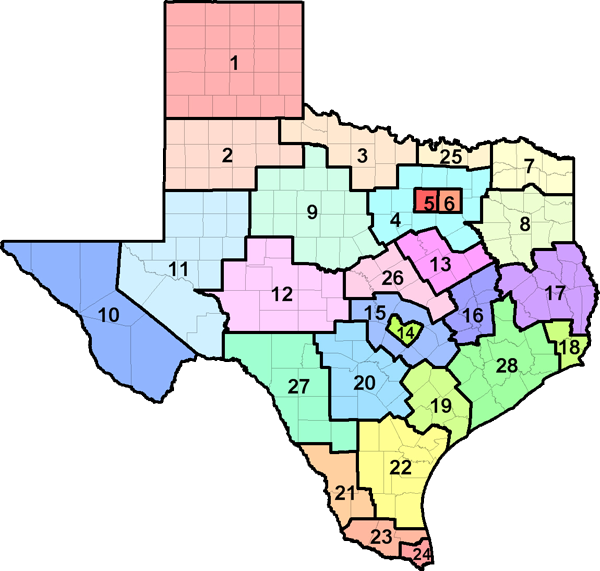
TEXAS COUNTY MAP BY WORKFORCE DEVELOPMENT AREA
* Due to confidentiality rules, not all regions may have the data displayed. The sum of all the regions may not be equal to the state total.


Top 10 Relevant Knowledge Areas Relevant Importance Levels
Customer and Personal Service
Knowledge of principles and processes for providing customer and personal services. This includes customer needs assessment, meeting quality standards for services, and evaluation of customer satisfaction.
91.20%
English Language
Knowledge of the structure and content of the English language including the meaning and spelling of words, rules of composition, and grammar.
80.80%
Medicine and Dentistry
Knowledge of the information and techniques needed to diagnose and treat human injuries, diseases, and deformities. This includes symptoms, treatment alternatives, drug properties and interactions, and preventive health-care measures.
79.00%
Physics
Knowledge and prediction of physical principles, laws, their interrelationships, and applications to understanding fluid, material, and atmospheric dynamics, and mechanical, electrical, atomic and sub-atomic structures and processes.
75.40%
Mathematics
Knowledge of arithmetic, algebra, geometry, calculus, statistics, and their applications.
72.40%
Education and Training
Knowledge of principles and methods for curriculum and training design, teaching and instruction for individuals and groups, and the measurement of training effects.
70.40%
Computers and Electronics
Knowledge of circuit boards, processors, chips, electronic equipment, and computer hardware and software, including applications and programming.
70.20%
Therapy and Counseling
Knowledge of principles, methods, and procedures for diagnosis, treatment, and rehabilitation of physical and mental dysfunctions, and for career counseling and guidance.
67.20%
Psychology
Knowledge of human behavior and performance; individual differences in ability, personality, and interests; learning and motivation; psychological research methods; and the assessment and treatment of behavioral and affective disorders.
67.00%
Biology
Knowledge of plant and animal organisms, their tissues, cells, functions, interdependencies, and interactions with each other and the environment.
66.80%


Top 10 Relevant Skill Areas Relevant Importance Levels
Reading Comprehension
Understanding written sentences and paragraphs in work-related documents.
75.00%
Active Listening
Giving full attention to what other people are saying, taking time to understand the points being made, asking questions as appropriate, and not interrupting at inappropriate times.
75.00%
Critical Thinking
Using logic and reasoning to identify the strengths and weaknesses of alternative solutions, conclusions, or approaches to problems.
70.00%
Social Perceptiveness
Being aware of others' reactions and understanding why they react as they do.
67.60%
Operations Monitoring
Watching gauges, dials, or other indicators to make sure a machine is working properly.
67.60%
Coordination
Adjusting actions in relation to others' actions.
65.00%
Speaking
Talking to others to convey information effectively.
65.00%
Monitoring
Monitoring/Assessing performance of yourself, other individuals, or organizations to make improvements or take corrective action.
65.00%
Service Orientation
Actively looking for ways to help people.
65.00%
Complex Problem Solving
Identifying complex problems and reviewing related information to develop and evaluate options and implement solutions.
62.40%


Top 10 Relevant Abilities Relevant Importance Levels
Oral Comprehension
The ability to listen to and understand information and ideas presented through spoken words and sentences.
80.00%
Problem Sensitivity
The ability to tell when something is wrong or is likely to go wrong. It does not involve solving the problem, only recognizing that there is a problem.
77.60%
Oral Expression
The ability to communicate information and ideas in speaking so others will understand.
77.60%
Written Comprehension
The ability to read and understand information and ideas presented in writing.
75.00%
Written Expression
The ability to communicate information and ideas in writing so others will understand.
72.40%
Information Ordering
The ability to arrange things or actions in a certain order or pattern according to a specific rule or set of rules (e.g., patterns of numbers, letters, words, pictures, mathematical operations).
72.40%
Deductive Reasoning
The ability to apply general rules to specific problems to produce answers that make sense.
70.00%
Arm-Hand Steadiness
The ability to keep your hand and arm steady while moving your arm or while holding your arm and hand in one position.
67.60%
Near Vision
The ability to see details at close range (within a few feet of the observer).
67.60%
Speech Clarity
The ability to speak clearly so others can understand you.
67.60%


  • Assisting and Caring for Others
    -- Providing personal assistance, medical attention, emotional support, or other personal care to others such as coworkers, customers, or patients.
  • Controlling Machines and Processes
    -- Using either control mechanisms or direct physical activity to operate machines or processes (not including computers or vehicles).
  • Inspecting Equipment, Structures, or Materials
    -- Inspecting equipment, structures, or materials to identify the cause of errors or other problems or defects.
  • Documenting/Recording Information
    -- Entering, transcribing, recording, storing, or maintaining information in written or electronic/magnetic form.
  • Identifying Objects, Actions, and Events
    -- Identifying information by categorizing, estimating, recognizing differences or similarities, and detecting changes in circumstances or events.
Other Activities


  • Relationships
    - Occupations that satisfy this work value allow employees to provide service to others and work with co-workers in a friendly non-competitive environment. Corresponding needs are Co-workers, Moral Values and Social Service.
  • Support
    - Occupations that satisfy this work value offer supportive management that stands behind employees. Corresponding needs are Company Policies, Supervision: Human Relations and Supervision: Technical.


Tools

Automatic lathe or chucking machine: Workshop lathes;

Brachytherapy units: Brachytherapy units;

Computed tomography CT or CAT radiotherapy simulators: Computed tomography CT radiation therapy planning simulators;

Desktop computers: Desktop computers;

Digital cameras: Digital cameras;

Distance meters: Optical distance indicators;

Drilling machines: Drill presses;

Electrometers: Electrometers;

Eye shields: Radiation protection eyewear;

Heat guns: Heat guns;

Hospital intercom systems: Treatment room intercoms;

Lasers: Position verification lasers;

Medical cinefluoroscopy units: Medical imaging fluoroscopes;

Medical computed tomography CT or CAT scanners or tubes: Computed tomography CT scanners;

Medical exam or non surgical procedure gloves: Protective medical gloves;

Medical imaging wet darkroom or daylight processors: Daylight medical film processing equipment;

Medical linear accelerator intensity modulated radiation therapy IMRT collimators: Multi-leaf radiation therapy collimators; Medical linear accelerator intensity modulated radiation therapy IMRT collimators; Linear accelerator compensation filters; Radiation therapy beam directing wedges;

Medical linear accelerator intensity modulated radiation therapy IMRT three dimensional units: Medical linear accelerator intensity modulated radiation therapy IMRT three dimensional units;

Medical linear accelerator intensity modulated radiation therapy IMRT two dimensional units: Medical linear accelerator intensity modulated radiation therapy IMRT two dimensional units;

Medical magnetic resonance imaging MRI scanners: Magnetic resonance imaging MRI systems;

Medical positron emission tomography PET units: Treatment verification equipment;

Medical radiation dosimeters: Wireless patient dosimeters; Multi-monitor dosimetry systems; Dual diode dosimeter patient dose monitors;

Medical radiation films or badges: Personal radiation monitors;

Medical radiological positioning aids for general radiological use: Beam direction shells; Immobilizing bite blocks; Patient positioning devices; Patient positioning headrests; Patient positioning neck rests; Patient positioning straps; Patient treatment area casts;

Medical radiological shielding aprons or masks or drapes: Radiation shielding lead aprons; Thyroid shields;

Medical radiological shielding freestanding or portable screens or curtains: Lead alloy shielding blocks;

Medical ultrasound or doppler or pulse echocardiograph or echocardiograph units for general diagnostic use: Ultrasound imaging scanners;

Medical x ray intensifying screens: Medical x ray image intensifiers;

Medical x ray units for general diagnostic use: Medical diagnostic x ray equipment;

Mobile medical services automated external defibrillators AED or hard paddles: Automated external defibrillators AED;

Notebook computers: Laptop computers;

Phantom dosimeters: Dynamic phantoms;

Power drills: Power drills;

Power saws: Band saws;

Radiation detectors: Solid state diode detectors; Survey meters; Area radiation monitors;

Radiotherapy teletherapy cobalt 60 units: Cobalt radiation therapy machines;

Respiratory monitoring kits: Respiration monitors;

Sawing machines: Computerized block cutting equipment;

Skinfold calipers: Body-fat calipers;

Still cameras: 35 millimeter cameras;

Vacuum molding machines: Vacuum formers;

Water baths: Laboratory water baths;

Wood chisels: Wood chisels;

X ray and fluoroscopy RF radiotherapy planning simulators: X ray or fluoroscopy treatment planning simulators;


Technology

Development environment software: Eclipse IDE;

Graphics or photo imaging software: Image processing software;

Internet browser software: Web browser software;

Medical software: Lifeline Software RadCalc; Electronic medical record EMR software; Epic Systems; Beam analysis software; Dose unit calculation software; eClinicalWorks EHR software; Nucletron planning systems; Patient management software; Procedure scheduling software; Radiation dose calculation software; Radiation therapy equipment software; Sun Nuclear MapCHECK; Treatment planning software; Virtual simulation software;

Office suite software: Microsoft Office software;

Spreadsheet software: Microsoft Excel;

Word processing software: Microsoft Word;


Related O*NET occupational titles for Radiation Therapists include:
  • 29-2031.00 Cardiovascular Technologists and Technicians
  • 29-2032.00 Diagnostic Medical Sonographers
  • 29-2035.00 Magnetic Resonance Imaging Technologists
  • 29-2036.00 Medical Dosimetrists
  • 29-2099.01 Neurodiagnostic Technologists
  • 29-2033.00 Nuclear Medicine Technologists
  • 31-2011.00 Occupational Therapy Assistants
  • 29-2034.00 Radiologic Technologists and Technicians
  • 29-1126.00 Respiratory Therapists
  • 29-9093.00 Surgical Assistants


Sources of Additional Information
  • For more information about radiation therapists, visit: American Society of Radiologic Technologists
  • The American Registry of Radiologic Technologists
  • For a list of accredited programs in radiation therapy, visit: The Joint Review Committee on Education in Radiologic Technology
  • Radiation Therapists

  • Contact Texas Workforce Commission
    Labor Market and Career Information  |  101 E. 15th Street, Annex Room 0252  |  Austin, Texas 78778
    Official Website  |  1-800-822-PLAN (7526)  |  512.936.3200

    ** The information in this report may be derived from many sources like O*NET, BLS (Bureau of Labor Statistics), OOH (Occupational Outlook Handbook), and Career One Stop.