Occupation Summary

Nurse Midwives

O*NET 29-1161.00

Description:

Diagnose and coordinate all aspects of the birthing process, either independently or as part of a healthcare team. May provide well-woman gynecological care. Must have specialized, graduate nursing education.

Annual Wages:
$112,987.00
Employment Rate:
Employment is expected to increase by 18.51%.
Education Level:
Master's Degree. According to O*Net, the majority of people employed in this occupation have this level of education.
Endorsement:
Public Service, Science Technology Engineering and Math (STEM)

  1. Educate patients and family members regarding prenatal, intrapartum, postpartum, newborn, or interconception care.
  2. Provide prenatal, intrapartum, postpartum, or newborn care to patients.
  3. Document patients' health histories, symptoms, physical conditions, or other diagnostic information.
  4. Monitor fetal development by listening to fetal heartbeat, taking external uterine measurements, identifying fetal position, or estimating fetal size and weight.
  5. Perform physical examinations by taking vital signs, checking neurological reflexes, examining breasts, or performing pelvic examinations.
  6. Consult with or refer patients to appropriate specialists when conditions exceed the scope of practice or expertise.
  7. Develop and implement individualized plans for health care management.
  8. Document findings of physical examinations.
  9. Explain procedures to patients, family members, staff members or others.
  10. Initiate emergency interventions to stabilize patients.
  11. Manage newborn care during the first weeks of life.
  12. Provide primary health care, including pregnancy and childbirth, to women.
  13. Order and interpret diagnostic or laboratory tests.
  14. Prescribe medications as permitted by state regulations.
  15. Provide patients with direct family planning services, such as inserting intrauterine devices, dispensing oral contraceptives, and fitting cervical barriers, including cervical caps or diaphragms.
  16. Write information in medical records or provide narrative summaries to communicate patient information to other health care providers.
  17. Conduct clinical research on topics such as maternal or infant health care, contraceptive methods, breastfeeding, and gynecological care.
  18. Establish practice guidelines for specialty areas such as primary health care of women, care of the childbearing family, and newborn care.
  19. Read current literature, talk with colleagues, or participate in professional organizations or conferences to keep abreast of developments in midwifery.
  20. Plan, provide, or evaluate educational programs for nursing staff, health care teams, or the community.
  21. Instruct student nurse midwives, medical students, or residents on the birthing process.

Watch a video about Nurse Midwives

Career videos are provided by: CareerOneStop.org


National Industry Employment Patterns


Industry % of Nurse Midwives employed Annual Growth Rate
Offices of physicians 45.7 0.27
General medical and surgical hospitals 23.7 0.51
Outpatient care centers 14.6 1.55
Offices of other health practitioners 9.1 1.34


Labor Market Information


2024 Statewide average hourly wage $54.32
2024 National average hourly wage $61.59
2022 National employment 8,200
2022 Texas employment 497
Texas projected employment by 2032 589
Texas projected annual employment and Turnover openings through 2032 33


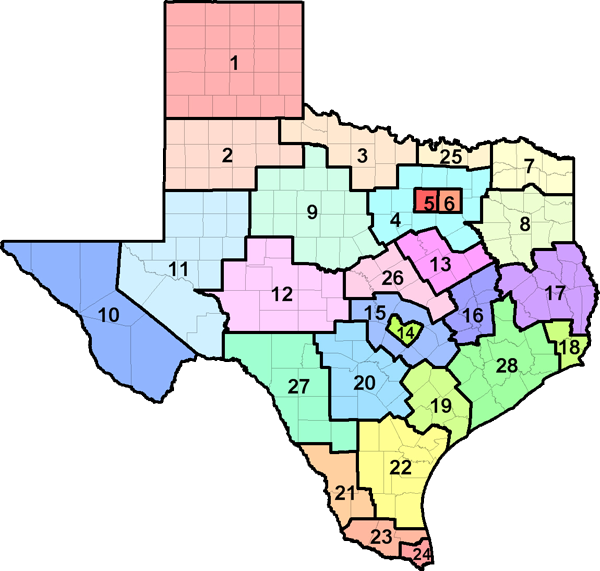
TEXAS COUNTY MAP BY WORKFORCE DEVELOPMENT AREA
* Due to confidentiality rules, not all regions may have the data displayed. The sum of all the regions may not be equal to the state total.


Top 10 Relevant Knowledge Areas Relevant Importance Levels
Medicine and Dentistry
Knowledge of the information and techniques needed to diagnose and treat human injuries, diseases, and deformities. This includes symptoms, treatment alternatives, drug properties and interactions, and preventive health-care measures.
96.40%
Psychology
Knowledge of human behavior and performance; individual differences in ability, personality, and interests; learning and motivation; psychological research methods; and the assessment and treatment of behavioral and affective disorders.
86.60%
Customer and Personal Service
Knowledge of principles and processes for providing customer and personal services. This includes customer needs assessment, meeting quality standards for services, and evaluation of customer satisfaction.
83.80%
English Language
Knowledge of the structure and content of the English language including the meaning and spelling of words, rules of composition, and grammar.
83.60%
Biology
Knowledge of plant and animal organisms, their tissues, cells, functions, interdependencies, and interactions with each other and the environment.
81.20%
Sociology and Anthropology
Knowledge of group behavior and dynamics, societal trends and influences, human migrations, ethnicity, cultures, and their history and origins.
76.20%
Therapy and Counseling
Knowledge of principles, methods, and procedures for diagnosis, treatment, and rehabilitation of physical and mental dysfunctions, and for career counseling and guidance.
74.60%
Education and Training
Knowledge of principles and methods for curriculum and training design, teaching and instruction for individuals and groups, and the measurement of training effects.
73.40%
Mathematics
Knowledge of arithmetic, algebra, geometry, calculus, statistics, and their applications.
62.40%
Law and Government
Knowledge of laws, legal codes, court procedures, precedents, government regulations, executive orders, agency rules, and the democratic political process.
61.20%


Top 10 Relevant Skill Areas Relevant Importance Levels
Active Listening
Giving full attention to what other people are saying, taking time to understand the points being made, asking questions as appropriate, and not interrupting at inappropriate times.
82.40%
Speaking
Talking to others to convey information effectively.
82.40%
Critical Thinking
Using logic and reasoning to identify the strengths and weaknesses of alternative solutions, conclusions, or approaches to problems.
82.40%
Social Perceptiveness
Being aware of others' reactions and understanding why they react as they do.
82.40%
Active Learning
Understanding the implications of new information for both current and future problem-solving and decision-making.
80.00%
Reading Comprehension
Understanding written sentences and paragraphs in work-related documents.
80.00%
Monitoring
Monitoring/Assessing performance of yourself, other individuals, or organizations to make improvements or take corrective action.
80.00%
Writing
Communicating effectively in writing as appropriate for the needs of the audience.
77.60%
Coordination
Adjusting actions in relation to others' actions.
77.60%
Service Orientation
Actively looking for ways to help people.
77.60%


Top 10 Relevant Abilities Relevant Importance Levels
Written Comprehension
The ability to read and understand information and ideas presented in writing.
85.00%
Oral Expression
The ability to communicate information and ideas in speaking so others will understand.
82.40%
Problem Sensitivity
The ability to tell when something is wrong or is likely to go wrong. It does not involve solving the problem, only recognizing that there is a problem.
82.40%
Deductive Reasoning
The ability to apply general rules to specific problems to produce answers that make sense.
82.40%
Oral Comprehension
The ability to listen to and understand information and ideas presented through spoken words and sentences.
82.40%
Inductive Reasoning
The ability to combine pieces of information to form general rules or conclusions (includes finding a relationship among seemingly unrelated events).
80.00%
Written Expression
The ability to communicate information and ideas in writing so others will understand.
80.00%
Near Vision
The ability to see details at close range (within a few feet of the observer).
75.00%
Speech Recognition
The ability to identify and understand the speech of another person.
75.00%
Speech Clarity
The ability to speak clearly so others can understand you.
75.00%


  • Assisting and Caring for Others
    -- Providing personal assistance, medical attention, emotional support, or other personal care to others such as coworkers, customers, or patients.
  • Documenting/Recording Information
    -- Entering, transcribing, recording, storing, or maintaining information in written or electronic/magnetic form.
  • Getting Information
    -- Observing, receiving, and otherwise obtaining information from all relevant sources.
  • Identifying Objects, Actions, and Events
    -- Identifying information by categorizing, estimating, recognizing differences or similarities, and detecting changes in circumstances or events.
  • Making Decisions and Solving Problems
    -- Analyzing information and evaluating results to choose the best solution and solve problems.
Other Activities


  • Achievement
    - Occupations that satisfy this work value are results oriented and allow employees to use their strongest abilities, giving them a feeling of accomplishment. Corresponding needs are Ability Utilization and Achievement.
  • Relationships
    - Occupations that satisfy this work value allow employees to provide service to others and work with co-workers in a friendly non-competitive environment. Corresponding needs are Co-workers, Moral Values and Social Service.


Tools

Acute care fetal or maternal monitoring units: Fetal heart rate monitors;

Blood collection syringes: Blood drawing syringes;

Blood pressure cuff kits: Sphygmomanometers;

Clinical incubators or infant warmers: Infant warmers;

Colposcopes or vaginoscopes: Colposcopes;

Electronic medical thermometers: Digital medical thermometers;

Endoscopic hemostatic balloons or needles or tubes or accessories: Curved hemostats; Straight hemostats;

Flow sensors or regulators or components: Oxygen flowmeters;

Infant scales: Baby scales;

Intravenous tubing with catheter administration kits: Intravenous IV administration equipment;

Irrigation or suction handpieces or cannulas or tips or catheters: Suction catheters;

Lancets: Lancets;

Medical acoustic stethoscopes: Mechanical stethoscopes;

Medical aspiration or irrigation syringes: Bulb syringes;

Medical nasal cannulas: Oxygen nasal cannulae;

Medical oxygen masks or parts: Oxygen delivery masks; Infant oxygen masks;

Medical syringes with needle: Hypodermic syringes;

Medical tape measures: Medical measuring tapes;

Medical ultrasound or doppler or echocardiograph probes: Vaginal ultrasound probes;

Medical ultrasound or doppler or echocardiograph transducer accessories: Fetal doppler units;

Microscope slides: Microscope slides;

Notebook computers: Laptop computers;

Oxygen concentrators: Oxygen concentrators;

Patient floor scales: Medical scales;

Personal computers: Personal computers;

Personal digital assistant PDAs or organizers: Personal digital assistants PDA;

Reflex hammers or mallets: Reflex hammers;

Resuscitation masks: Bag valve mask BVM resuscitators;

Specimen collection container: Specimen collection containers;

Surgical clamps or clips or forceps: Umbilical cord clamps; Tissue forceps; Allis clamps; Curved forceps; Ring forceps; Mosquito forceps; Obstetrical forceps;

Surgical gloves: Surgical gloves;

Surgical isolation or surgical masks: Protective face shields;

Surgical needle holders: Curved needle holders; Straight needle holders;

Surgical scissors: Episiotomy scissors; Umbilical cord scissors; Surgical scissors;

Suturing kits or trays or packs or sets: Suturing kits;

Tourniquets: Tourniquets;

Transcutaneous electric nerve stimulation units: Transcutaneous electric nerve stimulation TENS equipment;

Urinary catheterization kits: Urinary catheters;

Vacuum blood collection tubes or containers: Evacuated blood collection containers;

Vaginal exam speculas: Vaginal exam speculas;


Technology

Medical software: Acrendo Medical Software Ob/Gyn EMR; Allscripts Professional EHR; Amkai AmkaiCharts; Bizmatics PrognoCIS EMR; Cerner Millennium; ChartWare EMR; digiChart OB-GYN; e-MDs software; eClinicalWorks EHR software; Epic Systems; GE Healthcare Centricity EMR; Greenway Medical Technologies PrimeSUITE; Medscribbler Enterprise; MicroFour PracticeStudio.NET EMR; NextGen Healthcare Information Systems EMR; Practice Partner Total Practice Partner; Prognosis Innovation Healthcare ChartAccess; SOAPware EMR; StatCom Patient Flow Logistics Enterprise Suite; SynaMed EMR; Texas Medical Software SpringCharts EMR;

Office suite software: Microsoft Office software;

Spreadsheet software: Microsoft Excel;


Related O*NET occupational titles for Nurse Midwives include:
  • 29-1141.01 Acute Care Nurses
  • 29-1141.02 Advanced Practice Psychiatric Nurses
  • 29-1141.04 Clinical Nurse Specialists
  • 29-1141.03 Critical Care Nurses
  • 29-2061.00 Licensed Practical and Licensed Vocational Nurses
  • 29-9099.01 Midwives
  • 29-1151.00 Nurse Anesthetists
  • 29-1171.00 Nurse Practitioners
  • 29-1218.00 Obstetricians and Gynecologists
  • 29-1141.00 Registered Nurses


Sources of Additional Information
  • For more information about nurse anesthetists, including a list of accredited programs, visit: American Association of Nurse Anesthetists
  • For more information about nurse midwives, including a list of accredited programs, visit: American College of Nurse-Midwives
  • For more information about nurse practitioners, including a list of accredited programs, visit: American Association of Nurse Practitioners
  • For more information about registered nurses, including credentialing, visit: American Nurses Association
  • For more information about nursing education and being a registered nurse, visit: National League for Nursing
  • For more information about undergraduate and graduate nursing education, nursing career options, and financial aid, visit: American Association of Colleges of Nursing
  • For more information about states’ Boards of Nursing, visit: National Council of State Boards of Nursing
  • For more information about certification, visit: American Academy of Nurse Practitioners Certification Board
  • American Association of Critical-Care Nurses
  • American Midwifery Certification Board
  • American Nurses Credentialing Center
  • National Certification Corporation
  • National Board of Certification and Recertification for Nurse Anesthetists
  • Pediatric Nursing Certification Board
  • For career videos on nurse anesthetists, nurse midwives, and nurse practitioners, visit: Nurse Anesthetists
  • Nurse Midwives
  • Nurse Practitioners
  • Nurse Anesthetists
  • Nurse Midwives
  • Nurse Practitioners

  • Contact Texas Workforce Commission
    Labor Market and Career Information  |  101 E. 15th Street, Annex Room 0252  |  Austin, Texas 78778
    Official Website  |  1-800-822-PLAN (7526)  |  512.936.3200

    ** The information in this report may be derived from many sources like O*NET, BLS (Bureau of Labor Statistics), OOH (Occupational Outlook Handbook), and Career One Stop.