Occupation Summary

Family Medicine Physicians

O*NET 29-1215.00

Description:

Diagnose, treat, and provide preventive care to individuals and families across the lifespan. May refer patients to specialists when needed for further diagnosis or treatment.

Annual Wages:
$270,425.00
Employment Rate:
Employment is expected to increase by 15.16%.
Education Level:
Doctoral Degree. According to O*Net, the majority of people employed in this occupation have this level of education.
Endorsement:
Public Service, Science Technology Engineering and Math (STEM)

  1. Prescribe or administer treatment, therapy, medication, vaccination, and other specialized medical care to treat or prevent illness, disease, or injury.
  2. Order, perform, and interpret tests and analyze records, reports, and examination information to diagnose patients' condition.
  3. Monitor patients' conditions and progress and reevaluate treatments as necessary.
  4. Collect, record, and maintain patient information, such as medical history, reports, or examination results.
  5. Explain procedures and discuss test results or prescribed treatments with patients.
  6. Advise patients and community members concerning diet, activity, hygiene, and disease prevention.
  7. Refer patients to medical specialists or other practitioners when necessary.
  8. Direct and coordinate activities of nurses, students, assistants, specialists, therapists, and other medical staff.
  9. Coordinate work with nurses, social workers, rehabilitation therapists, pharmacists, psychologists, and other health care providers.
  10. Plan, implement, or administer health programs or standards in hospitals, businesses, or communities for prevention or treatment of injury or illness.
  11. Train residents, medical students, and other health care professionals.
  12. Prepare government or organizational reports which include birth, death, and disease statistics, workforce evaluations, or medical status of individuals.


National Industry Employment Patterns


Industry % of Family Medicine Physicians employed Annual Growth Rate
Offices of physicians 64.3 0.28
General medical and surgical hospitals 16.5 0.33
Outpatient care centers 6.9 1.75
Colleges, universities, and professional schools 2.3 0.39


Labor Market Information


2024 Statewide average hourly wage $130.01
2024 National average hourly wage $123.47
2022 National employment 108,000
2022 Texas employment 9,303
Texas projected employment by 2032 10,713
Texas projected annual employment and Turnover openings through 2032 406


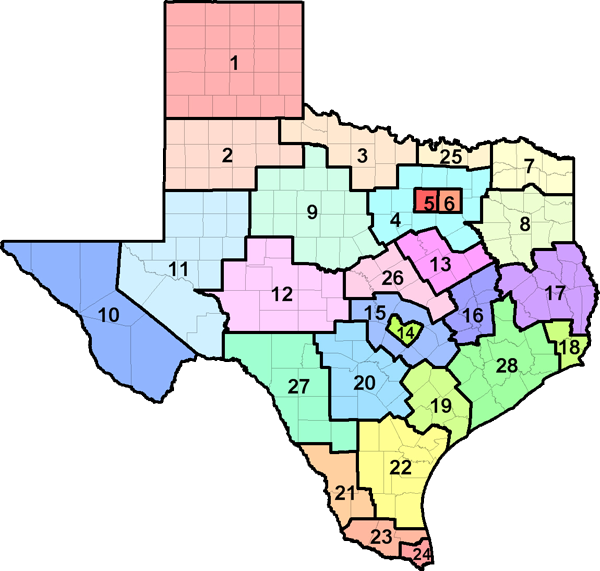
TEXAS COUNTY MAP BY WORKFORCE DEVELOPMENT AREA
* Due to confidentiality rules, not all regions may have the data displayed. The sum of all the regions may not be equal to the state total.


Top 10 Relevant Knowledge Areas Relevant Importance Levels
Medicine and Dentistry
Knowledge of the information and techniques needed to diagnose and treat human injuries, diseases, and deformities. This includes symptoms, treatment alternatives, drug properties and interactions, and preventive health-care measures.
100.00%
English Language
Knowledge of the structure and content of the English language including the meaning and spelling of words, rules of composition, and grammar.
93.40%
Therapy and Counseling
Knowledge of principles, methods, and procedures for diagnosis, treatment, and rehabilitation of physical and mental dysfunctions, and for career counseling and guidance.
91.20%
Psychology
Knowledge of human behavior and performance; individual differences in ability, personality, and interests; learning and motivation; psychological research methods; and the assessment and treatment of behavioral and affective disorders.
89.80%
Biology
Knowledge of plant and animal organisms, their tissues, cells, functions, interdependencies, and interactions with each other and the environment.
89.20%
Customer and Personal Service
Knowledge of principles and processes for providing customer and personal services. This includes customer needs assessment, meeting quality standards for services, and evaluation of customer satisfaction.
73.20%
Computers and Electronics
Knowledge of circuit boards, processors, chips, electronic equipment, and computer hardware and software, including applications and programming.
68.00%
Mathematics
Knowledge of arithmetic, algebra, geometry, calculus, statistics, and their applications.
65.80%
Education and Training
Knowledge of principles and methods for curriculum and training design, teaching and instruction for individuals and groups, and the measurement of training effects.
64.40%
Sociology and Anthropology
Knowledge of group behavior and dynamics, societal trends and influences, human migrations, ethnicity, cultures, and their history and origins.
62.80%


Top 10 Relevant Skill Areas Relevant Importance Levels
Critical Thinking
Using logic and reasoning to identify the strengths and weaknesses of alternative solutions, conclusions, or approaches to problems.
87.60%
Reading Comprehension
Understanding written sentences and paragraphs in work-related documents.
85.00%
Active Listening
Giving full attention to what other people are saying, taking time to understand the points being made, asking questions as appropriate, and not interrupting at inappropriate times.
85.00%
Writing
Communicating effectively in writing as appropriate for the needs of the audience.
82.40%
Speaking
Talking to others to convey information effectively.
82.40%
Monitoring
Monitoring/Assessing performance of yourself, other individuals, or organizations to make improvements or take corrective action.
80.00%
Active Learning
Understanding the implications of new information for both current and future problem-solving and decision-making.
80.00%
Complex Problem Solving
Identifying complex problems and reviewing related information to develop and evaluate options and implement solutions.
80.00%
Judgment and Decision Making
Considering the relative costs and benefits of potential actions to choose the most appropriate one.
80.00%
Time Management
Managing one's own time and the time of others.
80.00%


Top 10 Relevant Abilities Relevant Importance Levels
Problem Sensitivity
The ability to tell when something is wrong or is likely to go wrong. It does not involve solving the problem, only recognizing that there is a problem.
100.00%
Oral Expression
The ability to communicate information and ideas in speaking so others will understand.
97.60%
Oral Comprehension
The ability to listen to and understand information and ideas presented through spoken words and sentences.
97.60%
Written Comprehension
The ability to read and understand information and ideas presented in writing.
85.00%
Deductive Reasoning
The ability to apply general rules to specific problems to produce answers that make sense.
85.00%
Inductive Reasoning
The ability to combine pieces of information to form general rules or conclusions (includes finding a relationship among seemingly unrelated events).
82.40%
Written Expression
The ability to communicate information and ideas in writing so others will understand.
80.00%
Speech Clarity
The ability to speak clearly so others can understand you.
80.00%
Speech Recognition
The ability to identify and understand the speech of another person.
77.60%
Near Vision
The ability to see details at close range (within a few feet of the observer).
77.60%


  • Assisting and Caring for Others
    -- Providing personal assistance, medical attention, emotional support, or other personal care to others such as coworkers, customers, or patients.
  • Documenting/Recording Information
    -- Entering, transcribing, recording, storing, or maintaining information in written or electronic/magnetic form.
  • Updating and Using Relevant Knowledge
    -- Keeping up-to-date technically and applying new knowledge to your job.
  • Getting Information
    -- Observing, receiving, and otherwise obtaining information from all relevant sources.
  • Working with Computers
    -- Using computers and computer systems (including hardware and software) to program, write software, set up functions, enter data, or process information.
Other Activities


  • Achievement
    - Occupations that satisfy this work value are results oriented and allow employees to use their strongest abilities, giving them a feeling of accomplishment. Corresponding needs are Ability Utilization and Achievement.
  • Relationships
    - Occupations that satisfy this work value allow employees to provide service to others and work with co-workers in a friendly non-competitive environment. Corresponding needs are Co-workers, Moral Values and Social Service.


Tools

Acute care fetal or maternal monitoring units: Fetal monitors;

Auditory function screening units: Auditory testing equipment;

Binocular vision test sets: Vision screeners;

Blood collection syringes: Blood collection syringes;

Cervical collars or neck braces: Cervical collars;

Clinical incubators or infant warmers: Infant warmers;

Colposcopes or vaginoscopes: Colposcopes;

Cryosurgery units: Cryosurgical units;

Desktop computers: Desktop computers;

Diagnostic or interventional vascular catheters for general use: Angiocaths;

Dictation machines: Dictation equipment;

Electrocardiography EKG units: Electrocardiography EKG machines;

Electronic blood pressure units: Electronic blood pressure units;

Electronic stethoscopes: Electronic stethoscopes;

Electrosurgical or electrocautery equipment: Electrosurgery units;

Eye charts or vision cards: Snellen eye charts;

Glucose monitors or meters: Glucometers;

Holter or wearable EKG monitoring systems or accessories: Holter monitors;

Infant scales: Baby scales;

Intravenous tubing with catheter administration kits: Intravenous IV equipment;

Intubation forceps: Adult Magill forceps;

Intubation laryngoscopes: Laryngoscopes;

Irrigation or suction handpieces or cannulas or tips or catheters: Suction catheters;

Medical acoustic stethoscopes: Mechanical stethoscopes;

Medical exam or non surgical procedure gloves: Medical examination protective gloves;

Medical or surgical suction or vacuum appliances: Suction machines;

Medical oxygen masks or parts: Neonatal airways; Oxygen masks; Patient airways;

Medical tuning forks: Medical tuning forks;

Medical ultrasound bone densitometers: Ultrasound bone density scanners;

Medical ultrasound or doppler or echocardiograph transducer accessories: Fetal doppler units;

Medical ultrasound or doppler or pulse echocardiograph or echocardiograph units for general diagnostic use: Ultrasound imaging scanners;

Mercury blood pressure units: Manual blood pressure units;

Microscope slides: Microscope slides;

Mobile medical services automated external defibrillators AED or hard paddles: Automated external defibrillators AED;

Nasogastric tubes: Nasogastric tubes;

Notebook computers: Laptop computers;

Ophthalmoscopes or otoscopes or scope sets: Ophthalmoscopes; Otoscopes;

Orthopedic splint systems: Orthopedic splints;

Otological instruments: Ear curettes;

Oxygen therapy delivery system products: Oxygen administration equipment;

Personal computers: Personal computers;

Personal digital assistant PDAs or organizers: Personal digital assistants PDA;

Pulse oximeter units: Pulse oximeters;

Reflex hammers or mallets: Neurological hammers;

Resuscitation masks: Neonatal resuscitation masks; Valve mask resuscitators;

Specimen collection container: Laboratory specimen containers;

Spirometers: Spirometers;

Surgical clamps or clips or forceps: Dressing forceps; Ear forceps; Cord clamps; Mosquito clamps; Splinter forceps; Suture forceps;

Surgical curettes or loops or curette sets: Dermal curettes;

Surgical gloves: Surgical gloves;

Surgical isolation or surgical masks: Medical masks; Protective face shields;

Surgical lasers: Medical lasers;

Surgical scalpels or knives or blades or trephines: Surgical scalpels;

Surgical scissors: Umbilical cord scissors; Operating scissors; Episiotomy scissors;

Surgical suction machine or vacuum extractor or ultrasonic surgical aspirator: Vacuum extractors;

Suture needles: Suture needles;

Suture removers: Suture removers; Suture scissors;

Tablet computers: Tablet computers;

Tourniquets: Tourniquets;

Vacuum blood collection tubes or containers: Evacuated blood collection tubes;

Vaginal exam speculas: Vaginal exam speculas;


Technology

Accounting software: Billing software;

Calendar and scheduling software: Scheduling software;

Electronic mail software: Email software;

Information retrieval or search software: Medical reference software;

Internet browser software: Web browser software;

Medical software: MEDITECH software; Acrendo Medical Software Family Practice EMR; Allscripts Professional EHR; SOAPware EMR; Misys Healthcare Systems Mysis Tiger; Practice management software PMS; Practice Partner Total Practice Partner; Epic Systems; Epocrates; Greenway Health PrimeSuite; Med Math; MedcomSoft Record; Medical procedure coding software; Brickell Research Brickell Medical Office; ChartWare EMR; e-MDs software; e-MDs topsE&M Coder; eClinicalWorks EHR software;

Office suite software: Microsoft Office software;

Spreadsheet software: Microsoft Excel;


Related O*NET occupational titles for Family Medicine Physicians include:
  • 29-1141.02 Advanced Practice Psychiatric Nurses
  • 29-1212.00 Cardiologists
  • 29-1214.00 Emergency Medicine Physicians
  • 29-1216.00 General Internal Medicine Physicians
  • 29-1229.02 Hospitalists
  • 29-1218.00 Obstetricians and Gynecologists
  • 29-1243.00 Pediatric Surgeons
  • 29-1221.00 Pediatricians, General
  • 29-1071.00 Physician Assistants
  • 29-1223.00 Psychiatrists


Sources of Additional Information
  • For more information about physicians and surgeons, visit: American Medical Association
  • American Osteopathic Association
  • For more information about various medical specialties, visit: American Academy of Family Physicians
  • American Board of Medical Specialties
  • American Board of Physician Specialties
  • American College of Obstetricians and Gynecologists
  • American College of Physicians
  • American College of Surgeons
  • For a list of medical schools and residency programs, as well as for general information on premedical education, financial aid, and medicine as a career, visit: Association of American Medical Colleges
  • American Association of Colleges of Osteopathic Medicine
  • For information about licensing, visit: Federation of State Medical Boards
  • National Board of Medical Examiners
  • National Board of Osteopathic Medical Examiners
  • United States Medical Licensing Examination
  • CareerOneStop

  • For a career video on anesthesiologists and other medical specialties, visit: Anesthesiologists
  • For a career video on family medicine physicians, visit: Family Medicine Physicians
  • For a career video on general internal medicine physicians, visit: General Internal Medicine Physicians
  • For a career video on obstetricians and gynecologists, visit: Obstetricians and Gynecologists
  • For a career video on orthopedic and other surgeons, visit: Orthopedic Surgeons
  • For a career video on pediatricians, visit: Pediatricians, General
  • Allergists and Immunologists
  • Anesthesiologists
  • Cardiologists
  • Dermatologists
  • Emergency Medicine Physicians
  • Family Medicine Physicians
  • General Internal Medicine Physicians
  • Hospitalists
  • Neurologists
  • Obstetricians and Gynecologists
  • Ophthalmologists, Except Pediatric
  • Orthopedic Surgeons, Except Pediatric
  • Pediatric Surgeons
  • Pediatricians, General
  • Physical Medicine and Rehabilitation Physicians
  • Physicians, All Other
  • Physicians, Pathologists
  • Preventive Medicine Physicians
  • Psychiatrists
  • Radiologists
  • Sports Medicine Physicians
  • Surgeons, All Other
  • Urologists

  • Contact Texas Workforce Commission
    Labor Market and Career Information  |  101 E. 15th Street, Annex Room 0252  |  Austin, Texas 78778
    Official Website  |  1-800-822-PLAN (7526)  |  512.936.3200

    ** The information in this report may be derived from many sources like O*NET, BLS (Bureau of Labor Statistics), OOH (Occupational Outlook Handbook), and Career One Stop.