Occupation Summary

Physicians, Pathologists

O*NET 29-1222.00

Description:

Diagnose diseases and conduct lab tests using organs, body tissues, and fluids. Includes medical examiners.

Annual Wages:
$301,422.00
Employment Rate:
Employment is expected to increase by 18.82%.
Education Level:
Post-Doctoral Training. According to O*Net, the majority of people employed in this occupation have this level of education.
Endorsement:
Public Service, Science Technology Engineering and Math (STEM)

  1. Testify in depositions or trials as an expert witness.
  2. Review cases by analyzing autopsies, laboratory findings, or case investigation reports.
  3. Manage medical laboratories.
  4. Read current literature, talk with colleagues, or participate in professional organizations or conferences to keep abreast of developments in pathology.
  5. Develop or adopt new tests or instruments to improve diagnosis of diseases.
  6. Educate physicians, students, and other personnel in medical laboratory professions, such as medical technology, cytotechnology, or histotechnology.
  7. Conduct research and present scientific findings.
  8. Perform autopsies to determine causes of deaths.
  9. Plan and supervise the work of the pathology staff, residents, or visiting pathologists.
  10. Obtain specimens by performing procedures, such as biopsies or fine needle aspirations (FNAs) of superficial nodules.
  11. Identify the etiology, pathogenesis, morphological change, and clinical significance of diseases.
  12. Diagnose infections, such as Hepatitis B and Acquired Immune Deficiency Syndrome (AIDS), by conducting tests to detect the antibodies that patients' immune systems make to fight such infections.
  13. Conduct genetic analyses of deoxyribonucleic acid (DNA) or chromosomes to diagnose small biopsies and cell samples.
  14. Write pathology reports summarizing analyses, results, and conclusions.
  15. Analyze and interpret results from tests, such as microbial or parasite tests, urine analyses, hormonal assays, fine needle aspirations (FNAs), and polymerase chain reactions (PCRs).
  16. Communicate pathologic findings to surgeons or other physicians.
  17. Consult with physicians about ordering and interpreting tests or providing treatments.
  18. Examine microscopic samples to identify diseases or other abnormalities.
  19. Diagnose diseases or study medical conditions, using techniques such as gross pathology, histology, cytology, cytopathology, clinical chemistry, immunology, flow cytometry, or molecular biology.


National Industry Employment Patterns


Industry % of Physicians, Pathologists employed Annual Growth Rate
Offices of physicians 34.3 0.44
Medical and diagnostic laboratories 27.1 0.80
Colleges, universities, and professional schools 5.1 0.00


Labor Market Information


2024 Statewide average hourly wage $144.91
2024 National average hourly wage
2022 National employment 13,200
2022 Texas employment 898
Texas projected employment by 2032 1,067
Texas projected annual employment and Turnover openings through 2032 43


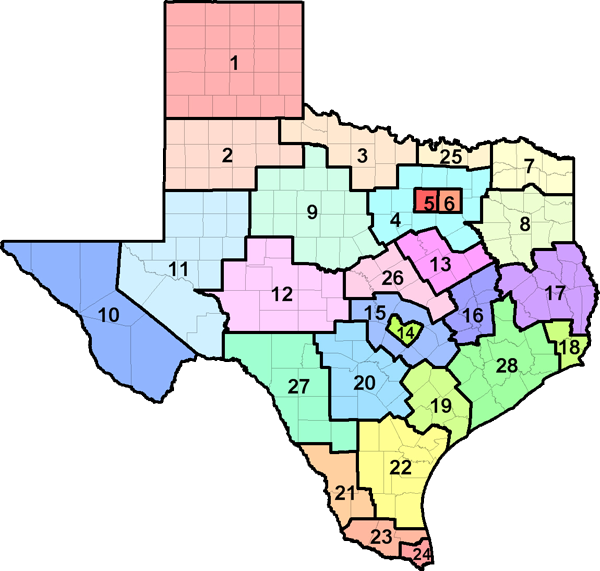
TEXAS COUNTY MAP BY WORKFORCE DEVELOPMENT AREA
* Due to confidentiality rules, not all regions may have the data displayed. The sum of all the regions may not be equal to the state total.


Top 10 Relevant Knowledge Areas Relevant Importance Levels
Medicine and Dentistry
Knowledge of the information and techniques needed to diagnose and treat human injuries, diseases, and deformities. This includes symptoms, treatment alternatives, drug properties and interactions, and preventive health-care measures.
97.00%
Biology
Knowledge of plant and animal organisms, their tissues, cells, functions, interdependencies, and interactions with each other and the environment.
90.20%
English Language
Knowledge of the structure and content of the English language including the meaning and spelling of words, rules of composition, and grammar.
85.20%
Education and Training
Knowledge of principles and methods for curriculum and training design, teaching and instruction for individuals and groups, and the measurement of training effects.
68.20%
Customer and Personal Service
Knowledge of principles and processes for providing customer and personal services. This includes customer needs assessment, meeting quality standards for services, and evaluation of customer satisfaction.
68.00%
Chemistry
Knowledge of the chemical composition, structure, and properties of substances and of the chemical processes and transformations that they undergo. This includes uses of chemicals and their interactions, danger signs, production techniques, and disposal methods.
63.40%
Administration and Management
Knowledge of business and management principles involved in strategic planning, resource allocation, human resources modeling, leadership technique, production methods, and coordination of people and resources.
62.60%
Computers and Electronics
Knowledge of circuit boards, processors, chips, electronic equipment, and computer hardware and software, including applications and programming.
62.40%
Administrative
Knowledge of administrative and office procedures and systems such as word processing, managing files and records, stenography and transcription, designing forms, and workplace terminology.
55.80%
Personnel and Human Resources
Knowledge of principles and procedures for personnel recruitment, selection, training, compensation and benefits, labor relations and negotiation, and personnel information systems.
53.40%


Top 10 Relevant Skill Areas Relevant Importance Levels
Reading Comprehension
Understanding written sentences and paragraphs in work-related documents.
85.00%
Writing
Communicating effectively in writing as appropriate for the needs of the audience.
82.40%
Critical Thinking
Using logic and reasoning to identify the strengths and weaknesses of alternative solutions, conclusions, or approaches to problems.
82.40%
Active Learning
Understanding the implications of new information for both current and future problem-solving and decision-making.
80.00%
Complex Problem Solving
Identifying complex problems and reviewing related information to develop and evaluate options and implement solutions.
80.00%
Active Listening
Giving full attention to what other people are saying, taking time to understand the points being made, asking questions as appropriate, and not interrupting at inappropriate times.
80.00%
Science
Using scientific rules and methods to solve problems.
80.00%
Judgment and Decision Making
Considering the relative costs and benefits of potential actions to choose the most appropriate one.
77.60%
Speaking
Talking to others to convey information effectively.
77.60%
Monitoring
Monitoring/Assessing performance of yourself, other individuals, or organizations to make improvements or take corrective action.
70.00%


Top 10 Relevant Abilities Relevant Importance Levels
Inductive Reasoning
The ability to combine pieces of information to form general rules or conclusions (includes finding a relationship among seemingly unrelated events).
95.00%
Problem Sensitivity
The ability to tell when something is wrong or is likely to go wrong. It does not involve solving the problem, only recognizing that there is a problem.
87.60%
Oral Comprehension
The ability to listen to and understand information and ideas presented through spoken words and sentences.
85.00%
Written Expression
The ability to communicate information and ideas in writing so others will understand.
85.00%
Written Comprehension
The ability to read and understand information and ideas presented in writing.
82.40%
Oral Expression
The ability to communicate information and ideas in speaking so others will understand.
82.40%
Deductive Reasoning
The ability to apply general rules to specific problems to produce answers that make sense.
82.40%
Near Vision
The ability to see details at close range (within a few feet of the observer).
80.00%
Speech Clarity
The ability to speak clearly so others can understand you.
77.60%
Information Ordering
The ability to arrange things or actions in a certain order or pattern according to a specific rule or set of rules (e.g., patterns of numbers, letters, words, pictures, mathematical operations).
77.60%


  • Updating and Using Relevant Knowledge
    -- Keeping up-to-date technically and applying new knowledge to your job.
  • Processing Information
    -- Compiling, coding, categorizing, calculating, tabulating, auditing, or verifying information or data.
  • Documenting/Recording Information
    -- Entering, transcribing, recording, storing, or maintaining information in written or electronic/magnetic form.
  • Getting Information
    -- Observing, receiving, and otherwise obtaining information from all relevant sources.
  • Making Decisions and Solving Problems
    -- Analyzing information and evaluating results to choose the best solution and solve problems.
Other Activities


  • Achievement
    - Occupations that satisfy this work value are results oriented and allow employees to use their strongest abilities, giving them a feeling of accomplishment. Corresponding needs are Ability Utilization and Achievement.
  • Independence
    - Occupations that satisfy this work value allow employees to work on their own and make decisions. Corresponding needs are Creativity, Responsibility and Autonomy.


Tools

Albuminometers: Albuminometers;

Analytical balances: Analytical balances;

Anesthesia nerve block kit or tray: Lumbar puncture needles;

Benchtop centrifuges: Centrifuges;

Biopsy needles: Biopsy needles; FNAC needles;

Blood gas analyzers: In vitro blood gas analyzers; Blood gas analyzers;

Calorimeters: Calorimeters;

Capillary or hematocrit tubes: Capillary tubes;

Chemistry analyzers: Chemistry analyzers; Clinical chemical systems;

Coagulation analyzers: Coagulation analyzers;

Desktop computers: Desktop computers;

Digital cameras: Digital cameras;

Dropping pipettes: Gravimetric pipettes; Disposable plastic pipettes; Automated pipettes;

Electron microscopes: Electron microscopes;

Electrophoresis system accessories: Electrophoresis instruments;

Eyewashers or eye wash stations: Eyewash fountains;

Facial shields: Chemical protective face shields;

Gas chromatographs: Gas chromatographs GC;

General purpose refrigerators or refrigerator freezers: Laboratory refrigerators;

Hazardous material protective apparel: Personal protective equipment;

Hemacytometer sets: Hemacytometers;

Hematology analyzers: Hematology analyzers;

Histology or cytology slide stainers: Automated slide stainers;

Histology paraffin: Paraffin molds;

Histology tissue cassettes: Histopathology block holders;

Immunology analyzers: Fluorescence polarization immunoassay analyzers; Chemiluminescent immunoassay analyzers; Automated immunoassay analyzers;

Irradiation gamma sources: Blood irradiators;

Label making machines: Label printers;

Laboratory flasks: Volumetric flasks;

Laboratory freezer or refrigerator thermometers: Laboratory freezer or refrigerator thermometers;

Laboratory vials: Weighing vials;

Mass spectrometers: Mass spectroscopes;

Medical exam or non surgical procedure gloves: Powder-free gloves;

Microbiology analyzers: Flow cytometers;

Microtomes: Sliding microtomes; Ultra microtomes; Rocking microtomes; Rotary microtomes; Freezing microtomes; Microtome blocks;

Non vacuum blood collection tubes or containers: Sterile screw-cap cups; Sterile screw-cap glass tubes; Sterile screw-cap plastic tubes;

Patient identification and information products: Positive patient identification PPID systems;

Petri plates or dishes: Plastic petri dishes;

Photo attachments for microscopes: Digital photomicroscopes;

Photometer: Flame photometers;

Rapid amplification or complementary deoxyribonucleic acid ends RACE technology products: Polymerase chain reaction PCR equipment;

Shaking incubators: Blood culture incubators;

Slide dryers: Slide drying ovens;

Specialty plates for bacteria: Blood agar plates;

Specimen holders: Anaerobic specimen transport systems;

Spirometers: Spirometers;

Sputum collection apparatus or containers: Sputum traps;

Surgical bone biopsy trephines: Trephine biopsy needles; Bone marrow puncture needles;

Swab collection or transport containers: Swab transports;

Temperature cycling chambers or thermal cyclers: Thermal cyclers;

Tissue processors: Tissue baths;

Ultra cold or ultralow upright cabinets or freezers: Freezers;

Urinalysis analyzers: Urinometers;

Vacuum blood collection tubes or containers: Clot tubes;

Volumetric pipettes: Volumetric pipettes;

Water baths: Laboratory water baths;


Technology

Accounting software: Accounts receivables system software; Cerner Millennium ProFit; Computer Service and Support AR 2000 Laboratory Billing System; HEX Laboratory Systems Billing and Cash Management; Cortex Medical Management Systems Cortex Medical Billing; McKesson Horizon Lab Financials; Healthvision MediAR; SCC Soft Computer SoftA/R; Seacoast Laboratory Data Systems SurroundLab AR; Sunquest Information Systems Sunquest Clinical Financials; TELCOR Billing Information System; XIFIN;

Data base management system software: Database management software;

Data base user interface and query software: Database software; Microsoft Access;

Enterprise resource planning ERP software: SAP software;

Information retrieval or search software: Digital image databases; ComBase;

Medical software: Comp Pro Med Polytech; Computer Trust WinSurge; Clinical Information Systems CISLab CPS; Clinical Software Solutions CLIN1 Suite; ClinLab LIS; Anatomic pathology software; Antek HealthWare LabDAQ; Aspyra CyberLAB; Aspyra CyberPATH; Blood Bank Computer Systems Blood Bank Control System; Blood bank information systems; Cerner CoPathPlus; Cerner Millennium PathNet; Cerner Millennium PathNet Blood Bank Transfusion; EasyPath Software Pathology Assistant; Elekta Impac Software IntelliLab; Elekta Impac Software PowerPath; EpicLab Laboratory Information System; eTeleNext AP Anywhere; eTeleNext LIS; Fletcher-Flora Health Care Systems FFlex eSuite LIS; Fletcher-Flora Health Care Systems LabPak LIS; GE Healthcare Centricity Laboratory; GE Healthcare Centricity Laboratory Anatomic Pathology/Cytology; GE Healthcare Centricity Laboratory Transfusion Medicine; Haemonetics Symphony Suite; HEX Laboratory Systems LAB/HEX; HT Systems PatientSecure; Iatric Systems MobiLab; Korchek Technologies CareChek; Laboratory information system LIS; LabSoft LabNet; Lattice MediCopia; McKesson Horizon Anatomic Pathology; McKesson Horizon Blood Bank; McKesson Horizon Lab; Healthvision TDSynergy Anatomic Pathology; Healthvision TDSynergy LIS; SCC Soft Computer SoftBank; SCC Soft Computer SoftDonor; SCC Soft Computer SoftLab; SCC Soft Computer SoftPath; Schuyler House SchuyLab; McKesson Horizon MobileCare Phlebotomy; MEDITECH Anatomical Pathology; MEDITECH HCIS; Mediware Information Systems HCLL Donor; Mediware Information Systems HCLL Transfusion; Mediware Information Systems LifeTrak; Cortex Medical Management Systems The Gold Standard; CPSI CPSI System; CSS CLS-2000; Custom Software Systems StarLab; Multidata Computer Systems MultiTech; NeTLIMS AutoAP; NeTLIMS AutoFusion; NeTLIMS AutoLIMS Core Lab; NetSoft IntelliPath; Niceware International LabelClinic CT; Novovision NovoPath; Omnitech OMNILAB; Orchard Software Orchard Harvest LIS; Orchard Software Orchard Pathology; PathLogix; PathView Systems Progeny; Psyche Systems LabWeb; Psyche Systems Systematic Blood Bank; Psyche Systems WindoPath; Quality Software Systems LabHealth; WebPathLab; Wyndgate Technologies ElDorado Donor; Wyndgate Technologies SafeTrace; Sunquest Information Systems Sunquest Collection Manager; Sunquest Information Systems Sunquest CoPathPlus; Sunquest Information Systems Sunquest Laboratory; Sunquest Information Systems Sunquest Transfusion Manager; Seacoast Laboratory Data Systems SurroundLab Plus; Siemens NOVIUS Lab; Siemens Patient Identification Check; Small Business Computers of New England AP Easy; STARLIMS;

Office suite software: Microsoft Office software;

Presentation software: Microsoft PowerPoint;

Spreadsheet software: Microsoft Excel;


Related O*NET occupational titles for Physicians, Pathologists include:
  • 29-1229.01 Allergists and Immunologists
  • 29-1212.00 Cardiologists
  • 19-3039.03 Clinical Neuropsychologists
  • 29-2011.02 Cytotechnologists
  • 29-1214.00 Emergency Medicine Physicians
  • 29-2011.04 Histotechnologists
  • 29-2011.00 Medical and Clinical Laboratory Technologists
  • 29-1242.00 Orthopedic Surgeons, Except Pediatric
  • 29-1243.00 Pediatric Surgeons
  • 29-1224.00 Radiologists


Sources of Additional Information
  • For more information about physicians and surgeons, visit: American Medical Association
  • American Osteopathic Association
  • For more information about various medical specialties, visit: American Academy of Family Physicians
  • American Board of Medical Specialties
  • American Board of Physician Specialties
  • American College of Obstetricians and Gynecologists
  • American College of Physicians
  • American College of Surgeons
  • For a list of medical schools and residency programs, as well as for general information on premedical education, financial aid, and medicine as a career, visit: Association of American Medical Colleges
  • American Association of Colleges of Osteopathic Medicine
  • For information about licensing, visit: Federation of State Medical Boards
  • National Board of Medical Examiners
  • National Board of Osteopathic Medical Examiners
  • United States Medical Licensing Examination
  • CareerOneStop

  • For a career video on anesthesiologists and other medical specialties, visit: Anesthesiologists
  • For a career video on family medicine physicians, visit: Family Medicine Physicians
  • For a career video on general internal medicine physicians, visit: General Internal Medicine Physicians
  • For a career video on obstetricians and gynecologists, visit: Obstetricians and Gynecologists
  • For a career video on orthopedic and other surgeons, visit: Orthopedic Surgeons
  • For a career video on pediatricians, visit: Pediatricians, General
  • Allergists and Immunologists
  • Anesthesiologists
  • Cardiologists
  • Dermatologists
  • Emergency Medicine Physicians
  • Family Medicine Physicians
  • General Internal Medicine Physicians
  • Hospitalists
  • Neurologists
  • Obstetricians and Gynecologists
  • Ophthalmologists, Except Pediatric
  • Orthopedic Surgeons, Except Pediatric
  • Pediatric Surgeons
  • Pediatricians, General
  • Physical Medicine and Rehabilitation Physicians
  • Physicians, All Other
  • Physicians, Pathologists
  • Preventive Medicine Physicians
  • Psychiatrists
  • Radiologists
  • Sports Medicine Physicians
  • Surgeons, All Other
  • Urologists

  • Contact Texas Workforce Commission
    Labor Market and Career Information  |  101 E. 15th Street, Annex Room 0252  |  Austin, Texas 78778
    Official Website  |  1-800-822-PLAN (7526)  |  512.936.3200

    ** The information in this report may be derived from many sources like O*NET, BLS (Bureau of Labor Statistics), OOH (Occupational Outlook Handbook), and Career One Stop.