Occupation Summary

Urologists

O*NET 29-1229.03

Description:

Diagnose, treat, and help prevent benign and malignant medical and surgical disorders of the genitourinary system and the renal glands.

Annual Wages:
$255,879.00
Employment Rate:
Employment is expected to increase by 13.73%.
Education Level:
Post-Doctoral Training. According to O*Net, the majority of people employed in this occupation have this level of education.
Endorsement:
Public Service, Science Technology Engineering and Math (STEM)

  1. Teach or train medical and clinical staff.
  2. Document or review patients' histories.
  3. Provide urology consultation to physicians or other health care professionals.
  4. Refer patients to specialists when condition exceeds experience, expertise, or scope of practice.
  5. Direct the work of nurses, residents, or other staff to provide patient care.
  6. Treat urologic disorders using alternatives to traditional surgery such as extracorporeal shock wave lithotripsy, laparoscopy, or laser techniques.
  7. Treat lower urinary tract dysfunctions using equipment such as diathermy machines, catheters, cystoscopes, or radium emanation tubes.
  8. Prescribe or administer antibiotics, antiseptics, or compresses to treat infection or injury.
  9. Prescribe medications to treat patients with erectile dysfunction (ED), infertility, or ejaculation problems.
  10. Perform abdominal, pelvic, or retroperitoneal surgeries.
  11. Perform brachytherapy, cryotherapy, high intensity focused ultrasound (HIFU), or photodynamic therapy to treat prostate or other cancers.
  12. Order and interpret the results of diagnostic tests, such as prostate specific antigen (PSA) screening, to detect prostate cancer.
  13. Examine patients using equipment, such as radiograph (x-ray) machines or fluoroscopes, to determine the nature and extent of disorder or injury.
  14. Diagnose or treat diseases or disorders of genitourinary organs and tracts including erectile dysfunction (ED), infertility, incontinence, bladder cancer, prostate cancer, urethral stones, or premature ejaculation.

Watch a video about Urologists

Career videos are provided by: CareerOneStop.org


National Industry Employment Patterns


Industry % of Urologists employed Annual Growth Rate
Offices of physicians 38.6 0.29
Colleges, universities, and professional schools 5.9 0.35
Outpatient care centers 2.5 1.66


Labor Market Information


2024 Statewide average hourly wage $123.02
2024 National average hourly wage
2022 National employment 330,900
2022 Texas employment 23,373
Texas projected employment by 2032 26,581
Texas projected annual employment and Turnover openings through 2032 982


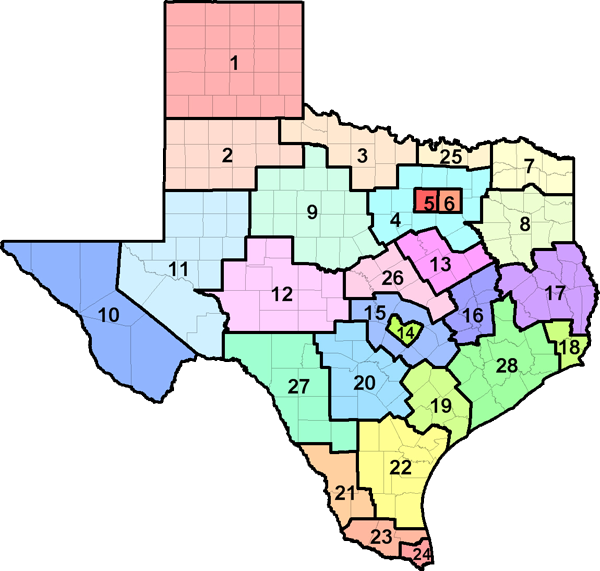
TEXAS COUNTY MAP BY WORKFORCE DEVELOPMENT AREA
* Due to confidentiality rules, not all regions may have the data displayed. The sum of all the regions may not be equal to the state total.


Top 10 Relevant Knowledge Areas Relevant Importance Levels
Medicine and Dentistry
Knowledge of the information and techniques needed to diagnose and treat human injuries, diseases, and deformities. This includes symptoms, treatment alternatives, drug properties and interactions, and preventive health-care measures.
100.00%
Biology
Knowledge of plant and animal organisms, their tissues, cells, functions, interdependencies, and interactions with each other and the environment.
95.00%
English Language
Knowledge of the structure and content of the English language including the meaning and spelling of words, rules of composition, and grammar.
85.40%
Education and Training
Knowledge of principles and methods for curriculum and training design, teaching and instruction for individuals and groups, and the measurement of training effects.
79.00%
Therapy and Counseling
Knowledge of principles, methods, and procedures for diagnosis, treatment, and rehabilitation of physical and mental dysfunctions, and for career counseling and guidance.
77.60%
Administration and Management
Knowledge of business and management principles involved in strategic planning, resource allocation, human resources modeling, leadership technique, production methods, and coordination of people and resources.
77.00%
Psychology
Knowledge of human behavior and performance; individual differences in ability, personality, and interests; learning and motivation; psychological research methods; and the assessment and treatment of behavioral and affective disorders.
75.00%
Customer and Personal Service
Knowledge of principles and processes for providing customer and personal services. This includes customer needs assessment, meeting quality standards for services, and evaluation of customer satisfaction.
74.00%
Chemistry
Knowledge of the chemical composition, structure, and properties of substances and of the chemical processes and transformations that they undergo. This includes uses of chemicals and their interactions, danger signs, production techniques, and disposal methods.
71.80%
Computers and Electronics
Knowledge of circuit boards, processors, chips, electronic equipment, and computer hardware and software, including applications and programming.
69.40%


Top 10 Relevant Skill Areas Relevant Importance Levels
Reading Comprehension
Understanding written sentences and paragraphs in work-related documents.
87.60%
Critical Thinking
Using logic and reasoning to identify the strengths and weaknesses of alternative solutions, conclusions, or approaches to problems.
85.00%
Judgment and Decision Making
Considering the relative costs and benefits of potential actions to choose the most appropriate one.
85.00%
Active Listening
Giving full attention to what other people are saying, taking time to understand the points being made, asking questions as appropriate, and not interrupting at inappropriate times.
82.40%
Writing
Communicating effectively in writing as appropriate for the needs of the audience.
82.40%
Speaking
Talking to others to convey information effectively.
80.00%
Complex Problem Solving
Identifying complex problems and reviewing related information to develop and evaluate options and implement solutions.
80.00%
Active Learning
Understanding the implications of new information for both current and future problem-solving and decision-making.
77.60%
Monitoring
Monitoring/Assessing performance of yourself, other individuals, or organizations to make improvements or take corrective action.
77.60%
Social Perceptiveness
Being aware of others' reactions and understanding why they react as they do.
77.60%


Top 10 Relevant Abilities Relevant Importance Levels
Problem Sensitivity
The ability to tell when something is wrong or is likely to go wrong. It does not involve solving the problem, only recognizing that there is a problem.
95.00%
Written Comprehension
The ability to read and understand information and ideas presented in writing.
87.60%
Oral Expression
The ability to communicate information and ideas in speaking so others will understand.
85.00%
Written Expression
The ability to communicate information and ideas in writing so others will understand.
85.00%
Deductive Reasoning
The ability to apply general rules to specific problems to produce answers that make sense.
85.00%
Inductive Reasoning
The ability to combine pieces of information to form general rules or conclusions (includes finding a relationship among seemingly unrelated events).
85.00%
Oral Comprehension
The ability to listen to and understand information and ideas presented through spoken words and sentences.
85.00%
Near Vision
The ability to see details at close range (within a few feet of the observer).
80.00%
Speech Clarity
The ability to speak clearly so others can understand you.
77.60%
Information Ordering
The ability to arrange things or actions in a certain order or pattern according to a specific rule or set of rules (e.g., patterns of numbers, letters, words, pictures, mathematical operations).
77.60%


  • Documenting/Recording Information
    -- Entering, transcribing, recording, storing, or maintaining information in written or electronic/magnetic form.
  • Assisting and Caring for Others
    -- Providing personal assistance, medical attention, emotional support, or other personal care to others such as coworkers, customers, or patients.
  • Making Decisions and Solving Problems
    -- Analyzing information and evaluating results to choose the best solution and solve problems.
  • Identifying Objects, Actions, and Events
    -- Identifying information by categorizing, estimating, recognizing differences or similarities, and detecting changes in circumstances or events.
  • Processing Information
    -- Compiling, coding, categorizing, calculating, tabulating, auditing, or verifying information or data.
Other Activities


  • Achievement
    - Occupations that satisfy this work value are results oriented and allow employees to use their strongest abilities, giving them a feeling of accomplishment. Corresponding needs are Ability Utilization and Achievement.
  • Recognition
    - Occupations that satisfy this work value offer advancement, potential for leadership, and are often considered prestigious. Corresponding needs are Advancement, Authority, Recognition and Social Status.


Tools

Androgeny and fertility automated counter: Semen analyzers;

Biofeedback devices: Biofeedback equipment;

Cystoscopes or cystourethroscopes: Ureteroscopes; Cystoscopes or cystourethroscopes;

Desktop computers: Desktop computers;

Electrocardiography EKG units: Electrocardiography EKG machines;

Electroencephalograph EEGs: Electromyographs EMG;

Electrosurgical or electrocautery equipment: Electrosurgical coagulation units;

Endoscopic clamp or dissector or grasper or forceps: Optical biopsy forceps; Optical graspers; Stone grasping forceps;

Flowmeters: Uroflowmeters;

Laparoscopes or laparoscopic telescopes: Laparoscopes;

Male impotence gages: Erectile dysfunction analyzers;

Medical syringes with needle: Hypodermic syringes;

Medical ultrasound or doppler or pulse echocardiograph or echocardiograph units for general diagnostic use: Bladder scanners; Diagnostic ultrasound scanners;

Mercury blood pressure units: Sphygmomanometers;

Mobile medical services automated external defibrillators AED or hard paddles: Automated external defibrillators AED;

Multiparameter vital sign units: Vital signs monitors;

Nephroscopes: Renal endoscopes;

Notebook computers: Laptop computers;

Pulse oximeter units: Pulse oximeters;

Resectoscopes: Resectoscopes;

Surgical clamps or clips or forceps: Catheter forceps;

Surgical lasers: Surgical lasers; Prostate treatment lasers;

Surgical lithotripters: Ultrasonic lithotripters; Intracorporeal lithotripters;

Surgical microscopes or loupes or magnifiers: Surgical microscopes;

Surgical scalpels or knives or blades or trephines: Surgical scalpels;

Surgical scissors: Surgical scissors;

Surgical suction machine or vacuum extractor or ultrasonic surgical aspirator: Ultrasonic aspirators;

Tablet computers: Tablet computers;

Urethral urinary catheters: Dilator catheters;

Urethrotomes: Urethrotomes;

Urinalysis analyzers: Urodynamics analyzers;

Urological procedure trays or packs or kits: Catheter trays;

Urological sheaths or sets: Urological sheaths;


Technology

Electronic mail software: Email software;

Graphics or photo imaging software: SmugMug Flickr;

Medical software: Vitera Healthcare Solutions Vitera Intergy; WRSHealth EMR; Modernizing Medicine Practice Management; Nextech EMR; NextGen Healthcare NextGen Practice Management; simplifyMD; Epic Practice Management; Epic Systems; GalacTek ECLIPSE; GE Healthcare Centricity Practice Solution; Greenway Medical Technologies PrimeSUITE; HealthFusion MediTouch; Henry Schein Medical Systems MicroMD Urology EMR; IOS Health Systems Medios EHR; Kareo Practice Management; McKesson Practice Plus; MEDITECH software; Meditwatch Portaflow Advanced; Allscripts PM; athenahealth athenaCollector; Automatic Data Processing AdvancedMD EHR; Benchmark Systems Benchmark Clinical EHR; Bizmatics PrognoCIS EMR; CareCloud Central; Cerner PowerWorks Practice Management; eClinicalWorks EHR software;

Office suite software: Microsoft Office software;

Presentation software: Microsoft PowerPoint;

Spreadsheet software: Microsoft Excel;

Word processing software: Microsoft Word;


Related O*NET occupational titles for Urologists include:
  • 29-1212.00 Cardiologists
  • 29-1213.00 Dermatologists
  • 29-1214.00 Emergency Medicine Physicians
  • 29-1216.00 General Internal Medicine Physicians
  • 29-1217.00 Neurologists
  • 29-1218.00 Obstetricians and Gynecologists
  • 29-1241.00 Ophthalmologists, Except Pediatric
  • 29-1242.00 Orthopedic Surgeons, Except Pediatric
  • 29-1243.00 Pediatric Surgeons
  • 29-1229.04 Physical Medicine and Rehabilitation Physicians


Sources of Additional Information
  • For more information about physicians and surgeons, visit: American Medical Association
  • American Osteopathic Association
  • For more information about various medical specialties, visit: American Academy of Family Physicians
  • American Board of Medical Specialties
  • American Board of Physician Specialties
  • American College of Obstetricians and Gynecologists
  • American College of Physicians
  • American College of Surgeons
  • For a list of medical schools and residency programs, as well as for general information on premedical education, financial aid, and medicine as a career, visit: Association of American Medical Colleges
  • American Association of Colleges of Osteopathic Medicine
  • For information about licensing, visit: Federation of State Medical Boards
  • National Board of Medical Examiners
  • National Board of Osteopathic Medical Examiners
  • United States Medical Licensing Examination
  • CareerOneStop

  • For a career video on anesthesiologists and other medical specialties, visit: Anesthesiologists
  • For a career video on family medicine physicians, visit: Family Medicine Physicians
  • For a career video on general internal medicine physicians, visit: General Internal Medicine Physicians
  • For a career video on obstetricians and gynecologists, visit: Obstetricians and Gynecologists
  • For a career video on orthopedic and other surgeons, visit: Orthopedic Surgeons
  • For a career video on pediatricians, visit: Pediatricians, General
  • Allergists and Immunologists
  • Anesthesiologists
  • Cardiologists
  • Dermatologists
  • Emergency Medicine Physicians
  • Family Medicine Physicians
  • General Internal Medicine Physicians
  • Hospitalists
  • Neurologists
  • Obstetricians and Gynecologists
  • Ophthalmologists, Except Pediatric
  • Orthopedic Surgeons, Except Pediatric
  • Pediatric Surgeons
  • Pediatricians, General
  • Physical Medicine and Rehabilitation Physicians
  • Physicians, All Other
  • Physicians, Pathologists
  • Preventive Medicine Physicians
  • Psychiatrists
  • Radiologists
  • Sports Medicine Physicians
  • Surgeons, All Other
  • Urologists

  • Contact Texas Workforce Commission
    Labor Market and Career Information  |  101 E. 15th Street, Annex Room 0252  |  Austin, Texas 78778
    Official Website  |  1-800-822-PLAN (7526)  |  512.936.3200

    ** The information in this report may be derived from many sources like O*NET, BLS (Bureau of Labor Statistics), OOH (Occupational Outlook Handbook), and Career One Stop.