Occupation Summary

Magnetic Resonance Imaging Technologists

O*NET 29-2035.00

Description:

Operate Magnetic Resonance Imaging (MRI) scanners. Monitor patient safety and comfort, and view images of area being scanned to ensure quality of pictures. May administer gadolinium contrast dosage intravenously. May interview patient, explain MRI procedures, and position patient on examining table. May enter into the computer data such as patient history, anatomical area to be scanned, orientation specified, and position of entry.

Annual Wages:
$96,785.00
Employment Rate:
Employment is expected to increase by 19.49%.
Education Level:
Associate's Degree (or other 2-year degree). According to O*Net, the majority of people employed in this occupation have this level of education.
Endorsement:
Public Service, Science Technology Engineering and Math (STEM)

  1. Attach physiological monitoring leads to patient's finger, chest, waist, or other body parts.
  2. Calibrate magnetic resonance imaging (MRI) console or peripheral hardware.
  3. Conduct screening interviews of patients to identify contraindications, such as ferrous objects, pregnancy, prosthetic heart valves, cardiac pacemakers, or tattoos.
  4. Connect physiological leads to physiological acquisition control (PAC) units.
  5. Create backup copies of images by transferring images from disk to storage media or workstation.
  6. Develop or otherwise produce film records of magnetic resonance images.
  7. Explain magnetic resonance imaging (MRI) procedures to patients, patient representatives, or family members.
  8. Intravenously inject contrast dyes, such as gadolinium contrast, in accordance with scope of practice.
  9. Inspect images for quality, using magnetic resonance scanner equipment and laser camera.
  10. Operate magnetic resonance imaging (MRI) scanners.
  11. Position patients on cradle, attaching immobilization devices, if needed, to ensure appropriate placement for imaging.
  12. Provide headphones or earplugs to patients to improve comfort and reduce unpleasant noise.
  13. Select appropriate imaging techniques or coils to produce required images.
  14. Troubleshoot technical issues related to magnetic resonance imaging (MRI) scanner or peripheral equipment, such as monitors or coils.
  15. Conduct inventories to maintain stock of clinical supplies.
  16. Instruct medical staff or students in magnetic resonance imaging (MRI) procedures or equipment operation.
  17. Operate optical systems to capture dynamic magnetic resonance imaging (MRI) images, such as functional brain imaging, real-time organ motion tracking, or musculoskeletal anatomy and trajectory visualization.
  18. Place and secure small, portable magnetic resonance imaging (MRI) scanners on body part to be imaged, such as arm, leg, or head.
  19. Schedule appointments for research subjects or clinical patients.
  20. Take brief medical histories from patients.
  21. Test magnetic resonance imaging (MRI) equipment to ensure proper functioning and performance in accordance with specifications.
  22. Write reports or notes to summarize testing procedures or outcomes for physicians or other medical professionals.
  23. Review physicians' orders to confirm prescribed exams.
  24. Comfort patients during exams, or request sedatives or other medication from physicians for patients with anxiety or claustrophobia.


National Industry Employment Patterns


Industry % of Magnetic Resonance Imaging Technologists employed Annual Growth Rate
Medical and diagnostic laboratories 17 1.28
Offices of physicians 13 1.87
Outpatient care centers 3 2.72


Labor Market Information


2025 Statewide median hourly wage $46.53
2025 National median hourly wage $45.91
2024 National employment 44,100
2024 Texas employment 2,448
Texas projected employment by 2034 2,925
Texas projected annual employment and Turnover openings through 2034 180


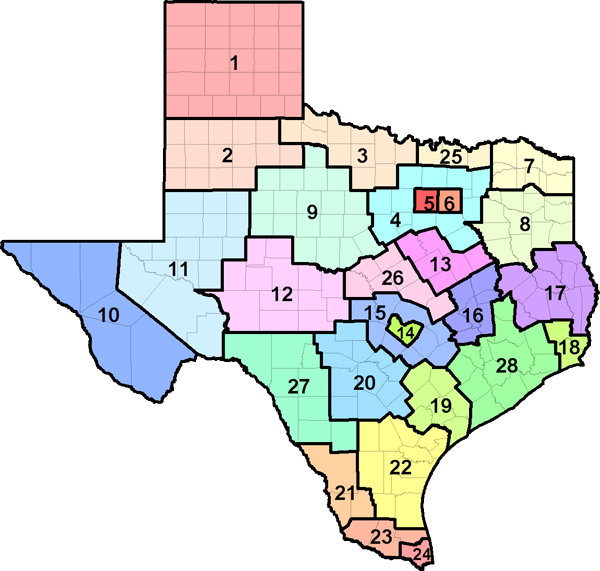
TEXAS COUNTY MAP BY WORKFORCE DEVELOPMENT AREA
* Due to confidentiality rules, not all regions may have the data displayed. The sum of all the regions may not be equal to the state total.


Top 10 Relevant Knowledge Areas Relevant Importance Levels
Customer and Personal Service
Knowledge of principles and processes for providing customer and personal services. This includes customer needs assessment, meeting quality standards for services, and evaluation of customer satisfaction.
83.60%
English Language
Knowledge of the structure and content of the English language including the meaning and spelling of words, rules of composition, and grammar.
80.00%
Physics
Knowledge and prediction of physical principles, laws, their interrelationships, and applications to understanding fluid, material, and atmospheric dynamics, and mechanical, electrical, atomic and sub-atomic structures and processes.
79.20%
Computers and Electronics
Knowledge of circuit boards, processors, chips, electronic equipment, and computer hardware and software, including applications and programming.
73.00%
Medicine and Dentistry
Knowledge of the information and techniques needed to diagnose and treat human injuries, diseases, and deformities. This includes symptoms, treatment alternatives, drug properties and interactions, and preventive health-care measures.
70.40%
Public Safety and Security
Knowledge of relevant equipment, policies, procedures, and strategies to promote effective local, state, or national security operations for the protection of people, data, property, and institutions.
70.40%
Education and Training
Knowledge of principles and methods for curriculum and training design, teaching and instruction for individuals and groups, and the measurement of training effects.
67.80%
Biology
Knowledge of plant and animal organisms, their tissues, cells, functions, interdependencies, and interactions with each other and the environment.
60.80%
Psychology
Knowledge of human behavior and performance; individual differences in ability, personality, and interests; learning and motivation; psychological research methods; and the assessment and treatment of behavioral and affective disorders.
60.80%
Administrative
Knowledge of administrative and office procedures and systems such as word processing, managing files and records, stenography and transcription, designing forms, and workplace terminology.
57.20%


Top 10 Relevant Skill Areas Relevant Importance Levels
Reading Comprehension
Understanding written sentences and paragraphs in work-related documents.
77.60%
Active Listening
Giving full attention to what other people are saying, taking time to understand the points being made, asking questions as appropriate, and not interrupting at inappropriate times.
75.00%
Monitoring
Monitoring/Assessing performance of yourself, other individuals, or organizations to make improvements or take corrective action.
75.00%
Speaking
Talking to others to convey information effectively.
72.40%
Operations Monitoring
Watching gauges, dials, or other indicators to make sure a machine is working properly.
72.40%
Critical Thinking
Using logic and reasoning to identify the strengths and weaknesses of alternative solutions, conclusions, or approaches to problems.
67.60%
Operation and Control
Controlling operations of equipment or systems.
65.00%
Active Learning
Understanding the implications of new information for both current and future problem-solving and decision-making.
62.40%
Service Orientation
Actively looking for ways to help people.
62.40%
Complex Problem Solving
Identifying complex problems and reviewing related information to develop and evaluate options and implement solutions.
62.40%


Top 10 Relevant Abilities Relevant Importance Levels
Oral Expression
The ability to communicate information and ideas in speaking so others will understand.
80.00%
Oral Comprehension
The ability to listen to and understand information and ideas presented through spoken words and sentences.
80.00%
Near Vision
The ability to see details at close range (within a few feet of the observer).
80.00%
Written Comprehension
The ability to read and understand information and ideas presented in writing.
77.60%
Problem Sensitivity
The ability to tell when something is wrong or is likely to go wrong. It does not involve solving the problem, only recognizing that there is a problem.
72.40%
Written Expression
The ability to communicate information and ideas in writing so others will understand.
70.00%
Deductive Reasoning
The ability to apply general rules to specific problems to produce answers that make sense.
65.00%
Inductive Reasoning
The ability to combine pieces of information to form general rules or conclusions (includes finding a relationship among seemingly unrelated events).
65.00%
Information Ordering
The ability to arrange things or actions in a certain order or pattern according to a specific rule or set of rules (e.g., patterns of numbers, letters, words, pictures, mathematical operations).
65.00%
Control Precision
The ability to quickly and repeatedly adjust the controls of a machine or a vehicle to exact positions.
65.00%


  • Working with Computers
    -- Using computers and computer systems (including hardware and software) to program, write software, set up functions, enter data, or process information.
  • Documenting/Recording Information
    -- Entering, transcribing, recording, storing, or maintaining information in written or electronic/magnetic form.
  • Assisting and Caring for Others
    -- Providing personal assistance, medical attention, emotional support, or other personal care to others such as coworkers, customers, or patients.
  • Performing for or Working Directly with the Public
    -- Performing for people or dealing directly with the public. This includes serving customers in restaurants and stores, and receiving clients or guests.
  • Making Decisions and Solving Problems
    -- Analyzing information and evaluating results to choose the best solution and solve problems.
Other Activities


  • Achievement
    - Occupations that satisfy this work value are results oriented and allow employees to use their strongest abilities, giving them a feeling of accomplishment. Corresponding needs are Ability Utilization and Achievement.
  • Working Conditions
    - Occupations that satisfy this work value offer job security and good working conditions. Corresponding needs are Activity, Compensation, Independence, Security, Variety and Working Conditions.


Tools

Blood pressure cuff kits: Sphygmomanometers;

Body plethysmographs: Photoplethysmographs;

Electrocardiography EKG transmitters or telemetry devices: Telemetry leads;

Emergency or resuscitation carts: Crash carts;

End tidal carbon dioxide monitors: Carbon dioxide monitors;

Facial shields: Protective eye shields;

Fire extinguishers: Magnetic resonance imaging MRI compatible fire extinguishers;

Hypodermic needle: Venipuncture needles;

Intravenous infusion pumps for general use: Intravenous IV infusion pumps;

Intravenous tubing with catheter administration kits: Intravenous IV line sets;

Medical imaging contrast agent injector: Power injectors;

Medical imaging dry laser printers or imagers: Magnetic resonance imaging MRI printers;

Medical magnetic resonance imaging MRI 3 dimensional system components: Magnetic resonance imaging MRI audio and visual intercommunication systems;

Medical magnetic resonance imaging MRI coils: Magnetic resonance imaging MRI coils;

Medical magnetic resonance imaging MRI monitors: Magnetic resonance imaging MRI monitors;

Medical magnetic resonance imaging MRI positioning aids: Magnetic resonance imaging MRI positioning sandbags;

Medical magnetic resonance imaging MRI primary or remote or secondary consoles: Magnetic resonance imaging MRI consoles;

Medical magnetic resonance imaging MRI quality assurance or calibration phantoms or devices: Magnetic resonance imaging MRI calibration devices; Magnetic resonance imaging MRI calibration phantoms; Laser cameras;

Medical magnetic resonance imaging MRI scanners: Functional magnetic resonance imaging fMRI scanners; Magnetic resonance imaging MRI systems; Portable magnetic resonance imaging MRI scanners;

Medical magnetic resonance imaging MRI tables: Medical magnetic resonance imaging MRI patient tables;

Medical nasal cannulas: Medical nasal cannulas;

Medical picture archiving computer systems PACS: Image capturing and transmission systems;

Medical radiation films or badges: Dosimetry badges;

Medical radiological positioning aids for general radiological use: Patient positioning devices;

Mobile medical services first aid kits: Emergency contrast reaction kits;

Oxygen therapy delivery system products: Oxygen delivery equipment;

Patient carbon dioxide detectors: Capnographs;

Patient lifts: Patient lifting equipment;

Patient temperature continuous or trend monitors: Fluoroptic thermometry systems;

Personal computers: Clinical imaging workstations; Personal computers;

Pulse oximeter units: Non-magnetic pulse oximeter units;

Surgical isolation or surgical masks: Protective medical face masks;


Technology

Calendar and scheduling software: Appointment scheduling software;

Internet browser software: Web browser software;

Medical software: eClinicalWorks EHR software; Electronic medical record EMR software; GE Healthcare Centricity EMR; Medical image processing software; MEDITECH software; Radiology information systems (RIS); Teleradiology systems;

Office suite software: Microsoft Office software;

Spreadsheet software: Microsoft Excel;

Word processing software: Microsoft Word;


Related O*NET occupational titles for Magnetic Resonance Imaging Technologists include:
  • 29-2031.00 Cardiovascular Technologists and Technicians
  • 29-2032.00 Diagnostic Medical Sonographers
  • 31-9099.02 Endoscopy Technicians
  • 29-2012.00 Medical and Clinical Laboratory Technicians
  • 29-2099.01 Neurodiagnostic Technologists
  • 29-2033.00 Nuclear Medicine Technologists
  • 29-2099.05 Ophthalmic Medical Technologists
  • 29-1124.00 Radiation Therapists
  • 29-2034.00 Radiologic Technologists and Technicians
  • 29-1126.00 Respiratory Therapists

Contact Texas Workforce Commission
Labor Market and Career Information  |  101 E. 15th Street, Annex Room 0252  |  Austin, Texas 78778
Official Website  |  1-800-822-PLAN (7526)  |  512.936.3200

** The information in this report may be derived from many sources like O*NET, BLS (Bureau of Labor Statistics), OOH (Occupational Outlook Handbook), and Career One Stop.