Occupation Summary

Genetic Counselors

O*NET 29-9092.00

Description:

Assess individual or family risk for a variety of inherited conditions, such as genetic disorders and birth defects. Provide information to other healthcare providers or to individuals and families concerned with the risk of inherited conditions. Advise individuals and families to support informed decisionmaking and coping methods for those at risk. May help conduct research related to genetic conditions or genetic counseling.

Annual Wages:
$96,425.00
Employment Rate:
Employment is expected to increase by 27.12%.
Education Level:
Master's Degree. According to O*Net, the majority of people employed in this occupation have this level of education.
Endorsement:
Public Service, Science Technology Engineering and Math (STEM)

  1. Analyze genetic information to identify patients or families at risk for specific disorders or syndromes.
  2. Explain diagnostic procedures such as chorionic villus sampling (CVS), ultrasound, fetal blood sampling, and amniocentesis.
  3. Provide genetic counseling in specified areas of clinical genetics, such as obstetrics, pediatrics, oncology and neurology.
  4. Assess patients' psychological or emotional needs, such as those relating to stress, fear of test results, financial issues, and marital conflicts to make referral recommendations or assist patients in managing test outcomes.
  5. Provide counseling to patient and family members by providing information, education, or reassurance.
  6. Determine or coordinate treatment plans by requesting laboratory services, reviewing genetics or counseling literature, and considering histories or diagnostic data.
  7. Discuss testing options and the associated risks, benefits and limitations with patients and families to assist them in making informed decisions.
  8. Interpret laboratory results and communicate findings to patients or physicians.
  9. Interview patients or review medical records to obtain comprehensive patient or family medical histories, and document findings.
  10. Provide patients with information about the inheritance of conditions such as cardiovascular disease, Alzheimer's disease, diabetes, and various forms of cancer.
  11. Refer patients to specialists or community resources.
  12. Write detailed consultation reports to provide information on complex genetic concepts to patients or referring physicians.
  13. Design and conduct genetics training programs for physicians, graduate students, other health professions or the general community.
  14. Collect for, or share with, research projects patient data on specific genetic disorders or syndromes.
  15. Engage in research activities related to the field of medical genetics or genetic counseling.
  16. Evaluate or make recommendations for standards of care or clinical operations, ensuring compliance with applicable regulations, ethics, legislation, or policies.
  17. Identify funding sources and write grant proposals for eligible programs or services.
  18. Read current literature, talk with colleagues, or participate in professional organizations or conferences to keep abreast of developments in genetics.
  19. Prepare or provide genetics-related educational materials to patients or medical personnel.


National Industry Employment Patterns


Industry % of Genetic Counselors employed Annual Growth Rate
General medical and surgical hospitals 38.2 1.44
Offices of physicians 17.6 1.55
Medical and diagnostic laboratories 8.6 2.92
Outpatient care centers 8.4 2.92
Colleges, universities, and professional schools 7.3 0.00
Scientific research and development services 4.8 0.00
Specialty (except psychiatric and substance abuse) hospitals 3.4 0.00


Labor Market Information


2024 Statewide average hourly wage $46.36
2024 National average hourly wage $49.47
2022 National employment 3,500
2022 Texas employment 118
Texas projected employment by 2032 150
Texas projected annual employment and Turnover openings through 2032 11


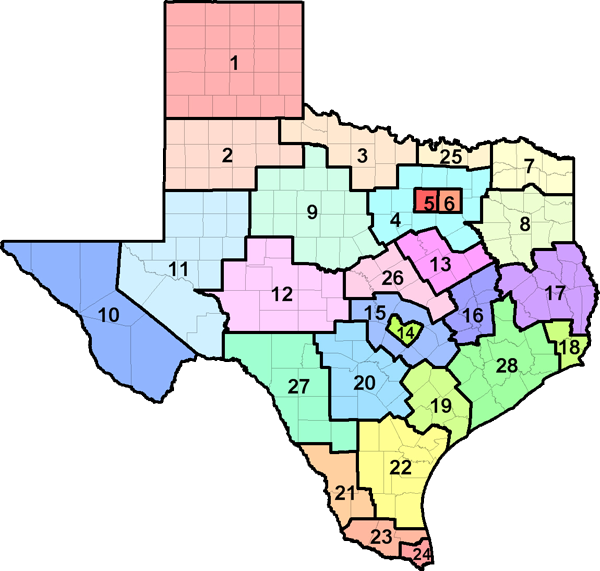
TEXAS COUNTY MAP BY WORKFORCE DEVELOPMENT AREA
* Due to confidentiality rules, not all regions may have the data displayed. The sum of all the regions may not be equal to the state total.


Top 10 Relevant Knowledge Areas Relevant Importance Levels
Biology
Knowledge of plant and animal organisms, their tissues, cells, functions, interdependencies, and interactions with each other and the environment.
95.60%
Psychology
Knowledge of human behavior and performance; individual differences in ability, personality, and interests; learning and motivation; psychological research methods; and the assessment and treatment of behavioral and affective disorders.
91.40%
Medicine and Dentistry
Knowledge of the information and techniques needed to diagnose and treat human injuries, diseases, and deformities. This includes symptoms, treatment alternatives, drug properties and interactions, and preventive health-care measures.
87.80%
Therapy and Counseling
Knowledge of principles, methods, and procedures for diagnosis, treatment, and rehabilitation of physical and mental dysfunctions, and for career counseling and guidance.
87.00%
English Language
Knowledge of the structure and content of the English language including the meaning and spelling of words, rules of composition, and grammar.
81.80%
Customer and Personal Service
Knowledge of principles and processes for providing customer and personal services. This includes customer needs assessment, meeting quality standards for services, and evaluation of customer satisfaction.
77.40%
Mathematics
Knowledge of arithmetic, algebra, geometry, calculus, statistics, and their applications.
74.00%
Sociology and Anthropology
Knowledge of group behavior and dynamics, societal trends and influences, human migrations, ethnicity, cultures, and their history and origins.
67.80%
Education and Training
Knowledge of principles and methods for curriculum and training design, teaching and instruction for individuals and groups, and the measurement of training effects.
67.00%
Chemistry
Knowledge of the chemical composition, structure, and properties of substances and of the chemical processes and transformations that they undergo. This includes uses of chemicals and their interactions, danger signs, production techniques, and disposal methods.
57.40%


Top 10 Relevant Skill Areas Relevant Importance Levels
Reading Comprehension
Understanding written sentences and paragraphs in work-related documents.
82.40%
Active Listening
Giving full attention to what other people are saying, taking time to understand the points being made, asking questions as appropriate, and not interrupting at inappropriate times.
80.00%
Complex Problem Solving
Identifying complex problems and reviewing related information to develop and evaluate options and implement solutions.
80.00%
Social Perceptiveness
Being aware of others' reactions and understanding why they react as they do.
77.60%
Writing
Communicating effectively in writing as appropriate for the needs of the audience.
77.60%
Speaking
Talking to others to convey information effectively.
77.60%
Critical Thinking
Using logic and reasoning to identify the strengths and weaknesses of alternative solutions, conclusions, or approaches to problems.
77.60%
Active Learning
Understanding the implications of new information for both current and future problem-solving and decision-making.
77.60%
Science
Using scientific rules and methods to solve problems.
65.00%
Judgment and Decision Making
Considering the relative costs and benefits of potential actions to choose the most appropriate one.
65.00%


Top 10 Relevant Abilities Relevant Importance Levels
Written Comprehension
The ability to read and understand information and ideas presented in writing.
85.00%
Deductive Reasoning
The ability to apply general rules to specific problems to produce answers that make sense.
82.40%
Inductive Reasoning
The ability to combine pieces of information to form general rules or conclusions (includes finding a relationship among seemingly unrelated events).
80.00%
Oral Expression
The ability to communicate information and ideas in speaking so others will understand.
80.00%
Written Expression
The ability to communicate information and ideas in writing so others will understand.
80.00%
Oral Comprehension
The ability to listen to and understand information and ideas presented through spoken words and sentences.
80.00%
Problem Sensitivity
The ability to tell when something is wrong or is likely to go wrong. It does not involve solving the problem, only recognizing that there is a problem.
80.00%
Information Ordering
The ability to arrange things or actions in a certain order or pattern according to a specific rule or set of rules (e.g., patterns of numbers, letters, words, pictures, mathematical operations).
77.60%
Speech Recognition
The ability to identify and understand the speech of another person.
77.60%
Speech Clarity
The ability to speak clearly so others can understand you.
75.00%


  • Updating and Using Relevant Knowledge
    -- Keeping up-to-date technically and applying new knowledge to your job.
  • Interpreting the Meaning of Information for Others
    -- Translating or explaining what information means and how it can be used.
  • Getting Information
    -- Observing, receiving, and otherwise obtaining information from all relevant sources.
  • Documenting/Recording Information
    -- Entering, transcribing, recording, storing, or maintaining information in written or electronic/magnetic form.
  • Assisting and Caring for Others
    -- Providing personal assistance, medical attention, emotional support, or other personal care to others such as coworkers, customers, or patients.
Other Activities


  • Achievement
    - Occupations that satisfy this work value are results oriented and allow employees to use their strongest abilities, giving them a feeling of accomplishment. Corresponding needs are Ability Utilization and Achievement.
  • Relationships
    - Occupations that satisfy this work value allow employees to provide service to others and work with co-workers in a friendly non-competitive environment. Corresponding needs are Co-workers, Moral Values and Social Service.


Tools

Benchtop centrifuges: Table top centrifuges;

Cryostats: Cryostats;

Darkfield microscopes: Differential interference microscopes;

Deoxyribonucleic sequence analyzers: Automated deoxyribonucleic acid DNA sequencers;

Fluorescent microscopes: Fluorescent microscopes;

Gel documentation systems: Gel documentation systems;

Microplate readers: Microplate readers;

Personal computers: Personal computers;

Ultracentrifuges: Ultracentrifuges; Benchtop ultracentrifuges; High speed centrifuges;

X ray radiography examination equipment: Phosphor imagers;


Technology

Analytical or scientific software: Ftree; Pedigree drawing and management software;

Data base user interface and query software: Microsoft Access; Database software; FileMaker Pro;

Electronic mail software: Microsoft Outlook;

Internet browser software: Web browser software;

Medical software: PedHunter; PediDraw; Progeny Software Progeny Clinical; Prognosis Innovation Healthcare ChartAccess; SynDiag; Wageningen MapChart; Jurek Software Pedigree-Draw; Medgen PED; Benetech PRA; BRCAPRO; Breast Cancer Risk Assessment Tool; CancerGene; CyrillicSoftware Cyrillic;

Office suite software: Microsoft Office software;

Presentation software: Microsoft PowerPoint;

Spreadsheet software: Microsoft Excel;

Word processing software: Microsoft Word; Word processing software;


Related O*NET occupational titles for Genetic Counselors include:
  • 29-1141.02 Advanced Practice Psychiatric Nurses
  • 29-1212.00 Cardiologists
  • 19-3039.03 Clinical Neuropsychologists
  • 29-1141.04 Clinical Nurse Specialists
  • 29-1215.00 Family Medicine Physicians
  • 29-1217.00 Neurologists
  • 29-1243.00 Pediatric Surgeons
  • 29-1221.00 Pediatricians, General
  • 29-1229.05 Preventive Medicine Physicians
  • 29-1223.00 Psychiatrists


Sources of Additional Information
  • For more information about genetic counselors, certification, and schools offering education in genetic counseling, visit: American Board of Genetic Counseling
  • For more information about genetic counseling career requirements and developments in genetics, including licensure, visit: National Society of Genetic Counselors
  • For more information about accreditation and schools offering education in genetic counseling, visit: Accreditation Council for Genetic Counseling
  • CareerOneStop

  • For a career video on genetic counselors, visit: Genetic Counselors
  • Genetic Counselors

  • Contact Texas Workforce Commission
    Labor Market and Career Information  |  101 E. 15th Street, Annex Room 0252  |  Austin, Texas 78778
    Official Website  |  1-800-822-PLAN (7526)  |  512.936.3200

    ** The information in this report may be derived from many sources like O*NET, BLS (Bureau of Labor Statistics), OOH (Occupational Outlook Handbook), and Career One Stop.