Occupation Summary

Personal Care Aides

O*NET 31-1122.00

Description:

Provide personalized assistance to individuals with disabilities or illness who require help with personal care and activities of daily living support (e.g., feeding, bathing, dressing, grooming, toileting, and ambulation). May also provide help with tasks such as preparing meals, doing light housekeeping, and doing laundry. Work is performed in various settings depending on the needs of the care recipient and may include locations such as their home, place of work, out in the community, or at a daytime nonresidential facility.

Annual Wages:
Unavailable
Employment Rate:
Employment is expected to increase by %.
Education Level:
High School Diploma - or the equivalent (for example, GED). According to O*Net, the majority of people employed in this occupation have this level of education.

  1. Perform healthcare-related tasks, such as monitoring vital signs and medication, under the direction of registered nurses or physiotherapists.
  2. Administer bedside or personal care, such as ambulation or personal hygiene assistance.
  3. Prepare and maintain records of client progress and services performed, reporting changes in client condition to manager or supervisor.
  4. Perform housekeeping duties, such as cooking, cleaning, washing clothes or dishes, or running errands.
  5. Care for individuals or families during periods of incapacitation, family disruption, or convalescence, providing companionship, personal care, or help in adjusting to new lifestyles.
  6. Instruct or advise clients on issues, such as household cleanliness, utilities, hygiene, nutrition, or infant care.
  7. Plan, shop for, or prepare nutritious meals or assist families in planning, shopping for, or preparing nutritious meals.
  8. Participate in case reviews, consulting with the team caring for the client, to evaluate the client's needs and plan for continuing services.
  9. Transport clients to locations outside the home, such as to physicians' offices or on outings, using a motor vehicle.
  10. Train family members to provide bedside care.
  11. Provide clients with communication assistance, typing their correspondence or obtaining information for them.


No Industry Employment Patterns found.

Labor Market Information


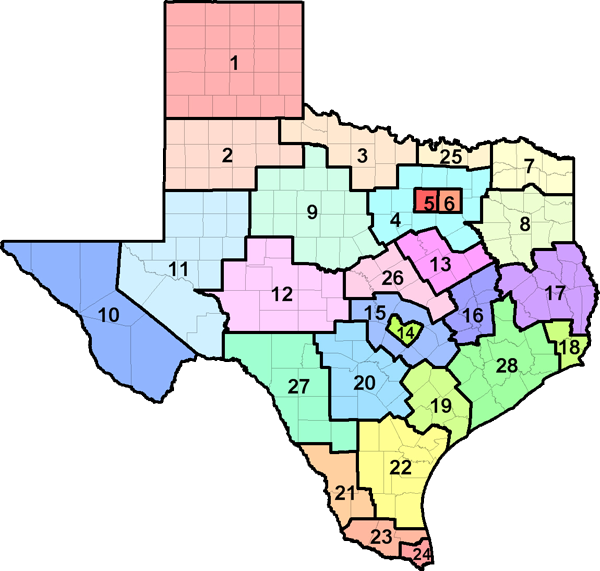
TEXAS COUNTY MAP BY WORKFORCE DEVELOPMENT AREA
Region Employment Projected Employment 2032 Projected
Annual Openings 2032
Annual
Growth Rate
Average Income
Texas (all regions) Unavailable Unavailable Unavailable Unavailable Unavailable
* Due to confidentiality rules, not all regions may have the data displayed. The sum of all the regions may not be equal to the state total.


Top 10 Relevant Knowledge Areas Relevant Importance Levels
English Language
Knowledge of the structure and content of the English language including the meaning and spelling of words, rules of composition, and grammar.
72.60%
Transportation
Knowledge of principles and methods for moving people or goods by air, rail, sea, or road, including the relative costs and benefits.
68.80%
Customer and Personal Service
Knowledge of principles and processes for providing customer and personal services. This includes customer needs assessment, meeting quality standards for services, and evaluation of customer satisfaction.
68.40%
Psychology
Knowledge of human behavior and performance; individual differences in ability, personality, and interests; learning and motivation; psychological research methods; and the assessment and treatment of behavioral and affective disorders.
68.20%
Education and Training
Knowledge of principles and methods for curriculum and training design, teaching and instruction for individuals and groups, and the measurement of training effects.
68.20%
Public Safety and Security
Knowledge of relevant equipment, policies, procedures, and strategies to promote effective local, state, or national security operations for the protection of people, data, property, and institutions.
63.80%
Food Production
Knowledge of techniques and equipment for planting, growing, and harvesting food products (both plant and animal) for consumption, including storage/handling techniques.
59.80%
Therapy and Counseling
Knowledge of principles, methods, and procedures for diagnosis, treatment, and rehabilitation of physical and mental dysfunctions, and for career counseling and guidance.
59.40%
Administration and Management
Knowledge of business and management principles involved in strategic planning, resource allocation, human resources modeling, leadership technique, production methods, and coordination of people and resources.
58.80%
Personnel and Human Resources
Knowledge of principles and procedures for personnel recruitment, selection, training, compensation and benefits, labor relations and negotiation, and personnel information systems.
58.20%


Top 10 Relevant Skill Areas Relevant Importance Levels
Service Orientation
Actively looking for ways to help people.
80.00%
Social Perceptiveness
Being aware of others' reactions and understanding why they react as they do.
77.60%
Active Listening
Giving full attention to what other people are saying, taking time to understand the points being made, asking questions as appropriate, and not interrupting at inappropriate times.
67.60%
Critical Thinking
Using logic and reasoning to identify the strengths and weaknesses of alternative solutions, conclusions, or approaches to problems.
65.00%
Monitoring
Monitoring/Assessing performance of yourself, other individuals, or organizations to make improvements or take corrective action.
65.00%
Coordination
Adjusting actions in relation to others' actions.
62.40%
Speaking
Talking to others to convey information effectively.
60.00%
Instructing
Teaching others how to do something.
60.00%
Time Management
Managing one's own time and the time of others.
60.00%
Judgment and Decision Making
Considering the relative costs and benefits of potential actions to choose the most appropriate one.
57.60%


Top 10 Relevant Abilities Relevant Importance Levels
Oral Expression
The ability to communicate information and ideas in speaking so others will understand.
77.60%
Oral Comprehension
The ability to listen to and understand information and ideas presented through spoken words and sentences.
77.60%
Problem Sensitivity
The ability to tell when something is wrong or is likely to go wrong. It does not involve solving the problem, only recognizing that there is a problem.
75.00%
Deductive Reasoning
The ability to apply general rules to specific problems to produce answers that make sense.
65.00%
Written Comprehension
The ability to read and understand information and ideas presented in writing.
65.00%
Near Vision
The ability to see details at close range (within a few feet of the observer).
62.40%
Speech Recognition
The ability to identify and understand the speech of another person.
62.40%
Speech Clarity
The ability to speak clearly so others can understand you.
62.40%
Inductive Reasoning
The ability to combine pieces of information to form general rules or conclusions (includes finding a relationship among seemingly unrelated events).
60.00%
Information Ordering
The ability to arrange things or actions in a certain order or pattern according to a specific rule or set of rules (e.g., patterns of numbers, letters, words, pictures, mathematical operations).
60.00%


  • Assisting and Caring for Others
    -- Providing personal assistance, medical attention, emotional support, or other personal care to others such as coworkers, customers, or patients.
  • Getting Information
    -- Observing, receiving, and otherwise obtaining information from all relevant sources.
  • Establishing and Maintaining Interpersonal Relationships
    -- Developing constructive and cooperative working relationships with others, and maintaining them over time.
  • Training and Teaching Others
    -- Identifying the educational needs of others, developing formal educational or training programs or classes, and teaching or instructing others.
  • Communicating with Supervisors, Peers, or Subordinates
    -- Providing information to supervisors, co-workers, and subordinates by telephone, in written form, e-mail, or in person.
Other Activities


  • Relationships
    - Occupations that satisfy this work value allow employees to provide service to others and work with co-workers in a friendly non-competitive environment. Corresponding needs are Co-workers, Moral Values and Social Service.
  • Support
    - Occupations that satisfy this work value offer supportive management that stands behind employees. Corresponding needs are Company Policies, Supervision: Human Relations and Supervision: Technical.


Tools

Adjustable widemouth pliers: Adjustable widemouth pliers;

Adjustable wrenches: Adjustable wrenches;

Alarm systems: Alarm systems;

Back or lumbar or sacral orthopedic softgoods: Back braces;

Bedpans: Bedpans;

Blood pressure cuff kits: Blood pressure cuffs;

Braille devices for the physically challenged: Braille printing software;

Canes: Canes;

Crutches: Crutches;

Digital camcorders or video cameras: Digital video cameras;

Digital cameras: Digital cameras;

Electric vibrators for rehabilitation or therapy: Mechanical vibrating massage devices;

Electronic blood pressure units: Automatic blood pressure machines;

Electronic medical thermometers: Electronic patient thermometers;

Glucose monitors or meters: Glucometers;

Hammers: Hammers;

Hearing aid: Hearing aid devices;

Lower extremity prosthetic devices: Lower-body prosthetic devices;

Medical acoustic stethoscopes: Mechanical stethoscopes;

Oxygen therapy delivery system products: Oxygen delivery equipment;

Paging controllers: Paging systems;

Patient bed or table scales for general use: Bed scales;

Patient lifts: Hoyer lifts; Patient lifting devices; Mechanical patient lifts;

Patient shifting boards: Transfer boards;

Personal computers: Personal computers;

Screwdrivers: Screwdrivers;

Shower or bath chairs or seats for the physically challenged: Hydraulic tub seats; Shower chairs;

Specimen collection container: Specimen collection containers;

Tablet computers: Tablet computers;

Telecommunication devices TDD or teletypewriters TTY for the physically challenged: Telecommunication devices TDD; Teletypewriters TTY;

Upper extremity prosthetic devices: Upper-body prosthetic devices;

Vascular or compression apparel or support: Therapeutic elastic stockings;

Voice synthesizers for the physically challenged: Speech synthesizers;

Walkers or rollators: Walkers;

Walking braces: Walking braces;

Wheelchairs: Wheelchairs;


Technology

Calendar and scheduling software: August Systems Visit Wizard;

Computer based training software: Appletree;

Data base reporting software: Mi-Co Mi-Forms;

Electronic mail software: Email software; Voltage SecureMail;

Medical software: MEDITECH software;

Optical character reader OCR or scanning software: Computer reading software;

Spreadsheet software: Spreadsheet software;

Video conferencing software: FaceTime;

Word processing software: Word processing software;


Related O*NET occupational titles for Personal Care Aides include:
  • 21-1021.00 Child, Family, and School Social Workers
  • 31-1121.00 Home Health Aides
  • 29-2061.00 Licensed Practical and Licensed Vocational Nurses
  • 39-9011.01 Nannies
  • 31-1131.00 Nursing Assistants
  • 31-2012.00 Occupational Therapy Aides
  • 31-2022.00 Physical Therapist Aides
  • 31-1133.00 Psychiatric Aides
  • 21-1015.00 Rehabilitation Counselors
  • 21-1093.00 Social and Human Service Assistants


No sources of additional information found.

Contact Texas Workforce Commission
Labor Market and Career Information  |  101 E. 15th Street, Annex Room 0252  |  Austin, Texas 78778
Official Website  |  1-800-822-PLAN (7526)  |  512.936.3200

** The information in this report may be derived from many sources like O*NET, BLS (Bureau of Labor Statistics), OOH (Occupational Outlook Handbook), and Career One Stop.