Occupation Summary

Physical Therapist Aides

O*NET 31-2022.00

Description:

Under close supervision of a physical therapist or physical therapy assistant, perform only delegated, selected, or routine tasks in specific situations. These duties include preparing the patient and the treatment area.

Annual Wages:
$34,519.00
Employment Rate:
Employment is expected to increase by 6.02%.
Education Level:
High School Diploma - or the equivalent (for example, GED). According to O*Net, the majority of people employed in this occupation have this level of education.
Endorsement:
Public Service, Science Technology Engineering and Math (STEM)

  1. Clean and organize work area and disinfect equipment after treatment.
  2. Observe patients during treatment to compile and evaluate data on patients' responses and progress and report to physical therapist.
  3. Instruct, motivate, safeguard, or assist patients practicing exercises or functional activities, under direction of medical staff.
  4. Secure patients into or onto therapy equipment.
  5. Transport patients to and from treatment areas, using wheelchairs or providing standing support.
  6. Confer with physical therapy staff or others to discuss and evaluate patient information for planning, modifying, or coordinating treatment.
  7. Record treatment given and equipment used.
  8. Perform clerical duties, such as taking inventory, ordering supplies, answering telephone, taking messages, or filling out forms.
  9. Maintain equipment or furniture to keep it in good working condition, including performing the assembly or disassembly of equipment or accessories.
  10. Administer active or passive manual therapeutic exercises, therapeutic massage, or heat, light, sound, water, or electrical modality treatments, such as ultrasound.
  11. Change linens, such as bed sheets and pillow cases.
  12. Arrange treatment supplies to keep them in order.
  13. Assist patients to dress, undress, or put on and remove supportive devices, such as braces, splints, or slings.
  14. Measure patient's range-of-joint motion, body parts, or vital signs to determine effects of treatments or for patient evaluations.
  15. Train patients to use orthopedic braces, prostheses, or supportive devices.
  16. Fit patients for orthopedic braces, prostheses, or supportive devices, adjusting fit as needed.
  17. Participate in patient care tasks, such as assisting with passing food trays, feeding residents, or bathing residents on bed rest.
  18. Administer traction to relieve neck or back pain, using intermittent or static traction equipment.
  19. Schedule patient appointments with physical therapists and coordinate therapists' schedules.


National Industry Employment Patterns


Industry % of Physical Therapist Aides employed Annual Growth Rate
Offices of other health practitioners 64.3 0.94
General medical and surgical hospitals 13.8 -1.19
Offices of physicians 10.4 -1.14
Specialty (except psychiatric and substance abuse) hospitals 4.5 -0.51
Nursing care facilities (skilled nursing facilities) 2.2 -2.21


Labor Market Information


2024 Statewide average hourly wage $16.60
2024 National average hourly wage $17.07
2022 National employment 44,500
2022 Texas employment 4,400
Texas projected employment by 2032 4,665
Texas projected annual employment and Turnover openings through 2032 641


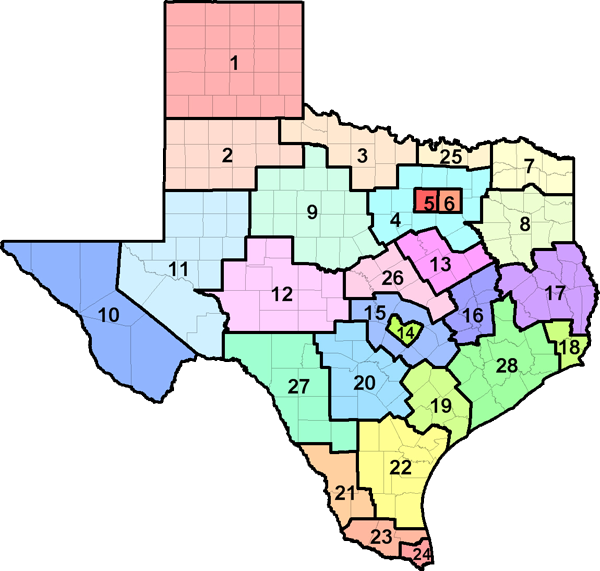
TEXAS COUNTY MAP BY WORKFORCE DEVELOPMENT AREA
* Due to confidentiality rules, not all regions may have the data displayed. The sum of all the regions may not be equal to the state total.


Top 10 Relevant Knowledge Areas Relevant Importance Levels
Customer and Personal Service
Knowledge of principles and processes for providing customer and personal services. This includes customer needs assessment, meeting quality standards for services, and evaluation of customer satisfaction.
89.60%
English Language
Knowledge of the structure and content of the English language including the meaning and spelling of words, rules of composition, and grammar.
80.60%
Computers and Electronics
Knowledge of circuit boards, processors, chips, electronic equipment, and computer hardware and software, including applications and programming.
69.80%
Therapy and Counseling
Knowledge of principles, methods, and procedures for diagnosis, treatment, and rehabilitation of physical and mental dysfunctions, and for career counseling and guidance.
66.60%
Psychology
Knowledge of human behavior and performance; individual differences in ability, personality, and interests; learning and motivation; psychological research methods; and the assessment and treatment of behavioral and affective disorders.
59.60%
Public Safety and Security
Knowledge of relevant equipment, policies, procedures, and strategies to promote effective local, state, or national security operations for the protection of people, data, property, and institutions.
57.80%
Administrative
Knowledge of administrative and office procedures and systems such as word processing, managing files and records, stenography and transcription, designing forms, and workplace terminology.
56.40%
Education and Training
Knowledge of principles and methods for curriculum and training design, teaching and instruction for individuals and groups, and the measurement of training effects.
52.40%
Telecommunications
Knowledge of transmission, broadcasting, switching, control, and operation of telecommunications systems.
48.80%
Administration and Management
Knowledge of business and management principles involved in strategic planning, resource allocation, human resources modeling, leadership technique, production methods, and coordination of people and resources.
48.60%


Top 10 Relevant Skill Areas Relevant Importance Levels
Active Listening
Giving full attention to what other people are saying, taking time to understand the points being made, asking questions as appropriate, and not interrupting at inappropriate times.
72.40%
Monitoring
Monitoring/Assessing performance of yourself, other individuals, or organizations to make improvements or take corrective action.
65.00%
Service Orientation
Actively looking for ways to help people.
65.00%
Reading Comprehension
Understanding written sentences and paragraphs in work-related documents.
62.40%
Social Perceptiveness
Being aware of others' reactions and understanding why they react as they do.
62.40%
Coordination
Adjusting actions in relation to others' actions.
62.40%
Writing
Communicating effectively in writing as appropriate for the needs of the audience.
60.00%
Speaking
Talking to others to convey information effectively.
60.00%
Instructing
Teaching others how to do something.
60.00%
Critical Thinking
Using logic and reasoning to identify the strengths and weaknesses of alternative solutions, conclusions, or approaches to problems.
60.00%


Top 10 Relevant Abilities Relevant Importance Levels
Oral Comprehension
The ability to listen to and understand information and ideas presented through spoken words and sentences.
67.60%
Problem Sensitivity
The ability to tell when something is wrong or is likely to go wrong. It does not involve solving the problem, only recognizing that there is a problem.
65.00%
Speech Recognition
The ability to identify and understand the speech of another person.
65.00%
Near Vision
The ability to see details at close range (within a few feet of the observer).
62.40%
Oral Expression
The ability to communicate information and ideas in speaking so others will understand.
62.40%
Written Expression
The ability to communicate information and ideas in writing so others will understand.
60.00%
Written Comprehension
The ability to read and understand information and ideas presented in writing.
60.00%
Inductive Reasoning
The ability to combine pieces of information to form general rules or conclusions (includes finding a relationship among seemingly unrelated events).
60.00%
Information Ordering
The ability to arrange things or actions in a certain order or pattern according to a specific rule or set of rules (e.g., patterns of numbers, letters, words, pictures, mathematical operations).
60.00%
Selective Attention
The ability to concentrate on a task over a period of time without being distracted.
60.00%


  • Assisting and Caring for Others
    -- Providing personal assistance, medical attention, emotional support, or other personal care to others such as coworkers, customers, or patients.
  • Performing for or Working Directly with the Public
    -- Performing for people or dealing directly with the public. This includes serving customers in restaurants and stores, and receiving clients or guests.
  • Communicating with Supervisors, Peers, or Subordinates
    -- Providing information to supervisors, co-workers, and subordinates by telephone, in written form, e-mail, or in person.
  • Getting Information
    -- Observing, receiving, and otherwise obtaining information from all relevant sources.
  • Handling and Moving Objects
    -- Using hands and arms in handling, installing, positioning, and moving materials, and manipulating things.
Other Activities


  • Relationships
    - Occupations that satisfy this work value allow employees to provide service to others and work with co-workers in a friendly non-competitive environment. Corresponding needs are Co-workers, Moral Values and Social Service.
  • Support
    - Occupations that satisfy this work value offer supportive management that stands behind employees. Corresponding needs are Company Policies, Supervision: Human Relations and Supervision: Technical.


Tools

Blood pressure cuff kits: Blood pressure cuffs;

Canes: Canes;

Clinical hydraulic lifts: Hydraulic lifts;

Crutches: Crutches;

Electronic blood pressure units: Electronic blood pressure units;

Electrotherapy combination units: Electrical stimulation equipment;

Full body immersion hydrotherapy baths or tanks: Hydrotherapy immersion baths;

Gait belts for rehabilitation or therapy: Gait belts;

Lower extremity prosthetic devices: Lower extremity prosthetic devices;

Notebook computers: Notebook computers;

Orthopedic splint systems: Orthopedic splint sets;

Orthotics or foot care products: Orthotic devices;

Parallel bars for rehabilitation or therapy: Parallel bars;

Personal computers: Personal computers;

Therapeutic heating or cooling pads or compresses or packs: Hot packs; Cold packs;

Ultrasonic therapy apparatus or supplies: Therapeutic ultrasound equipment;

Upper extremity prosthetic devices: Upper extremity prosthetic devices;

Vascular or compression apparel or support: Anti-embolism elastic stockings;

Walkers or rollators: Walkers;

Wheelchairs: Wheelchairs;


Technology

Calendar and scheduling software: Scheduling software;

Electronic mail software: Microsoft Outlook;

Medical software: Patient record maintenance software; Epic Systems; Medical procedure coding software; MEDITECH software;

Office suite software: Microsoft Office software;

Spreadsheet software: Microsoft Excel;

Word processing software: Microsoft Word; Word processing software;


Related O*NET occupational titles for Physical Therapist Aides include:
  • 31-9011.00 Massage Therapists
  • 31-9092.00 Medical Assistants
  • 31-1131.00 Nursing Assistants
  • 29-1122.00 Occupational Therapists
  • 31-2012.00 Occupational Therapy Aides
  • 31-2011.00 Occupational Therapy Assistants
  • 31-2021.00 Physical Therapist Assistants
  • 31-1133.00 Psychiatric Aides
  • 29-2053.00 Psychiatric Technicians
  • 29-1126.00 Respiratory Therapists


Sources of Additional Information
  • For more information about physical therapist assistants, visit: American Physical Therapy Association
  • For a list of schools offering accredited programs, visit: Commission on Accreditation in Physical Therapy Education
  • For more information about state licensing requirements and about the National Physical Therapy Exam, visit: Federation of State Boards of Physical Therapy
  • CareerOneStop

  • For a career video on physical therapist assistants and aides, visit: Physical therapist assistants and aides
  • Physical Therapist Aides
  • Physical Therapist Assistants

  • Contact Texas Workforce Commission
    Labor Market and Career Information  |  101 E. 15th Street, Annex Room 0252  |  Austin, Texas 78778
    Official Website  |  1-800-822-PLAN (7526)  |  512.936.3200

    ** The information in this report may be derived from many sources like O*NET, BLS (Bureau of Labor Statistics), OOH (Occupational Outlook Handbook), and Career One Stop.