Occupation Summary

Animal Trainers

O*NET 39-2011.00

Description:

Train animals for riding, harness, security, performance, or obedience, or for assisting persons with disabilities. Accustom animals to human voice and contact, and condition animals to respond to commands. Train animals according to prescribed standards for show or competition. May train animals to carry pack loads or work as part of pack team.

Annual Wages:
$34,808.00
Employment Rate:
Employment is expected to increase by 30.69%.
Education Level:
High School Diploma - or the equivalent (for example, GED). According to O*Net, the majority of people employed in this occupation have this level of education.
Endorsement:
Business and Industry

  1. Observe animals' physical conditions to detect illness or unhealthy conditions requiring medical care.
  2. Cue or signal animals during performances.
  3. Administer prescribed medications to animals.
  4. Evaluate animals to determine their temperaments, abilities, or aptitude for training.
  5. Feed or exercise animals or provide other general care, such as cleaning or maintaining holding or performance areas.
  6. Talk to or interact with animals to familiarize them to human voices or contact.
  7. Keep records documenting animal health, diet, or behavior.
  8. Advise animal owners regarding the purchase of specific animals.
  9. Train horses or other equines for riding, harness, show, racing, or other work, using knowledge of breed characteristics, training methods, performance standards, and the peculiarities of each animal.
  10. Use oral, spur, rein, or hand commands to condition horses to carry riders or to pull horse-drawn equipment.
  11. Train dogs in human assistance or property protection duties.
  12. Retrain horses to break bad habits, such as kicking, bolting, or resisting bridling or grooming.
  13. Organize or conduct animal shows.
  14. Conduct training programs to develop or maintain desired animal behaviors for competition, entertainment, obedience, security, riding, or related purposes.
  15. Evaluate animals for trainability and ability to perform.


National Industry Employment Patterns


Industry % of Animal Trainers employed Annual Growth Rate
Other personal services 13.8 1.02
Other miscellaneous retailers 7.6 0.24
Spectator sports 3.5 0.51


Labor Market Information


2024 Statewide average hourly wage $16.73
2024 National average hourly wage $22.01
2022 National employment 54,100
2022 Texas employment 2,701
Texas projected employment by 2032 3,530
Texas projected annual employment and Turnover openings through 2032 514


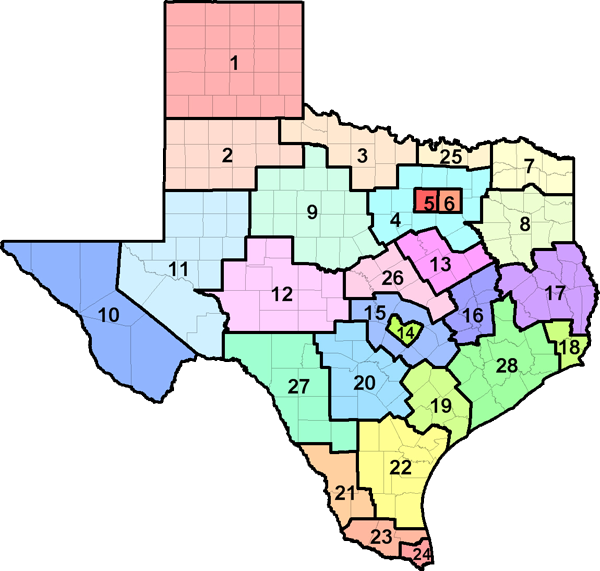
TEXAS COUNTY MAP BY WORKFORCE DEVELOPMENT AREA
* Due to confidentiality rules, not all regions may have the data displayed. The sum of all the regions may not be equal to the state total.


Top 10 Relevant Knowledge Areas Relevant Importance Levels
Customer and Personal Service
Knowledge of principles and processes for providing customer and personal services. This includes customer needs assessment, meeting quality standards for services, and evaluation of customer satisfaction.
81.00%
Education and Training
Knowledge of principles and methods for curriculum and training design, teaching and instruction for individuals and groups, and the measurement of training effects.
72.00%
Psychology
Knowledge of human behavior and performance; individual differences in ability, personality, and interests; learning and motivation; psychological research methods; and the assessment and treatment of behavioral and affective disorders.
63.80%
Administration and Management
Knowledge of business and management principles involved in strategic planning, resource allocation, human resources modeling, leadership technique, production methods, and coordination of people and resources.
62.40%
English Language
Knowledge of the structure and content of the English language including the meaning and spelling of words, rules of composition, and grammar.
62.20%
Sales and Marketing
Knowledge of principles and methods for showing, promoting, and selling products or services. This includes marketing strategy and tactics, product demonstration, sales techniques, and sales control systems.
56.40%
Administrative
Knowledge of administrative and office procedures and systems such as word processing, managing files and records, stenography and transcription, designing forms, and workplace terminology.
54.80%
Personnel and Human Resources
Knowledge of principles and procedures for personnel recruitment, selection, training, compensation and benefits, labor relations and negotiation, and personnel information systems.
53.40%
Biology
Knowledge of plant and animal organisms, their tissues, cells, functions, interdependencies, and interactions with each other and the environment.
51.80%
Public Safety and Security
Knowledge of relevant equipment, policies, procedures, and strategies to promote effective local, state, or national security operations for the protection of people, data, property, and institutions.
50.40%


Top 10 Relevant Skill Areas Relevant Importance Levels
Instructing
Teaching others how to do something.
75.00%
Speaking
Talking to others to convey information effectively.
70.00%
Learning Strategies
Selecting and using training/instructional methods and procedures appropriate for the situation when learning or teaching new things.
70.00%
Critical Thinking
Using logic and reasoning to identify the strengths and weaknesses of alternative solutions, conclusions, or approaches to problems.
67.60%
Active Learning
Understanding the implications of new information for both current and future problem-solving and decision-making.
65.00%
Monitoring
Monitoring/Assessing performance of yourself, other individuals, or organizations to make improvements or take corrective action.
62.40%
Active Listening
Giving full attention to what other people are saying, taking time to understand the points being made, asking questions as appropriate, and not interrupting at inappropriate times.
62.40%
Judgment and Decision Making
Considering the relative costs and benefits of potential actions to choose the most appropriate one.
62.40%
Time Management
Managing one's own time and the time of others.
60.00%
Social Perceptiveness
Being aware of others' reactions and understanding why they react as they do.
60.00%


Top 10 Relevant Abilities Relevant Importance Levels
Problem Sensitivity
The ability to tell when something is wrong or is likely to go wrong. It does not involve solving the problem, only recognizing that there is a problem.
75.00%
Oral Expression
The ability to communicate information and ideas in speaking so others will understand.
72.40%
Oral Comprehension
The ability to listen to and understand information and ideas presented through spoken words and sentences.
67.60%
Information Ordering
The ability to arrange things or actions in a certain order or pattern according to a specific rule or set of rules (e.g., patterns of numbers, letters, words, pictures, mathematical operations).
65.00%
Speech Clarity
The ability to speak clearly so others can understand you.
65.00%
Speech Recognition
The ability to identify and understand the speech of another person.
62.40%
Deductive Reasoning
The ability to apply general rules to specific problems to produce answers that make sense.
62.40%
Fluency of Ideas
The ability to come up with a number of ideas about a topic (the number of ideas is important, not their quality, correctness, or creativity).
62.40%
Originality
The ability to come up with unusual or clever ideas about a given topic or situation, or to develop creative ways to solve a problem.
62.40%
Inductive Reasoning
The ability to combine pieces of information to form general rules or conclusions (includes finding a relationship among seemingly unrelated events).
60.00%


  • Making Decisions and Solving Problems
    -- Analyzing information and evaluating results to choose the best solution and solve problems.
  • Performing General Physical Activities
    -- Performing physical activities that require considerable use of your arms and legs and moving your whole body, such as climbing, lifting, balancing, walking, stooping, and handling materials.
  • Training and Teaching Others
    -- Identifying the educational needs of others, developing formal educational or training programs or classes, and teaching or instructing others.
  • Performing for or Working Directly with the Public
    -- Performing for people or dealing directly with the public. This includes serving customers in restaurants and stores, and receiving clients or guests.
  • Thinking Creatively
    -- Developing, designing, or creating new applications, ideas, relationships, systems, or products, including artistic contributions.
Other Activities


  • Independence
    - Occupations that satisfy this work value allow employees to work on their own and make decisions. Corresponding needs are Creativity, Responsibility and Autonomy.
  • Relationships
    - Occupations that satisfy this work value allow employees to provide service to others and work with co-workers in a friendly non-competitive environment. Corresponding needs are Co-workers, Moral Values and Social Service.


Tools

Animal collars: Dog training collars; Stud chains;

Domestic pet training kits: Agility A-frames; Agility dog walks; Agility jumps; Agility pause tables; Agility see-saws; Agility tire jumps; Agility tunnels; Agitation sticks; Bite tugs; Clicker targets;

Ear plugs: Equine ear plugs;

Harnesses or its accessories: Rope halters; Training forks; Training surcingles; Equine training harnesses; Flat halters;

Leashes or leads: Lead ropes; Long leashes;

Muzzles: Dog muzzles;

Personal computers: Personal computers;

Pet grooming products: Pin brushes; Slicker brushes;

Protective coveralls: Bite suits;

Reins: Draw reins; Side reins;

Safety sleeves: Bite sleeves;

Swivel carabiner: Swivel carabiners;

Therapeutic heating or cooling blankets or drapes: Dog cooling vests;

Whips: Agitation whips;

Whistle: Training whistles;


Technology

Calendar and scheduling software: Work scheduling software;

Data base user interface and query software: Tracks Software; Oracle Database; Database software;

Electronic mail software: Microsoft Outlook;

Enterprise resource planning ERP software: Oracle PeopleSoft; SAP software;

Medical software: Epic Systems;

Office suite software: Microsoft Office software;

Operating system software: Microsoft Windows;

Presentation software: Microsoft PowerPoint;

Project management software: Microsoft Project; Atlassian JIRA;

Spreadsheet software: Microsoft Excel;

Transaction server software: Customer information control system CICS;

Web page creation and editing software: Facebook;

Word processing software: Microsoft Word;


Related O*NET occupational titles for Animal Trainers include:
  • 45-2021.00 Animal Breeders
  • 39-2021.00 Animal Caretakers
  • 33-9011.00 Animal Control Workers
  • 27-2021.00 Athletes and Sports Competitors
  • 39-9031.00 Exercise Trainers and Group Fitness Instructors
  • 45-2093.00 Farmworkers, Farm, Ranch, and Aquacultural Animals
  • 25-3021.00 Self-Enrichment Teachers
  • 27-2023.00 Umpires, Referees, and Other Sports Officials
  • 31-9096.00 Veterinary Assistants and Laboratory Animal Caretakers
  • 29-2056.00 Veterinary Technologists and Technicians


Sources of Additional Information
  • For more information about pet groomers, visit: National Dog Groomers Association of America, Inc.
  • For more information about pet sitters, including information on certification, visit: National Association of Professional Pet Sitters
  • Pet Sitters International
  • For more information about animal trainers, visit: The Association of Professional Dog Trainers
  • International Marine Animal Trainers’ Association
  • For more information about keepers, visit: Association of Zoos & Aquariums
  • American Association of Zoo Keepers
  • Occupational Requirements Survey

  • For a profile highlighting selected BLS data on occupational requirements, see
  • Animal caretakers (PDF)
  • CareerOneStop

  • For a career video on animal trainers, visit: Animal trainers
  • Animal Caretakers
  • Animal Trainers

  • Contact Texas Workforce Commission
    Labor Market and Career Information  |  101 E. 15th Street, Annex Room 0252  |  Austin, Texas 78778
    Official Website  |  1-800-822-PLAN (7526)  |  512.936.3200

    ** The information in this report may be derived from many sources like O*NET, BLS (Bureau of Labor Statistics), OOH (Occupational Outlook Handbook), and Career One Stop.