Occupation Summary

Animal Caretakers

O*NET 39-2021.00

Description:

Feed, water, groom, bathe, exercise, or otherwise provide care to promote and maintain the well-being of pets and other animals that are not raised for consumption, such as dogs, cats, race horses, ornamental fish or birds, zoo animals, and mice. Work in settings such as kennels, animal shelters, zoos, circuses, and aquariums. May keep records of feedings, treatments, and animals received or discharged. May clean, disinfect, and repair cages, pens, or fish tanks.

Annual Wages:
$32,349.00
Employment Rate:
Employment is expected to increase by 31.09%.
Education Level:
High School Diploma - or the equivalent (for example, GED). According to O*Net, the majority of people employed in this occupation have this level of education.
Endorsement:
Business and Industry

  1. Feed and water animals according to schedules and feeding instructions.
  2. Answer telephones and schedule appointments.
  3. Examine and observe animals to detect signs of illness, disease, or injury.
  4. Respond to questions from patrons, and provide information about animals, such as behavior, habitat, breeding habits, or facility activities.
  5. Provide treatment to sick or injured animals, or contact veterinarians to secure treatment.
  6. Collect and record animal information, such as weight, size, physical condition, treatments received, medications given, and food intake.
  7. Perform animal grooming duties, such as washing, brushing, clipping, and trimming coats, cutting nails, and cleaning ears.
  8. Exercise animals to maintain their physical and mental health.
  9. Order, unload, and store feed and supplies.
  10. Mix food, liquid formulas, medications, or food supplements according to instructions, prescriptions, and knowledge of animal species.
  11. Clean and disinfect surgical equipment.
  12. Discuss with clients their pets' grooming needs.
  13. Observe and caution children petting and feeding animals in designated areas to ensure the safety of humans and animals.
  14. Find homes for stray or unwanted animals.
  15. Adjust controls to regulate specified temperature and humidity of animal quarters, nurseries, or exhibit areas.
  16. Anesthetize and inoculate animals, according to instructions.
  17. Transfer animals between enclosures to facilitate breeding, birthing, shipping, or rearrangement of exhibits.
  18. Install, maintain, and repair animal care facility equipment, such as infrared lights, feeding devices, and cages.
  19. Train animals to perform certain tasks.
  20. Sell pet food and supplies.
  21. Do facility laundry and clean, organize, maintain, and disinfect animal quarters, such as pens and stables, and equipment, such as saddles and bridles.
  22. Advise pet owners on how to care for their pets' health.


National Industry Employment Patterns


Industry % of Animal Caretakers employed Annual Growth Rate
Other personal services 38.3 1.98
Other miscellaneous retailers 12.7 0.16
Other professional, scientific, and technical services 11.2 2.00
Social advocacy organizations 3.5 0.81
Spectator sports 2.2 0.51


Labor Market Information


2024 Statewide average hourly wage $15.55
2024 National average hourly wage $16.71
2022 National employment 339,000
2022 Texas employment 24,805
Texas projected employment by 2032 32,516
Texas projected annual employment and Turnover openings through 2032 5,925


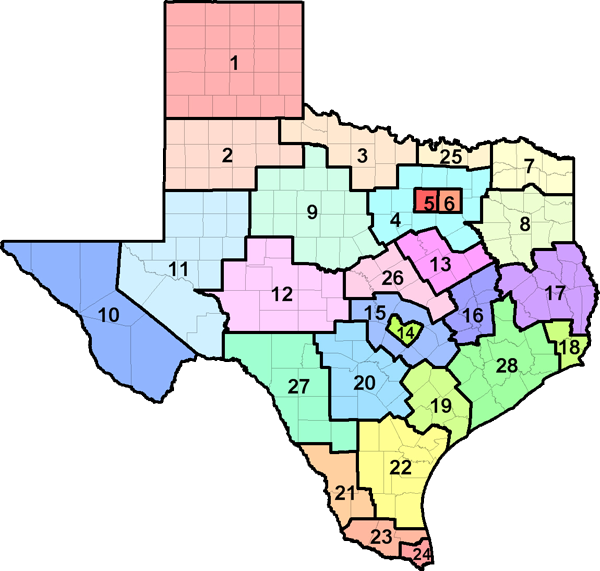
TEXAS COUNTY MAP BY WORKFORCE DEVELOPMENT AREA
* Due to confidentiality rules, not all regions may have the data displayed. The sum of all the regions may not be equal to the state total.


Top 10 Relevant Knowledge Areas Relevant Importance Levels
Customer and Personal Service
Knowledge of principles and processes for providing customer and personal services. This includes customer needs assessment, meeting quality standards for services, and evaluation of customer satisfaction.
84.00%
Administrative
Knowledge of administrative and office procedures and systems such as word processing, managing files and records, stenography and transcription, designing forms, and workplace terminology.
62.60%
English Language
Knowledge of the structure and content of the English language including the meaning and spelling of words, rules of composition, and grammar.
61.40%
Education and Training
Knowledge of principles and methods for curriculum and training design, teaching and instruction for individuals and groups, and the measurement of training effects.
52.40%
Administration and Management
Knowledge of business and management principles involved in strategic planning, resource allocation, human resources modeling, leadership technique, production methods, and coordination of people and resources.
50.80%
Psychology
Knowledge of human behavior and performance; individual differences in ability, personality, and interests; learning and motivation; psychological research methods; and the assessment and treatment of behavioral and affective disorders.
50.40%
Mathematics
Knowledge of arithmetic, algebra, geometry, calculus, statistics, and their applications.
49.00%
Public Safety and Security
Knowledge of relevant equipment, policies, procedures, and strategies to promote effective local, state, or national security operations for the protection of people, data, property, and institutions.
48.40%
Chemistry
Knowledge of the chemical composition, structure, and properties of substances and of the chemical processes and transformations that they undergo. This includes uses of chemicals and their interactions, danger signs, production techniques, and disposal methods.
47.80%
Biology
Knowledge of plant and animal organisms, their tissues, cells, functions, interdependencies, and interactions with each other and the environment.
47.60%


Top 10 Relevant Skill Areas Relevant Importance Levels
Monitoring
Monitoring/Assessing performance of yourself, other individuals, or organizations to make improvements or take corrective action.
62.40%
Reading Comprehension
Understanding written sentences and paragraphs in work-related documents.
60.00%
Active Listening
Giving full attention to what other people are saying, taking time to understand the points being made, asking questions as appropriate, and not interrupting at inappropriate times.
60.00%
Coordination
Adjusting actions in relation to others' actions.
60.00%
Service Orientation
Actively looking for ways to help people.
60.00%
Judgment and Decision Making
Considering the relative costs and benefits of potential actions to choose the most appropriate one.
60.00%
Speaking
Talking to others to convey information effectively.
57.60%
Writing
Communicating effectively in writing as appropriate for the needs of the audience.
55.00%
Social Perceptiveness
Being aware of others' reactions and understanding why they react as they do.
55.00%
Critical Thinking
Using logic and reasoning to identify the strengths and weaknesses of alternative solutions, conclusions, or approaches to problems.
55.00%


Top 10 Relevant Abilities Relevant Importance Levels
Oral Comprehension
The ability to listen to and understand information and ideas presented through spoken words and sentences.
65.00%
Problem Sensitivity
The ability to tell when something is wrong or is likely to go wrong. It does not involve solving the problem, only recognizing that there is a problem.
62.40%
Oral Expression
The ability to communicate information and ideas in speaking so others will understand.
62.40%
Information Ordering
The ability to arrange things or actions in a certain order or pattern according to a specific rule or set of rules (e.g., patterns of numbers, letters, words, pictures, mathematical operations).
62.40%
Static Strength
The ability to exert maximum muscle force to lift, push, pull, or carry objects.
62.40%
Near Vision
The ability to see details at close range (within a few feet of the observer).
62.40%
Speech Recognition
The ability to identify and understand the speech of another person.
60.00%
Speech Clarity
The ability to speak clearly so others can understand you.
60.00%
Trunk Strength
The ability to use your abdominal and lower back muscles to support part of the body repeatedly or continuously over time without "giving out" or fatiguing.
60.00%
Deductive Reasoning
The ability to apply general rules to specific problems to produce answers that make sense.
60.00%


  • Getting Information
    -- Observing, receiving, and otherwise obtaining information from all relevant sources.
  • Communicating with Supervisors, Peers, or Subordinates
    -- Providing information to supervisors, co-workers, and subordinates by telephone, in written form, e-mail, or in person.
  • Performing General Physical Activities
    -- Performing physical activities that require considerable use of your arms and legs and moving your whole body, such as climbing, lifting, balancing, walking, stooping, and handling materials.
  • Identifying Objects, Actions, and Events
    -- Identifying information by categorizing, estimating, recognizing differences or similarities, and detecting changes in circumstances or events.
  • Handling and Moving Objects
    -- Using hands and arms in handling, installing, positioning, and moving materials, and manipulating things.
Other Activities


  • Relationships
    - Occupations that satisfy this work value allow employees to provide service to others and work with co-workers in a friendly non-competitive environment. Corresponding needs are Co-workers, Moral Values and Social Service.
  • Support
    - Occupations that satisfy this work value offer supportive management that stands behind employees. Corresponding needs are Company Policies, Supervision: Human Relations and Supervision: Technical.


Tools

Aquariums: Fish tanks;

Articulating boom lift: Hydraulic bucket lifts;

Binocular light compound microscopes: Binocular light compound microscopes;

Cages or its accessories: Animal cages;

Cleaning scrapers: Algae scrapers;

Compressed air gun: Spear guns;

Dissolved oxygen meters: Portable dissolved oxygen DO meters;

Diving instruments or accessories: Self-contained underwater breathing apparatus SCUBA gear;

Domestic hair dryers: Blow dryers;

Dosing droppers: Eye droppers;

Electric hair clipper: Animal clippers; Cordless animal trimmers;

Electronic toploading balances: Benchtop electronic toploading balances;

Forklifts: Wheeled forklifts;

Handheld refractometers or polarimeters: Handheld digital refractometers;

Harnesses or its accessories: Animal harnesses;

Immersion heaters: Aquarium heaters;

Inflatable rubber boat: Inflatable rubber motor boats;

Kennels: Animal crates;

Laboratory ultraviolet UV sterilizers: Aquarium ultraviolet UV sterilizers;

Ladders: Stepladders;

Muzzles: Animal muzzles;

Oxidation reduction tester: Digital oxidation reduction potential ORP meters;

Personal computers: Personal computers;

Pet grooming products: Cat grooming bags; Coat strippers; Grooming combs; Grooming rakes; Grooming tables; Mat breakers; Pet bathing brushes; Pin brushes; Shedding blades; Slicker brushes;

pH meters: pH testers;

Pressure or steam cleaners: Pressure sprayers;

Protective gloves: Animal handling gloves;

Respirators: Air purifying respirators;

Safety sleeves: Animal handling sleeves;

Scaffolding: Scaffolding;

Scissor lift or lift table: Scissor lifts;

Shears: Grooming shears;

Slings: Slings;

Special hoses: Siphon hoses;

Tongs: Aquarium tongs;

Underwater cameras: Underwater cameras;

Underwater lighting: Aquarium lighting;

Veterinary nail trimmers or cutters: Animal nail clippers; Animal nail files; Animal nail grinders;

Water filters: Aquarium filters;

Water pumps: Aquarium pumps;

Water purification equipment: Protein skimmers;

Water testing and sampling kits: General hardness GH test kits; Nitrate test kits; Nitrite test kits; Ammonia test kits; Carbonate hardness test kits; pH test kits;


Technology

Calendar and scheduling software: DaySmart Software Appointment-Plus; Groom Pro; Mobile Dog Grooming Software mGroomer; Petschedule;

Data base user interface and query software: The Groomer's Write Hand; Groomsoft; K9 Bytes K9 Koordinator; Kennel Link; Microsoft Access; Envision Pet Grooming; CEEJS The Pet Groomer's Secretary; DaySmart Software 123Pet;

Electronic mail software: Microsoft Outlook;

Office suite software: Microsoft Office software;

Presentation software: Microsoft PowerPoint;

Spreadsheet software: Microsoft Excel;

Word processing software: Microsoft Word;


Related O*NET occupational titles for Animal Caretakers include:
  • 45-2021.00 Animal Breeders
  • 33-9011.00 Animal Control Workers
  • 39-2011.00 Animal Trainers
  • 39-9011.00 Childcare Workers
  • 45-2093.00 Farmworkers, Farm, Ranch, and Aquacultural Animals
  • 31-1121.00 Home Health Aides
  • 31-1131.00 Nursing Assistants
  • 31-1122.00 Personal Care Aides
  • 31-9096.00 Veterinary Assistants and Laboratory Animal Caretakers
  • 29-2056.00 Veterinary Technologists and Technicians


Sources of Additional Information
  • For more information about pet groomers, visit: National Dog Groomers Association of America, Inc.
  • For more information about pet sitters, including information on certification, visit: National Association of Professional Pet Sitters
  • Pet Sitters International
  • For more information about animal trainers, visit: The Association of Professional Dog Trainers
  • International Marine Animal Trainers’ Association
  • For more information about keepers, visit: Association of Zoos & Aquariums
  • American Association of Zoo Keepers
  • Occupational Requirements Survey

  • For a profile highlighting selected BLS data on occupational requirements, see
  • Animal caretakers (PDF)
  • CareerOneStop

  • For a career video on animal trainers, visit: Animal trainers
  • Animal Caretakers
  • Animal Trainers

  • Contact Texas Workforce Commission
    Labor Market and Career Information  |  101 E. 15th Street, Annex Room 0252  |  Austin, Texas 78778
    Official Website  |  1-800-822-PLAN (7526)  |  512.936.3200

    ** The information in this report may be derived from many sources like O*NET, BLS (Bureau of Labor Statistics), OOH (Occupational Outlook Handbook), and Career One Stop.